

Van's Air Force
You are using an out of date browser. It may not display this or other websites correctly.
You should upgrade or use an alternative browser.
You should upgrade or use an alternative browser.
Random RV-15 Build Questions?
- Thread starter Jetmart
- Start date


Perhaps this could be a place to ask random questions.
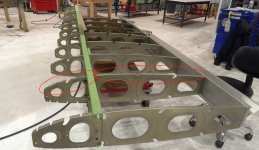
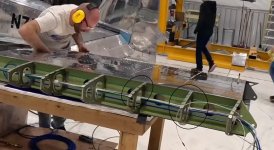
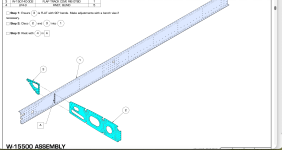
I have one. My last build was a RV-14 QB so don't know if this is typical. Noticed on the 15 the nose rib flange alternate directions when the main rib doesn't. Why?
View attachment 106398View attachment 106399View attachment 106400
It allows the ability to reach in, through access holes, with a bucking bar should you decide to do solid rivets.

So you can buck rivets on the leading edge. Pull rivets used elsewhere.
Are you certain there are flush bucked rivets on the leading edge? Pictures I have seen show pulled rivets on the bottom of the wing.
It allows the ability to reach in, through access holes, with a bucking bar should you decide to do solid rivets.
I'm surprised. My impression is that Van's has been discouraging the use of flush bucked rivets.

In this particular area, the choice is yours. In in other areas you have to use pulled rivets.Are you certain there are flush bucked rivets on the leading edge? Pictures I have seen show pulled rivets on the bottom of the wing.

Early on in the development of the RV – 15 one of the primary design goal decisions was to make the airplane as quick and easy to build as possible. Based on the previous experience with the RV– 12, it was known that the best way to do that was use primarily blind rivets for construction.I'm surprised. My impression is that Van's has been discouraging the use of flush bucked rivets.
I have heard numerous others besides you make the statement that Vans is discouraging conventional riveting.
I have never heard anyone say anything in the context that you shouldn’t do it. They have only said that all the design work was biased towards using blind rivets for the reason I already mentioned.
The fact that they Incorporated openings into the leading edge skins for riveting access shows that they were willing to design in some accommodation for solid riveting as long as it didn’t impact the primary design philosophy of using blind rivets.
The only thing I have heard strongly emphasized is that internal performed testing showed that the substitution of flush head CS4 blind rivets is not acceptable.
I disagree, and to my knowledge no one at Vans has specifically stated this.In this particular area, the choice is yours. In in other areas you have to use pulled rivets.
Some people may feel this is true because riveting other areas is going to have different levels of challenge compared to legacy RV kit because there was no design emphasis for providing riveting accessibility, particularly the control surfaces and flaps but with some creative planning and processes that doesn’t mean it can’t be done


Call Vans and send them pics. No way I would put that in my airplane.Continuing the randomness
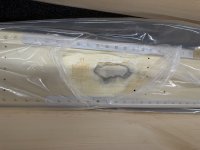
Other than aesthetically, should I be concerned with this spot on the left spar?
It looks worse than it is, the thing that looks like a flaking edge is just a stain.
This was a defect on my RV12’s spar and engineering suggested that it be replaced.
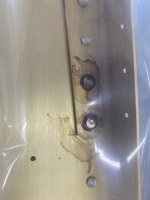

Is that shipping damage or did they ship it like that? Either way, no way I would accept it....should I be concerned with this spot on the left spar?

It was inside the spar crate and inside plastic wrapping of the spar..I had to tear a hole in the wrap to get a clear picture. So I don’t think it was shipping damage. I will ask Vans about it tomorrowIs that shipping damage or did they ship it like that? Either way, no way I would accept it.
Now that I have had a look at that pic on a large screen, looks like they scratched the spar web after anodizing and then sanded/blended out the scratch and then used an alodine pen or similar to attempt to protect the area. The anodizing has definitely been removed there.Continuing the randomness
Other than aesthetically, should I be concerned with this spot on the left spar?
It looks worse than it is, the thing that looks like a flaking edge is just a stain.
I doubt it will ever cause a safety of flight issue but I would run it by Van's anyway to be sure. What would bother me the most is that there is a visually crappy repair done to a brand new spar web. You will see that at every condition inspection to be reminded that you paid for that. I would also be concerned that it may impact future sale value if you ever decide to sell it.
The consistency of the quality of the spars has declined over the years. When I built my 7, they were a work of art. The spars on the 10 I started were also flawless. The 12 required a replacement due to deep scratch that was in the web next to the end of a doubler's last rivet.
Last edited:
It definitely looks like someone has done some work on it. To me, with limited past experience, the rest of the spar looks gorgeous, which makes this spot stand out. I never have been big on the beauty mark conceptNow that I have had a look at that pic on a large screen, looks like they scratched the spar web after anodizing and then sanded/blended out the scratch and then used an alodine pen or similar to attempt to protect the area. The anodizing has definitely been removed there.
I doubt it will ever cause a safety of flight issue but I would run it by Van's anyway to be sure. What would bother me the most is that there is a visually crappy repair done to a brand new spar web. You will see that at every condition inspection to be reminded that you paid for that. I would also be concerned that it may impact future sales value if you ever decide to sell it.
The quality of the spars has declined over the years. When I built my 7, they were a work of art. The spars on the 10 I started were also flawless. The 12 required a replacement due to deep scratch that was in the web next to the end of a doubler's last rivet.

I emailed support at Vans and will report back.
Thanks for all the info!

My (one) RV-15 spar is beautiful. No quality concerns with it.The quality of the spars has declined over the years. When I built my 7, they were a work of art. The spars on the 10 I started were also flawless. The 12 required a replacement due to deep scratch that was in the web next to the end of a doubler's last rivet.
I should have said: “the consistency of the spar quality has declined….”. I did not intend to insinuate that they are all poor. Sorry about that!My (one) RV-15 spar is beautiful. No quality concerns with it.
Heard back from Clarrissa from Vans support this morning about my ugly spar issue. She asked to verify my shipping address so they could ship me a new spar today and arrange to have the blemished one picked up.
As a new Vans customer, this pretty much blew me away...it was not the response I was expecting. Exemplary customer service, IMHO.
I told them I could wait till they could ship both spars together towards the end of January (when the backordered right spar becomes available) and I could bring the ugly one back to the factory when I go to get the tail kit in March to save them the shipping cost. Not sure what they will decide to do, but good-on Vans either way
I am impressed..
As a new Vans customer, this pretty much blew me away...it was not the response I was expecting. Exemplary customer service, IMHO.
I told them I could wait till they could ship both spars together towards the end of January (when the backordered right spar becomes available) and I could bring the ugly one back to the factory when I go to get the tail kit in March to save them the shipping cost. Not sure what they will decide to do, but good-on Vans either way
I am impressed..
Heard back from Clarrissa from Vans support this morning about my ugly spar issue. She asked to verify my shipping address so they could ship me a new spar today and arrange to have the blemished one picked up.
As a new Vans customer, this pretty much blew me away...it was not the response I was expecting. Exemplary customer service, IMHO.
I told them I could wait till they could ship both spars together towards the end of January (when the backordered right spar becomes available) and I could bring the ugly one back to the factory when I go to get the tail kit in March to save them the shipping cost. Not sure what they will decide to do, but good-on Vans either way
I am impressed..
They also replaced one of my RV-12 spars after engineering deemed the one I received as junk. I had to send them pictures of the spar cut up into pieces. They did not want it back. This was shortly before they filed bankruptcy.
Yeah, I certainly appreciate the need to balance great customer service and profitability going forward. I hope they dont have to eat this spar, and the more shipping costs can be saved the better. I was even going to ask them if they want their crates back when I return for the tail kit, although the big crate looks like it might make a pretty good shelf unitThey also replaced one of my RV-12 spars after engineering deemed the one I received as junk. I had to send them pictures of the spar cut up into pieces. They did not want it back. This was shortly before they filed bankruptcy.

Is it correct that all the #30 and #40 holes in all thickness of material are factory final size and don't need drilling or deburring?

N10KE
Well Known Member
I would be more impressed if the new and improved quality control/quality assurance processes had caught this before it ever left Aurora.Heard back from Clarrissa from Vans support this morning about my ugly spar issue. She asked to verify my shipping address so they could ship me a new spar today and arrange to have the blemished one picked up.
As a new Vans customer, this pretty much blew me away...it was not the response I was expecting. Exemplary customer service, IMHO.
I told them I could wait till they could ship both spars together towards the end of January (when the backordered right spar becomes available) and I could bring the ugly one back to the factory when I go to get the tail kit in March to save them the shipping cost. Not sure what they will decide to do, but good-on Vans either way
I am impressed..
That is the case on my 12is kit. An occasional hole needs a reaming and/or a spin of deburring tool. There are several places where a hole is match drilled then the 2 pieces up sized to #19 or #12 for bolts. I imagine the 15 to be the same. YMMV.Is it correct that all the #30 and #40 holes in all thickness of material are factory final size and don't need drilling or deburring?

My first thought agreed with your inclination, however after looking at some pieces and talking with some fellow builders, there appears to be a high level of variability in competency of deburring. Given these are punched at final size any over enthusiastic deburring easily results in an oblong or oversize hole, particularly in the lighter materials of the RV-12. I don't know for sure, but suspect the section 5 comment on how to handle factory final sized holes takes into account the damage and variability that aggressive deburring may induce. I.e. the risk of stress riser cracking from a factory final hole is less than the damage from incorrect deburring. All this does not mean a builder should skip the inspection step! There will be holes that need a pass or two of a deburring tool. Due to the nature of punching, holes may need a pass on one side of the piece and not the other. I got comfortable looking at and using a thumb run over the hole and if no grab or tactile roughness I accepted the hole without deburring.In reading Section 5 it does say the factory made holes only need to be inspected. However, I will be unable to not-deburr them. Too many years of making holes in aluminum I guess.
So far, I felt the need to do a very quick and light deburr of the holes on one side. No up-sizing of holes. Edges definitely need deburring, IMHO.Is it correct that all the #30 and #40 holes in all thickness of material are factory final size and don't need drilling or deburring?

Just a quick $.02 worth---we are assembling kits, with mostly pre-made parts. Ultimantly, its on the builder to inspect the parts he or she is assembling in his/her aircraft. His is a lesson I learn YEARS ago doing engine building as a side job. Just because it came out of the box, doesnt mean its serviceable. ( Long story about building a Ford 390 engine, and after getting the bottom end done, found the piston deck height exceeded the block deck height by an unacceptable amount. With the heads installed, the decks of the pistons would have hit the heads during rotation; obviously not good). So check your parts, and dont assume that the 'inspectors' did.So far, I felt the need to do a very quick and light deburr of the holes on one side. No up-sizing of holes. Edges definitely need deburring, IMHO.
N10KE
Well Known Member
I agree Tom, but a spar that looks like the one in the picture above should never have left the factory. One large contributing factor to the bankruptcy was the lack of competent QA/QC that didn’t catch the defective primer being applied or the laser miscut parts fiasco that was probably the final nail in the proverbial coffin. I’m most disappointed and yes, a bit concerned as an RV-15 builder that the needed lessons have yet to be learned or the processes not fully implemented.Just a quick $.02 worth---we are assembling kits, with mostly pre-made parts. Ultimantly, its on the builder to inspect the parts he or she is assembling in his/her aircraft. His is a lesson I learn YEARS ago doing engine building as a side job. Just because it came out of the box, doesnt mean its serviceable. ( Long story about building a Ford 390 engine, and after getting the bottom end done, found the piston deck height exceeded the block deck height by an unacceptable amount. With the heads installed, the decks of the pistons would have hit the heads during rotation; obviously not good). So check your parts, and dont assume that the 'inspectors' did.
Last edited:
