

Van's Air Force
You are using an out of date browser. It may not display this or other websites correctly.
You should upgrade or use an alternative browser.
You should upgrade or use an alternative browser.
QA my soldering please
- Thread starter AviatorJ
- Start date


Norman CYYJ
Well Known Member
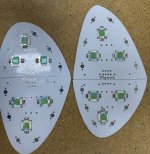
Looks okay to meIt has been decades since I did any component level repair with solder. Can someone please take a look at these and let me know if any look completely janky? I wanted to get some extra eyes on it before I call it good and clean up the residue. Thanks!
View attachment 107179

Clean the flux residue then inspect. IF it is shinny, it should be good to go. The two or three I looked at in the image look ok.
Decades ago, I was solder certified for space flight. I have built many Heathkits and solder lots of stuff in the past including at work that I was paid for. I am also an A&P and also Ham Radio Amateur Extra but that has nothing to do with soldering.
Decades ago, I was solder certified for space flight. I have built many Heathkits and solder lots of stuff in the past including at work that I was paid for. I am also an A&P and also Ham Radio Amateur Extra but that has nothing to do with soldering.
I think it's probably okay, but....
I see several where the "pad" was hot enough, but the "legs" (metal pieces reaching down from the chip) look like they didn't get hot enough (solder has flowed over the legs, not really bonded). Now, down at the junction of the legs to the pad, I'll bet it's okay. So, my second comment: you could probably get by with half as much solder. But test them, if they work, they're okay.
I see several where the "pad" was hot enough, but the "legs" (metal pieces reaching down from the chip) look like they didn't get hot enough (solder has flowed over the legs, not really bonded). Now, down at the junction of the legs to the pad, I'll bet it's okay. So, my second comment: you could probably get by with half as much solder. But test them, if they work, they're okay.
Jim Frisbie
Well Known Member
Make sure of the orientation of the LEDS
I got some of mine backward and had to redo
I got some of mine backward and had to redo


As others have said it looks like you could have used a little less solder, but then photos of solder joints can also be very good at lying to us as they pick up reflections from around the area. The key is to let the soldering iron heat up both the solder pad and the component leg, and the solder will want to naturally flow between the two items. A little blob of solder applied to the tip at first will help get the heat from the tip to the parts, but then the solder should be applied to the parts being joined and the internal flux core can do its job as well.
Move on to the position LEDs, noting their orientation. Then note that all of the resistors and terminal blocks belong on the back of the boards where they will be out of sight.
Well done! Carry on.
Move on to the position LEDs, noting their orientation. Then note that all of the resistors and terminal blocks belong on the back of the boards where they will be out of sight.
Well done! Carry on.
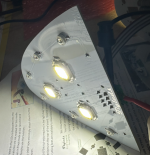
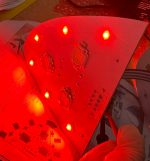

I agree--less solder. I think ideally you'd like to see the outline of the component leads on the pads. Solder between the pads and the component leads is important. Solder on top of the component leads doesn't really add any value. There are a couple of places where it looks like there might have been a bridge to adjacent copper if there hadn't been solder mask in place.I think it's probably okay, but....
I see several where the "pad" was hot enough, but the "legs" (metal pieces reaching down from the chip) look like they didn't get hot enough (solder has flowed over the legs, not really bonded). Now, down at the junction of the legs to the pad, I'll bet it's okay. So, my second comment: you could probably get by with half as much solder. But test them, if they work, they're okay.
All that having been said, congrats on completing the process with working lights!

dnimigon
Well Known Member
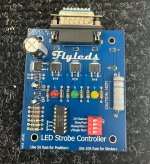
Heathkits. Yes, done lots of them too. So im much older but should be fine on soldering Flyled’sClean the flux residue then inspect. IF it is shinny, it should be good to go. The two or three I looked at in the image look ok.
Decades ago, I was solder certified for space flight. I have built many Heathkits and solder lots of stuff in the past including at work that I was paid for. I am also an A&P and also Ham Radio Amateur Extra but that has nothing to do with soldering.
