Van's Air Force

The definitive Van's Aircraft support community! Buying, building or flying an RV? Join our exclusive family of mentors and enthusiasts!

Purging of oil system and cleaning oil tank

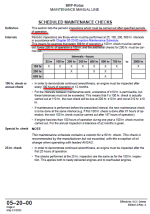
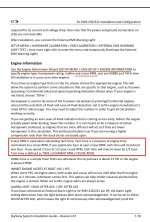
When reading the line maintenance manual it says that cleaning the oil tank is optional, but if you do it, you must purge the oil system. I have read a couple posts from 2020 where people said that you can clean the oil tank without purging the system. You would just have to keep the OUT line elevated to prevent air from getting into the system. At least this is what I gathered from the video being shared there which I will also share here.


We are about to change the oil again at the 200 hour Tach time on the engine. We’ve been changing it every 50 hours since 44 Tach.

This 912iS engine was ran with 100LL for the first 44 hours and we have been running strictly 91 Octane since then as that’s when we bought the airplane from Tango Flight (high school build program).

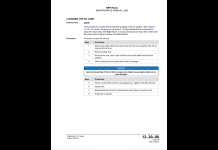
If you read the attached instructions for cleaning the oil tank, it says optional, and most importantly do it at the 200 hour mark if you’ve been running 100LL. It also says that you must purge the oil system which seems rather involved.

Trying to do everything correct here without causing too much work. Can I get some seasoned guidance on whether I can clean this oil tank without having to purge the system? TIA
 

Attachments

  • IMG_0005.png
    IMG_0005.png
    220.6 KB · Views: 10
I seldom run avgas but on long trips it is just easier than chasing mogas. In those instances I do my next oil change early and clean the tank. On regular oil changes I don’t clean the tank except during conditional. When cleaning the tank I drain from the bottom, then clean everything inside with a towel, no solvent. Reassembly and startup watching for oil pressure. Never had a problem in 1800 hours.
 
Also note that Rotax maintenance intervals are based upon OPERATING HOURS, i.e., Hobbs, not tach. intervals.

1769963655862.png
 
I seldom run avgas but on long trips it is just easier than chasing mogas. In those instances I do my next oil change early and clean the tank. On regular oil changes I don’t clean the tank except during conditional. When cleaning the tank I drain from the bottom, then clean everything inside with a towel, no solvent. Reassembly and startup watching for oil pressure. Never had a problem in 1800 hours.
Thanks. Just to clarify the answer to my question. Do you purge the oil system after cleaning the tank? The manual says to do this but seems like it might be unnecessary.
 
Also note that Rotax maintenance intervals are based upon OPERATING HOURS, i.e., Hobbs, not tach. intervals.

Just curious, mine is setup straight time when engine is running “operating hours” using a Dynon. Is it possible to setup a “tach time” that adjusts the time non-linear based on RPM?
 
Thanks. Just to clarify the answer to my question. Do you purge the oil system after cleaning the tank? The manual says to do this but seems like it might be unnecessary.
I have never purged after oil changes. When changing hoses, yes purge.
When you burp the engine you are introducing air into the lower hose back to the canister. There is no requirement to purge after that.
 
If I’m correctly understanding your question, that is how tach time is calculated in the Dynon.
 

Attachments

  • IMG_2945.jpeg
    IMG_2945.jpeg
    712.6 KB · Views: 17
I have never purged after oil changes. When changing hoses, yes purge.
When you burp the engine you are introducing air into the lower hose back to the canister. There is no requirement to purge after that.
My question is not if you purge system after oil changes. My question is if you purge oil system after taking off the oil canister and wiping out the deposits on the bottom of the canister. These are 2 separate procedures in the manual. Thanks
 
If I’m correctly understanding your question, that is how tach time is calculated in the Dynon.
Thread creep here. I’m not asking about Tach or Hobbs.

My question is about cleaning the oil canister per the Rotax manual. It says to purge the oil system after you do this procedure. This is a separate procedure than just changing the oil.

Is anyone feeling it necessary to purge the oil system after cleaning the oil canister as the procedure says to in the attachment you see with the first entry I started with this thread?
 
I’ve always used compressed air to purge after removing the oil cooler or gear box, but when cleaning the oil tank, since it was always during a CI and the plugs were removed anyway, I’ve simply spun the prop by hand and verified oil pressure buildup; it’s easy to do at that time.

And the tach comment was in response to your initial post indicating you were using tach time for your oil changes. The second response was to Walt’s question regarding tach calculations. Sorry, as I should have quoted his question.
 
Thread creep here. I’m not asking about Tach or Hobbs.

My question is about cleaning the oil canister per the Rotax manual. It says to purge the oil system after you do this procedure. This is a separate procedure than just changing the oil.

Is anyone feeling it necessary to purge the oil system after cleaning the oil canister as the procedure says to in the attachment you see with the first entry I started with this thread?
Joe;
Rotax assumes to clean the oil tank it is removed from airframe, the top removed and the inner canister is pulled from the outer and all is cleaned then reassembled. This is essentially equivalent to removing the oil cooler or changing an oil hose out. I would do the purge procedure after removing and replacing the oil tank.

It is not necessary to purge after oil changes or filter changes, though I do put oil in the new filter to minimize the air entrained.

These procedures are markedly different from those of typical Lycoming or Conti engines and are driven by the Rotax not having an oil sump on the bottom of the crankcase.
 
I’ve always used compressed air to purge after removing the oil cooler or gear box, but when cleaning the oil tank, since it was always during a CI and the plugs were removed anyway, I’ve simply spun the prop by hand and verified oil pressure buildup; it’s easy to do at that time.

And the tach comment was in response to your initial post indicating you were using tach time for your oil changes. The second response was to Walt’s question regarding tach calculations. Sorry, as I should have quoted his question.
Positive oil pressure is not indicative of clearing air in the lifters which is a good portion of the reason for purge procedure. Yes the instructions say run engine for 5 minutes if you still have flat lifter after positive pressure purge but you still have to go back and check the lifters until convinced they are right. Personal opinion alert here, but if checking differential compression, cleaning oil tank, changing oil and filter at 100 hr checks, why not purge the system and check lifters? All it costs is the valve cover o-ring kit and a few more minutes. Also allows for a good look at valve train and combined with a borescope inspection can spot issues before they become major problems. Having seen what happens to cylinder head and piston with a flat lifter running, the trouble to do the purge procedure is small price to pay.
 
My question is not if you purge system after oil changes. My question is if you purge oil system after taking off the oil canister and wiping out the deposits on the bottom of the canister. These are 2 separate procedures in the manual. Thanks
I do not remove the oil canister to clean it. I clean it in place only removing the top hose to remove the lid, bottom hose still attached. This is my method and I’m not suggesting you follow, just my experience.
 
All it costs is the valve cover o-ring kit and a few more minutes.
You are correct, time is minimal and cheap. Not so much for the gasket $9.57ea x (4). If you are strict to the mfg requirements they need to be replaced every time they are opened.
 
You are correct, time is minimal and cheap. Not so much for the gasket $9.57ea x (4). If you are strict to the mfg requirements they need to be replaced every time they are opened.
Rotax part number 881920 set of 8 o-rings, $55.67, or buy separately if cheaper from your supplier of choice. I can't and won't argue price. Typically I put on new after successful lifter check and valve lash measurement. New engines are shipped with a kit to use for initial purge on engine installation.

I do not remove the oil canister to clean it. I clean it in place only removing the top hose to remove the lid, bottom hose still attached. This is my method and I’m not suggesting you follow, just my experience.
Hmm, not sure I understand your set up. 912is Sport tanks have both in and out plus vent hose on top of tank. I have to remove all three to get top of tank off to clean top, screen, support plate and outer tank. I am having trouble visualizing a bottom hose.
 
Hmm, not sure I understand your set up. 912is Sport tanks have both in and out plus vent hose on top of tank. I have to remove all three to get top of tank off to clean top, screen, support plate and outer tank. I am having trouble visualizing a bottom hose.
You are correct, all hoses are on top and are exposed to air after an oil change. Removing them from the top of the tank and keeping them at that elevation changes nothing as far as air infiltration into the system. The return line has air all the time after a burp so it should not be an issue. The suction line is exposed to air during an oil change. Rotax doesn’t require a purge after a normal maintenance oil change. They do say to purge if the canister is removed. In my mind assuming the suction line is kept at the same level after removal as it is when connected to the tank the amount of air filtration isn’t going to change. It is very important that the propeller is not moved during the time the suction line is exposed to air regardless if it is an oil change or hose removal from the tank.
This method has worked fine for me and many other Rotax owners and mechanics I personally know.
In any case I am not suggesting anyone do what I do. Do as you please.
 
I hear everybody… but I’ve never gotten a satisfactory explaination of what happens when you drain the oil tank and the suction dip tube runs dry. This tube is probably 8” long and maybe 3/8” round. When you drain the oil tank this tube also drains. The hype about don’t let air ingress into the oil galleries doesn’t hold water here. When you refill the oil tank the suction dip tube retains an 8” slug of air which gets ingested into the oil pump at engine start. This happens everytime you change oil and drain the oil tank. So far, at 1000TT I haven’t seen any problems...
 
Last edited:
The 8” tube that is drained is also filled back up when you put it back down in the tank full of oil. Like a straw put back into a glass of water? As long as you keep the hoses above the tank top when off you won’t have a problem, unless you turn the prop. You always get a little air when changing an oil filter. All combustion motors can and have operated for ever with a few air bubbles mixed in, it when large amount is put in that you have problems.
 
When the oil tank is filled the air in the tube has to move out of the way. The only place for the air to go is towards the oil pump. Put your finger over the “straw” the water in the glass will not enter the straw until the air moves up.
 
When the oil tank is filled the air in the tube has to move out of the way. The only place for the air to go is towards the oil pump. Put your finger over the “straw” the water in the glass will not enter the straw until the air moves up.
Correct... 8" slug of air ingested into oil pump at each oil change
 
I don’t know how you do it, but I remove the hoses. Put the tank back together after cleaning, fill with oil. The tube is now full, reconnect the hose’s. Not rocket science
 
Correct... 8" slug of air ingested into oil pump at each oil change
Nope, the only way that the engine intake pick up tube (Out Connection on tank) gets air in it during an oil change is if there is a break in the line between it and the oil pump. I.E. the finger is never taken off the top of the straw during an oil change. Now during a tank clean, the hose is taken off the top of tank which does allow air to entrain into the oil system pick-up tube. I understand and have seen oil tanks opened and cleaned with the lines held above the level of the tank to keep them from draining. Rotax instructions are meant to be "engine safe", and goof proof, follow the instructions. Yes, there are short cuts, but not without risk, and I won't have someone wreck their engine based on a short cut I endorse.

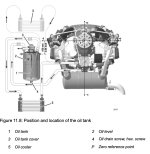
Lubrication system.jpg
 
You are entitled to your opinions and fears, but they are incorrect assumptions. When the oil tank is drained the pickup tube DOES empty once the level in the tank drops below the end of the pickup. It will empty from the bottom of the pickup tube to the highest point in the line. This is physics and you can’t have it your way. The engine is not a perfect seal like your straw and water example. When the tank refills the air in the pickup tube is moved uphill towards the engine.
 
The diameter of a tube, viscosity of liquid, angle of tube from vertical, and length of time all come into play. It is physics… I drain my oil when engine is hot and oil flows like water. I leave the tank drain overnight to capture all residual oil. I am very certain that the dip tube empties completely all the way up to the apex of the curved hose above the tank. I estimate the dip tube at 8” length, but you can also add a few inches for the fitting and curvature of hose above the tank lid. Bottom line is a significant amount of air is ingested into the oil pump at first engine start after a routine oil change. You can take that to the bank….
 
This discussion is largely an example of missing the forest for the trees.

The diameter of a tube, viscosity of liquid, angle of tube from vertical, and length of time all come into play. It is physics… I drain my oil when engine is hot and oil flows like water. I leave the tank drain overnight to capture all residual oil. I am very certain that the dip tube empties completely all the way up to the apex of the curved hose above the tank. I estimate the dip tube at 8” length, but you can also add a few inches for the fitting and curvature of hose above the tank lid. Bottom line is a significant amount of air is ingested into the oil pump at first engine start after a routine oil change. You can take that to the bank….

I think this is probably a realistic estimation of what happens with that dip tube, especially in an overnight drain scenario like you describe. 8" is kind of an arbitrary number since it's a small diameter tube, but some air is introduced into the oil system. This has been mentioned along with other opportunities for the same, like the oil filter change.

What always seems to be lost in the discussion is the actual purpose of what we all call the purge procedure. The purge is a necessary part, and it's where the process begins, but removing the air is not point of all this. The engine can and does purge the air by itself, there is no problem with a some air getting into the oil circulation system. The purpose of the purge is to make sure you have air out of lifter system so you can test the lifter. The purge allows you to identify a faulty lifter, which can be catastrophic.

Jim is right about air entry. To Doc's point, it's an inch-wide-mile-deep risk and should be taken seriously. We should all understand the entire service instruction, including contingencies in the pages that everyone seems to skip and what it is we are trying to accomplish.
 
This discussion is largely an example of missing the forest for the trees.
.
Perhaps the point was missed. We are now in agreement that during an oil change there is air entry, and also air entry with a filter change, AND Rotax doesn’t require a purge for these operations.
The discussion is about opening the oil tank vs not opening it. Open it and do a purge, oil change (which introduces the same air) and no purge.
If you error on the side of caution then a purge and lifter check should be done for an oil change.
 
Perhaps the point was missed. We are now in agreement that during an oil change there is air entry, and also air entry with a filter change, AND Rotax doesn’t require a purge for these operations.
The discussion is about opening the oil tank vs not opening it. Open it and do a purge, oil change (which introduces the same air) and no purge.
If you error on the side of caution then a purge and lifter check should be done for an oil change.

I would agree that doing the purge and lifter check after an oil change is an error, on the side of caution. Go ahead, it's not going to hurt anything but is probably a waste of time.

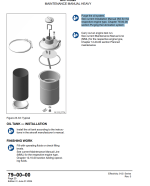
Appreciate the re-focus on the original question, which I guess was based on a belief that this is left to interpretation. After a quick review of the posts in this thread I see that we have referenced the line maintenance manual and the service instruction, but not the heavy maintenance manual. The answer with respect to the oil tank work is found there.

MMH 912i 79-00-00 (pg 20): "Finishing Work" includes "Purge the oil system. See current Installation Manual (IM) for the respective engine type, Chapter 79-00-00 section Purging the lubrication system."

If you are doing some abbreviated version of the tank cleaning procedure, you have departed from Rotax guidance and already decided that you are on your own to interpret what you can and can't get away with. My opinion is that the shortcuts described here are unlikely to lead to trouble, because the lifter failure is rare and that is the actual risk we would attempt to avoid. That said, my opinion really only applies to my own engine and would suggest the same applies to others taking the shortcut. Rotax is clear.


Screenshot 2026-02-03 at 9.27.14 AM.png
 
Last edited:
For the discussion of not purging after an oil change - A purge isn't necessary if you have the newer style oil tank, like depicted above in post #30, because the oil pickup tube remains submerged in oil that is trapped by the cup at the bottom, so no air can be introduced into the system when the oil is drained.
 
because the oil pickup tube remains submerged in oil that is trapped by the cup at the bottom, so no air can be introduced into the system when the oil is drained.
Not so, you are basically dealing with a siphon;
“A siphon will flow as long as the outlet end is lower than the liquid surface in the source reservoir, and the liquid column remains continuous.”
The oil tank pickup is slightly higher than the bottom of the crankcase where the hose terminates. The siphon will cause the oil to flow back to the engine eventually sucking air.
 
Lots of conversation about air ingestion into the oil galleries when draining oil tank and also when installing new oil filter with some % air entrapped. Suffice to say, my very early SN RV-12 has had ~ 20 oil changes with the above known / accepted risks and engine runs like new…
 
Not so, you are basically dealing with a siphon;
“A siphon will flow as long as the outlet end is lower than the liquid surface in the source reservoir, and the liquid column remains continuous.”
The oil tank pickup is slightly higher than the bottom of the crankcase where the hose terminates. The siphon will cause the oil to flow back to the engine eventually sucking air.

The easiest way to see why what you describe won't happen and why that cup at the bottom of the oil tank is there is to fill up a sink with water and submerge a glass so that it is completely full. Then without letting any air into the glass, invert it and pick it up so that the glass is well above the water, but the bottom is still in the water. You will be holding a column of water in the glass that can't escape and no air can get into the glass. It's also easy to use a straw in the same manner by plugging one end.

That's what happens when you drain the oil from the oil tank, air can't get into the suction line because it is in oil retained by the cup. Now if you open the oil tank and take the suction line out of the cup at the bottom, then yes, air will get into the system.
 
The easiest way to see why what you describe won't happen and why that cup at the bottom of the oil tank is there is to fill up a sink with water and submerge a glass so that it is completely full. Then without letting any air into the glass, invert it and pick it up so that the glass is well above the water, but the bottom is still in the water. You will be holding a column of water in the glass that can't escape and no air can get into the glass. It's also easy to use a straw in the same manner by plugging one end.

That's what happens when you drain the oil from the oil tank, air can't get into the suction line because it is in oil retained by the cup. Now if you open the oil tank and take the suction line out of the cup at the bottom, then yes, air will get into the system.
The tank has a vent at the top ,a cap that is not sealed and two hoses of which are not part of an air tight system! Air can enter in multiple areas.
 
The tank has a vent at the top ,a cap that is not sealed and two hoses of which are not part of an air tight system! Air can enter in multiple areas.
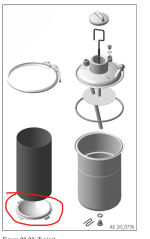
In post #30 I see no cup. What that is a curved little tray on raised legs that supports the screen off the bottom of the tank. A few years ago, the community college aviation dept. here changed the oils and cleaned the tank on one of their RV 12’s. When they put it back together they turned the little curved tray upside down. Shortly after takeoff the engine sized and the CFI landed on a road. All ok except for needing a new engine! The curve part was now up and blocked the pickup tube!
 
In post #30 I see no cup. What that is a curved little tray on raised legs that supports the screen off the bottom of the tank. A few years ago, the community college aviation dept. here changed the oils and cleaned the tank on one of their RV 12’s. When they put it back together they turned the little curved tray upside down. Shortly after takeoff the engine sized and the CFI landed on a road. All ok except for needing a new engine! The curve part was now up and blocked the pickup tube!

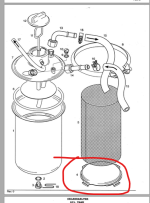
From the IPC it's called "PARTION 2". Note that it is concave and that it will retain oil when the tank is drained. The suction tube is always submerged in this oil unless the oil tank cover assembly is removed, like for a cleaning. I have circled it in the attached drawing.

1770706137028.png

Here is a drawing of the old style tank where you can see it appears flat (not a cup) and would allow air into the suction side if the oil tank was drained.

1770706254011.png

The question of why an oil system purge was not required during an oil change came up in the Rotax course I attended and this was the explanation. Perhaps it's wrong, but it certainly seems valid to me.

Blue Skies!
 
The easiest way to see why what you describe won't happen …
Your “cup” represents the suction line returning back to the engine correct?
The cup is sealed to atmosphere, …. the oil line is not. Once it enters the crankcase atmospheric air can enter from open valves and past the rings. It isn't much but anything beyond a perfect seal allows the oil to flow into the canister and air replaces it. .
Use your cup, but make it a paper one, fill it with water and turn it upside down in the water then lift it above the water line, the cup will stay full, then make a pin hole in the bottom, you will understand.
 
When I was a kid, I used to watch Mr. Wizard on TV. Seagull’s paper cup / pin hole demonstration brought back early memories which spurred my lifelong love of science. Seagull’s explanation of crankcase not being inherently sealed is correct. Piston ring gap alone will allow oil column in tank suction line to drain when tank is left empty over night during oil change…
 
……AND even if you don't accept that air is introduced when the oil is drained, it absolutely obvious that a significant amount of air IS introduced when the oil filter is R&R’d. The block drains the oil which leaves air to replace it, and it is impossible to put on a new oil filter full of oil with no air. Rotax does not address that at all for priming.
 
Your “cup” represents the suction line returning back to the engine correct?
The cup is sealed to atmosphere, …. the oil line is not. Once it enters the crankcase atmospheric air can enter from open valves and past the rings. It isn't much but anything beyond a perfect seal allows the oil to flow into the canister and air replaces it. .
Use your cup, but make it a paper one, fill it with water and turn it upside down in the water then lift it above the water line, the cup will stay full, then make a pin hole in the bottom, you will understand.

The suction line runs from the oil tank to the cooler then to the oil pump. Very little air, if any, is going to go through the oil pump in the time it takes to drain the tank, replace the filter and refill with oil.

Fun experiment for the next oil change: Drain the oil tank completely and then remove the oil filter. If the suction line starts draining and you get more oil out of the tank then you're right!
 
The suction line runs from the oil tank to the cooler then to the oil pump. Very little air, if any, is going to go through the oil pump in the time it takes to drain the tank, replace the filter and refill with oil.
----------
You missed post #27 above where I mention that I leave oil tank drain overnight. Hot oil at near 200F will drain out of the suction dip tube in a short time. At 1000TT, I have installed over 20 oil filters all bone-dry as removed from the box. It doesn’t matter that the oil cooler is located in the suction line between the tank and the oil pump, it's irrelevant, and completing oil change quickly does not midigate the introduction of trapped air.
 
Back
Top