Van's Air Force

The definitive Van's Aircraft support community! Buying, building or flying an RV? Join our exclusive family of mentors and enthusiasts!

PlanePower Hartzell 12v 60A Alternator Failed

JDA_BTR

Well Known Member
Patron
Supplied by Vans with my 2018 delivered RV14 FF kit. 365 hours. Installed per plans. Tensioned per Lycoming spec. Rear bearing fine, rear bearing housing worn such that the rotor rubs the stator under certain conditions. Did not seize and electrically is perfect.

Called Hartzell. Check the brushes they say and I say that isn’t it. Sorry too bad they say. I whined. I encouraged. I ….. well too bad.

A local shop fixes alternators but not for cars (or airplanes). He fiddles it a bit and says the rear bearing housing is the problem. I agree and then “hey let’s see what we can do with this!”

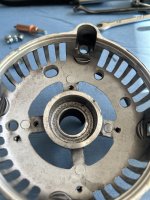
Indeed the rear bearing is fine. The housing looks worn like the bearing housing isn’t tight enough, wanders around, takes material slowly.

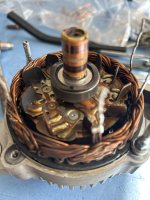
Good news is I’m building an 8. I bought an identical alternator for the 8. Voila’ I have a spare I installed and tested great today. Bad news is this old one is not serviceable. Pictures for your entertainment. It is now a core for the future.

Except I won’t be buying this again. Low hour failure. Very thin material in the rear housing to retain the bearing. Poor design. $$$$ compared to other options.

So I’ll be exploring automotive and B&C. Prob B&C internal regulated because they will sell me the brackets and good to go. Automotive I have to fiddle brackets too much on the 390.

Pictures included. And for those that remember Hartzell saying that the PP that they bought had problems they fixed? No, this is a Hartzell product confirmed with vendor.
 

Attachments

  • image.jpg
    image.jpg
    2.1 MB · Views: 160
  • image.jpg
    image.jpg
    1.9 MB · Views: 160
  • image.jpg
    image.jpg
    1.6 MB · Views: 160
Supplied by Vans with my 2018 delivered RV14 FF kit. 365 hours. Installed per plans. Tensioned per Lycoming spec. Rear bearing fine, rear bearing housing worn such that the rotor rubs the stator under certain conditions. Did not seize and electrically is perfect.

Called Hartzell. Check the brushes they say and I say that isn’t it. Sorry too bad they say. I whined. I encouraged. I ….. well too bad.

A local shop fixes alternators but not for cars (or airplanes). He fiddles it a bit and says the rear bearing housing is the problem. I agree and then “hey let’s see what we can do with this!”

Indeed the rear bearing is fine. The housing looks worn like the bearing housing isn’t tight enough, wanders around, takes material slowly.

Good news is I’m building an 8. I bought an identical alternator for the 8. Voila’ I have a spare I installed and tested great today. Bad news is this old one is not serviceable. Pictures for your entertainment. It is now a core for the future.

Except I won’t be buying this again. Low hour failure. Very thin material in the rear housing to retain the bearing. Poor design. $$$$ compared to other options.

So I’ll be exploring automotive and B&C. Prob B&C internal regulated because they will sell me the brackets and good to go. Automotive I have to fiddle brackets too much on the 390.

Pictures included. And for those that remember Hartzell saying that the PP that they bought had problems they fixed? No, this is a Hartzell product confirmed with vendor.
Mine did the same at about 1000 hrs only seized the rotor... Managed to get it rebuilt with a new back case at a local shop...
 
Ohh and my brushes would have lasted another decade.

The rotor would have seized eventually. But I could hear it from time to time rubbing and I hate catastrophe!

Is there a part number for the rear case, clocked as everything is?
 
Supplied by Vans with my 2018 delivered RV14 FF kit. 365 hours. Installed per plans.
When you say installed per plans did you use a blast tube for cooling?

Per PP install instructions. Regardless it's not a great design.

Screenshot 2025-05-08 195118.jpg
 
Last edited:
No and cooling had nothing to do with it. The bearing fretted in the housing and is not retained. Electrically perfect.

My RV14 plans have no blast cooling provision and I think it would have been fine a long time except for the rub.
 
Yes that part number seems identical with the omission of the bushings PP has to fit the bracket.
55A Alternator For CDD John Deere Yanmar Engine ...

<SNIP>

Would be easier and cheaper to buy this 101211-2950 alternator and take the bushings off of the PP. I wonder what that requires.
 
Last edited by a moderator:
One thing about 101211-2950 that mak not make it right completely in that it says clockwise fan. If the pulley is the face we turn CCW?
 
Supplied by Vans with my 2018 delivered RV14 FF kit. 365 hours. Installed per plans. Tensioned per Lycoming spec. Rear bearing fine, rear bearing housing worn such that the rotor rubs the stator under certain conditions. Did not seize and electrically is perfect.

Called Hartzell. Check the brushes they say and I say that isn’t it. Sorry too bad they say. I whined. I encouraged. I ….. well too bad.

A local shop fixes alternators but not for cars (or airplanes). He fiddles it a bit and says the rear bearing housing is the problem. I agree and then “hey let’s see what we can do with this!”

Indeed the rear bearing is fine. The housing looks worn like the bearing housing isn’t tight enough, wanders around, takes material slowly.

Good news is I’m building an 8. I bought an identical alternator for the 8. Voila’ I have a spare I installed and tested great today. Bad news is this old one is not serviceable. Pictures for your entertainment. It is now a core for the future.

Except I won’t be buying this again. Low hour failure. Very thin material in the rear housing to retain the bearing. Poor design. $$$$ compared to other options.

So I’ll be exploring automotive and B&C. Prob B&C internal regulated because they will sell me the brackets and good to go. Automotive I have to fiddle brackets too much on the 390.

Pictures included. And for those that remember Hartzell saying that the PP that they bought had problems they fixed? No, this is a Hartzell product confirmed with vendor.
 
One thing about 101211-2950 that mak not make it right completely in that it says clockwise fan. If the pulley is the face we turn CCW?
That's maybe why a blast tube is needed? I used B@C. 650 hrs no issues, RV-14 with a IO390.

Screenshot 2025-05-08 195118.jpg
 
Supplied by Vans with my 2018 delivered RV14 FF kit. 365 hours. Installed per plans. Tensioned per Lycoming spec. Rear bearing fine, rear bearing housing worn such that the rotor rubs the stator under certain conditions. Did not seize and electrically is perfect.

Called Hartzell. Check the brushes they say and I say that isn’t it. Sorry too bad they say. I whined. I encouraged. I ….. well too bad.

A local shop fixes alternators but not for cars (or airplanes). He fiddles it a bit and says the rear bearing housing is the problem. I agree and then “hey let’s see what we can do with this!”

Indeed the rear bearing is fine. The housing looks worn like the bearing housing isn’t tight enough, wanders around, takes material slowly.

Good news is I’m building an 8. I bought an identical alternator for the 8. Voila’ I have a spare I installed and tested great today. Bad news is this old one is not serviceable. Pictures for your entertainment. It is now a core for the future.

Except I won’t be buying this again. Low hour failure. Very thin material in the rear housing to retain the bearing. Poor design. $$$$ compared to other options.

So I’ll be exploring automotive and B&C. Prob B&C internal regulated because they will sell me the brackets and good to go. Automotive I have to fiddle brackets too much on the 390.

Pictures included. And for those that remember Hartzell saying that the PP that they bought had problems they fixed? No, this is a Hartzell product confirmed with vendor.

My 2019 delivered 60 amp alternator failed with rear housing bearing spinning. Was out of warranty however Hartzell replaced with no questions asked. It is a known issue.
 
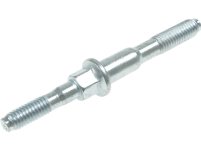
Two bolts come out and two bolts are fixed inside with nuts. It is really trivial to remove them. 7mm metric nuts tho be wary.
The reason I ask -- they changed the bolts/studs on the case halves to incorporate a "shoe" which holds the stator tightly in the DE bracket. This change was made sometime in the H-Qnnnn or H-Rnnnn serial number range IIRC. Without the shoe, the stator sits loose, can wiggle and work and cause one or more of the 4 leads to fracture.
 
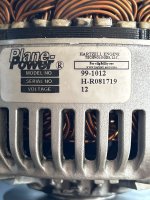
Mine is an H-R, see pics. They suggested I send it as a core for my replacement. There was no shoe.
 
One thing about 101211-2950 that mak not make it right completely in that it says clockwise fan. If the pulley is the face we turn CCW?
Fan direction doesn't matter. As an interesting aside, the Denso units made for Honda/Acura were CCW, Toyota and the rest were CW. Finding the right combination of stator, rotor, SRE, DE, rectifier, regulator has proven to be challenging :)
 
Mine is an H-R, see pics. They suggested I send it as a core for my replacement. There was no shoe.
Makes sense -- if it's 4 bolts, then your stator isn't anchored and it will shift and chatter. This is what the studs should look like --

Screenshot 2025-05-08 at 7.15.39 PM.png
 
Last edited:
I followed the Lycoming advice on tension and slip but I wonder if their advice is not best for these units.
 
Also of note is that it could have gone this way for a long time. One flight 15 hours before O heard a noise for a while and couldn’t place it. Since then I’ve rocked the prop wondering if it was the alternator. I even took it off and thought it was okay until I figured out how to jiggle it to make the rub. I wonder how long it could have gone if I hadn’t been suspicious. I’m glad I was.

There is another thread of automotive alternatives for 390s and there just isn’t a ready set of alternator and bracket that is good to go. I wish there was. For the price of the auto alternators I’d buy two and spare one of them for the future no problem.

I don’t like a 350-400 hour failure item on their expensive component. Especially when I think it will just happen again.
 
Also of note is that it could have gone this way for a long time. One flight 15 hours before O heard a noise for a while and couldn’t place it. Since then I’ve rocked the prop wondering if it was the alternator. I even took it off and thought it was okay until I figured out how to jiggle it to make the rub. I wonder how long it could have gone if I hadn’t been suspicious. I’m glad I was.

There is another thread of automotive alternatives for 390s and there just isn’t a ready set of alternator and bracket that is good to go. I wish there was. For the price of the auto alternators I’d buy two and spare one of them for the future no problem.

I don’t like a 350-400 hour failure item on their expensive component. Especially when I think it will just happen again.

ND 101211-2130, comes pretty close...might need a few washers. Swap pulleys from the PP you have.
 
Interesting you say that. I put the pulley in a vise this afternoon and tried to turn the nut to get it off but couldn’t. The shaft rotated. I’m not sure how I would keep the shaft from rotating with the nut.
 
101211-2130 Looks a very good candidate. Is the width of the wide side good for the boss bracket that fits the PP?

I’m also curious if the boss bracket for PP is the same one used by B&C.
 
Why not just sleeve that rear housing, replace the bearing and keep running? Any machine shop could probably do it and it would be better than stock.
 
Interesting you say that. I put the pulley in a vise this afternoon and tried to turn the nut to get it off but couldn’t. The shaft rotated. I’m not sure how I would keep the shaft from rotating with the nut.
Use an impact wrench.
 
There is a tradeoff between hassle and money and time. Yeah I could order a rear housing and hope it works. Yeah I could move the pulley to something and see how it works. Yeah I could spend all the time running around to a shop and explaining things and all that. I now know how to pull it apart, but it only gets me so far. I'm disappointed that the PP product is not better than it is. I don't think I want to double down and make it work no matter what. My time begins to be a bigger factor.

I'll try the impact wrench - I'm just curious if I can get it off from an experimental aviation is educational perspective.

I'm very interested in an automotive alternator solution. When I hang the new -390 on the -8 and I don't want to fly it for a while I'll probably investigate more options that cost less than the PP. Hopefully the PP on the -14 lasts long enough until I find a better solution on the second project.
 
My Plane power 60Amp alternator lasted 15 years and 3,000 hours but did fail on a trip recently. I had replaced the brushes and regulator pack several years ago and expected it to run forever ;) I was able to get it rebuilt as a 70Amp auto style salvaging the front case at a small automotive alternator / starter shop that worked fine for the rest of the trip but going forward I was looking to switch to a smaller case mounted direct drive unit and ordered up the B&C 410 and remote regulator.

Installing the new alternator did involve a bit of re-wiring and that is always fun climbing in and out lying upside down working on the floor under the panel doing body contortions... Fun!

Wow I really like this unit! The energy it generates is directly connected to the engine rpm and load demand. It makes 0 to just a bit over 30 amps and the loads and voltage that you see coming from it make sense. The old 60/70 amp pully driven units pretty much make full power at any rpm and hit a lithium battery with everything after every start. This has always looked a bit sketchy to me.

After having the new case mounted alternator running for the past month, I can say definitively that the engine starts easier and loafs at low idle smoother which is interesting and a welcome plus.
 
Supplied by Vans with my 2018 delivered RV14 FF kit. 365 hours. Installed per plans. Tensioned per Lycoming spec. Rear bearing fine, rear bearing housing worn such that the rotor rubs the stator under certain conditions. Did not seize and electrically is perfect.

Called Hartzell. Check the brushes they say and I say that isn’t it. Sorry too bad they say. I whined. I encouraged. I ….. well too bad.

A local shop fixes alternators but not for cars (or airplanes). He fiddles it a bit and says the rear bearing housing is the problem. I agree and then “hey let’s see what we can do with this!”

Indeed the rear bearing is fine. The housing looks worn like the bearing housing isn’t tight enough, wanders around, takes material slowly.

Good news is I’m building an 8. I bought an identical alternator for the 8. Voila’ I have a spare I installed and tested great today. Bad news is this old one is not serviceable. Pictures for your entertainment. It is now a core for the future.

Except I won’t be buying this again. Low hour failure. Very thin material in the rear housing to retain the bearing. Poor design. $$$$ compared to other options.

So I’ll be exploring automotive and B&C. Prob B&C internal regulated because they will sell me the brackets and good to go. Automotive I have to fiddle brackets too much on the 390.

Pictures included. And for those that remember Hartzell saying that the PP that they bought had problems they fixed? No, this is a Hartzell product confirmed with vendor.
Mine failed at 346 hours. For expediency I replaced with another PP and a blast tube. If it fails prematurely again, I will replace with B&C.
 
I think the unit can’t handle the tensioning spec given by Lycoming. PP says to use what the manuf says. The blast tube is a primer war item so far as I can tell looking at all the alternator posts over the years.
 
I think the unit can’t handle the tensioning spec given by Lycoming. PP says to use what the manuf says. The blast tube is a primer war item so far as I can tell looking at all the alternator posts over the years.
I agree, but spoke with a Hartzel rep at Oshkosh last year and he recommended it. Might work . . . 🙄
 
We’ve been putting on PP ALT-FLX 6 phase alternators and they are tanks. Took noise filters off too. I don’t know why the experimental ones aren’t as good seems like
 
The SRE bearing cavity enlargement is a known problem. At annual, remove the alternator, clamp the pulley in a padded vice with the shaft vertical. Try to rock the case. Any free play is cause for rejection.
Supposedly they did something (undisclosed) about the issue in 2020. We'll see. Given yours is pre-2020, perhaps you might push a little.
Further back PP was blaming the problem on overly tight belt tension. Wasn't it; they still spun the rear bearing running the specified tension. Been there.
Stator fixation was a different problem.
The PP facility is right here in Montgomery and I've tried to be supportive, but I'm done. $1400 for a discount Chinese knockoff is ridiculous.
 
Mine failed at 346 hours. For expediency I replaced with another PP and a blast tube. If it fails prematurely again, I will replace with B&C.
My PP has been working for well over 1000 hours. Belt tension is not very tight. I can push the belt ¾" for displacement. No blast tube. Since you already have a new one, you might try loosening the tension and see if it fails again.
 
My PP has been working for well over 1000 hours. Belt tension is not very tight. I can push the belt ¾" for displacement. No blast tube. Since you already have a new one, you might try loosening the tension and see if it fails again.
Thanks for that. So many variables with the PP. Don’t seem to see as many issues with the B&C.
 
I'm wanting an automotive solution for when this one goes. Everything is a compromise and getting the right pulley at the right place with the right bracket is the biggest struggle. I won't be buying PP again though. I got my spare (actually for the 8 I'm building) at Vans when they announced the refinancing before they announced bankruptcy. I bought all the big FF items at that time and I'm so glad I did. The price was under $1000 but a lot higher than I paid in 2017 for the failed unit. Now that it is >1500 there is just no way - no way.

If this one fails I have the excellent pad mounted B&C backup. I could fly a long time on that!

I've seen posts about a B&C internally regulated alternator but don't see it on their website. That would be a no-brainer to not have the uncertainty of figuring out the automotive solution.
 
Supplied by Vans with my 2018 delivered RV14 FF kit. 365 hours. Installed per plans. Tensioned per Lycoming spec. Rear bearing fine, rear bearing housing worn such that the rotor rubs the stator under certain conditions. Did not seize and electrically is perfect.

Called Hartzell. Check the brushes they say and I say that isn’t it. Sorry too bad they say. I whined. I encouraged. I ….. well too bad.

I re-read your original post and I am confused, I hope you will clarify.

What system behavior or misbehavior led you to remove, tear down, inspect the alternator? You state that it "did not seize" and was "electrically perfect.", Hartzell TS seemed to think it may be the brushes? So what was it that you experienced *before* you took it apart and saw the worn cavity?

I'm wanting an automotive solution for when this one goes. Everything is a compromise and getting the right pulley at the right place with the right bracket is the biggest struggle.

You do realize that the PP and B&C *are* in fact "automotive" in their origins; the mounting brackets are essentially knock-offs of the original Lycoming bracketry -- and so is the pulley.

I don't disagree that the price for the PP alternator is exorbitant, and to a lesser degree, the B&C. This is why I have spent so much time finding replacement parts so when it fails I can fix it with a minimum of fuss.

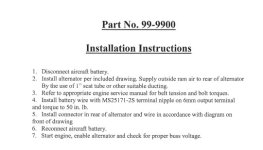
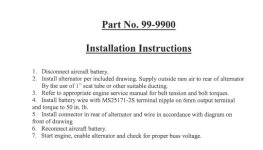
And, in closing, the use of a blast tube pointed at the regulator shouldn't be a "primer war" kind of item...The (1) installation instructions call for them, (2) anyone who has worked with silicon/integrated circuits understands the need to keep devices cool, google "effects of heat on P-N junctions" for grins/giggles.
 
....... I have spent so much time finding replacement parts so when it fails I can fix it with a minimum of fuss.

Which is very much appreciated by me.

And, in closing, the use of a blast tube pointed at the regulator shouldn't be a "primer war" kind of item...The (1) installation instructions call for them, (2) anyone who has worked with silicon/integrated circuits understands the need to keep devices cool, google "effects of heat on P-N junctions" for grins/giggles.

I don't disagree that "cooler is better". It may even be an aid in avoiding the SRE bearing cavity enlargement. That said, let's remember current OEM temperature standards for automotive electronics are way above the relatively mild conditions in the average RV cowl. For $1400+ we should be getting top drawer components...and it ain't so.
 
I re-read your original post and I am confused, I hope you will clarify.

What system behavior or misbehavior led you to remove, tear down, inspect the alternator? You state that it "did not seize" and was "electrically perfect.", Hartzell TS seemed to think it may be the brushes? So what was it that you experienced *before* you took it apart and saw the worn cavity?


You do realize that the PP and B&C *are* in fact "automotive" in their origins; the mounting brackets are essentially knock-offs of the original Lycoming bracketry -- and so is the pulley.

I don't disagree that the price for the PP alternator is exorbitant, and to a lesser degree, the B&C. This is why I have spent so much time finding replacement parts so when it fails I can fix it with a minimum of fuss.

And, in closing, the use of a blast tube pointed at the regulator shouldn't be a "primer war" kind of item...The (1) installation instructions call for them, (2) anyone who has worked with silicon/integrated circuits understands the need to keep devices cool, google "effects of heat on P-N junctions" for grins/giggles.
On a start I thought that I heard a strange sound, but then I didn't hear it anymore. Electrically the PP alternator performed fine; it's never had an electrical problem. When I stopped I rocked the prop and something felt gravelly, then it didn't. So I took out the PP alternator, and it seemed perfectly fine. So I reinstalled it, and then rocked the prop and under tension of the belt the alternator was gravelly and had some noise. So I took it out, and found that if I loaded the pully sidewise "just so" then I could make the gravelly feel, and it seemed it was the rotor rubbing the stator. Later I took it apart, and the bearing was perfect; but it had wallowed out in the case just enough to rub and cause problems. The brushes were barely worn. It was the bearing not being properly retained in the case.

I also took it to the local industrial alternator shop. They put it in the test fixture and declared it fine! But then I showed the owner how the rotor could rub when loading the pulley and he then agreed it was the bearing (but actually the bearing seat in the casing).

The bearing did not seize. The PP call was a waste of time because yes, they said it was likely the brushes, but no way the brushes would do this. It is my opinion that PP will do nothing but offer to sell me another one. I felt that telling me to inspect the brushes was the dumbest thing they could have told me; I think they said that because it is the only maintenance item they allow on the unit and they won't do anything else except replace it if it happens to be in the warranty period - which it isn't.

I hope that clarifies it. I won't get another PP. B&C has an internally regulated option that requires no wiring changes so I'll get one of those and have it handy for my RV8 I'm building, but available if needed before then on the -14A.
 
Oh, and I want to put the old Denso equivalent on but I'm probably overthinking that I shouldn't because I can't turn it off in flight if I need to.
 
Oh, and I want to put the old Denso equivalent on but I'm probably overthinking that I shouldn't because I can't turn it off in flight if I need to.
Get one of the externally regulated versions. Easy yo turn off. If you really feel the need to switch it off, put a relay on the B lead wire for the internally regulated.
 
On a start I thought that I heard a strange sound, but then I didn't hear it anymore. Electrically the PP alternator performed fine; it's never had an electrical problem. When I stopped I rocked the prop and something felt gravelly, then it didn't. So I took out the PP alternator, and it seemed perfectly fine. So I reinstalled it, and then rocked the prop and under tension of the belt the alternator was gravelly and had some noise. So I took it out, and found that if I loaded the pully sidewise "just so" then I could make the gravelly feel, and it seemed it was the rotor rubbing the stator. Later I took it apart, and the bearing was perfect; but it had wallowed out in the case just enough to rub and cause problems. The brushes were barely worn. It was the bearing not being properly retained in the case.

I also took it to the local industrial alternator shop. They put it in the test fixture and declared it fine! But then I showed the owner how the rotor could rub when loading the pulley and he then agreed it was the bearing (but actually the bearing seat in the casing).

The bearing did not seize. The PP call was a waste of time because yes, they said it was likely the brushes, but no way the brushes would do this. It is my opinion that PP will do nothing but offer to sell me another one. I felt that telling me to inspect the brushes was the dumbest thing they could have told me; I think they said that because it is the only maintenance item they allow on the unit and they won't do anything else except replace it if it happens to be in the warranty period - which it isn't.

I hope that clarifies it. I won't get another PP. B&C has an internally regulated option that requires no wiring changes so I'll get one of those and have it handy for my RV8 I'm building, but available if needed before then on the -14A.
Dudley,

Really common problem. Any idea about the year of manufacture? Supposedly the SLE bearing bore enlargement issue was "fixed" around 2020, although the speaker didn't go into details. If PP refused to acknowledge the issue, you were talking to a new hire, or a skunk.

Here's how you check 'em, on some regular schedule. Clamp the pulley, try to rock the case. Any freeplay is a rejection.

Alternator Rear Bearing Test.jpg
 
Dudley,

Really common problem. Any idea about the year of manufacture? Supposedly the SLE bearing bore enlargement issue was "fixed" around 2020, although the speaker didn't go into details. If PP refused to acknowledge the issue, you were talking to a new hire, or a skunk.

Here's how you check 'em, on some regular schedule. Clamp the pulley, try to rock the case. Any freeplay is a rejection.

View attachment 88016

I had the same bearing housing issue. Hartzell replace the alternator quickly without questioning even though it was out of warranty.
 
The PlanePower alternator in my RV-14A (IO-390) failed at around 200 hours. Replaced it with a B&C and never looked back. Preemptively removed the PP from my RV-8 (IO-360-M1B), put in a B&C, and since then have had no alternator issues on either airplane. This was all about 3 years ago.
 
Mine was made in 2018, and is a Hartzell PP product (labeled as such). They gave me words about brushes, and that was it. The official words in their email after my fruitless phone call were:

There are several reasons we will be unable to provide warranty consideration:

1. The alternator is well beyond the published warranty period

2. Previous evaluations of these same type failures find the most common root cause was improper belt tensioning at installation which placed undo stress on the bearing assembly.

3. The unit has been outside a certified quality system for a number of years, experiencing unknown environmental and operational factors.

Sorry we are unable to assist. However, the alternator only p/n is 99-1012 as you do not need to purchase the entire kit and you can use your current assembly for the core required.
 
I'll add that I'm so disappointed with my PP experience that I might just buy a BandC starter and alternator just to get the PP off my ship.

I'm also considering having an 40A alternator instead of 60A. With every single thing on my ship loads are 30A. It would lower the big inrush to the Earth-X battery. Typically after start the 60A model pushes 60A to the battery and recharges it in about 30 sec or less.
 
I'll add that I'm so disappointed with my PP experience that I might just buy a BandC starter and alternator just to get the PP off my ship.

I'm also considering having an 40A alternator instead of 60A. With every single thing on my ship loads are 30A. It would lower the big inrush to the Earth-X battery. Typically after start the 60A model pushes 60A to the battery and recharges it in about 30 sec or less.
...Ohm's Law...

Dudley,

Really common problem. Any idea about the year of manufacture? Supposedly the SLE bearing bore enlargement issue was "fixed" around 2020, although the speaker didn't go into details. If PP refused to acknowledge the issue, you were talking to a new hire, or a skunk.

Here's how you check 'em, on some regular schedule. Clamp the pulley, try to rock the case. Any freeplay is a rejection.

View attachment 88016

@DanH -- It appears that they (Unipoint or HET) changed the type of bearing in the rear of the rotor; it's now a solid 9mm x 32mm x 15mm affair, no more plastic inlays.

Also, do you have BillL's pics of the rotor's "prawls" (prangs, tangs, triangle wedges), or did you happen to notice if there were small holes drilled in them to remove material (balance) the rotor? All of the PP's that I've looked at so far *have* had some work done, except the new WAI 13499 that I am evaluating doesn't appear to have any holes drilled in it -- which could mean it was "perfect" (yah right), or not balanced at all.

I'm wondering if the RPM we operate at + unbalanced rotor is what's leading to the cavity expansion and spun bearings.
 
@JDA_BTR

Take a look at a Denso 101211-3860 as a potential "drop in" (Unipoint ALT-5016, WAI 12357N or 12476N). Some OE's list it as a 60A, some 50A. I think the interesting thing is the Pulley size (74MM).

The stator, rotor (which are what determine the ampacity) are the same as the 60A Nippondenso 101211-2130 and PP EI60.
 
...Ohm's Law...


@DanH -- It appears that they (Unipoint or HET) changed the type of bearing in the rear of the rotor; it's now a solid 9mm x 32mm x 15mm affair, no more plastic inlays.

Based on Bill's teardown, I don't think they ever had the plastic rings.

Also, do you have BillL's pics of the rotor's "prawls" (prangs, tangs, triangle wedges), or did you happen to notice if there were small holes drilled in them to remove material (balance) the rotor? All of the PP's that I've looked at so far *have* had some work done, except the new WAI 13499 that I am evaluating doesn't appear to have any holes drilled in it -- which could mean it was "perfect" (yah right), or not balanced at all.

I dismantled an early SRE bore failure, but it was at least a decade ago and I've slept since then. All the rest have been exchange. Sorry.

I'm wondering if the RPM we operate at + unbalanced rotor is what's leading to the cavity expansion and spun bearings.

Certainly a reasonable theory. Poor balance, combined with the differential expansion rates of the steel bearing shell and the alloy SRE case might well do it. If we assume 150F rise (70F at assembly, zero clearance slip fit, and a 220F running temperature due to radiant exhaust heating), the bearing bore clearance would be a little less than 0.001" when hot. Probably not zero clearance at assembly, so more is likely.
 
Back
Top