Van's Air Force

The definitive Van's Aircraft support community! Buying, building or flying an RV? Join our exclusive family of mentors and enthusiasts!

Pitot Static Hardware Fittings & Tubes & Going from 1/4" aluminum to Polyline

jackking123

Well Known Member
Patron
Tips on 1/4" aluminum tube (my pitot and AOA are plain aluminum tubes)?????

Aluminum AN flared fitting to pipe and some plastic nylon fitting adapter I guess is doable.
Looking at all this and it is getting complicated. I want to make it simple and not cost $100's of dollars.

There are many ways to go. But the starting point is 1/4" (OD) aluminum soft tube to Flight Instrument with 1/4" NPT port.

At the aviation supply isle of Big Orange Home Improvement there is some 1/4" polyethylene tube. I assume that works with the PUSH ON style fittings that are all the rage.
 
A simple way to connect the 1/4" aluminum tube to the 1/4" plastic tube is with a short piece of rubber vacuum hose ID 1/4" and a couple of constant pressure spring clamps. The plastic tube may need a small insert to help prevent it from collapsing.
 
Tips on 1/4" aluminum tube (my pitot and AOA are plain aluminum tubes)?????

Aluminum AN flared fitting to pipe and some plastic nylon fitting adapter I guess is doable.
Looking at all this and it is getting complicated. I want to make it simple and not cost $100's of dollars.

There are many ways to go. But the starting point is 1/4" (OD) aluminum soft tube to Flight Instrument with 1/4" NPT port.

At the aviation supply isle of Big Orange Home Improvement there is some 1/4" polyethylene tube. I assume that works with the PUSH ON style fittings that are all the rage.
Most flare the aluminum and install AN816 then transition to quick connect.
Something like this. Kit has pretty much all you need.
 
Steinair has the adapter too, I think it’s that Parker fitting, but I’m not at home to check.
 
Looked it up, sku is P-518, 1/4” to 3/16” adapter. Not quite the Parker fitting. And can do the tubing to npt to an as well.
 
A simple way to connect the 1/4" aluminum tube to the 1/4" plastic tube is with a short piece of rubber vacuum hose ID 1/4" and a couple of constant pressure spring clamps. The plastic tube may need a small insert to help prevent it from collapsing.
I have an assortment of silicone hose in various sizes that I use to couple nylo / barbed fittings and metal tubes together. Absolutely leak free, easy to assemble/disassemble, and inexpensive. Push on fittings are convenient but I have replaced many due to leaks, they also scar nylon tubing after multiple disassemblies and need trimming to restore the seal, they will also leak if the tube side loads the fittings.
 
Last edited:
I have an assortment of silicone hose in various sizes that I use to couple nylo / barbed fittings and metal tubes together. Absolutely leak free, easy to assemble/disassemble, and inexpensive. Push on fittings are convenient but I have replaced many due to leaks, they also scar nylon tubing after multiple disassemblies and need trimming to restore the seal, they will also leak if the tube side loads the fittings.
+1

I had a fair amount of ptc Fittings on my planes. During pitot static checks showing slight leak's over the years , i have replaced them all with nyloseal fittings. No more ptc on my planes.
 
+1

I had a fair amount of ptc Fittings on my planes. During pitot static checks showing slight leak's over the years , i have replaced them all with nyloseal fittings. No more ptc on my planes.
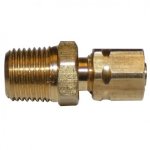
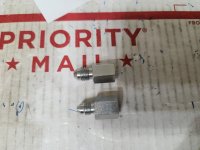
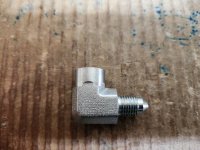
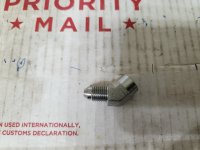
Standard DOT airbrake compression fittings, to a female NPT/ -3 or -4 AN straight, 45* or 90* fitting. Simple solution, much more permanent than the push connect versions that will leak at the oring over time.
Tom
 

Attachments

  • 05-12255a brass nylaflo adapter-convert to male AN.jpg
    05-12255a brass nylaflo adapter-convert to male AN.jpg
    20.3 KB · Views: 14
  • 2405 straights.jpg
    2405 straights.jpg
    214.9 KB · Views: 13
  • 2502-0302.jpg
    2502-0302.jpg
    98.8 KB · Views: 12
  • 2505 45.jpg
    2505 45.jpg
    205.3 KB · Views: 13
Another consideration.
Plan the transition from wing to fuse carefully. Either make it a pass through or make sure whatever is used can't leak. That's a difficult area to work.
 
Thanks for the replies... All great info.... and have all the options...

My design criteria, is
  • Reliable, leak free
  • Easy to connect / disconnect / route
  • Light and simple (less parts)
  • Cost and weight minimized
So many choices

It looks like the PUSH on devices (which are kind of new to me) are all over now a days, not only the usual suspects, but other non aviation on line aviation. Not that expensive. I will try it. These tubes and fittings are used in pneumatics, robotics, and shop equipment. So price is very good. Looks like a no brainer. Still the Alum to Plastic question....

Aviation isle at the local big box home improvement can get the pitot/static job done (in brass, compression fittings and 1/4" and polyethylene tube). The hardware store brass fitting method is not that cheap and not light. Brass compression fittings made for 1/4" copper tubes would work on alum. They go to NPT male. Then a female to female NPT female coupler, finally to NPT to push on fitting for plastic.

I could go aluminum tube flared AN hardware to NPT male, Non critical AN fittings from the car guys not too bad on money. Flare nut set up to NPT, and alum AN NPT coupler to NPT to push on plastic tube fitting. It would look nice.

That is another thing I want it to look good. I am not a fan of Van's Pop Rivet push on a tube and blob of RTV method for static sources. It "works" but if you ever paid an avionics guy money for your Pitot Static Transponder test and there is a tiny leak it's a pain to chase it down. And may have to come back and cost more money. I want a solid no leak last a long time set up.

The PUSH on couple on to the alum tube? I was not sure (still not) sure how these would do on METAL tubes, as they seem to be for plastic tubes. However Dynon seems to do this. I think this is the way I am going. Does not work I can go AN fitting or "old school" below.

The old school alluded to above, is how I use to do it, vinyl tube, barbed fittings, small clamps or safety wire clamp tool (it is a tool to make several paralleled wraps of safety wire around a hose, to make a hose clamp). Making a splice, or transition from 1/4" alum to 1/4" plastic can be done old school, vinyl tube with 1/4" ID and clamp on the smaller tubes. The PUSH on looks more elegant. Just not sure it was made for metal tubes, but Dynon seems to do this.

Pretty much going with push on. It looks like there are non aviation suppliers I can make a kit from.... I am going to buy the parts and start playing erector set Mr. plumber. If I don't like something I'll in the time honored tradition for kit building do it again.

 
Standard DOT airbrake compression fittings, to a female NPT/ -3 or -4 AN straight, 45* or 90* fitting. Simple solution, much more permanent than the push connect versions that will leak at the oring over time.
Tom

So you think these Push On's might or will leak?

Your fittings are great idea, may go that way... but I am going to try the push on first. My back up at least with Alum to Plastic transition is flared AN fitting on the alum, or your brake fitting idea.

The GOOD news is all the fittings will have fairly easy access after plane is finished, all be it with some effort (access panel, pulling instrument out of panel).

Pitot Static Transponder checks don't go well with leaks for sure.
 
Back
Top