Van's Air Force

The definitive Van's Aircraft support community! Buying, building or flying an RV? Join our exclusive family of mentors and enthusiasts!

Only a few leaks he said…

Ralph Inkster

Well Known Member
Sponsor
Friend
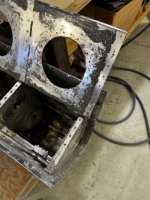
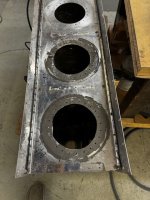
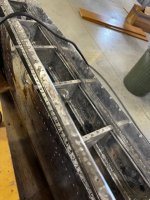
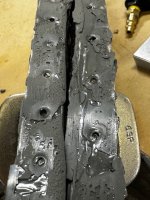
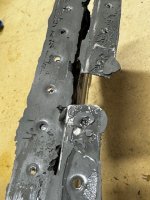
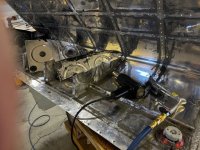
I kept looking at these 2 newly assembled tanks & finally told the owner that there was no way they would leave my hangar in their current condition.
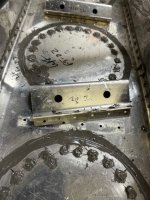
Beside the random rivet leaks on both tanks, I found no sealant under any Z bracket… than I got to second tank… NO sealant on either end rib to baffle, sealant gaps on the baffle/skin flanges, plus same no sealant under any Z bracket.

Just saying- read the instructions… watch any installation videos you can… REASON OUT YOUR TASK AHEAD… & don’t rush!

Now back to tearing that second tank apart
 

Attachments

  • IMG_2254.jpeg
    IMG_2254.jpeg
    135 KB · Views: 567
  • IMG_2255.jpeg
    IMG_2255.jpeg
    137.2 KB · Views: 538
  • IMG_2256.jpeg
    IMG_2256.jpeg
    127.4 KB · Views: 501
  • IMG_2257.jpeg
    IMG_2257.jpeg
    117 KB · Views: 468
  • IMG_2258.jpeg
    IMG_2258.jpeg
    119.2 KB · Views: 561
At what point do you give up and just order new parts and build a new tank? I would think you are close to that point now...
 
Although I haven't leak tested my tanks yet (can't stomach the thought of a leak), I'm feeling better about my odds after looking at these pictures.
 
At what point do you give up and just order new parts and build a new tank? I would think you are close to that point now...
New fitting flanges & ribs. Opted to reuse & rework original skins (skins- ain’t cheap no more!). Biggest task is cleanup with Polygon.
Must be the fumes… I’m just about thinking this is a fun 3 week task.
 
Sealant everywhere but where it needs to be. Jeepers, what a mess.

I admire your persevereance. Good luck with the clean-up.
 
Ralph,

Please assume for a moment the tanks in the picutres were actually sealed. Would there be concerns of the sealant on the walls breaking free and interfering with fuel flow? We start riveting our tanks tomorrow and are quite anxious.

Cheers!
Mike
 
Just be careful to not get a blob of sealant in the vent line opening. You can install the fuel pickup fitting/screen a couple days later when sealant on the ribs/skins is already dry.
As for excessive sealant after riveting, you want to smooth it around every rivet shop head inside the tank, this is necessary for proper tank sealing. Add more sealant if necessary. DO NOT dab the sealant on the rivet shop heads, instead, smear it on & smooth it out with your finger (most leaker tanks I’ve repaired had sealant daintily dabbed on the shop heads, you can’t tell if it got all around the rivet, & it’s a bitch to have to go in there & scrape that crap out before applying a thick smooth layer again during a repair).
You will find that your bucking bar gets mucked up quickly while riveting. Clean it frequently. Same with the rivet gun, you don’t want a sealant layer build up on the rivet set, will cause proud rivet heads.
My process is to apply sealant & rivet the top curved half of the tank skin to the ribs except the the 3 most forward holes of each rib (rib too flimsy to cleko for now) leaving the bottom half open, than apply seal to the rest of the tank skin & bend the leading edge around by placing the structure in the plywood fixture & rivet the bottom half including the previously missed leading edge holes I missed on the first pass. Of course I applied sealant at each stage as I went. This assures the sealant is fluid & flows as I rivet it together.
I do not believe in the technique of gluing & clekoing tanks together to be riveted later after it firms up - clekos are not strong enough to properly force sealant & air bubbles out from between the skin & rib. I’ll try to get a picture of a rib that was glued together with the glue/cleko & rivet later method.
 
Last edited:
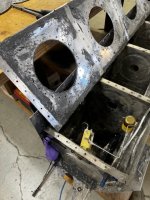
I kept looking at these 2 newly assembled tanks & finally told the owner that there was no way they would leave my hangar in their current condition.
Beside the random rivet leaks on both tanks, I found no sealant under any Z bracket… than I got to second tank… NO sealant on either end rib to baffle, sealant gaps on the baffle/skin flanges, plus same no sealant under any Z bracket.

Just saying- read the instructions… watch any installation videos you can… REASON OUT YOUR TASK AHEAD… & don’t rush!

Now back to tearing that second tank apart
+1 on Scott Daniels Van's video see here...https://www.vansaircraft.com/faq/fuel-tank-construction-tips-and-techniques-video-series/
 
Pictures just don’t do this supposed seal/cleko & rivet later technique process justice…

By the way, if you ever have the misfortune to have to take a tank apart, after drilling out all the rivets, quickest way is use shears to cut ribs in half, apply heat to the joint & gently pry ribs sideways. Sorry, no best practice hints for the messy Polygon sealant removal.
 

Attachments

  • IMG_2259.jpeg
    IMG_2259.jpeg
    138.1 KB · Views: 136
  • IMG_2260.jpeg
    IMG_2260.jpeg
    127.4 KB · Views: 133
  • IMG_2262.jpeg
    IMG_2262.jpeg
    139.7 KB · Views: 135
I was an oddball that found working on the tanks rather enjoyable. I would mix up enough to do one rib at a time. I did everything while in the cradle, and screwed my cradle to my workbench. Wore the same long sleeve shirt for both tanks and threw it away after. Also, I used the technique Scott does in the video for sealing the shop heads, except I used plastic bendy straws. Cut them to a comfortable length and scooped up plenty of sealant into them, they could be squeezed to push a little out while over the head of the rivet to get into all crevices. Also I ground different angles into my popsicle sticks to aid in applying the correct shape fillet.
 
Pictures just don’t do this supposed seal/cleko & rivet later technique process justice…
In all fairness, I don't think anything about the effort put into these tanks should be held up as an argument against any particular technique! 🤣 I riveted one tank wet and one tank with the "dry" proseal method. I found no difference in the amount of squeeze out, the finish of the skins, leaks, etc (but I did find that riveting with the dry method made getting good shop heads much easier and far less stressful). Granted, I not only clecoed things in place, but also used judicious amounts of duct tape and jigs to squeeze the skins tightly against the ribs, then riveted as soon as the proseal skinned over, which meant it was still plenty soft everywhere else to conform/squeeze out). The only leak I had was at one rear baffle corner (riveted the baffles on wet).

For encapsulating the rivet heads, I 3D printed a tube and plunger. I filled the tube with proseal, then placed it over each rivet head and push down on the plunger to fully encapsulate the shop head. A very clean and reliable way of forcing proseal all around the head without going overboard.
 
If it works for you great.

Just pointing out the ominous issues I found in this pair of tanks & I have seen these issues in other tanks in the past. & sad to say, I have repaired many tanks on many different RVs over the last 20 years
 
Probably doesn't matter what technique is used, if the workmanship is poor. +1 (well, +2, as both tanks done this way) on applying sealant, clecoing together and letting set up, then riveting. Careful, neat application of proseal on the shop heads, plus a small dab on the end of the rivet before inserting into the hole before setting. And just generally being observant, neat and careful during construction.

I'd be ashamed if that work in the first set of photos were mine...just sayin'.

12 years, no leaks (knock on wood).
 
I prefer the Fay seal technique and never had a leak. One thing I do though is after the parts are sealed and clecoed, I use a hair dryer to warm up the aluminum which makes the sealant flow better and squeeze out. You can actually watch it squeeze out of the joint as you warm it. I then add more sealant at both sides of the prepared joint and pull the tape off for a clean line. After cure pull the cleco's one at a time and set the rivets covering the shop heads afterwards with sealant, and again, a little heat on those covered shop heads. Minimal mess and EZ to get good rivet sets.
 
Wow! I also am weird. I enjoyed the tanks. Of course, I had a broken leg and it helped take my mind off it. I still like the smell of Proseal. Weird.
I fay sealed. I used 4-40 nuts on 100% clekos. After a short cure, I riveted using a q-tip stick to get sealant in the hole. Then a swirl of proseal on each shop head. Baffle was also fay sealed.
I left the cured tanks on the manometer at 1psi for several weeks. Other than temp fluctuations, they held pressure till I released it.
 
I’d personally start from scratch. And the reason I say that is that you have four new repair holes in the baffle that you have to seal now as well.
 
[Quoted text that has been deleted has been removed from this post; S.Buchanan]

I feel I have to reply. Intent of this thread was to highlight some build flaws so others might not repeat similar mistakes. I wouldn’t label, even comically, a builder for messing up a build step.
I would call/say he is a first time builder trying to do the best he could with the knowledge & resources available to him at the time.
 
Last edited by a moderator:
Yep. How many ways can you bake a pie!?
I like the hair dryer trick, does your wife know you borrow it?
Building 2 Cozy MKIV's and 2 RV's, I've gone through at least 10 so far. Latest one went out on me last week. I don't touch my wife's stuff or else I would have to sleep with both eyes open!
 
Back
Top