Van's Air Force

The definitive Van's Aircraft support community! Buying, building or flying an RV? Join our exclusive family of mentors and enthusiasts!

Oil cooler shutter: Controllable in the cabin or not?

Draker

Well Known Member
Sponsor
Now that the winter is coming, one of my todo lists needs to get done: I'm going to install one of those shutters on my baffle-mounted oil cooler. In the summer, my oil temperature remains between 165F and 185F, which is a little on the cool side, but within Lycoming's desired range. But in the winter, it's between 145F and 165F sometimes getting as low as 130F in cruise. Too cold for oil!

For those of you who have installed a shutter, do you find you need to control it while flying? My current plan is to just run the pull cable over to the oil door, so I can adjust it once in a while when days get cold. I don't think I really need to be playing with it while flying, as long as my temps remain safe. Ideally, I'd just have a "summer" setting (wide open) and "winter" setting, and just adjust it twice a year. Do I really need to make this complicated and run the pull cable through the firewall?

What are your thoughts?
 
I use a butterfly valve for my firewall mounted oil cooler. I find it necessary to adjust it a few times each flight to keep oil temps around 180.

Carl
 
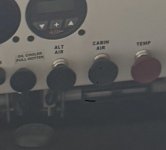
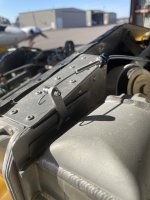
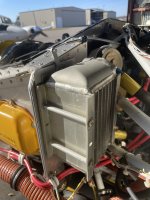
Mine is the anti-splat oil cooler shutter. It uses a Bowden cable that passes through the firewall and mounts on the panel next to the cabin air controls. Pretty simple to install, so my A&P tells me. I use it frequently in flight. The lever on the shutter isn’t reachable through the oil door, so not ground adjustable without removing the upper cowl.
 

Attachments

  • IMG_2059.jpeg
    IMG_2059.jpeg
    156.7 KB · Views: 148
  • IMG_0182.jpeg
    IMG_0182.jpeg
    1.6 MB · Views: 152
  • IMG_0181.jpeg
    IMG_0181.jpeg
    1.6 MB · Views: 152
After years of taking off / putting on a blocker, I went ahead and installed a shutter with a Bowden cable in the cabin. Having it controllable from the cabin means it's no longer an issue if I don't have it set right on takeoff. Yes it was fussy to install the cable but that's soon forgotten and I much prefer having the control when I need it.
 
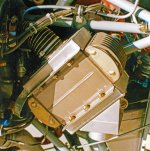
Mine is a flap shutter controlled from the cockpit. My cooler is REALLY efficient and I find I have to block off a lot of the cooling air and use the 'waste gate' to fine-tune the temperature from the cockpit. Bottom line: yes; have control of it from the cockpit. IMHO PS: old picture; the nylon nuts have since been replaced with steel.... 😉

Pictures: the cooler set-up; the intake with my Summer air intake restrictor; the Summer and Winter restrictors.
 

Attachments

  • img709acs5.jpg
    img709acs5.jpg
    749.5 KB · Views: 152
  • img.837.jpg
    img.837.jpg
    97.7 KB · Views: 148
  • img.835.jpg
    img.835.jpg
    15.5 KB · Views: 148
I also have cockpit controllable. In summer with high OAT keep it closed on take off when oil temps are lower to force more cooling air down #4. Open it up once oil temps start rising above 180
 
Low budget? You can do what I did years ago living in Jackson's Hole in their "balmy" winters when it was -40F , simply use a Domino's pizza box to cover the radiator.

 
Low budget? You can do what I did years ago living in Jackson's Hole in their "balmy" winters when it was -40F , simply use a Domino's pizza box to cover the radiator.
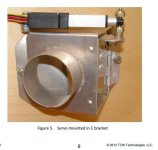
TCW used to make a little servo motor for the oil cooler shutter. Easy adjustments from the cabin. Having seen this on a friends RV10, I was alittle concerned if the servo stuck in the closed position, causing the oil to overheat. I think a manual override, like an emergency push cable wold solve that, but then it seems to override the need for the servo.
 
Non-builder here: I've got the cable running to the cockpit and adjustments occur on most, if not all, flights year round.

Putting in a blocking plate for cold operations would work for my mechanic, but not me! heehee
 
I had the same question. It must be engine/airframe dependent. The parallel valve IO360 in my 8 with the stock oil cooler on the baffle seems to be happy with it all the way open in the summer and taped all the way closed the rest of the time. The OT rises up to the Vernatherm setting and regulates there.
 
TCW used to make a little servo motor for the oil cooler shutter. Easy adjustments from the cabin. Having seen this on a friends RV10, I was alittle concerned if the servo stuck in the closed position, causing the oil to overheat. I think a manual override, like an emergency push cable wold solve that, but then it seems to override the need for the servo.
This. I removed mine after it failed.
I think FWF is no place for those actuators. 2 out of 3 of mine have failed so far.
If you’re going to have a shutter or butterfly I’d strongly recommend making it manual unless you can satisfy yourself that having it fail is not a safety of flight issue.
 
Wow, surprisingly strong support here for running the control cable in to the cabin or panel. Food for thought. Thanks.
The control cable into the cabin is what I have done on all 3 builds. Works great for keeping my oil temp at 185* in summer, although it still won't get there in winter. The only way to go in my opinion.
 
TCW used to make a little servo motor for the oil cooler shutter. Easy adjustments from the cabin. Having seen this on a friends RV10, I was alittle concerned if the servo stuck in the closed position, causing the oil to overheat. I think a manual override, like an emergency push cable wold solve that, but then it seems to override the need for the servo.
While I find that I adjust the oil temp shutter a bit on most flights, it's something that doesn't require much fine-tuning/fiddling during the course of a flight (on my airplane). Controlling the thing from inside the cockpit is very useful and convenient, and Anti-Splat's Bowden cable is simple to route, doesn't require power, and very reliable.
 
This. I removed mine after it failed.
I think FWF is no place for those actuators. 2 out of 3 of mine have failed so far.
If you’re going to have a shutter or butterfly I’d strongly recommend making it manual unless you can satisfy yourself that having it fail is not a safety of flight issue.
Hmmm. I have three of those actuators forward of the firewall and have had zero issue in over 500 hours of Midwest flying. Summer outside temps over 100 degrees.

I wonder what caused your failures..
 
Hmmm. I have three of those actuators forward of the firewall and have had zero issue in over 500 hours of Midwest flying. Summer outside temps over 100 degrees.

I wonder what caused your failures..
Who knows. It’s plenty hot here as well. It shouldn’t come as a surprise. It’s obvious that they are not designed to withstand the heat that they may encounter FWF. There have been many failures.
It’s not so much the failure. It’s that if it fails closed then you may well have a real problem. Cabin heat. Not a big deal. Oil cooler though…
Half a dozen (or even a few dozen) people with no problems isn’t a big enough sample size to change my mind.
 
Who knows. It’s plenty hot here as well. It shouldn’t come as a surprise. It’s obvious that they are not designed to withstand the heat that they may encounter FWF. There have been many failures.
It’s not so much the failure. It’s that if it fails closed then you may well have a real problem. Cabin heat. Not a big deal. Oil cooler though…
Half a dozen (or even a few dozen) people with no problems isn’t a big enough sample size to change my mind.
Not really trying to change your mind, just adding a data point.
 
I have the antisplat shutter on my cooler. I do not have a cable attached. My problem is getting the oil hot enough- especially in the winter. I will have my cowl off tomorrow and will maybe install the cable I have to the oil filler door but dont think I need it in the cabin. The hottest recorded oil temp I have ever had was 184. Most flights even in summer age about 145 to 165. I do have a 90 degree oil filter adapter and the sensor is a little further from the engine than standard but the oil still runs cold. I keep a dehumidifier on my engine 24/7 and keep the moisture at 15% or less. When I get back from a flight you can see the moisture coming out of the dipstick in the clear tube going to the dehumidifier so it is getting hot enough to vaporize the water in the oil.
 
Whatever the reliability of the TCW actuator, it's a serious missed opportunity for closed-loop computerized oil temperature control. I have one on my plane (I didn't build) and IMO the only reason to make such a thing electrically-actuated is if there's a control algorithm working it. The way it's setup now, I don't see why not a simple cable instead.
 
Whatever the reliability of the TCW actuator, it's a serious missed opportunity for closed-loop computerized oil temperature control. I have one on my plane (I didn't build) and IMO the only reason to make such a thing electrically-actuated is if there's a control algorithm working it. The way it's setup now, I don't see why not a simple cable instead.
See, that’s the great thing about experimental aviation, you can do what you want…and so can everyone else.
 
See, that’s the great thing about experimental aviation, you can do what you want…and so can everyone else.
I could probably figure out how to program an arduino board and implement a rudimentary control algorithm, but it's not worth the time or effort to me. I'll keep it as a manually-controlled potentiometer until it fails and either replace the failed actuator or consider a manual cable.
 
Wow, surprisingly strong support here for running the control cable in to the cabin or panel. Food for thought. Thanks.

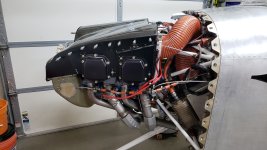
For what it's worth, I put the butterfly right in the hole in the #4 baffle. You can see the control in the photo. Bowden cable to the cockpit.
 

Attachments

  • 20230422_161106.jpg
    20230422_161106.jpg
    2.7 MB · Views: 102
Whatever the reliability of the TCW actuator, it's a serious missed opportunity for closed-loop computerized oil temperature control. I have one on my plane (I didn't build) and IMO the only reason to make such a thing electrically-actuated is if there's a control algorithm working it. The way it's setup now, I don't see why not a simple cable instead.
Entirely true to the spirit of Experimental Aviation and no doubt a fun project but would provide substantially more precision and more complexity than I need/want given the broad temperature target (165° - 220°).
 
I have cable to cockpit with knob under panel but reachable strapped into pilot seat. Typically never adjust in flight with summer full open and winter full closed. Oil temps always in green. Never need to make adjustment in the summer. Here in the lower midwest we can have hot days in the middle of January so having the easy access for adjustment can be useful.
 
I also installed the Antisplat oil cooler shutter with a cable control from the cockpit. I use it year around to maintain the 180 degree oil temp target.
I shoot for about 180° too but don’t obsess over it. Plus/minus 15° works fine for me too. Even with the relatively broad temperature swings that we can occasionally see here, season-to-season, day-to-day, even morning/afternoon, it doesn’t require very much attention to maintain that target.
 
This. I removed mine after it failed.
I think FWF is no place for those actuators. 2 out of 3 of mine have failed so far.
If you’re going to have a shutter or butterfly I’d strongly recommend making it manual unless you can satisfy yourself that having it fail is not a safety of flight issue.
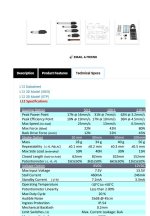
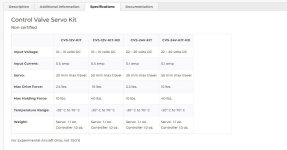
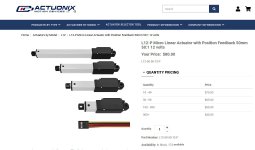
Not going to debate the rhetoric but TCW rates their system for 70 C (158 F) yet the producer of the servo (Actuonix) rates the servo at 50 C (122 F). 122 F is marginal FWF and depends exactly where located. Mine failed FWF and now only use on the ground. If anyone has data please post, 36 F diff is not insignificance. I agree with Richard. TCW should help us understand how they can state this, failure of an oil cooler door could be catastrophic.
 

Attachments

  • Screenshot 2024-11-07 231624.jpg
    Screenshot 2024-11-07 231624.jpg
    101.2 KB · Views: 31
  • Screenshot 2024-11-07 230719.jpg
    Screenshot 2024-11-07 230719.jpg
    37.5 KB · Views: 36
  • Screenshot 2024-11-07 232919.jpg
    Screenshot 2024-11-07 232919.jpg
    58.5 KB · Views: 29
  • Screenshot 2024-11-07 235126.jpg
    Screenshot 2024-11-07 235126.jpg
    77.2 KB · Views: 28
  • Screenshot 2024-11-07 234923.jpg
    Screenshot 2024-11-07 234923.jpg
    43.7 KB · Views: 31
Last edited:
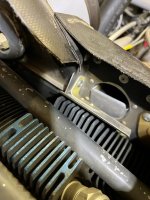
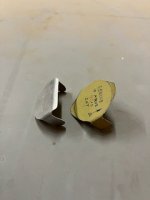
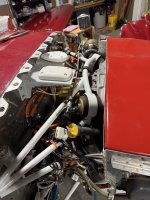
Update. I put an AS shutter control cable on last week. It is accessible at the oil filler door. It is closed for the winter for me and it worked as desired. I was able to get my oil temp up to about 160 and that is pretty high for my system. Here are a couple pics of how I installed it.
 

Attachments

  • IMG_7913.jpeg
    IMG_7913.jpeg
    2.5 MB · Views: 74
  • IMG_7910.jpeg
    IMG_7910.jpeg
    2.2 MB · Views: 73
Update. I put an AS shutter control cable on last week. It is accessible at the oil filler door. It is closed for the winter for me and it worked as desired. I was able to get my oil temp up to about 160 and that is pretty high for my system. Here are a couple pics of how I installed it.
Methinks that your OT would get even higher if the gate was installed on the front side of the filter.
 
Totally agree with Brian. Mounting on the back side still allows cold air moving through the cowling to cool the front face of the oil cooler.
 
Methinks that your OT would get even higher if the gate was installed on the front side of the filter.
I agree. So tempting because the backside of the oil cooler is an easier mount, but I found that that location was substantially less effective. The coils are still exposed to the cooler air in the plenum.
 
You may be correct on mounting it on the inside. I did first try sealing it off on the inside with a piece of aluminum and it didn’t make much of a difference on my system than just having the shutter on the back so I removed it. I have a 90 degree oil filter adapter and my sensor is a little further away than most so that could cause a lower reading.

I will try it this season as is and see how it goes. My cylinder temps are great and very even so I’m not sure I want to make changes. I use a dehydrator on my engine and vapor does show in the tube after I go for a flight so I’m satisfied with the engine and oil temps. Now I just need to get more heat into the cabin!
 
You may be correct on mounting it on the inside. I did first try sealing it off on the inside with a piece of aluminum and it didn’t make much of a difference on my system than just having the shutter on the back so I removed it. I have a 90 degree oil filter adapter and my sensor is a little further away than most so that could cause a lower reading.

I will try it this season as is and see how it goes. My cylinder temps are great and very even so I’m not sure I want to make changes. I use a dehydrator on my engine and vapor does show in the tube after I go for a flight so I’m satisfied with the engine and oil temps. Now I just need to get more heat into the cabin!
I tried mounting it on the backside too, but that didn't work as well, for me, as I'd hoped. Every airplane cools the oil a bit differently, I guess, so if it meets your needs, I sure leave it. Mounting it between my plenum and the oil cooler was a bit of a nuisance as we had to bend/pound some flanges flat so it would sit flush against the plenum, as well as get some slightly longer bolts.
 
Whatever the reliability of the TCW actuator, it's a serious missed opportunity for closed-loop computerized oil temperature control. I have one on my plane (I didn't build) and IMO the only reason to make such a thing electrically-actuated is if there's a control algorithm working it. The way it's setup now, I don't see why not a simple cable instead.
I think I’d want a cable backup anyway (I’ve made enough mistakes tuning thermal control loops in my day job to not want to risk a $$$ engine on it), at least at first. Then again, I’m not really a controls guy, I just pretend to be when controls guys aren’t around, so YMMV.
 
Back
Top