Van's Air Force

The definitive Van's Aircraft support community! Buying, building or flying an RV? Join our exclusive family of mentors and enthusiasts!

Nyloc nut on drilled bolt?

PaulvS

Well Known Member
Patron
The plans for RV-6/7/9 call for the elevator bellcrank to be mounted on an undrilled AN4-25A bolt using an AN365-428 lock nut.

The bolt that was shipped with my kit in bag 660 is however drilled shank AN4-25 and I never picked up the discrepancy until now during final assembly.

Does anyone know for sure if it is acceptable to use a drilled bolt with a nyloc nut?

Out of "abundance of caution" I've ordered a replacement (undrilled) bolt but am curious (for learning) whether the bolt that was supplied could have been used anyway.
 
Last edited:
Maybe :)

That bolt/nut is loaded in shear, so if the hole is clear of the plastic in the nut, there shouldn't be reduction of the nuts ability to resist turning. Ergo, fine to use. If the hole is somehow buried in the plastic, well...hmmm...I'd consider an alternative; Change out the -416 washer to a -416L to position the hole farther out, or go for a longer AN4 bolt and add a couple of washers to the stack-up.
 
Last edited:
Back in the day when I maintained puddle jumpers for a flight school, the FAA PMI would have spanked me silly for installing a nyloc nut on a drilled bolt. With that said, I believe it's ok if th nylon lock ring is not on the drilled hole.
 
Or use a castleated nut and cotter pin. It won't get loose or come off. Just sayin.
Agreed that would be another option to use the supplied drilled bolt and buy the extra AN310 castle nut instead. For interest, the undrilled repacement bolt is $2.07 whereas the castle nut is $3.85 (so I went down the path of ordering the bolt). ;)
 
If you want a “perfect” install, you will need to insure the bell crank to rod end interface allows for proper torque on that nut. This may involve shimming the bolt between the bell crank and rod end.
You could get lucky with a casleated nut, but it may be under or over torqued.
Is that a big deal? Depends on who you ask.
 
After reading all the recent accidents where screws and nuts backed out, I am inclined to replace all the nuts in the control connections to castle nuts where it is possible. I use the torque seal to indicate the nuts don't back out. So far at every preflight, the nuts that I could see haven't back out. But having a castle nut secured with a cotter pin will add a bit of safety. Just something I am thinking about.
 
After reading all the recent accidents where screws and nuts backed out, I am inclined to replace all the nuts in the control connections to castle nuts where it is possible. I use the torque seal to indicate the nuts don't back out. So far at every preflight, the nuts that I could see haven't back out. But having a castle nut secured with a cotter pin will add a bit of safety. Just something I am thinking about.
Over 11,000 RV’s flying and I have never heard of a nyloc backing off and causing an accident. Perhaps I missed something.
Before I made that switch, I would want to know from Vans why they choose this over other methods. Perhaps there is a not so obvious reason.
You will have a couple dozen at least to change out.
 
I'm sure I'll get flamed, but all my controls, servos & surfaces are installed with drilled bolts and MS17825 nuts.
It's not easy because setting torque involes swapping washers till the torque is correct when the hole aligns. Upside is nothing will come apart.
 
Now you have me nervous....Better check that bolt, make sure it's not drilled. I haven't tightened yet, But?
 
I'm sure I'll get flamed, but all my controls, servos & surfaces are installed with drilled bolts and MS17825 nuts.
It's not easy because setting torque involes swapping washers till the torque is correct when the hole aligns. Upside is nothing will come apart.
Certainly not flaming you. It’s your airplane and from what I have seen you post, it will be a fine example. You do have to finish it though ;)
I am not a fan of re-engineering systems that have hundreds of thousands of flight hours. It also takes quite a bit more time and some mechanical inclination to do it right.
Where do you start, and where do you stop? If you don’t trust Vans engineering, you’re building the wrong airplane!
 
I'm sure I'll get flamed, but all my controls, servos & surfaces are installed with drilled bolts and MS17825 nuts.
It's not easy because setting torque involes swapping washers till the torque is correct when the hole aligns. Upside is nothing will come apart.
I make it a habit of checking how the control connections are assembled on different airplanes when I visit airshows, or other fly in events. I noticed that most European airplanes that I saw use castle nuts. Even on gliders where the fasteners aren't connected to the rotating control, they use castle nuts. So if the nuts are exposed, they use castle nuts. I see lock nuts on most American airplanes, even the fast ones like Bonanza. Of course this isn't a comprehensive list, just something I observed after I started building my current airplane.
 
I make it a habit of checking how the control connections are assembled on different airplanes when I visit airshows, or other fly in events. I noticed that most European airplanes that I saw use castle nuts. Even on gliders where the fasteners aren't connected to the rotating control, they use castle nuts. So if the nuts are exposed, they use castle nuts. I see lock nuts on most American airplanes, even the fast ones like Bonanza. Of course this isn't a comprehensive list, just something I observed after I started building my current airplane.
You won’t find a single nyloc on the Bucker. All castle nuts. Could be it was engineered in the 1930’s.
Interesting observation.
 
Guys….if the bolt/nut is CLAMPING a Heim bearing between a yoke, a nylon nut gives you the correct torque, and that is how you shoudl build it - the way Van’s design it. If you have a bolt that is subject to rotation (Van’s rudder cable bolts/nuts for instance), then you use a drilled bolt and caste nut. Please do NOT advocate a change to ay design without engineering rationale - the rookies won’t know if the advice is god or bad!
 
Guys….if the bolt/nut is CLAMPING a Heim bearing between a yoke, a nylon nut gives you the correct torque, and that is how you shoudl build it - the way Van’s design it. If you have a bolt that is subject to rotation (Van’s rudder cable bolts/nuts for instance), then you use a drilled bolt and caste nut. Please do NOT advocate a change to ay design without engineering rationale - the rookies won’t know if the advice is god or bad!
Totally agree but that's only the beginning of the story. The application of this fastener combo is both safe and proven. Potential issues, while not limited to this specific subject application, shifts to maintenance and inspection. A seized bearing will subject the associated fasteners to rotation(al force). There have been related incidents reported and probably many more findings that never got mention. Because we are all probably used to dealing with well maintained aircraft, the idea of a frozen bearing is probably foreign. Talk to some people with experience in the GA fleet and you'd probably never fly in anything where you didn't know it's maintainer/inspector.

My worthless $0.02 today.
 
Certainly not flaming you. It’s your airplane and from what I have seen you post, it will be a fine example. You do have to finish it though ;)
I am not a fan of re-engineering systems that have hundreds of thousands of flight hours. It also takes quite a bit more time and some mechanical inclination to do it right.
Where do you start, and where do you stop? If you don’t trust Vans engineering, you’re building the wrong airplane!
Who said it's not finished. AWC pending appointment. I just don't post much because...
 
Freemasm is correct (post#15) the majority of GA aircraft AP/IA mechanics repair and/or inspect are 30yrs+ in age. I understand this is an RV forum and many have been flying as many years. Yes the nylon lock ring is sufficient, but if the bolt seizes for any reason, the pinned castle nut guarantees the fastener is secure
 
A seized bearing in a properly clamped bearing assy would prevent the surface from moving.
 
Freemasm is correct (post#15) the majority of GA aircraft AP/IA mechanics repair and/or inspect are 30yrs+ in age. I understand this is an RV forum and many have been flying as many years. Yes the nylon lock ring is sufficient, but if the bolt seizes for any reason, the pinned castle nut guarantees the fastener is secure
Yes…but any A&P/IA knows that they can’t just substitute different parts than are specified for the design (or in teh Type Certificate if certified) because they have a better idea. You can do whatever you want with your own planes, but this is a public forum with lots of new folks coming along and soaking up information - they need to know I what is fact, and what is opinion. It is FACT that Van’s specifies nylon lock nuts for Heim Joint hinge spots.
 
Totally agree but that's only the beginning of the story. The application of this fastener combo is both safe and proven. Potential issues, while not limited to this specific subject application, shifts to maintenance and inspection. A seized bearing will subject the associated fasteners to rotation(al force). There have been related incidents reported and probably many more findings that never got mention. Because we are all probably used to dealing with well maintained aircraft, the idea of a frozen bearing is probably foreign. Talk to some people with experience in the GA fleet and you'd probably never fly in anything where you didn't know it's maintainer/inspector.

My worthless $0.02 today.
In the case of a seized bearing, the locknut will only loosen to the point that the bearing assembly and bolt can freely rotate, IF someone applies enough stick foce to get it to move. After that, the nylon is more than adequate to hold. This is why the guidelines call for a thread or two past the nylon. If the bolt is captive and there is rotational force, that is different.d

Lets take an example with a WHOLE lot more force involved. My 4500# sedan has struts that must support 1000’s of pounds. No upper control arm (strut carries the side loading). That strut has a nylon locknut holding it on to the frame. Steering the vehicle involves rotating the strut back and forth constantly. Been done this way for decades and they never loosen and often they aren’t torqued much as they are just compressing rubber.
 
Last edited:
Yes…but any A&P/IA knows that they can’t just substitute different parts than are specified for the design (or in teh Type Certificate if certified) because they have a better idea. You can do whatever you want with your own planes, but this is a public forum with lots of new folks coming along and soaking up information - they need to know I what is fact, and what is opinion. It is FACT that Van’s specifies nylon lock nuts for Heim Joint hinge spots.
A recent encounter with a new RV owner…

He asked a couple of us Older Types whether it was acceptable for the two elevators on his aircraft to be able to move independently of each other. There was enough slop that the aircraft was oscillating gently in cruise. Eyebrows were accordingly raised.

Investigation revealed that the bolt connecting the pushrod to the two control horns had at some stage been fitted with a castellated nut and split pin. As Paul points out, this meant that the rod end bearing was not captured between the two horns and the whole assembly was free to move about.

We were quick to source a nylock nut, and torque it suitably to get him home. But that wasn’t the end of the problem, because the continued movement had enlarged the holes in the horns so the bolt was no longer a tight fit. The ultimate fix, urgently needed, will be to have the holes welded and re-drilled, or to try finding a larger rod end and take the holes up to the new size. None of this will be trivial, and all because of a single AN3 nut incorrectly chosen.
 
After reading all the recent accidents where screws and nuts backed out, I am inclined to replace all the nuts in the control connections to castle nuts where it is possible. I use the torque seal to indicate the nuts don't back out. So far at every preflight, the nuts that I could see haven't back out. But having a castle nut secured with a cotter pin will add a bit of safety. Just something I am thinking about.
G'day PhatRV,

after first flight of our RV-7 in 2011, the after flight check revealed that the bolts securing the main landing gear, and the two bolts securing the tail sting to the tail wheel fuselage mount, (all four bolts/nylocs) had loosened, but the torque seal remained intact on all four.

A search of old VAF posts at the time revealed that bolts do stretch, and that torque seal should be used only to indicate that the nut/bolt had been properly secured to within the correct torque range.

So I continue my habit of checking the security of all accessible nuts/bolts/flight controls during each preflight, and an end to end check of all control runs at each periodic inspection. Nothing found since, but I keep checking.

Regards

Bob Redman
 
G'day PhatRV,

after first flight of our RV-7 in 2011, the after flight check revealed that the bolts securing the main landing gear, and the two bolts securing the tail sting to the tail wheel fuselage mount, (all four bolts/nylocs) had loosened, but the torque seal remained intact on all four.

A search of old VAF posts at the time revealed that bolts do stretch, and that torque seal should be used only to indicate that the nut/bolt had been properly secured to within the correct torque range.

So I continue my habit of checking the security of all accessible nuts/bolts/flight controls during each preflight, and an end to end check of all control runs at each periodic inspection. Nothing found since, but I keep checking.

Regards

Bob Redman

I have seen torque seal stay on the nut and end of the exposed threads of the bolt as I was loosening it off. To your point torque seal is not always an indication of a bolt and nut being tight.
 
I do that all the time. If that little hole is such a worry then there’d be dead bodies scattered all over the countryside! Don’t over think it, your choice though!
 
A seized bearing in a properly clamped bearing assy would prevent the surface from moving.
Yes…but any A&P/IA knows that they can’t just substitute different parts than are specified for the design (or in teh Type Certificate if certified) because they have a better idea. You can do whatever you want with your own planes, but this is a public forum with lots of new folks coming along and soaking up information - they need to know I what is fact, and what is opinion. It is FACT that Van’s specifies nylon lock nuts for Heim Joint hinge spots.
@Walt Absolutely true, Sir but this assumes everything was done correctly initially and in all subsequent maintenance. If my relatively limited experience had witnessed such, i would have been sure yours would have as well. Would have lost that bet.

@Ironflight Don't believe anyone was advocating and sticking with the plans is always smart. Not a debate; I know most of the cert world's TCs are pretty ancient but you'll still find the vast majority using castle nuts. Not right or wrong but many of those AP/IAs look at the subject Vans approach and shake their heads.
 
.....A search of old VAF posts at the time revealed that bolts do stretch, and that torque seal should be used only to indicate that the nut/bolt had been properly secured to within the correct torque range.....

No Sir. That would mean the fastener material was torqued/loaded into its plastic range which would be significant. It would also probably mean the fastener was in tension vs shear which would be the small minority of our installs. In rare instances where significant load was applied for a very long time, the material could creep but that wouldn't be the case here. If a threaded fastener loses its preload, first suspicion falls on an installation issue. second would be the materials in the stack.

Remember that fastener (counter) torque is only an indication. Thread condition, thread cleanliness, proper technique, etc. are all important to achieve proper preload in a non-engineered joint.
 
Yes…but any A&P/IA knows that they can’t just substitute different parts than are specified for the design (or in the Type Certificate if certified) because they have a better idea.
Just a bit of clarification here, certified aircraft 'Type Certificates' (TC's) don't in any way specify hardware!
Those things are referenced in applicable maintenance and parts manuals.
43.13 is the general reference used for hardware substitution.
 
I have seen torque seal stay on the nut and end of the exposed threads of the bolt as I was loosening it off. To your point torque seal is not always an indication of a bolt and nut being tight.
It's not the point of it being tight. It's to ensure I will see when the nut has backed out. Of course, putting a wrench on the bolts and nuts is done at every inspection, when it is a regular locknut or castle nut. Yes I have found that bolts and nuts needed additional torque during the more frequent phase 1 inspections and less so now it has accumulated more hours.
 
A recent encounter with a new RV owner…

He asked a couple of us Older Types whether it was acceptable for the two elevators on his aircraft to be able to move independently of each other. There was enough slop that the aircraft was oscillating gently in cruise. Eyebrows were accordingly raised.

Investigation revealed that the bolt connecting the pushrod to the two control horns had at some stage been fitted with a castellated nut and split pin. As Paul points out, this meant that the rod end bearing was not captured between the two horns and the whole assembly was free to move about.

We were quick to source a nylock nut, and torque it suitably to get him home. But that wasn’t the end of the problem, because the continued movement had enlarged the holes in the horns so the bolt was no longer a tight fit. The ultimate fix, urgently needed, will be to have the holes welded and re-drilled, or to try finding a larger rod end and take the holes up to the new size. None of this will be trivial, and all because of a single AN3 nut incorrectly chosen.
A great story to make the point, though sorry to hear it happened to you.. If you want the fastener to freely move around, like the rudder cable attach point's at rudder and pedals, castle nuts are great. If you need the fastner properly torqued, like heim bearings, you typically want lock nuts. If there is a fear of loosening, there are stronger versions, though rarely required. Trying to out think the engineers to make things safer often backfires.

There are places where castle nuts on torqued fasteners are required, but that doesn’t mean we should strive to put them where they are not necessary, as getting proper torque on them is very difficult. Typically they end up either under torqued or over torqued and this creates more problems than those trying to address.
 
Last edited:
seems to me that if torque seal is not absolutely 100% reliable then it is worthless and better not to use it.
Its purpose is as an indicator that it was torqued. I think torque “seal” is a bad product description. It doesn’t seal anything and isn’t even a very good indicator that the fastener moved either as others noted.
I use it to mark that I torqued it, at one point in time, for what that’s worth.
 
Its purpose is as an indicator that it was torqued. I think torque “seal” is a bad product description. It doesn’t seal anything and isn’t even a very good indicator that the fastener moved either as others noted.
I use it to mark that I torqued it, at one point in time, for what that’s worth.
This is the same reason I use torque seal on the jamnuts. During pre-flight, I can see if the jamnuts on the tail control links are still in place. In theory, when properly torqued, the jamnuts should not move. But at night, or low light, it's much easier to see when the torque seal rather than checking the gaps by eye. I do this for all the jamnuts on the airplane, from the aileron control rods, elevator torque rod, engine control cable ends, etc. So far after 1 1/2 year of flying, I have not had a jamnut coming loose but the torque seals let me check them easier.
 
I have seen torque seal stay on the nut and end of the exposed threads of the bolt as I was loosening it off. To your point torque seal is not always an indication of a bolt and nut being tight.
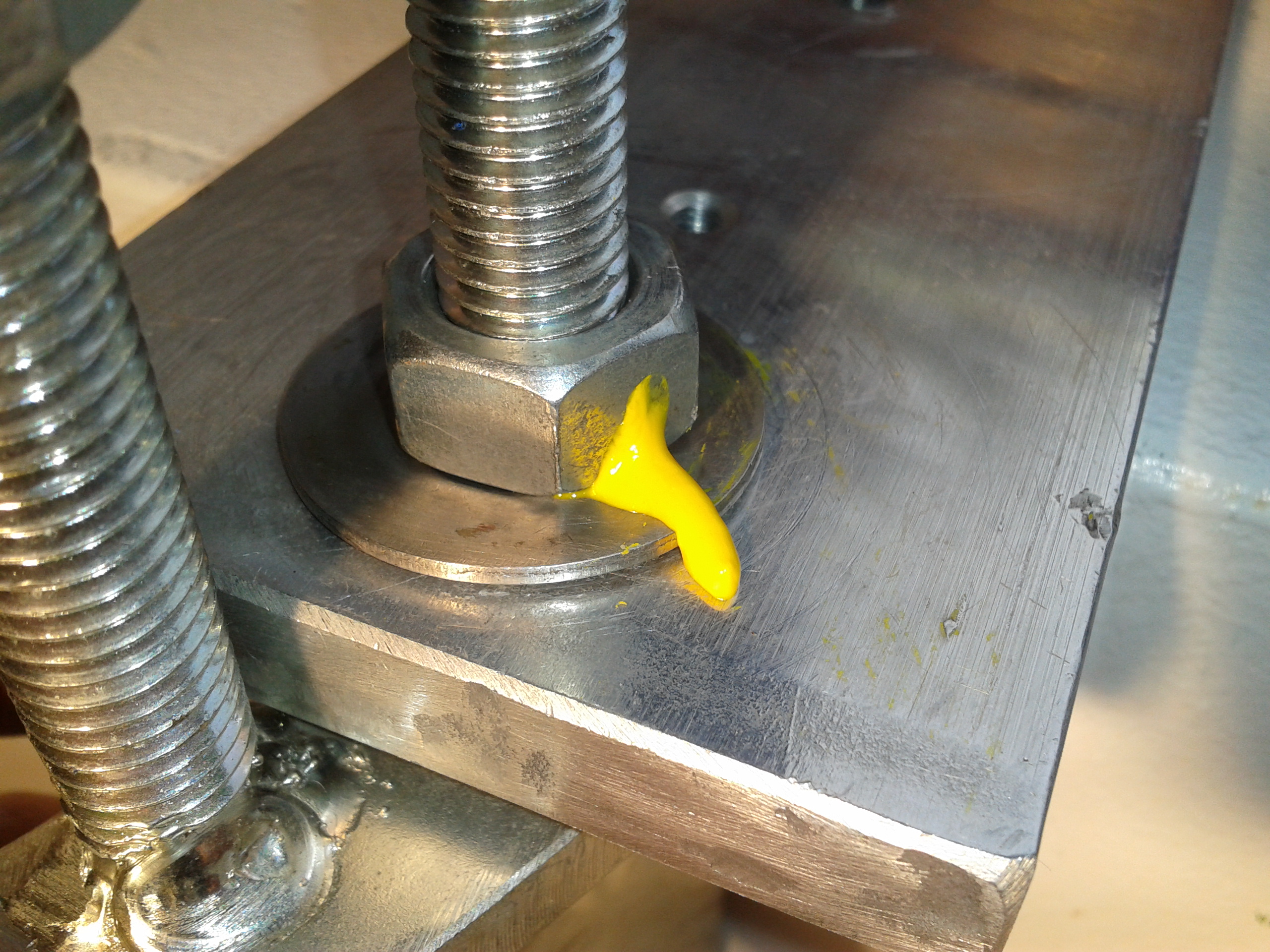
At the risk of taking some heat, I'll chime in. If you're putting torque seal on the THREADS, you're doing it wrong. Torque seal goes on the nut, the underlying washer and the thing being bolted together, NOT the threads. Like this:

2012-07-25-10-17-30.jpg
 
My humble opinion: every AP/IA knows designers/manufacturers strive to do their best but sometimes improvements are required (SB's & AD's).. Pinned Castle nuts are more secure than nyloc nuts. I have complied with more than one AD by installing a pinned castle nut. Two examples are gear scissors and control horns.. In regards to torque seal, my belief is it is a visual indicator only.
 
Back
Top