Van's Air Force

The definitive Van's Aircraft support community! Buying, building or flying an RV? Join our exclusive family of mentors and enthusiasts!

Not an Axis, hear the difference with a CQ Headset

scard

Well Known Member
Advertiser
Garmin sure setup for quite the day of announcements that many of us tuned in for. In order to hear those fancy audio alerts, we all need to plug in. For so many of us, that means a CQ Headset. The difference is clear, but has to be experienced.

For a decade we've been pushing forward with continuous improvement in product and delivery, accelerating into other markets (non-experimental) , especially in the last four years, with headsets flying every major carrier around the globe. Our innovation continues quietly.

If you're just hearing about the CQ Headset, it is because the marketing department is out to lunch. Just the way I like it.

If you're at OSH '26, we'll be at a certain back yard just off the field with a beer in hand on Monday, ready to talk headsets with no sales pitch.

Cheers,
Scott
CMW_Ad1.jpg
 
I purchased a used CQ here on VAF a short while ago. Only have half a dozen flights on them so far but they are great. I did not expect them to be as quiet as my Zulu 3"s but was very surprised to find they are actually quieter. I have found them very comfortable with very clear audible. My only complaint is that the mic tends to move out of position for me as the tube is a little long for my head. Just a minor inconvenience. My Zulu's are relegated to passenger use now.
 
I have been using this headset in the RV4 for a number of years now. I have extra large ear canals so I modified the foam to work better in my ears. I have two issues that I have found solutions for - 1. They need to "breath" when not in use, don't store them in a zip lock plastic bag. Moisture collects in the tubes if you do. 2. The mic position tend to rotate out of place which results in a fading transmit volume. People were having a difficult time hearing me. I finally figured out what was happening and marked the correct position on the outside of the mic tube with two dots of paint. Now I can check position easily. I really like the set - I can wear any wide brim hat in the summer or stocking hat in the winter, they are much cooler in the summer, no head clamp headaches, and no batteries to deal with.
 
A couple of quick questions after reviewing the web site;

Does the headset have noise reduction?

Also, anyone have any experience using the CQ in a cub?

I really like the idea but my main ride (for now) is a loud cub.
 
It's amazing the growth you guys have experienced with little to no mass market advertising. Word of mouth is way more valuable than some random advertisement, and I think that speaks to the quality of your product. I tell anybody that'll listen that it's the best headset I've ever used. I wear mine in my cub, my RV, and my jet day job, and the headset is equally at home in any of those environments.

It's amazing to me that I used to think Bose had cornered the market on comfort and quality. Now, any flight longer than about 15 minutes, and I have to have my CQ-1. When I ride as a passenger occasionally and wear one of the high-end ANR sets, I can't believe the clamping force that is considered "light". I guess when you get used to zero clamping force, anything after that is bothersome!

Keep up the great work, and I will keep shouting from the mountain tops anytime the subject of headsets comes up. Just go buy a CQ-1!
 
A couple of quick questions after reviewing the web site;

Does the headset have noise reduction?

Also, anyone have any experience using the CQ in a cub?

I really like the idea but my main ride (for now) is a loud cub.
This is a totally PASSIVE headset, NOT an Active Noise Reduction (ANR) headset.
With this having been said, it would help to understand the noise reduction available via this style of in-ear headset. And the answer to that question is "fantastic" - often better than ANY ANR headset. And all while not clamping the old melon.

By the way, not to insult, but your Cub isn't loud. Sit behind a thousand or more pounding ponies and your Cub will sound more like a quiet meowl.

Yes, there are lots of Cub drivers flying with in-ear headsets, so much so that at least two of the current manufacturers offer their headsets in "Cub Yellow" color!

Please do your research and make an informed decision. The current crop of in-ear headsets are excellent and very well suited for most GA cockpits in terms of providing hearing protection. The CQ does this while also offering excellent comfort. No more hot head band, no more squished melon. No more sweat under the ear cushions. BUT there's a big down-side with in-ear headsets. I can guarantee that, at some point, you'll try to exit the cockpit with the headset still on your head. Yup, they are that "set and forget" comfortable. (Yes, I've done this, hence the words of warning in advance!)

For reference, I've been flying with a broad assortment of headsets in my personal fleet of airplanes as well as in other aircraft for a whole bunch of years and still have excellent hearing. As an avionics guy I also assess headsets on a different level than most users because I'm also looking at them from a purely technical performance perspective as well as from a durability/maintainability perspective. That's why my over-the-ear ANRs are David Clark One-X units and I also fly with in-ear headsets (haven't yet sprung for CQ's - but have tried them out and love 'em!).
 
A couple of quick questions after reviewing the web site;

Does the headset have noise reduction?

Also, anyone have any experience using the CQ in a cub?

I really like the idea but my main ride (for now) is a loud cub.

Hey Aero,

I don’t have a cq but use the halo, which is the original in-ear setup, but I can answer your question:

They are quieter than an over the ear anr headset. The reason is physics. The best way to deaden sound is to prevent acoustic waves from reaching your eardrum. The classic over the ear headset did this by making a seal around your ear, but the seal is only so good without the headset clamping your noodle. ANR works by pumping in some audio that is inverse of the noise which cancels out the sound waves, but it’s not perfect and still very much depends on the seal around your ears.

A good way to test this is to use your hands to push the cups into your head. Notice how much quieter it gets? Also notice how uncomfortable that would be?

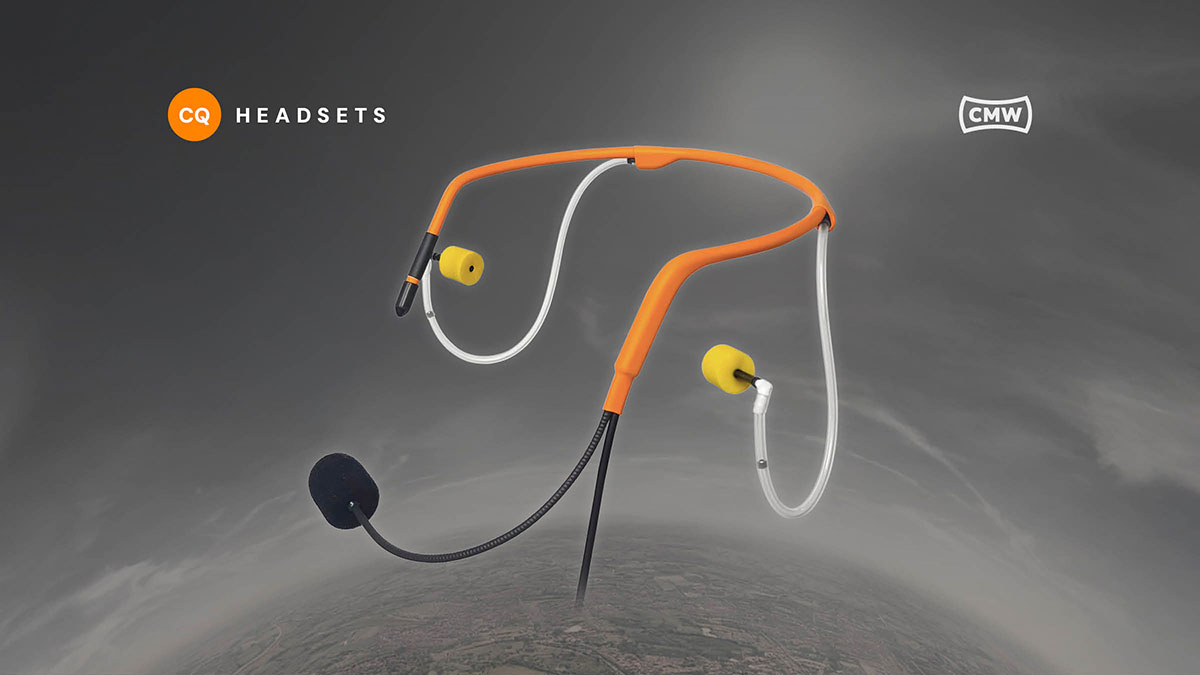
Now the in ear headsets have a very effective seal that completely fills your ear canal with a foam that molds itself. They are basically the same as having a very tight seal. The audio gets in with little tubes that plumb the audio directly into your ear without compromising the seal.
 
Hey Aero,

I don’t have a cq but use the halo, which is the original in-ear setup, but I can answer your question:

They are quieter than an over the ear anr headset. The reason is physics. The best way to deaden sound is to prevent acoustic waves from reaching your eardrum. The classic over the ear headset did this by making a seal around your ear, but the seal is only so good without the headset clamping your noodle. ANR works by pumping in some audio that is inverse of the noise which cancels out the sound waves, but it’s not perfect and still very much depends on the seal around your ears.

A good way to test this is to use your hands to push the cups into your head. Notice how much quieter it gets? Also notice how uncomfortable that would be?

Now the in ear headsets have a very effective seal that completely fills your ear canal with a foam that molds itself. They are basically the same as having a very tight seal. The audio gets in with little tubes that plumb the audio directly into your ear without compromising the seal.

"Nothing beats a very tight seal." - The Walrus

🤣
 
A couple of quick questions after reviewing the web site;

Does the headset have noise reduction?

Also, anyone have any experience using the CQ in a cub?

I really like the idea but my main ride (for now) is a loud cub.
Dan,
I use my CQ headset in my Wittman Tailwind and it is my "go to" headset. I take lots of long distance (1500-3000 mile) trips and it works great. It is one of the earlier ones and I think they have made enhancements since then. My ear canals are smaller than normal and I had always been uncomfortable trying to wear anything that I had to insert in my ear. I found and now use the beige colored "pediatric" size inserts and am totally comfortable during those long trips.
Keith
 
Pilots love their ANR clamp headsets, and I used to love mine — but if you can tolerate foam earplugs, you really owe it to yourself to try in-ear. I’m firmly convinced that it’s a better mousetrap. Now let’s talk about the 430W and the EIS 4000… 🤣
 
Pilots love their ANR clamp headsets, and I used to love mine — but if you can tolerate foam earplugs, you really owe it to yourself to try in-ear. I’m firmly convinced that it’s a better mousetrap. Now let’s talk about the 430W and the EIS 4000… 🤣

Something about cold-dead fingers.. ;)

In ear is great; No pressure induced headaches or hot spots, NRR is better, and there're no batteries or ships power to worry about. I've been using Clarity Aloft since 2009. The weak spot in the Clarity Aloft is the fragility of the wire to the in ear speakers/drivers. @scard Scott's design eliminates that problem.

However, I found the routing of the main cable, which is adjacent to the microphone boom, to be problematic; it pulls on my face/jaw when I turn my head to the left (left side mic boom). A version of the CQ-1 with the cable in the middle of the band between the drivers and angled down (left or right) would be great.
 
Last edited:
Something about cold-dead fingers.. ;)

In ear is great; No pressure induces headaches or hot spots, NRR is better, and there's no batteries or ships power to worry about. I've been using Clarity Aloft since 2009. The weak spot in the Clarity Aloft is the fragility of the wire to the in ear speakers/drivers. @scard Scott's design eliminates that problem.

However, I found the routing of the main cable, which is adjacent to the microphone boom, to be problematic; it pulls on my face/jaw when I turn my head to the left (left side mic boom). A version of the CQ-1 with the cable in the middle of the band between the drivers and angled down (left or right) would be great.
I had the same problem and found that strategic use of the supplied lapel clip is very helpful. I suspend a little service loop by clipping it to the pull strap on my Hooker (don’t quote that line…).
 
I love in ear for good seal and quietness. But I also love the ease of over the head muff style

Normally with in ear I can twist freely, curious how this happens on a headset

Video?
 
I love in ear for good seal and quietness. But I also love the ease of over the head muff style
That’s a good point. I do think if I were “donning and doffing” the headset a lot (think CFI) the old school clamp headset would have some advantages. I mostly do longer flights and for that, in ear is the shizzle.
 
Back
Top