I am reposting this valuable information from a thread I started a while back. We spent alot of time and effort troubleshooting a generator A failure. The faulure would occur under the following conditions:
At ~4000 RPM:
The fault would NOT occur if:
We swapped the following components with another aircraft to rule them out:
With no change, attention turned to the engine wiring harness. Initial continuity checks were normal.
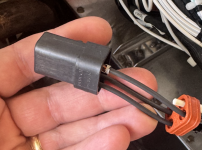
We then removed the rear seal from the Generator A Deutsch connector and found that one of the three phase wires was not fully seated from the factory. Although it showed continuity on a multimeter, the terminal would intermittently open under load and vibration.
After properly seating the terminal, all faults were eliminated.
Lesson learned:
Continuity checks alone are not sufficient for generator circuits. Always remove the rear seal and physically verify pin seating and retention on the generator connectors.
At ~4000 RPM:
- Generator A fault
- Both lane lights flashing
- Engine ECU displayed as “white”
The fault would NOT occur if:
- Only one fuel pump was operating
- One lane was selected OFF
- AAPTS sensor was disconnected
- Throttle position sensor (TPS) was disconnected
We swapped the following components with another aircraft to rule them out:
- ECU
- HIC module
- Fuse box
With no change, attention turned to the engine wiring harness. Initial continuity checks were normal.
We then removed the rear seal from the Generator A Deutsch connector and found that one of the three phase wires was not fully seated from the factory. Although it showed continuity on a multimeter, the terminal would intermittently open under load and vibration.
After properly seating the terminal, all faults were eliminated.
Lesson learned:
Continuity checks alone are not sufficient for generator circuits. Always remove the rear seal and physically verify pin seating and retention on the generator connectors.