



Due to laser cut parts, I had to rebuild the elevators on my 14. The planes have been updated to incorporate SB-00043, which involves adding a fillet of fuel tank sealant between the skins and rear spar. This is to provide more support and dampen vibrations/flexing to preclude cracking around the rivets. The issue impacts both 14's and 10's. I am not sure if the plans for the 10 have been updated for new builders, but as I stated, they have for the 14. Unfortunately, the approach taken in the updated 14 plans, is to add the fillet much the same way it is described in the service bulletin. This didn't make sense to me, so I thought I would describe the alternative approach I took, that I think is much easier, and possibly more effective.
Of course, the service bulletin was all about getting the fillet of sealant in an existing structure. However, when building new, you have much easier access to the spar and can add a bead to sealant exactly where its needed before joining (riveting) the skins. In fact it may be better to get a bit of sealant into the rivet area, again with the goal of dampening vibrations.
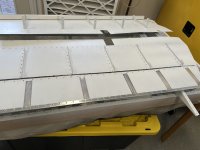
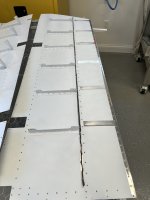
The area where sealant is to be applied must be bare aluminum, no primer. Prepare the surfaces as described in the plans, that is. do not prime, and scuff with 80-120 grit sandpaper. This includes the skins and spar. I used some 1/4in masking tape to mask the area while priming. When ready to join the two, first apply a bead of sealant to both the skin and spar, see the pictures below:
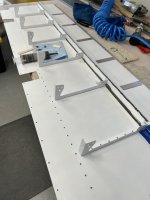
As stated, apply sealant to the spar as well. Below is a picture of that, but after the first skin was joined. You can see I'm using a 60ml disposable syringe with catheter tip to apply the bead. You can also see the tongue depressor I use to create the fillet once the spar and skin are joined. Use clecos to properly position and hold the surfaces in place while creating the fillet.
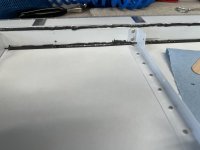
Creating the fillet is so easy with the two surfaces completely exposed. It gets a bit more challenging when joining the second skin, but it is way easier than the plans, as the sealant is in place. All you need to do is reach in with the tongue depressor to create the fillet, see picture below:
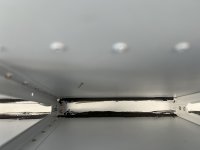
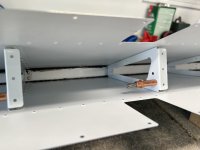
Once the sealant is in place and the fillet is created, you can leave the clecos in place and let the sealant dry before riveting, or rivet while wet. Riveting while wet is not a problem as the sealant is on one side of the spar, and the riveting action is on the other, precluding some of the mess.
There is a bay at the end of the elevator where you will need to get access later, so you do not rivet the skin and spar in that area. You can see in the images above, that I did not add sealant to that area before joining, and did it later.
Hope that helps, and as always your mileage may very.
Of course, the service bulletin was all about getting the fillet of sealant in an existing structure. However, when building new, you have much easier access to the spar and can add a bead to sealant exactly where its needed before joining (riveting) the skins. In fact it may be better to get a bit of sealant into the rivet area, again with the goal of dampening vibrations.
The area where sealant is to be applied must be bare aluminum, no primer. Prepare the surfaces as described in the plans, that is. do not prime, and scuff with 80-120 grit sandpaper. This includes the skins and spar. I used some 1/4in masking tape to mask the area while priming. When ready to join the two, first apply a bead of sealant to both the skin and spar, see the pictures below:
As stated, apply sealant to the spar as well. Below is a picture of that, but after the first skin was joined. You can see I'm using a 60ml disposable syringe with catheter tip to apply the bead. You can also see the tongue depressor I use to create the fillet once the spar and skin are joined. Use clecos to properly position and hold the surfaces in place while creating the fillet.
Creating the fillet is so easy with the two surfaces completely exposed. It gets a bit more challenging when joining the second skin, but it is way easier than the plans, as the sealant is in place. All you need to do is reach in with the tongue depressor to create the fillet, see picture below:
Once the sealant is in place and the fillet is created, you can leave the clecos in place and let the sealant dry before riveting, or rivet while wet. Riveting while wet is not a problem as the sealant is on one side of the spar, and the riveting action is on the other, precluding some of the mess.
There is a bay at the end of the elevator where you will need to get access later, so you do not rivet the skin and spar in that area. You can see in the images above, that I did not add sealant to that area before joining, and did it later.
Hope that helps, and as always your mileage may very.
Last edited:


