Van's Air Force

The definitive Van's Aircraft support community! Buying, building or flying an RV? Join our exclusive family of mentors and enthusiasts!

Mosaic Rule and Repairman Certificate

Status
Not open for further replies.
PEOPLE, PEOPLE, PEOPLE, PLEASE stop referring to Sport Pilots as Light Sport Pilots. There is no such thing and it adds significantly to the confusion.
This is most of the problem at this point. It really isn't that confusing, but there are a select few who refuse, or somehow find it difficult, to get it in their heads that "Sport Pilot" and "Light Sport Aircraft" are different things. On top of that, they are injecting made up terms that don't exist other than in their own head, like 'ls pilot' and trying to make it fit within the rules. It's hard to tell if they are doing this because the truly can't understand, or are just uncomfortable with a rule change and are using confusion to make others feel similar. "Just asking questions"

Light Sport Aircraft, and Sport Pilot mean different things. Light-Sport Aircraft is a category of aircraft, Sport Pilot is a pilot certificate. They have the word "sport" in common but they are otherwise unrelated. Lots of terms have words in common but mean different things.

The Executive Summary of the rule lays out the two terms and the purpose for the rules as applied to each.
 
When I became a DAR back in the last century, one of the first statements at every FAA Seminar was, "We don't answer why questions!"

That statement still holds true today.
Definately sounds like a government statement. :)
 
This is most of the problem at this point. It really isn't that confusing, but there are a select few who refuse, or somehow find it difficult, to get it in their heads that "Sport Pilot" and "Light Sport Aircraft" are different things. On top of that, they are injecting made up terms that don't exist other than in their own head, like 'ls pilot' and trying to make it fit within the rules. It's hard to tell if they are doing this because the truly can't understand, or are just uncomfortable with a rule change and are using confusion to make others feel similar. "Just asking questions"

Light Sport Aircraft, and Sport Pilot mean different things. Light-Sport Aircraft is a category of aircraft, Sport Pilot is a pilot certificate. They have the word "sport" in common but they are otherwise unrelated. Lots of terms have words in common but mean different things.

The Executive Summary of the rule lays out the two terms and the purpose for the rules as applied to each.
I hope you guys aren't pointing all this at me. I clearly said that I know little about this subject, including naming conventions, and that I was looking to learn. I get a very nice resonse or two, educating me on the details and then several people start dumping on me for using incorrect terminology as if I was one of the guys running around pontificating on the new rules using bad data. I stated that I was not knowledgeable on the subject and even asked to help correct my assumptions, so expected some slack in use of terminology.

I get your frustration, but PLEASE PLEASE PLEASE don't snap at someone looking to learn who is not using the correct terminology. When someone asks for an education, it should be implied that they do not understand the nuances of the associated terminology. I have thick skin, but this kind of attitude can turn off newer members.
 
I hope you guys aren't pointing all this at me. I clearly said that I know little about this subject, including naming conventions, and that I was looking to learn. I get a very nice resonse or two, educating me on the details and then several people start dumping on me for using incorrect terminology as if I was one of the guys running around pontificating on the new rules using bad data. I stated that I was not knowledgeable on the subject and even asked to help correct my assumptions, so expected some slack in use of terminology.

I get your frustration, but PLEASE PLEASE PLEASE don't snap at someone looking to learn who is not using the correct terminology. When someone asks for an education, it should be implied that they do not understand the nuances of the associated terminology. I have thick skin, but this kind of attitude can turn off newer members.
It was not directed at you or anyone specific. Obviously you got the terms from other posts. The improper terms are somewhat rampant and every time they are used just makes everything more confusing.
 
Last edited:
Light-Sport Aircraft is a category of aircraft
It is post-MOSAIC. I think a lot of the confusion goes all the way back to the original sport ruling from 2004, which put "Light Sport Aircraft" in FAR 1.1 and defined everything else in terms of it (61.315(a) for pilot privileges, 21.190(a) for S-LSAs, 21.191(i) for E-LSAs). In retrospect this was a bad way to do it, and MOSAIC wisely split them apart, but we have 20 years of confusion to un-do. See my humble plea here ;)
 
All can be found by reading Page 430 to 436.
The direct answer is on page 432.....


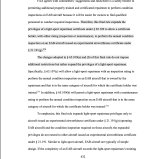
FAA agrees with commenters’ suggestions and finds there is a safety benefit in permitting additional properly trained and certificated repairmen to perform condition inspections on EAB aircraft because it will be easier for owners to find qualified personnel to conduct required inspections. Therefore, this final rule expands the privileges of a light-sport repairman certificate under § 65.109 to allow a certificate holder, with either rating (inspection or maintenance), to perform the annual condition inspection on an EAB aircraft issued an experimental airworthiness certificate under § 21.191(g).270

The changes adopted in § 65.109(a) and (b) of this final rule do not impose additional restrictions but rather expand the privileges of a light-sport repairman. Specifically, § 65.107(c) will allow a light-sport repairman with an inspection rating to perform the annual condition inspection on an EAB aircraft that is owned by the repairman and that is in the same category of aircraft for which the certificate holder was trained.271 In addition, § 65.109(b) will permit a light-sport repairman with a maintenance rating to perform the annual condition inspection on an EAB aircraft that is in the same category of aircraft for which the certificate holder was trained.272

To emphasize, this final rule expands light-sport repairman privileges only to aircraft issued an experimental airworthiness certificate under § 21.191(g) (operating EAB aircraft) and the condition inspection required on those aircraft; the expanded privileges do not extend to other aircraft issued an experimental airworthiness certificate under § 21.191. Similar to light-sport aircraft, EAB aircraft are typically of simple design. If the complexity of an EAB aircraft exceeds the light-sport repairman’s training

Page 432
 
All can be found by reading Page 430 to 436.
The direct answer is on page 432.....


FAA agrees with commenters’ suggestions and finds there is a safety benefit in permitting additional properly trained and certificated repairmen to perform condition inspections on EAB aircraft because it will be easier for owners to find qualified personnel to conduct required inspections. Therefore, this final rule expands the privileges of a light-sport repairman certificate under § 65.109 to allow a certificate holder, with either rating (inspection or maintenance), to perform the annual condition inspection on an EAB aircraft issued an experimental airworthiness certificate under § 21.191(g).270

The changes adopted in § 65.109(a) and (b) of this final rule do not impose additional restrictions but rather expand the privileges of a light-sport repairman. Specifically, § 65.107(c) will allow a light-sport repairman with an inspection rating to perform the annual condition inspection on an EAB aircraft that is owned by the repairman and that is in the same category of aircraft for which the certificate holder was trained.271 In addition, § 65.109(b) will permit a light-sport repairman with a maintenance rating to perform the annual condition inspection on an EAB aircraft that is in the same category of aircraft for which the certificate holder was trained.272

To emphasize, this final rule expands light-sport repairman privileges only to aircraft issued an experimental airworthiness certificate under § 21.191(g) (operating EAB aircraft) and the condition inspection required on those aircraft; the expanded privileges do not extend to other aircraft issued an experimental airworthiness certificate under § 21.191. Similar to light-sport aircraft, EAB aircraft are typically of simple design. If the complexity of an EAB aircraft exceeds the light-sport repairman’s training

Page 432
I'm not sure this was in question, was it? I thought we all understood what the change was...just disagreed on whether it was a good idea or not.
 
I've decided to punt to the companies that teach the courses. When we see statements on their websites stating what courses they will offer under the final MOSAIC rule, that should put any confusion to bed. Their lawyers will make sure they are 100% inline with the FAA. In the meantime, I do not have confidence in the popular press (e.g., Kitplane's statements 48 hours after the rule came out - no offense Kitplanes, but I doubt you spoke with lawyers or the FAA before publication to confirm interpretations). I do, however, have confidence in the EAA, but EAA has not yet updated its site to list exactly what the final rule means. More specifically, I hope EAA will have a webinar in the next month or so to explain and take questions.


Below is partial body of an email I received a few days ago:


As has been the case since the light sport program began in 2004, owners of Experimental Light Sport Aircraft (ELSAs) will be able to take the course. If they pass the final test, I will issue them a course completion certificate which will make them immediately eligible for a repairman certificate for their ELSA.

Even though MOSAIC will not become effective until sometime in October, owners of Experimental Amateur-Built (EAB) airplanes will be able to take the course. If they pass the final test, I will issue them a course completion certificate which will make them eligible for a repairman certificate for their EAB once MOSAIC becomes effective.

Attached is the registration form for the course; to register, just follow the instructions on the form. After I receive your completed registration form and payment, I will send you a detailed email confirming your registration and including additional details about the course. Because of high demand due to EABs becoming eligible, the course is expected to fill up quickly, so I would suggest you register as soon as possible.
 
In addition to Rainbow Aviation (mentioned earlier in this thread), another option is Sport Aviation Specialties. They recently scheduled an LSRI course in Covington, GA (just east of Atlanta) for August 30-31.

This makes me wonder if it applies to RV-8As… from the website in their link:

“The most exciting change is that, in addition to Experimental Light Sport Aircraft (ELSA) owners, Experimental Amateur-Built (EAB) owners whose aircraft meet the new, much-expanded light sport definition will be able to attend an LSRI course and become eligible for an FAA Light Sport Repairman Certificate. The cetificate will allow them to perform and sign off their annual condition inspections, not matter who the original builder of the aircraft was, thus eliminating the difficulty and expense of using an A&P mechanic. This new privilege applies no matter whether the owner was the original bulder of the aircraft.”

Does that mean the aircraft must fall under the light sport definition for you to be able to inspect your EAB?
 
Perhaps anyone that reads the source documents and still questions things really ought not inspect their own planes.
Does that mean the school should also stop teaching if they aren’t in line with the source document as it is interpreted?

I’m asking because it’s not clear to me that everyone is on the same page. Even the school that teaches these classes isn’t matching what many say to be the answer based on the FAA MOSAIC ruling.
 
Does that mean the school should also stop teaching if they aren’t in line with the source document as it is interpreted?

I’m asking because it’s not clear to me that everyone is on the same page. Even the school that teaches these classes isn’t matching what many say to be the answer based on the FAA MOSAIC ruling.

I am pretty clear on what my interpretation is. Where are you reading anything different?

Again, I think if you want to bring any of that into things you need to provide specific examples.
It is clear to me that EAB airplane owners can take the LSRM or LSI class and inspect an EAB airplane that they own.Image 7-23-25 at 20.27.jpeg
 
Last edited:
Even the school that teaches these classes isn’t matching what many say the FAA says to be the answer based on the FAA MOSAIC ruling.
Fixed it for you! 🤣

In all seriousness, the new regime is complicated, the terminology is not the best, and the hangover from the old regs is not helpful. Some errors are to be expected.
 
This is pretty interesting and still clear as mud. I've built two RV-7's and got a repair certificate. I recently bought a 10. I'm hoping this new ruling will allow me to get the repairman's certificate for it as well.
 
When someone asks for an education, it should be implied that they do not understand the nuances of the associated terminology.
sorry but regularly posting obviously incorrect info or assumptions in a multitude of topics with the hope to learn something puts burden on the members to issue a correction. otherwise someone else may learn it incorrectly. 🤷‍♂️
 
  • Like
Reactions: Mel
This is pretty interesting and still clear as mud. I've built two RV-7's and got a repair certificate. I recently bought a 10. I'm hoping this new ruling will allow me to get the repairman's certificate for it as well.

As mentioned earlier in the thread, using correct (or in this case, complete) terminology is important, and not doing so will foster more confusion. Regarding the RV-10 you purchased, the question is a little bit ambiguous. Since you're a multi-time builder and are familiar with one kind of repairman certificate it needs some clarification.

You will not be able to get the same type of repairman's certificate for the RV-10 that you are used to. Nothing about that *repairman certificate* is changing. You still can't get it.

You can get either of the Light Sport Repairman certificates, a different certificate but still considered repairman. The emphasis on repairmen is to distinguish from a *mechanic* certificate that an A&P gets. These are casually referred to as LSRM or LSRI certificates.

Take either course, get either of the LSR* certificates and you can inspect your RV-10.
 
Does that mean the school should also stop teaching if they aren’t in line with the source document as it is interpreted?

I’m asking because it’s not clear to me that everyone is on the same page. Even the school that teaches these classes isn’t matching what many say to be the answer based on the FAA MOSAIC ruling.

The response to this is a little bit complicated. Bottom line is that per the proposed regs, whoever wrote that copy for the school should probably reconsider. Right now, the authorization being broad and applying to all EAB is not confusion. It's been pasted in this and other threads enough, and nobody ever reads them, so I won't bother.

It gets complicated in 2 ways:
  • The narrative in the published MOSAIC document explains the rationale for expanding authorization to EAB. Part of this rationale is that most of the EABs fit the new LSA standards. My opinion is that the FAA wants to be generic so that we don't end up fighting over 1 or 2 knots of VS0 VS1 in CAS. Their intent was to make things easier on people. Until this is abused they want to leave it alone.
  • There are obligations on the part of the Repairman to only perform work they have previously demonstrated. This is a hornets nest for educators. They will be giving people certificates that allow them to work on a category of aircraft that may include systems they have not been trained on. It's possible that the school is being conservative and doing a poor job communicating to prospective students that the curriculum may not prepare them for every kind of work that is authorized by getting the certificate.
In that respect, it is a little bit messy. I think the school just wrote crappy website copy and unless/until new guidance is published they are just wrong.
 
The response to this is a little bit complicated. Bottom line is that per the proposed regs, whoever wrote that copy for the school should probably reconsider. Right now, the authorization being broad and applying to all EAB is not confusion. It's been pasted in this and other threads enough, and nobody ever reads them, so I won't bother.

It gets complicated in 2 ways:
  • The narrative in the published MOSAIC document explains the rationale for expanding authorization to EAB. Part of this rationale is that most of the EABs fit the new LSA standards. My opinion is that the FAA wants to be generic so that we don't end up fighting over 1 or 2 knots of VS0 VS1 in CAS. Their intent was to make things easier on people. Until this is abused they want to leave it alone.
  • There are obligations on the part of the Repairman to only perform work they have previously demonstrated. This is a hornets nest for educators. They will be giving people certificates that allow them to work on a category of aircraft that may include systems they have not been trained on. It's possible that the school is being conservative and doing a poor job communicating to prospective students that the curriculum may not prepare them for every kind of work that is authorized by getting the certificate.
In that respect, it is a little bit messy. I think the school just wrote crappy website copy and unless/until new guidance is published they are just wrong.
Thank you that’s a good explanation to what I’m seeing. I’m sure you can understand I don’t want to put in $500 for a class fly in on that weekend to the school and then find out I “can’t” inspect my plane. I guess it’s up to FAA and not the school but you can see where the confusion can happen.
 
To update I called the owner of sport aviation specialties. He said it applies to EAB just like the way many have said on here. What he said in addition to this I don’t think is in context but he said now RV-8s would be considered LSA although still with an experimental homebuilt AW. Not sure that’s accurate either but at least he clarified my original question. Maybe his website could be a little more clear.

His August class is full. He said in the next few days he would post future classes.
 
To update I called the owner of sport aviation specialties. He said it applies to EAB just like the way many have said on here. What he said in addition to this I don’t think is in context but he said now RV-8s would be considered LSA although still with an experimental homebuilt AW. Not sure that’s accurate either but at least he clarified my original question. Maybe his website could be a little more clear.

His August class is full. He said in the next few days he would post future classes.
Relax!.... Your RV8 WILL qualify.
 
I think there is some confusion on what LSA is vs. EAB. An EAB is NEVER LSA. Some EABs can be flown by sport pilots, but that doesn't make them LSA.

LSA is a specific FAA certification category for aircraft that are manufactured to meet FAA-accepted design, production, and airworthiness standards. EAB are not made to the same standards.
 
Also a small point of clarification. If the airplane you are trying to get the cert for is in an LLC, you can not apply for it as the cert holder technically doesn't own it. You have to get the 120hr course if you elect to keep it in the LLC. Then you can do any eab whether owned or not
How about 51% owner of the LLC or INC?
 
How about 51% owner of the LLC or INC?
I've been holding my question about LLC, in my case single member, because I use my asbestos suit for other fun things. I expect the answer to be uniformly ANY llc requires the LSRM. But thanks for asking so I don't have to :)
 
I've been holding my question about LLC, in my case single member, because I use my asbestos suit for other fun things. I expect the answer to be uniformly ANY llc requires the LSRM. But thanks for asking so I don't have to :)
I really am asking for others...
I am 100% owner of the Inc that owns my plane and I am also an LSRM-A. Too bad my plane is a certified aircraft...
WHEN I buy an EAB my LSRM-A will come in handy now!
 
Yeah, I've asked, no form of airplane in an LLC, single member or not. You'll need the other longer class (content review/test). It's been that way with lsa's and will be the same with eab expansion. Technically the LLC owns the airplane, and the LLC can't get a certificate. They tried to get it not to be this way, but it didn't happen. Bottom line of the plane, LSA or eab is in an LLC, you need the maintenance cert, not the inspection one
 
Yeah, I've asked, no form of airplane in an LLC, single member or not.
Dang! Could I ask who you asked?

If, like me, you are the sole owner of the LLC that owns your plane, one option is to dissolve your LLC and transfer ownership to you in your individual capacity. I believe that, at least in my state of Illinois, this would be a taxable transaction though. 6.5% of fair market value is a lot of money to pay to be able to do my own condition inspections.
 
Dang! Could I ask who you asked?

If, like me, you are the sole owner of the LLC that owns your plane, one option is to dissolve your LLC and transfer ownership to you in your individual capacity. I believe that, at least in my state of Illinois, this would be a taxable transaction though. 6.5% of fair market value is a lot of money to pay to be able to do my own condition inspections.
I would look into that further. I believe that the feds treat asset movement from an SMLLC (single member) to the owner as a non taxable event, as the owner is paying all of the taxes anyways. States follow different rules, but there is possibly a way around it. Worth a call.
 
Dang! Could I ask who you asked?

If, like me, you are the sole owner of the LLC that owns your plane, one option is to dissolve your LLC and transfer ownership to you in your individual capacity. I believe that, at least in my state of Illinois, this would be a taxable transaction though. 6.5% of fair market value is a lot of money to pay to be able to do my own condition inspections.
I talked to the people who have been teaching the classes - Rainbow Aviation - they said they have had a number of people try, but so far none had succeeded
 
How about planes registered in a Trust?
If it is your trust and is revocable, most entities will view you as the owner of any asset held in the trust. IIRC, a trust is not a unique legal entity, like a corporatrion is. I believe it is more of a classification/legal structure to support varying types of defined asset movement and distribution. Unsure on irrevocable trusts.

If you are just a trustee, I am unsure how that would viewed, but speculate that you may not be viewed as the owner. A lawyer question.
 
Last edited:
Just off the phone with Michael Huffman @Sport Aviation Specialties, LLC who is in direct communication with the Faa rule writers and YES WITH THE LSRI CERTIFICATE EAB GUYS WILL BE AUTHORIZED TO SIGN OFF ON YOUR OWN CONDITION INSPECTION. Faa limits class sizes to 16 of which 11 are already filled for the Sep 20-21 course. Just can’t go to your FSDO with it until Mosaic actually go into affect prejected for October
 
Just off the phone with Michael Huffman @Sport Aviation Specialties, LLC who is in direct communication with the Faa rule writers and YES WITH THE LSRI CERTIFICATE EAB GUYS WILL BE AUTHORIZED TO SIGN OFF ON YOUR OWN CONDITION INSPECTION.
put another way, FAA TELLS PERSON WHAT REG ALREADY PLAINLY SAYS. 🤣
 
put another way, FAA TELLS PERSON WHAT REG ALREADY PLAINLY SAYS. 🤣

Yeah but now some guy said it on the phone, but even though his website has the rule wrong he is in direct contact with the auth-or-it-TIES so it must be true now. 😆

Epistemology is a hell of a thing.
 
Yeah but now some guy said it on the phone, but even though his website has the rule wrong he is in direct contact with the auth-or-it-TIES so it must be true now. 😆

Epistemology is a hell of a thing.
🤣🤣 I know! (get it?)

I have a theory as to how they got that wrong on their website, but describing it would only add to the confusion. 😃
 
Yeah, I've asked, no form of airplane in an LLC, single member or not. You'll need the other longer class (content review/test). It's been that way with lsa's and will be the same with eab expansion. Technically the LLC owns the airplane, and the LLC can't get a certificate. They tried to get it not to be this way, but it didn't happen. Bottom line of the plane, LSA or eab is in an LLC, you need the maintenance cert, not the inspection one
An important exemption to this is a non-profit flying club: see section 10.6:

Essentially, a non-profit flying club is treated special by the FAA and granted special privileges. Specifically all members are treated as being effectively owners of the club aircraft, and are both allowed to receive instruction, give instruction, and perform maintenance like owners.

In addition, member instructors and members mechanics are permitted to receive monetary compensation, or in-kind compensation (but not both) from the club.

see also https://thefederalregister.org/81-FR/13719

There is also a strange regulation gap such that a flying club can lease an EAB, but not an E-LSA. The club can own either.
 
An important exemption to this is a non-profit flying club: see section 10.6:
I wonder what the FAA would think if I made my sole member/manager LLC, which owns my EAB, a non-profit flying club with only 1 member. Hey, clubs have to start somewhere.
 
So, you can do that, and the easiest option would be to lease the EAB to the flying club.
So not just an end-around of the FAA ownership rules, but possibly a tax dodge too! If I lease the EAB to a (OK my) club, I might be able to deduct Insurance and possibly other expenses on behalf of the LLC owner, and maybe take depreciation on the plane itself.
 
So, you can do that, and the easiest option would be to lease the EAB to the flying club.
So not just an end-around of the FAA ownership rules, but possibly a tax dodge too! If I lease the EAB to a (OK my) club, I might be able to deduct Insurance and possibly other expenses on behalf of the LLC owner, and maybe take depreciation on the plane itself.

I would think that leasing an EAB aircraft would constitute operating it "for compensation or hire" which is specifically forbidden.

Skylor
 
An important exemption to this is a non-profit flying club: see section 10.6:

Essentially, a non-profit flying club is treated special by the FAA and granted special privileges. Specifically all members are treated as being effectively owners of the club aircraft, and are both allowed to receive instruction, give instruction, and perform maintenance like owners.

In addition, member instructors and members mechanics are permitted to receive monetary compensation, or in-kind compensation (but not both) from the club.

see also https://thefederalregister.org/81-FR/13719

There is also a strange regulation gap such that a flying club can lease an EAB, but not an E-LSA. The club can own either.
Very interesting. Do all of the special rules/privileges you mentioned above apply to an eab plane owned by the nonprofit?
 
So not just an end-around of the FAA ownership rules, but possibly a tax dodge too! If I lease the EAB to a (OK my) club, I might be able to deduct Insurance and possibly other expenses on behalf of the LLC owner, and maybe take depreciation on the plane itself.
I was under the impression that to receive preferential treatment under many government regs, you have to do more than just classify as non profit. I thought they wanted to see some philanthropic or community activity the org is involved with. I didn’t think you can just become a 501 3C just as a paperwork dodge because expenses exceed income.

Not a tax expert, just a data point that I captured years ago. These are just loose recollections, so Could be wrong here.
 
Last edited:
Perhaps anyone that reads the source documents and still questions things really ought not inspect their own planes.
Very much this. If these regs are hard, following the manufacturers instructions on how to properly do a task is not a something I'd recommend.
Just because the -I is a 2 day course doesn't mean you're remotely qualified to actually do the inspection to the standards. If anything the 2 day course will probably show you shouldn't be doing this unless you already know what you're doing. I haven't done the 2 day course(or read the syllabus), but I'd be surprised if you actually touch an aircraft.
Even the long course is just a license to learn if you're coming at this with no background.

A BIG part that people are stepping over is 65.107c3 and d. Not as applicable to EAB since anyone can do that on an EAB, but it does prevent someone from taking a 2 week (or day) class and doing any major work to a now part 22 aircraft. It's the same as the a&p reg(65.81a), the difference being that an a&p with 1.5+ years of OJT is very likely going to have done most things.

I've had my LSRM-A for years now. Through rainbow. Almost a quarter of the class was teaching people the regs. Which seems excessive, but was completely needed. It's really really weird how even under the old rules, people had such a difficulty understanding that production standards of an aircraft, issuance of a airman and repairman certificate are all completely unrelated and different things. Until they get that into their head they do not understand the regs whatsoever.

With the breadth comments offered to each regulation, this has to be the easiest section of the FARs I've ever seen.
Most of the time(especially in 121 and 135) you have to find 6 chief counsel interpretations that may not even be published anymore(and have dubious use post Chevron, but let's be honest ALJ's won't follow Loper Bright)), and then find out that the current regime doesn't like the 4th one, so we don't follow it now, but we haven't(and won't) provided anything in writing to this effect and god help you in the next administration.
 
Last edited:
I would think that leasing an EAB aircraft would constitute operating it "for compensation or hire" which is specifically forbidden.

Skylor
Skylor,

No, that is not correct. The regulation, and the operating limitations, prohibit "Carrying persons or property for compensation or hire". Leasing the aircraft to a flying club or other entity is perfectly legal. EAA does it themselves with the One Week Wonder RV-12. That airplane is amateur-built and is leased to the EAA Employee Flying Club. In fact, this is the reason EAA certificated that aircraft as amateur-built rather than ELSA, which it was also eligible for. An ELSA cannot be leased, but an amateur-built can.
 
I don’t have the patience to parse the regulations given I’m not confident I will reach correct conclusions.

Googling has taught me:
  • Sport Pilot is a pilot certificate and LSA is a category of aircraft that includes S-LSA and E-LSA.
  • FAA defines seven upper-case Categories of aircraft… Airplane, Rotorcraft, Powered Lift, Glider, Lighter-Than-Air, Powered Parachute, and Weight-Shift Control.
  • EAA uses the lower-case term category in reference to LSAs here. A Sport Pilot can fly LSAs whereas one has to be a Private Pilot or above to fly EAB.
  • Maybe some EABs can be converted to E-LSA under the 2025 MOSAIC.
  • EAB and E-LSA are what we are concerned with but there are other types of Experimentals like R&D, Exposition, and more.
Can I do Condition Inspections on my purchased RV-14A (registered in my name, not an LLC)? Reading this EAA page it seems the answer is I can do Condition Inspections on any E-LSA or EAB that I own, when MOSAIC takes effect October 22 2025, If I take a two-day LSRI (Light Sport Repairmen with an Inspection rating) course.

If one takes a “roughly three-week” LSRM (Light Sport Repairmen with a Maintenance rating) course one can do Condition Inspections on E-LSA and EAB aircraft they don’t own.

For certified and SLSA one needs to be an A&P to do Annual Inspections (which are called Condition Inspections in the E-LSA and EAB world and are required annually).
 
Last edited:
Skylor,

No, that is not correct. The regulation, and the operating limitations, prohibit "Carrying persons or property for compensation or hire". Leasing the aircraft to a flying club or other entity is perfectly legal. EAA does it themselves with the One Week Wonder RV-12. That airplane is amateur-built and is leased to the EAA Employee Flying Club. In fact, this is the reason EAA certificated that aircraft as amateur-built rather than ELSA, which it was also eligible for. An ELSA cannot be leased, but an amateur-built can.

Is there something different about leasing the plane vs generally charging for its use, like an hourly rate? Pretty sure the faa has interpreted the commercial use limitations to include renting that plane to others in exchange for compensation. I can’t see how leasing is any different, as it is still compensation. Maybe you can explain the difference. I didn’t even think that clubs can use eab unless each member is a part owner and payments are strictly limited to expenses - no discrete plane usage fee.

The faa will issue a loda allowing compensation for aircraft use, IF the activity is restricted to training. Possibly the eaa got a loda for this arrangement by saying that the club is for training. Sadly these cannot be used for me to rent my plane to a buddy for $100/hr.
.
 
Here's a question to through into the mix. After you take the 2 day course, you have to go to FSDO to register with them, correct? So now you can sign off the plane you own. What if you sell that plane and get another EAB plane, do you need to back to the FSDO and reregister of are you good for any EAB you would own in the future?
 
Status
Not open for further replies.
Back
Top