Van's Air Force

The definitive Van's Aircraft support community! Buying, building or flying an RV? Join our exclusive family of mentors and enthusiasts!

Master Cylinder Fitting

Jav8or

Member
Good Day All!

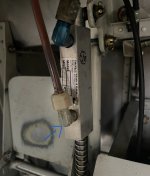
I’m looking to repack a leaking Cleveland Master cylinder, since the unit is leaking from what appears to be the plastic fitting. I’m thinking of just replacing the fitting while I have it out, but I cannot find a part number anywhere.

Is the piece in the picture just sourced from a hardware store?

Any assistance appreciated!
 

Attachments

  • IMG_1305.jpeg
    IMG_1305.jpeg
    454.5 KB · Views: 68
Good Day All!

I’m looking to repack a leaking Cleveland Master cylinder, since the unit is leaking from what appears to be the plastic fitting. I’m thinking of just replacing the fitting while I have it out, but I cannot find a part number anywhere.

Is the piece in the picture just sourced from a hardware store?

Any assistance appreciated!
Is it leaking where the plastic fitting connects into the master cylinder or at the top of the fitting where the plastic tube is? If it’s leaking at the fitting connection it could just be a matter of taking it off and thoroughly cleaning the fitting and the master cylinder threads then reseal with Loctite 567 (wait 24 hours before refilling the brake fluid). If it’s coming out the top at the tube connection might be a good time to contact Aircraft Specialty Flightlines (https://www.aircraftspecialty.com/) and get some stainless hoses made if possible. Might also be a good time to do the caliper O ring replacement and use the new recommended O rings and hydraulic fluid (Vans Service Letter SL-00047). https://www.vansaircraft.com/service-information-and-revisions/sl-00047/
 
Is it leaking where the plastic fitting connects into the master cylinder or at the top of the fitting where the plastic tube is? If it’s leaking at the fitting connection it could just be a matter of taking it off and thoroughly cleaning the fitting and the master cylinder threads then reseal with Loctite 567 (wait 24 hours before refilling the brake fluid). If it’s coming out the top at the tube connection might be a good time to contact Aircraft Specialty Flightlines (https://www.aircraftspecialty.com/) and get some stainless hoses made if possible. Might also be a good time to do the caliper O ring replacement and use the new recommended O rings and hydraulic fluid (Vans Service Letter SL-00047). https://www.vansaircraft.com/service-information-and-revisions/sl-00047/
Thanks for the reply.

My best guess is it is coming from elbow to cylinder connection. I will be doing a reseal too, but maybe I can get away with using the old fitting with some loctite.

Also, is it normal for the elbow fitting to move back and forth in the cylinder? The connection doesn’t appear to be very tight.
 
No it should not move, I suspect that’s where it’s leaking. When you remove the elbow and clean the threads look at the sealant used. If it’s dark sealant it may be Aviation Permatex which didn’t work for me. The white Loctite 567 sealed mine perfectly. With a plastic fitting you also have to be careful not to tighten it so tight that it cracks or breaks altogether. With metal lines and fittings you can get them a bit tighter but you still need to get the correct clocking of the lines.
 
No it should not move, I suspect that’s where it’s leaking. When you remove the elbow and clean the threads look at the sealant used. If it’s dark sealant it may be Aviation Permatex which didn’t work for me. The white Loctite 567 sealed mine perfectly. With a plastic fitting you also have to be careful not to tighten it so tight that it cracks or breaks altogether. With metal lines and fittings you can get them a bit tighter but you still need to get the correct clocking of the lines.
Well, judging by the way it’s moving, I’m willing to bet no sealant was used. Is it still worth it to reseal the cylnider?
 
Kinda depends on where the leak is, can’t tell in the picture. If it’s only leaking at the elbow connection then you probably don’t need to rebuild the master cylinder. If it’s leaking down the piston coming out of the master cylinder then a master cylinder rebuild is probably needed. You will have to drain the fluid to reseal the elbow connection either way. Looks like an upside down master cylinder in an RV-4 so once you get the leak squared away you’ll need to refill & bleed the brakes. Easiest way is to disconnect the bottom bolt and rotate the master cylinder 90 degrees to get the air out while bleeding so it’s a two man job.
 
EDIT: My apologies here. I didn't realize that the master cylinder was installed upside down. That tubing is completely acceptable, assuming this is the copilot side we are seeing in this picture, or only one set of MC's.. If it is the pilot side in a dual setup, however, that needs to be replaced as it is also under pressure when the copilot brakes are applied.

You should NOT have nylon fittings in that application. These must be brass or some other type of metal, Like aluminum. Those nylon fittings are only rated for 250 PSI and the brake hydraulics can produce much more than this. Vans provides either aluminum or brass fittings for this application, and that guidance should be followed. Nylo seal tubing is also not acceptable on the pressure side of the master cylinder. You can either use the special Parker tubing or stainless braided hose.

These type of fittings are only acceptable on the suction side of the co-pilot master cylinder.
 
Last edited:
EDIT: My apologies here. I didn't realize that the master cylinder was installed upside down. That tubing is completely acceptable, assuming this is the copilot side we are seeing in this picture, or only one set of MC's.. If it is the pilot side in a dual setup, however, that needs to be replaced as it is also under pressure when the copilot brakes are applied.

You should NOT have nylon fittings in that application. These must be brass or some other type of metal, Like aluminum. Those nylon fittings are only rated for 250 PSI and the brake hydraulics can produce much more than this. Vans provides either aluminum or brass fittings for this application, and that guidance should be followed. Nylo seal tubing is also not acceptable on the pressure side of the master cylinder. You can either use the special Parker tubing or stainless braided hose.

These type of fittings are only acceptable on the suction side of the co-pilot master cylinder.
If I recall correctly, the nylon fitting is on the reservoir side.
 
EDIT: My apologies here. I didn't realize that the master cylinder was installed upside down. That tubing is completely acceptable, assuming this is the copilot side we are seeing in this picture, or only one set of MC's.. If it is the pilot side in a dual setup, however, that needs to be replaced as it is also under pressure when the copilot brakes are applied.

You should NOT have nylon fittings in that application. These must be brass or some other type of metal, Like aluminum. Those nylon fittings are only rated for 250 PSI and the brake hydraulics can produce much more than this. Vans provides either aluminum or brass fittings for this application, and that guidance should be followed. Nylo seal tubing is also not acceptable on the pressure side of the master cylinder. You can either use the special Parker tubing or stainless braided hose.

These type of fittings are only acceptable on the suction side of the co-pilot master cylinder.
This is in an RV-4, and there are no rear brakes.

Appreciate the info!
 
Did you get the brake fluid leak resolved?

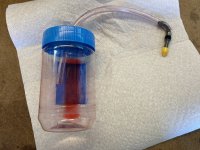
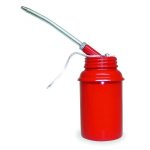
You might invest in a used plastic peanut butter jar and drill a small hole in the cap to insert a clear tube. Look up the guy below and get a fitting like this to screw into the brake master cylinder on the firewall. He has straight and curved fittings- the straight fitting gives better clearance on the firewall from the brake reservoir for an RV-4. Get the oil can shown below to pump hydraulic fluid from the bottom up and watch it push the bubbles out. On an RV-4 you do need to disconnect the bottom bolt and rotate the MC 90 degrees to get the bubbles out so it’s a two man job.
 

Attachments

  • IMG_1014.jpeg
    IMG_1014.jpeg
    3.3 MB · Views: 12
  • IMG_2242.jpeg
    IMG_2242.jpeg
    26.4 KB · Views: 12
  • IMG_2243.jpeg
    IMG_2243.jpeg
    72 KB · Views: 12
Last edited:
Did you get the brake fluid leak resolved?

You might invest in a used plastic peanut butter jar and drill a small hole in the cap to insert a clear tube. Look up the guy below and get a fitting like this to screw into the brake master cylinder on the firewall. He has straight and curved fittings- the straight fitting gives better clearance on the firewall from the brake reservoir for an RV-4. Get the oil can shown below to pump hydraulic fluid from the bottom up and watch it push the bubbles out. On an RV-4 you do need to disconnect the bottom bolt and rotate the MC 90 degrees to get the bubbles out so it’s a two man job.
Hey!

The job is complete. And I learned a lot.
First, I needed to hook up a 4-5 foot .170 nylon line to the reservoir and the other end to an empty hydraulic fluid bottle.

Had a devil of a time getting the pedal to firm up. However, having qmy son pump the brakes would coax some bubbles out. Also, rotating the the MC produce d the greatest release and firmed the pedal completely. Cycling the pedals got the remaining bubbles out.

Bottom line, I turned a 30 minute job into a 4 hour ordeal. But now I know how to do it and I have the tools and knowledge to do it in the future.

And yes, the leak from the MC seems to be solved (without sealant). The nylon fitting was very loose. So I tightened that. I also took the opportunity to rebuild the MC.
 
Back
Top