


Van's Air Force

The definitive Van's Aircraft support community! Buying, building or flying an RV? Join our exclusive family of mentors and enthusiasts!

Lycoming O-320-E1A Oil Screen Findings: 70 Hours Post-Top Overhaul

Pecks1472

I'm New Here
Patron
20260621_225023.jpg20260621_231707.jpg20260621_232308.jpgScreenshot_20260622_102007.jpg
Hi everyone,


I'm looking for some second opinions on what I just found in my oil screen during my third oil change post-top overhaul.


Engine & History:


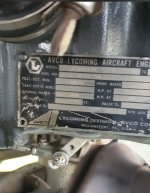
  • Engine: Lycoming O-320-E1A.
  • Time: 70 hours total running time since a top overhaul where 4 new cylinders were installed.
  • Previous Oil Changes: 1st change at 10 hours, 2nd change at 30 hours, and this 3rd change at 70 hours (meaning this oil ran for 40 hours).
  • Oil Used: I have been running AeroShell 100 Straight Mineral oil for the entire 70 hours, but I am now switching to AeroShell W100.
  • Engine Monitors: Oil pressure is rock solid at 90–100 PSI, and CHTs are great (e.g., CHT #3 is running cool at 320°F).

The Findings:


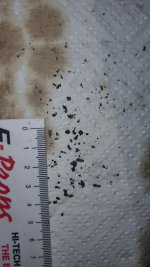
Upon pulling the oil screen, I found a heavy amount of dry, black carbon flakes. However, I also isolated two specific types of metal contaminants:


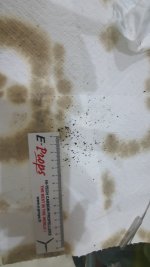
  1. Non-Magnetic Aluminum Flakes: I found 3 distinct metallic flakes that are completely non-magnetic. Looking at the scale, the largest one is quite flat, elongated, and measures roughly 4-5 mm in length.
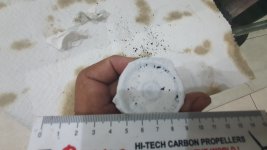
  2. Weakly Magnetic Fuzz/Dust: A lot of the black flakes and fine dust attached themselves to a strong neodymium magnet. It looks like standard ferrous break-in fuzz/sludge mixed with carbon.

Pictures Attached:


  • (Overview of the debris on paper towel)
  • (Close-up of the 3 aluminum pieces next to a ruler)
  • (The fine ferrous fuzz reacting to the magnet)

Given that the engine has 70 hours on the top overhaul and ran for 40 hours on this specific oil cycle, do you consider the size of that 5 mm aluminum flake acceptable per Lycoming SI 1492, or should I be worried about piston scuffing / wrist pin plug wear?


My plan right now is to scope the cylinders, run the new AeroShell W100 for a short 10-hour cycle, and pull the screen again to check for any active making of metal.


Would love to hear your thoughts or if anyone has seen similar flashing/shavings drop this late into a top overhaul.


Thanks,
Pecks1472
 
View attachment 121165View attachment 121166View attachment 121167View attachment 121168
Hi everyone,


I'm looking for some second opinions on what I just found in my oil screen during my third oil change post-top overhaul.


Engine & History:


  • Engine: Lycoming O-320-E1A.
  • Time: 70 hours total running time since a top overhaul where 4 new cylinders were installed.
  • Previous Oil Changes: 1st change at 10 hours, 2nd change at 30 hours, and this 3rd change at 70 hours (meaning this oil ran for 40 hours).
  • Oil Used: I have been running AeroShell 100 Straight Mineral oil for the entire 70 hours, but I am now switching to AeroShell W100.
  • Engine Monitors: Oil pressure is rock solid at 90–100 PSI, and CHTs are great (e.g., CHT #3 is running cool at 320°F).

The Findings:


Upon pulling the oil screen, I found a heavy amount of dry, black carbon flakes. However, I also isolated two specific types of metal contaminants:


  1. Non-Magnetic Aluminum Flakes: I found 3 distinct metallic flakes that are completely non-magnetic. Looking at the scale, the largest one is quite flat, elongated, and measures roughly 4-5 mm in length.
  2. Weakly Magnetic Fuzz/Dust: A lot of the black flakes and fine dust attached themselves to a strong neodymium magnet. It looks like standard ferrous break-in fuzz/sludge mixed with carbon.

Pictures Attached:


  • (Overview of the debris on paper towel)
  • (Close-up of the 3 aluminum pieces next to a ruler)
  • (The fine ferrous fuzz reacting to the magnet)

Given that the engine has 70 hours on the top overhaul and ran for 40 hours on this specific oil cycle, do you consider the size of that 5 mm aluminum flake acceptable per Lycoming SI 1492, or should I be worried about piston scuffing / wrist pin plug wear?


My plan right now is to scope the cylinders, run the new AeroShell W100 for a short 10-hour cycle, and pull the screen again to check for any active making of metal.


Would love to hear your thoughts or if anyone has seen similar flashing/shavings drop this late into a top overhaul.


Thanks,
Pecks1472
Good Morning,
Don't forget to send this info to Lycoming Tech Support - they are generally VERY helpful in analyzing this stuff... you did a good job of presenting the data.
I missed what type Cylinders you installed: You said New but that might also include Reworked - clarify please, Lycoming or ???.
Whats the total time on the engine since new or SMOH ?
Were the previous oil changes "clean" as-in nothing in filter or suction screen ?
What CHT's are you seeing ?
Hope that helps - Good luck.
 
Is this the first time you've pulled the screen?

Does the engine have a full-flow oil filter? Is there anything in that?

- mark
 
See the comments above. Besides cylinder type, do you know what rings are installed?

"Coffee grounds" are pretty common in the first xx hours after an overhaul. The interesting/potentially troubling thing would be if previous oil changes/inspections didn't reveal these, i.e. this is something new. Borescoping never hurts but the old timers' approach is maybe a good one, here.

Go fly for10 hour blocks with subsequent inspections. If the condition continues at current levels or increases, then I'd consider next steps.

Edit = Drift/story. The newest tech was CermaChrome if anyone remembers those (this was obviously a long time ago). After my first overhaul, ever, I found said indications in my screen and almost crapped myself. I could not really afford my hobby and a tear-down would have hurt bad. Anyway, I was put in my place by the very experienced A&P (Charles Taylor award winner) who'd done the overhaul with the following exchange.

After him listening to/me continuing my whining despite his claim reassurances,
"Any of the debris have serial numbers on them?"
"Huh? What?"
"Go fly and let me look at the next one"

Unlike most, I never had an issue with the CermaChrome and break-in was damn near instant even in a poorly cooled Mooney. Flew behind that engine for a couple of decades.
 
Last edited:
Looks pretyy normal. During cylinder break in, you get a lot of oil getting past the rings before they seat and do their job. This creates a lot of coke deposits on the piston. Over the next X hours, this coke breaks off and ends up in your filter. Because it is forming during break in, no surprise that it is going to contain fine metallic particles that were being scraped off the cyl wall during ring seating. That is what the black flakes are.
 
Can't say what the AL flakes are, but would not worry about a couple of them. The long one in the pic is not from the pin caps and not likely from the piston. Scuffing doesn't create large debris particles. its appearance could be coincidental or from pieces of metal introduced during the work. You'd be surprised what dirty work hands can introduce into an engine when it is open. No need to go back to straight wt oil. that just creates the need for more regular oil changes and more sludge production.
 
Last edited:
Would love to hear your thoughts or if anyone has seen similar flashing/shavings drop this late into a top overhaul.
Relatively large metallic debris generally goes to the pan and can sit there for countless hours before it is sucked up the pickup and trapped in the filter. I see nothing here that would require action beyond observing carefully in future for trends.
 
Back
Top
