Van's Air Force

The definitive Van's Aircraft support community! Buying, building or flying an RV? Join our exclusive family of mentors and enthusiasts!

Low EGT in cylinder after stuck valve

mic2377

Active Member
Hi All,
I had several months prior suffered a stuck exhaust valve on #4 cylinder as evidenced by a brief but complete loss of EGT. Prior to this the engine had perfect compressions and was running smoothly with no issues.

It was repaired with in-situ valve reaming with the McFarlane reamer. Compressions were fine at this time and this cured the issue.

Since then, I have been flying with reasonable regularity, and despite the winter have about 8 hrs on it in the past 3 weeks. I do preheat well before flying (I am in the Midwest).

One thing I have noticed however is a lower EGT in the repaired cylinder compared to prior, that has dropped with time over the initial repair. On average it is around 100 degrees lower than the rest. It also tends to fluctuate 10-15 degrees whereas the other cylinders are rock steady once at steady state cruise.

Despite having a carb as an O-360, I run at very moderate power settings, and as such EGT's have been surprisingly even between cylinders prior to the valve issue.

I suspect this cylinder is having an exhaust valve issue, most namely burning/poor sealing of the affected valve. I would assume the top 2 culprits are a guide or seat problem. I am not sure if the reaming process has somehow damaged the guide? After reaming the clearance was about on the loose side but not grossly out of spec. I used the smaller McFarland reamer as well.

Anyways my concern is that the next step after a burned valve, is a dropped valve. I am thinking of grounding the plane and replacing the cylinder with a new cylinder. I don't trust attempting an in situ valve lapping at this point.

Is this a reasonable plan of attack?
 
I'd be more suspicious of a failed/failing thermocouple than the valve guide work. Since EGT probes are relatively inexpensive, I'd start there.

I had done a little baffle work in/around the #3 Cylinder and I guess I jostled the connectors, and or the probe itself. After the baffle work was completed, the #3 EGT began reporting lower than its cohorts, occasional "Red X" on the EFIS/EIS. Replacing the probe and terminations resolved the issue.
 
my concern would be reaming the guide too large or added a bit of angle. A sloppy guide or an angle other than perpendicular will prevent 100% sealing of the valve face to seat. Some leakage there will reduce compression and drop EGTs some. I recommend a honing ball brush over a reamer for removing carbon for reasons such as these. Ironically, we had a long thread not too long agop where everybody called me and Bob crazy for not using a reamer for this. A reamer is unecessarilly agressive for this case and comes with risks, as you learned. Suggest a borescope to look for telltale burn marks on the valve as well as a compression test to see if the valve is seating correctly.

EDIT: Sorry, justy seeing that the valve is already burned. it will continue to warp and get worse. unsure if that will or will not lead to cracking. Cyl will need to come off for installation of a new valve and new guide and cutting the seat. Will likely need a different size pushrod also.
 
Last edited:
Yes my next step is a compression check and borescope. Unfortunately I already suspect the valve is not in good shape. I wonder if this started when the valve had started sticking, but I hadn't yet detected it.

The engine still makes great power however I seem to recall that a fluctuating EGT is a sign of a failing exhaust valve. Also it just doesn't seem as "smooth" subjectively, as the engine/prop is otherwise very well balanced.

Whether or not the reamer messed up the guide, I do not know. I purposely used the LC3 instead of LC4 reamer as this cuts to a smaller diameter and both have a stepped diameter that would be less risk to cut out of round or at an angle. It seemed to remove only carbon.

I wish I could blame it on the EGT sensor, unfortunately the one at that cylinder was freshly replaced about 25 hrs ago and has otherwise been ready stably. I will swap it with another cylinder though.
 
I recommend a honing ball brush over a reamer for removing carbon for reasons such as these. Ironically, we had a long thread not too long agop where everybody called me and Bob crazy for not using a reamer for this.
I also prefer a honing brush when I catch a sticky valve early. Returning to the op question... Now 😁
 
Yes my next step is a compression check and borescope. Unfortunately I already suspect the valve is not in good shape. I wonder if this started when the valve had started sticking, but I hadn't yet detected it.

The engine still makes great power however I seem to recall that a fluctuating EGT is a sign of a failing exhaust valve. Also it just doesn't seem as "smooth" subjectively, as the engine/prop is otherwise very well balanced.

Whether or not the reamer messed up the guide, I do not know. I purposely used the LC3 instead of LC4 reamer as this cuts to a smaller diameter and both have a stepped diameter that would be less risk to cut out of round or at an angle. It seemed to remove only carbon.

I wish I could blame it on the EGT sensor, unfortunately the one at that cylinder was freshly replaced about 25 hrs ago and has otherwise been ready stably. I will swap it with another cylinder though.
I don’t think that sticking will cause any damage to the valves or guides, just poor performance. If you are sure you didn’t take out any metal with the reamer, there is a good chance you did no damage. Possibly the guides were worn before and the carbon was there for a long time, making a tight guide. Once you cleaned it up its back to loose, but this time its not sealing right. You said the valve was loose after reaming. This doesn’t make a lot of sense if you reamed it correctly with the correct .4995 reamer and the valve stem is not worn. How did you determine it was loose. If there is no burning, you can try lapping in place if there is debris causing the issue. Also check for broken or weak springs. I just found a weak spring on my 320 and it caused debris to formon the seat and causing low compression. Fixed by lapping.

Also possible that your stem was a thou or two on the low side of tolerance or worn and the guides were originally reamed to 498or 499. If you then reamed them to .500, that would make them loose. Did you mic the stem?
 
Last edited:
I did not mic the stem or the guide, which in hindsight I should have. I didn't think to do so as it moved freely. As you mentioned I assumed that after having a tight guide, the reamed should restore normal clearance, not generate excessively loose clearance. The engine has 1100+ hrs on it so conceivable that the guides could be worn. This valve also had much more severe deposits on it compared to the other 3, so I wonder if this was looser in the guide and running hotter due to poor sealing to begin with. I guess that would explain the more significant deposits.

Now the next question is how is the quality of new Superior cylinder packs? I was planning to replace the whole cylinder pack and then send the original one off for a rebuild to keep as a spare. I could get the cylinder redone without putting on a new one, but I am so wary of prolonged lead times from shops because the original engine IRAN was supposed to take less than 6 months, and it ended up taking a lot longer than that.

Also any suggestions for a good cylinder rebuilder? I don't think I am going to go back to Penn Yan after all the issues I have had with this freshly IRAN'ed engine.

This is assuming that the borescope and compression test corroborate my suspicions of the exhaust valve problem of course
 
I did not mic the stem or the guide, which in hindsight I should have. I didn't think to do so as it moved freely. As you mentioned I assumed that after having a tight guide, the reamed should restore normal clearance, not generate excessively loose clearance. The engine has 1100+ hrs on it so conceivable that the guides could be worn. This valve also had much more severe deposits on it compared to the other 3, so I wonder if this was looser in the guide and running hotter due to poor sealing to begin with. I guess that would explain the more significant deposits.

Now the next question is how is the quality of new Superior cylinder packs? I was planning to replace the whole cylinder pack and then send the original one off for a rebuild to keep as a spare. I could get the cylinder redone without putting on a new one, but I am so wary of prolonged lead times from shops because the original engine IRAN was supposed to take less than 6 months, and it ended up taking a lot longer than that.

Also any suggestions for a good cylinder rebuilder? I don't think I am going to go back to Penn Yan after all the issues I have had with this freshly IRAN'ed engine.

This is assuming that the borescope and compression test corroborate my suspicions of the exhaust valve problem of course
I would avoid superior cylinders like the plague. I just pulled 4 on a 360 and had them bored 10 over, honed and re-ringed. One of them failed at 10 hours with the dreaded washboarding. Confirmed that defective superior rings are the cause of the washboarding.. Lyc no longer makes 10 over rings and conti was out of stock. In fairness, superior paid for the subsequent re-honing and new continental rings. Because they were honed 10 over, superior offered us 4 brand new cylinders; otherwise they would have provided a free cyl replacement. They have QA issues, but are stepping up to address it.

I would send it to a shop for overhaul. They can replace the guides and do a valve job, along with honing. You could also buy a superior cylinder and swap the rings with Lyc or conti. Cylinders are fine, it is the rings causing all the problems.
 
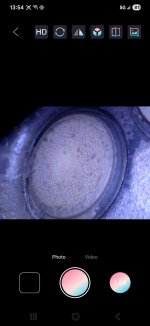
Finally got the hangar to do a compression check. The #4 cylinder checked out fine, 78/80. I could not detect any leakage from the cylinder in the exhaust. Also I am a beginner at borescope interpretation, but the valve does not look burned to me. My plan at this time is to keep flying it and replace the EGT probe in that cylinder. 1000008193.jpg
 
Also the cylinder seemed to have a fair amount of oil pooling in it, but to be honest I don't know if this is typically with sitting.


1000008194.jpg
 
Yep will be doing. I will say I have had 2 EGT probes fail since I have owned the RV, and they were obviously burned. I think that the GRT probes don't seem to last more than a few hundred hours.
 
The plane I bought had Electronics International probes, one was intermittent. I swapped it with another cylinder to see if it was a probe or wiring issue. Also connectors are critical for these little probes. If your setup has blade type connectors, consider switching to barrel connectors.

Remember these instruments are trying to interpret Millivolts- it doesn't take much to cause a faulty reading. In once case I found the grounds had multiple splices which was enough to cause them to read intermittently. More chances for bad connections, I guess.
 
Yep will be doing. I will say I have had 2 EGT probes fail since I have owned the RV, and they were obviously burned. I think that the GRT probes don't seem to last more than a few hundred hours.
The original GRT EGT probes never lasted very long. The "long life" GRT EGT probes are much better and I have yet to have one fail. AFAIK, they only sell the long life probes now.
 
Finally got the hangar to do a compression check. The #4 cylinder checked out fine, 78/80. I could not detect any leakage from the cylinder in the exhaust. Also I am a beginner at borescope interpretation, but the valve does not look burned to me. My plan at this time is to keep flying it and replace the EGT probe in that cylinder. View attachment 109455
that valve looks great. Though that has nothing to do with intermittent sticking. If you still think that the valve stuck, I would pull the spring and see if the valve stem has a bit of play and is free moving.
 
to wobble or not to wobble, that is not the question. wobble. find a local Robinson helicoper mechanic to do the work. they do this service bulitin all the time on the Robinson helicopters. it is a service bulletin with the company. it is good money spent and you will see and learn what it is all about. the exhaust valves are the weak part of the lycoming engine. if you have issues start using TCP or decalin fuel additive.
 
to wobble or not to wobble, that is not the question. wobble. find a local Robinson helicoper mechanic to do the work. they do this service bulitin all the time on the Robinson helicopters. it is a service bulletin with the company. it is good money spent and you will see and learn what it is all about. the exhaust valves are the weak part of the lycoming engine. if you have issues start using TCP or decalin fuel additive.
Yes, a wobble test is better. However, if just trying to confirm the event, it can be done without test tools. After removing the spring, it will be obvious whether or not the clearance is tight and sticking is possible. This doesn't tell you whether or not you are in tolerance, but if you can spin the valve with your fingers on a coldengine, you can be assured that the valve has not been sticking and will not in the near future. This method is not enough to say you are good for the next 500 hours, but gives an immediate good/no good for sticking.
 
Yes, a wobble test is better. However, if just trying to confirm the event, it can be done without test tools. After removing the spring, it will be obvious whether or not the clearance is tight and sticking is possible. This doesn't tell you whether or not you are in tolerance, but if you can spin the valve with your fingers on a coldengine, you can be assured that the valve has not been sticking and will not in the near future. This method is not enough to say you are good for the next 500 hours, but gives an immediate good/no good for sticking.

Like Larry Says. I just went through this.

 
I am not having any valve sticking issues at this time. No morning sickness or rough running, or abrupt and complete loss of EGT. It was just a slightly, but consistently lower, EGT in the cylinder in question that had the guide reamed.

I do think the valve looks good, as do the compressions.

I do use Decalin additive and 100% 100LL. I have never had a lead related plug issue, just the valve sticking episode.

The engine up until 25 hours ago was run on XC 20W50. I have since moved to Aeroshell W100+.

I am going to keep a close eye on the valve and compressions every 25 hrs.
 
I’m not the expert here, but just another point of consideration - these valves rotate. I think it is about once per minute? You can see the rotation by observing the variance on EGT temperatures. Usually somewhere around 10-25 degrees difference as they rotate. The difference comes from the slight imperfections between the seats and valve. The less the variance the more matched the seat and valve. As I remember a 25 - 30-degree difference in temperature (each valve - not valve to valve) is about as much as you want to see. My guess is that the disturbance when reaming the guide slightly changed the seat to valve fit and it will improve over time.
 
Like Larry Says. I just went through this.

that is a great video to show tight vs loose. that one is too tight. The stem should have just the slightest bit of rocking back and forth and should have 0 resistance when moving or spinning. Again caution. The wobble test will tell you if it is tightening up even though it is not yet problematic; This test won't. The wobble test will also tell you if your guides are worn - too much clearance.
 
I’m not the expert here, but just another point of consideration - these valves rotate. I think it is about once per minute? You can see the rotation by observing the variance on EGT temperatures.
Certainly not on a normal engine. Even with a warped valve or bad geometry in the guide will result in consistent leakage regardless of valve rotation. Even debris on the face or seat will not change leakage rate with rotation.

If your assumption here were correct, we would need to rotate the valves 360* while doing compression tests to find leaks.
 
Last edited:
Back
Top