



My home field is prone to fog in the Winter season... and we're having loads of it this as I speak.
The upside being the time left to complete upgrades to one's ship, or mini-projects, such as this one
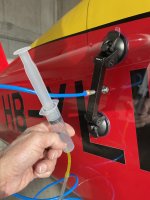
The talk here is about leak testing one's pitot and static system, which is performed following any disconnection of either system. HomebuiltHELP now offers this vid explaining the simple procedure using a plastic syringe, and this is the method I've been using successfully for a few years now...
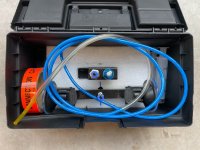
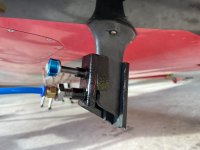
As I was getting tired of trying to get hold of the non-resident avionics guy to beg for the use of his static/dynamic adapters, I decided to make my own... making it more difficult is my use of a blade pitot probe type (and it's conical shape), and the typical use of flush static ports. A couple of cheap suction cups, aluminum bar, steel tubing, a couple of rivnuts and harware, and it all works pretty good, and all fits as a kit in a disused toolbox, good stuff.
The upside being the time left to complete upgrades to one's ship, or mini-projects, such as this one
The talk here is about leak testing one's pitot and static system, which is performed following any disconnection of either system. HomebuiltHELP now offers this vid explaining the simple procedure using a plastic syringe, and this is the method I've been using successfully for a few years now...
As I was getting tired of trying to get hold of the non-resident avionics guy to beg for the use of his static/dynamic adapters, I decided to make my own... making it more difficult is my use of a blade pitot probe type (and it's conical shape), and the typical use of flush static ports. A couple of cheap suction cups, aluminum bar, steel tubing, a couple of rivnuts and harware, and it all works pretty good, and all fits as a kit in a disused toolbox, good stuff.


