sansoneservices
Well Known Member
The Lyc IO-360 angle valve crankshaft can be had with or without dynamic counterweights. I assume the crankcase is different for each. Anyone know?


Yes regarding the specific weight configuration. Lycoming has a tech service bulletin regarding. I'm going to open the IPC and determine cases. I came across a high time engine with the B6 suffix, the 6 means weights. Thanks for responseNo first hand knowledge, but vaguely remember that the weights were opposite the crank offsets and didn’t increase the area required in the crankcase. My guess is that they fit in the same case. Too many years ago when i had the 540 apart.
Should be able to figure it out by reviewing parts catalogs.
Be careful with weight and pin parts, as they are usually specified based upon the prop hub type and the to the sub model. A few varieties out there.
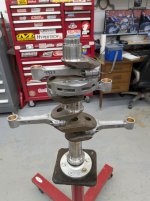
Thanks muchly sir.. I didn't get a chance yet to check the IPC.. I need to act quickly and purchase the high time (running w/logs) engine I found. I will work it over real good this winter and maybe install in my plane (w/out weights).. not sure how much smoother the weighted engine is, mine is pretty darn smoothView attachment 99352
You can see the counterweights here - they're the grey almost-half-circle part attached near the #4 piston rod. I don't think they take up any extra room in the case, they just fit into what's already there.
the crankcases are the same. Good Luck, MahlonThanks muchly sir.. I didn't get a chance yet to check the IPC.. I need to act quickly and purchase the high time (running w/logs) engine I found. I will work it over real good this winter and maybe install in my plane (w/out weights).. not sure how much smoother the weighted engine is, mine is pretty darn smooth

Not sure if this is what you mean, but I wouldn't recommend removing the counterweights from a counterweighted crank.Thanks muchly sir.. I didn't get a chance yet to check the IPC.. I need to act quickly and purchase the high time (running w/logs) engine I found. I will work it over real good this winter and maybe install in my plane (w/out weights).. not sure how much smoother the weighted engine is, mine is pretty darn smooth
I mean remove my engine w/o counterweights to install the engine WITH counterweights (after I overhaul)Not sure if this is what you mean, but I wouldn't recommend removing the counterweights from a counterweighted crank.
If you're going to do any aerobatics or formation flying, I would recommend the NON-Counterweighted crank.Thanks mahlon, I was under the impression the counterweights reduce vibration the occupants feel. I'm considering a purchase of a used crankcase with cam and crank installed. I would rather have just the crankcase halves so Divco can restore to new specs. My current crank is not counterweighted so I was curious as to the benefit

Why is a counterweighted crank not recommended?If you're going to do any aerobatics or formation flying, I would recommend the NON-Counterweighted crank.

Rapid throttle changes are discouraged with CW cranks.Why is a counterweighted crank not recommended?
Thanks for the infoRapid throttle changes are discouraged with CW cranks.
As far as I know Lycoming never made a AEIO 540 or 580 without counterweights. All of the Extra's, MX's, Edge 540's and S2 Pitts' have counter weighted cranks. A few of the 4 cylinder aerobatic planes also used counterweighted cranks. In my thousands of hours with and around aerobatic planes I never saw or heard a problem with the counter weights in an aerobatic plane.Why is a counterweighted crank not recommended?

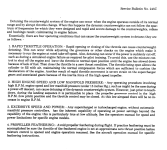
That's interesting! I was taught the same thing as what Walt said above. Here is a service bulletin I dug up on the subject but it pertains to geared and rotorcraft engines. It lists these engines: GO-435, GO-480, IGO-480. GSO-480, IGSO-480. IGO-540, IGSO-540, VO-540. TIGO-541. Most of them are geared so that must multiply the forces on the affected engine parts while the non-geared engines do not have the force?? Perhaps the origins of an old wives tale?As far as I know Lycoming never made a AEIO 540 or 580 without counterweights. All of the Extra's, MX's, Edge 540's and S2 Pitts' have counter weighted cranks. A few of the 4 cylinder aerobatic planes also used counterweighted cranks. In my thousands of hours with and around aerobatic planes I never saw or heard a problem with the counter weights in an aerobatic plane.

The bushings and rollers are steel. Not brass, nor bronze.The CW's have bores with brass bushings, as do the ears on the crank. ............
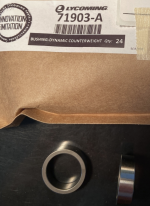
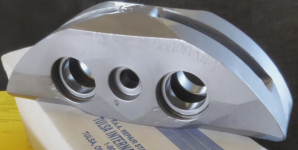
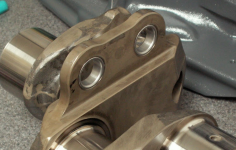
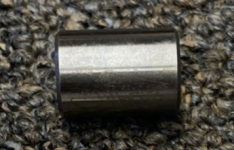
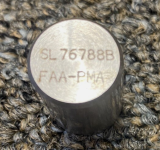
Thanks for clarifying. Its been too many years I guess, as I remember the bushings being bronze. The still wear though. The ones on the 540 i rebuilt had visible wear in two areas,The bushings and rollers are steel. Not brass, nor bronze.
View attachment 100084View attachment 100085View attachment 100086View attachment 100087View attachment 100088