Van's Air Force

The definitive Van's Aircraft support community! Buying, building or flying an RV? Join our exclusive family of mentors and enthusiasts!

Integrating 430w into existing G3x panel..

robblr

Member
Friend
1731526117831.png

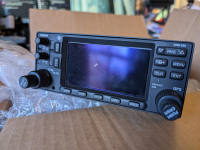
I impluse-bought a nice 430w here yesterday. It arrived today complete with mounting tray and connectors. My RV4 is equipped as follows:

  • Garmin G3X Touch (10" w/ Sirius XM Music/Weather)
    • GPS20A WAAS (GPS Navigation/ADS-B Position Source)
    • Garmin GDL39 (Remote Mount- ADS-B Traffic and Weather)
  • GEA24 (EIS: Engine monitoring and annunciation)
  • AUTOPILOT (2 Axis) GMC 307 (IAS Hold, VS and ALT Select,
    • Garmin GSA28 Servos
  • Garmin SL30 (NAV/COM)
  • Garmin GTX23ES Transponder (ADS-B OUT)
  • PS Engineering Stereo Audio Panel (w/ music control)

The previous owner left a 430-sized hole in the center console between my knees with the intent of eventually adding a 430. Now seems as good of a time as ever.

My goals are: Fly legal RNAVs and add a second comm. I have VOR capabilities in the SL30/G3x and the airplane flies a coupled approach just fine. I'd prefer not to add more antennas to get 2nd VOR working, unless there's a compelling reason to do so. I don't intend to spend much time in actual, but would like to be able to pop through a layer on days I'd normally be stuck on the ground.

I'm an instrument-rated pilot who rarely flies in actual, and when I do it's in a GNS-480 equipped steam gauge Cherokee which I use for currency and a modicum of proficiency.

Ideally, I'd like to run the 430 'headless' off the G3x as an external nav source, pushing flight plans to it, loading approaches and holds, etc. The seller of the 430 says this can be done with the newest software update.

It seems like now might be a good time to add a backup G5 or GI-275, as well. What else should I be considering before I talk to the avionics shop? I've started reading the G3x and 430 install guides, but I thought I'd ping the VAF hive-mind for some real-world opinions.

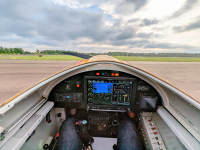
Here's my panel for reference. You can see the void below the SL-30. I'd likely bump the intercom and nav radio down and put the 430 on top. The Dynon D2 is inop and has been removed. I could put my backup instrument in this space.
1731526906200.png
 
Since you asked for opinions:
1. I won’t fly in IMC with just one attitude source. My #1 priority would be to replace the broken Dynon with a G5, or the GRT or Dynon equivalent (with standby batteries). The 275 is very nice but also expensive.
2. By all means, move the 430W higher.
3. Hook up the 430W VOR/ILS antenna. Just use splitters/diplexers off the existing antenna.
BTW, you do know your SL30 can simultaneously provide 2 vor signals, right? But adding the splitters is so easy, why not.
 
Since you asked for opinions:
1. I won’t fly in IMC with just one attitude source. My #1 priority would be to replace the broken Dynon with a G5, or the GRT or Dynon equivalent (with standby batteries). The 275 is very nice but also expensive.
2. By all means, move the 430W higher.
3. Hook up the 430W VOR/ILS antenna. Just use splitters/diplexers off the existing antenna.
BTW, you do know your SL30 can simultaneously provide 2 vor signals, right? But adding the splitters is so easy, why not.
I would install a GAD29 ARINC interface module, this will convert the ARINC from the GNS430W to the PFD and install a G5.
The G5 can drive the autopilot if PFD fails but the 275 can´t. A G3X system with a G5 installed, prevents installation of a 275.

The Garmin GNS™ 4XX receiver, moving map navigator are supported by the G3X system, including WAAS approach capability. This integration requires the use of a GAD 29 ARINC 429 interface module. GPS navigation data is provided to the G3X system through one RS-232 input and one ARINC 429 input for each GNS 4XX, IFR GPS navigator unit. The G3X system sends flight data and selected course information back to the external GPS navigator through an ARINC 429 output. The G3X system uses an additional ARINC 429 input to receive VOR, localizer, and glideslope deviation information from a Garmin GNS 430 IFR GPS/NAV receiver.
Link to G3X installation manual.

Good luck
 
Having just upgraded from G3X Touch + 430W: Some comments:

  • You'll need a GAD29 to interface the ARINC interface on the 430W to the G3X Touch system (this is needed for any IFR navigator)
  • You should get a G5.
  • When you get a G5, it isn't just a display, it also acts as a backup ADHARS, so it's a more valuable backup than you think.
  • The COM and NAV audio on the 430W can connect to your PS Engineering audio panel. The G3X Touch doesn't need to know about them (and, even if it did, it can't push frequency changes from the touch screen, you have to do that manually on the 430W)
  • You can run both NAV radios off the same antenna with an appropriate splitter.
  • You can't run both COM radios off the same antenna.
  • Pay attention to the COM interlock wiring in the G3X Touch / 430W installation manuals.
  • The 430W needs an ARINC port facing the (to-be-purchased GAD29) and two RS232 serial ports connected to the PFD. One serial port is configured to carry Garmin Aviation format GPS data, the other one is set up for Connext protocol to carry flight plan updates.
  • The 430W doesn't have a TO/GA input, so you'll have to sequence missed approaches with the SUSP key. If you have a TO/GA switch, leave it connected to the G3X Touch system just like it is now, and it'll command a straight-ahead climbing attitude to remove workload in the initial stages of dealing with the rest of the missed approach procedure.
  • You'll need two power inputs. GNS430W installation manual has the details, but the COM and GPS/Display inputs are separate.
  • The 430W receives more data from the G3X than you think. For example, after flying behind mine for ten years, adding the G3X Touch to the aircraft made the 430W suddenly able to display crosswinds on its map page and self-calculate TAS on the AUX pages without user input. I'd never seen that before, it surprised me to see the ancient 430W grow new capabilities because it was connected to a glass cockpit system.
  • Because the 430W is a TSO-145/146 GNSS source, whatever GPS you're currently using to feed position data to your transponder will be surplus to requirements, and you might be able to delete it.
  • When the G3X Touch system is configured for EXTERNAL navigation, the 430W will be in charge of the flight plan. You can't alter anything via the touch screen on the G3X Touch FltPln page, it's view-only. Any entries you make on the FPL or PROC pages on the 430W will be replicated "live" on the G3X Touch maps, charts, and FltPln page. In the event of a 430W failure, reversion to internal navigation is pretty seamless (your autopilot will kick out and need to be reengaged, and you'll need to fly a visual approach, but your enroute flight plan will survive)
  • This means you can't run the 430W "headless" in the way you've described in your original post when you're flying IFR. For example, you can't add/remove waypoints from a flight plan in flight, or select an approach, or select an arrival/departure without interacting with the 430W knobs and buttons.
  • When the G3X Touch system is configured for INTERNAL navigation, the 430W will only see updates to the active G3X Touch flight plan if you hit MENU and tap "Send to Navigator" on the FltPln page.
  • The G3X advisory visual approaches will no longer be selectable when an external IFR navigator is added to the system. I think it's a Garmin design decision, if you have an IFR navigator then the IFR navigator is the only way to set up approaches.
At my airport, IFR departures always get the same SID. My normal flow with the 430W was to enter my filed routing on the G3X Touch on the FltPln page with INTERNAL navigation selected prior to taxi, then shoot it over to the 430W with MENU->Send To Navigator, and re-set the G3X Touch navigation source to EXTERNAL. When ground gave me my clearance, it'd always be "[destination] via [first waypoint] then as filed, Bankstown 9 departure, climb via SID to 3000." So all I'd need to do is load up the SID on the 430W and get moving.

That's about the closest you can get to "headless" operation with a 430W. Still pretty good, but you can't use the G3X as a remote controller for any IFR navigator at all, as far as I know; You always need to interact with the IFR navigator to invoke IFR procedures.

- mark
 
Folks, this is immensely valuable feedback. The guys from the avionics shop are coming by on Saturday to take a look and get a plan together.
 
Having just upgraded from G3X Touch + 430W: Some comments:

These are all very good points. One extra comment to expand on this one:

  • Because the 430W is a TSO-145/146 GNSS source, whatever GPS you're currently using to feed position data to your transponder will be surplus to requirements, and you might be able to delete it.

Since the OP currently has a GPS 20A providing GPS data to his GTX 23ES transponder, he might be able to remove the GPS 20A entirely and use the GNS 430W for that purpose instead. This would require one extra RS-232 wire from the GNS to the GTX. The existing GPS antenna could be reused if it is a compatible type (GA 35, etc).

However! Before recommending this, first I would want to know if the GDU 4xx display has its own GPS antenna, or if the GPS 20A is the sole GPS source in the aircraft. A GPS 20A can provide the required GPS data to the GTX 23ES transponder and the GSU 25 ADAHRS, but a GNS 430W can only do the first part. So, removing the GPS 20A in favor of a GNS 430W would require adding a separate GPS antenna for the GDU, if there isn't one already, in order to provide the required GPS source for the GSU 25. This could be another external "teardrop" antenna, or a small glareshield-mounted unit.
 
I won't claim to KNOW, but interconnecting multiple screens from the same vendor always makes me a bit nervous. What software bug will lock up the CAN bus and kill all the screens, or some such? A second AHRS is useful, but if it is interconnected to everything (in theory good), does that actually create a vulnerability? I don't know. Since I don't know, I like fully isolated backups.

So for example a uAvionix AV-30 w/external compass would give you a completely seperate AHRS, Compass, display, and can take GPS serial data from the 430. It won't drive the servos, it won't give you VNAV, etc. But, it has it's own battery and gives you a full PFD should the big screen crash or black out.
 
I won't claim to KNOW, but interconnecting multiple screens from the same vendor always makes me a bit nervous. What software bug will lock up the CAN bus and kill all the screens, or some such? A second AHRS is useful, but if it is interconnected to everything (in theory good), does that actually create a vulnerability? I don't know. Since I don't know, I like fully isolated backups.

So for example a uAvionix AV-30 w/external compass would give you a completely seperate AHRS, Compass, display, and can take GPS serial data from the 430. It won't drive the servos, it won't give you VNAV, etc. But, it has it's own battery and gives you a full PFD should the big screen crash or black out.

If a G5 is connected to a G3x Touch system, then it has its own ADHARS, and its own display, and (optionally, recommended) its own backup power source. It also runs different software, so it’ll have its own independent set of bugs.

If something locks up the Canbus, it’s still an independent flight instrument with everything you’d expect from a six pack. So when the system is critically impaired, it’s no worse than an AV-30. But when the Canbus isn’t wedged, it’s a backup protecting you from failure of a GSU ADHARS unit, which the AV-30 can’t do.

I wouldn’t recommend an AV-30 on a G3X Touch system.

- mark
 
If you want only one COM antenna using two radios I suggest the RAMI-590 switch.

The AV-590 is an electronic switch allowing two COM radios to share the same COM antenna.
In receive mode, it acts as a signal splitter allowing both COM radios reception across the entire COM band (118-137 MHz).
In transmit mode, which ever COM radio (COM 1 or 2) is selected through the audio panel, a control signal is sent to the AV-590, switching the selected COM radio to the COM antenna and isolating the remaining COM radio from the COM antenna.
Once no longer transmitting, the control signal is removed and the AV-590 electronic switch reverts back to the receive mode as described above.


Good luck
 
Back
Top