Van's Air Force

The definitive Van's Aircraft support community! Buying, building or flying an RV? Join our exclusive family of mentors and enthusiasts!

I will need to put on new wheel pants

RNB

Well Known Member
Sponsor
Six days ago I had right brake failure on my RV10, saw smoke, then fire. I am beginning to learn what will be required to replace my wheel pants (likely not the nose wheel, but maybe so for looks. Note, the non fireside wheel pant seems to have struck something and is damaged). I am not the builder of the plane I fly, and am really far away from needing to learn about this for the plane I am building. So, I would like to bounce off the hive mind my thoughts on this, get feedback, pointers, tips, and tricks. On Tuesday I get a private hangar and with the steps involved in all of this I want to try and have parts and tools on hand. It seems to me that for alignment purposes all of this should be done at one time rather than flying in between work days. Of note, my home shop is 10 minutes from the airport, I expect I will need to move some tools to the hangar. Timing of this is unknown at present. If I get the plane back before Airventure I won't start until after. Here is what I think has to happen:

1. I assume the gear leg fairing is toasty enough to just plan on putting a new one on. This along with the wheel pants and trim pieces shown on page 48-1 of the plans: U-1020, U-1057 a and b, U-1017, and U-1019 along with the called for rivets and screws.
2. I assume I need some kind of appropriate laser light, chalk lines. I have no idea what laser light to use?
3. It seems some rough fitting is completed with the plane on the ground, then final positioning is done when the plane is jacked up and level. I've seen some things for planes under construction and how to level them but not on a completed flying 10. How do I make sure I have the plane level laterally and front to back?
4. Aftermarket jack supplies seem to focus on removing the tie down ring, inserting a shaped object that is more stable upon jacking each wing. Harbor Freight gets mentioned a lot, either rigging a heavy duty jack with lateral supports or a bottle jack on an about 20 inch platform.
5. There is a need for basic fiberglass work to reinforce things at final holes with a need to protect some areas from being glued/glassed together. This seems key!

So I think I need to order the referenced parts from Vans, a chalk line, some tie down related jack point, and maybe some fancy do doodads for running laser lines on the floor and wheel pants. Will I need any specialized fiberglass supplies that my boating family or West Marine local store would not have?

Are there other parts or things I should order in advance?
What laser type stuff do I need?
What safety things can I do while the plane is up?
I have looked for some videos, so far nothing great showing up.

What else?

Thank you!
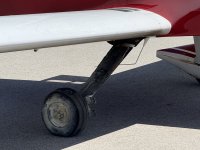
IMG_7891.jpeg
 
Reading your post it appears you may be overthinking the project. Are you purchasing the wheel pants already molded? More than likely someone at your airport can assist you installing them
 
  • Like
Reactions: RNB
Reading your post it appears you may be overthinking the project. Are you purchasing the wheel pants already molded? More than likely someone at your airport can assist you installing them
Perhaps I am overthinking on the lasers?
Yes, folks that work for >$100 per hour will help me on their schedule!
 
Perhaps I am overthinking on the lasers?
Yes, folks that work for >$100 per hour will help me on their schedule!
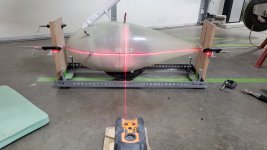
I don't know the 10 but I did write an article (draft) for Kitplanes on mounting pants and fairings. It may be useful. Shoot me a DM with and e-mail address if you want the draft.
As they say, a picture is 1000 words.
Maybe this will help.
20220922_130009.jpg
 
The usual leveling points fore-aft are the door sills.
Yes, you need to jack up the plane prior to final mounting hole drilling. As you jack up the plane you’ll see the wheels drop lower but not straight down, they rotate slightly. For minimum drag you want the fairings aligned in this weight-off-wheels position. If enough of the old fairings are left you might be able to carefully transfer the hole positions and avoid jacking up the plane.
 
  • Like
Reactions: RNB
Regarding the unburned but damaged left wheel fairing, it will be more efficient to repair the damage than to start over from scratch. Fiberglass is kind of a magic material in that damage can almost always be repaired with excellent results.
 
From the photo, it appears the underside of the wing received some heat. How does one determine if the aluminum was compromised?
 
The usual leveling points fore-aft are the door sills.
Yes, you need to jack up the plane prior to final mounting hole drilling. As you jack up the plane you’ll see the wheels drop lower but not straight down, they rotate slightly. For minimum drag you want the fairings aligned in this weight-off-wheels position. If enough of the old fairings are left you might be able to carefully transfer the hole positions and avoid jacking up the plane.

One pant remained on the plane.

Door sill? So put a 6-12 inch level on the door frame and let this guide me?
 
Door sill? So put a 6-12 inch level on the door frame and let this guide me?
Yep. That's documented in the plans. If you don't have those, send me a private message with your e-mail address and I'll send you the relevant chapter from the plans.
 
  • Like
Reactions: RNB
Van's instructions are pretty good at explaining this procedure. There are also plenty of builders that have documented how they did it on their websites. There are myriad minor variations, so you can make it as simple or as complex as you wish. You can do it with strings, tape, and plumb bobs if you don't have access to laser equipment. You'll likely need some wood to make spacer blocks and jigs to hold everything in place.

And yes, jack the plane up and keep going until you're finished. Starting over so you can fly in between work sessions will create a lot of rework and the possibilities of errors. Take your time and do it as accurately as you can. This will pay dividends in how the plane flies.
 
  • Like
Reactions: RNB
Six days ago I had right brake failure on my RV10, saw smoke, then fire. I am beginning to learn what will be required to replace my wheel pants (likely not the nose wheel, but maybe so for looks. Note, the non fireside wheel pant seems to have struck something and is damaged). I am not the builder of the plane I fly, and am really far away from needing to learn about this for the plane I am building. So, I would like to bounce off the hive mind my thoughts on this, get feedback, pointers, tips, and tricks. On Tuesday I get a private hangar and with the steps involved in all of this I want to try and have parts and tools on hand. It seems to me that for alignment purposes all of this should be done at one time rather than flying in between work days. Of note, my home shop is 10 minutes from the airport, I expect I will need to move some tools to the hangar. Timing of this is unknown at present. If I get the plane back before Airventure I won't start until after. Here is what I think has to happen:

1. I assume the gear leg fairing is toasty enough to just plan on putting a new one on. This along with the wheel pants and trim pieces shown on page 48-1 of the plans: U-1020, U-1057 a and b, U-1017, and U-1019 along with the called for rivets and screws.
2. I assume I need some kind of appropriate laser light, chalk lines. I have no idea what laser light to use?
3. It seems some rough fitting is completed with the plane on the ground, then final positioning is done when the plane is jacked up and level. I've seen some things for planes under construction and how to level them but not on a completed flying 10. How do I make sure I have the plane level laterally and front to back?
4. Aftermarket jack supplies seem to focus on removing the tie down ring, inserting a shaped object that is more stable upon jacking each wing. Harbor Freight gets mentioned a lot, either rigging a heavy duty jack with lateral supports or a bottle jack on an about 20 inch platform.
5. There is a need for basic fiberglass work to reinforce things at final holes with a need to protect some areas from being glued/glassed together. This seems key!

So I think I need to order the referenced parts from Vans, a chalk line, some tie down related jack point, and maybe some fancy do doodads for running laser lines on the floor and wheel pants. Will I need any specialized fiberglass supplies that my boating family or West Marine local store would not have?

Are there other parts or things I should order in advance?
What laser type stuff do I need?
What safety things can I do while the plane is up?
I have looked for some videos, so far nothing great showing up.

What else?

Thank you!

View attachment 91341

Suggest you contact Ken Krueger at Sky Designs Aero. He was the chief engineer on the RV-10 (and many others) and offers the best carbon fairings on the market. https://www.skydesigns.aero/
 
  • Like
Reactions: RNB
Back
Top