Van's Air Force

The definitive Van's Aircraft support community! Buying, building or flying an RV? Join our exclusive family of mentors and enthusiasts!

HS bolts

Imagine47

Member
Friend
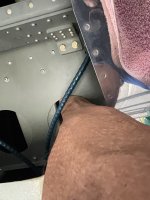
Clearly I am missing something. When I went to attach the HS I find 4 bolts to attach the forward spar to HS 814 angle, HS 819 aft deck etc that look impossible to get the nuts on the underside. Normal size hands got no chance. Can I flip the bolts and put the head down? I might be able to get that and will make future torques easier (maybe). Is there a clever tool or technique I am missing? Should I just cut an access plate in the side of the airplane since these are supposed to be torqued every CI?
A site search didn’t turn up much but maybe it’s been covered if someone will point me to it.
Thanks

Greg
RV 14A built, flown and sold (bad dog)
RV 14 on hold, thanks Vans/Lycoming
RV8 in process.
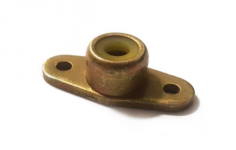
 
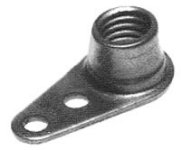
I had the same trouble with my HS so I installed anchor nuts riveted in. I didn't want to do it, I had to. This is what I used. Worked like a champ.
1731883575331.png
 
Clearly I am missing something. When I went to attach the HS I find 4 bolts to attach the forward spar to HS 814 angle, HS 819 aft deck etc that look impossible to get the nuts on the underside. Normal size hands got no chance. Can I flip the bolts and put the head down? I might be able to get that and will make future torques easier (maybe). Is there a clever tool or technique I am missing? Should I just cut an access plate in the side of the airplane since these are supposed to be torqued every CI?
A site search didn’t turn up much but maybe it’s been covered if someone will point me to it.
Thanks

Greg
RV 14A built, flown and sold (bad dog)
RV 14 on hold, thanks Vans/Lycoming
RV8 in process.
I had to go through the same trouble installing the nuts. You can make a nut holder using a box wrench to start the nut. It wasn’t easy. I had welts for many days afterward. You can get a young kid to help you because his arms are smaller.
 
Clearly I am missing something. When I went to attach the HS I find 4 bolts to attach the forward spar to HS 814 angle, HS 819 aft deck etc that look impossible to get the nuts on the underside. Normal size hands got no chance. Can I flip the bolts and put the head down?

No structural difference. However, a reality check...well over 1000 builders have installed those fasteners per plans.

I might be able to get that and will make future torques easier (maybe). Is there a clever tool or technique I am missing? Should I just cut an access plate in the side of the airplane since these are supposed to be torqued every CI?

There is no future torque requirement of which I'm aware. For sure you don't want to cut any holes in the side of the airplane.
 
Is there a clever tool or technique I am missing? Should I just cut an access plate in the side of the airplane since these are supposed to be torqued every CI?
These four bolts are probably the only structural bolts that are in tension in the airplane that I know off. I torqued these at higher torque than the normal bolts. The bolt heads can be accessed from the outside. But after the airplane is assembled, the only way to get to the nuts is by removing the vertical stabilizer so that your arm can fit through the opening. Even when using a nut holding tool, it will be tough to snake the tool either from the bottom or from the top opening. You can definitely having a 2nd person access the nut from inside the fuselage but only if you disassemble the elevator torque tube.

In hindsight, it would be a good idea to install a nut plate while everything is unassembled.

At my first condition inspection, I put a wrench on the bolts and the torque was still tight. I made a habit to lift up the horizontal stabilizer to detect any movement at every pre-flight. It was more for a piece of mind.
 
Last edited:
Just a tip
Buy sockets from a Pawn Shop. I buy a couple each size. Usually pennies and often free. They want to get rid of the cheap stuff. I also buy combination wrenches.
Grind the socket wall thin then grind the depth so the nut is flush to the edge. It works great for starting nuts in tight places.

Another tip
Stick the nut to a magnet pick up tool. It won't turn much, but usually enough to get a thread or two started. Plus it won't fall.
 
Thanks Larry that was the tip I was looking for. Pointing out that a thousand others have done it isnt really helpful. Life is short and I want to get flying.
I was informed by another -8 owner that those bolts need to be torqued at every CI. I would love to hear that he is in error.
The nutplate idea is so good you wonder why Vans doesn't do it that way.
Thanks
Greg
 
Pointing out that a thousand others have done it isnt really helpful.

Half the fleet is built below average. Take whatever help you can get.

I was informed by another -8 owner that those bolts need to be torqued at every CI. I would love to hear that he is in error.

Ask here: [email protected]

The nutplate idea is so good you wonder why Vans doesn't do it that way.

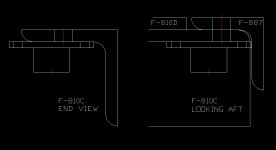
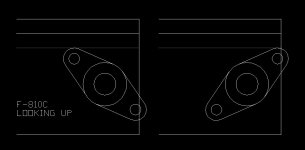
Because a NASM21078 doesn't fit with the outboard 0.190 hole in the right place.

Illustrations to scale. Nutplate aligned fore and aft (left), and transverse (right):

ScreenHunter_2503 Nov. 18 20.15.jpg

Nor does it fit when rotated:

ScreenHunter_2504 Nov. 18 20.16.jpg

It may be possible to fit two MS21080's (single lug) on each side, but the next question would be how to install them. The four #12 holes are drilled through the component stack after the rear fuselage is complete. Access to install nutplates is no better than access to install the nuts per plans.
 
Last edited:
Half the fleet is built below average. Take whatever help you can get.


Ask here: [email protected]


Because a NASM21078 doesn't fit with the outboard 0.190 hole in the right place.

Illustrations to scale. Nutplate aligned fore and aft (left), and transverse (right):

View attachment 74624

Nor does it fit when rotated:

View attachment 74625

It may be possible to fit two MS21080's (single lug) on each side, but the next question would be how to install them. The four #12 holes are drilled through the component stack after the rear fuselage is complete. Access to install nutplates is no better than access to install the nuts per plans.
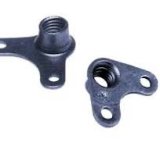
IMG_0256.jpegIMG_0255.jpegThere are options…
 
I wouldn’t drill any more holes than necessary in this part of the longeron. I know you don’t want to hear “thousands have gone before you and managed”, so hopefully the hints provided will give you the faith. You can do this per plans.
While you’re in there, make sure your edge distances are in tolerance. There is a long history of edge distance errors here. Better to know now than find out later.
 
As Dan pointed out, the real difficulty in using nutplates is that you have just as bad of access to install them as you do putting regular nut plates on - so if you’re looking for a “quick fix”, they aren’t going to help much. Getting fixed (versus floating) Nutplates perfectly aligned is tricky. Plus, you’re drilling additional holes (for the rivets) in a critical spot in the longerons. And….not all nutplates have the same strength as bolts. That’s important because this is one of the most critical bolts on the airplane - thre are two of them holding your tail on, and there are lots more wing mounting bolts - so these need to be gotten right.

To the OP’s question, I know of no requirement to check the torque on these bolts annually (been flying my -8 twenty years BTW), so this is really an installation problem. Look for a helper with smaller hands - might take time to find someone to help, and I know the OP is in a hurry, but sometimes you have to slow down - I am ready to rivet on a bunch of tail skins, but the wife (talented riveter) is gone for a week, so I’m working on something else until she gets back.

Honestly, I’ve built on a lot of airplanes, including a lot of Va’s airplanes (including a -3…talk about small!), and I don’t recall any trauma from the RV-8 tail installation, so there’s a solution without deviating significantly from plans.

Paul
 
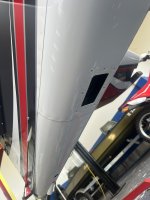
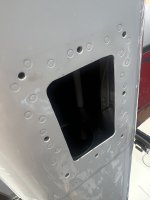
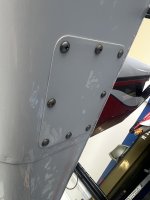
I put aa access panel on the bottom of the fuselage…
 

Attachments

  • IMG_0131.jpeg
    IMG_0131.jpeg
    1.4 MB · Views: 40
  • IMG_0132.jpeg
    IMG_0132.jpeg
    1 MB · Views: 37
  • IMG_0133.jpeg
    IMG_0133.jpeg
    1.1 MB · Views: 38
Thanks for all the responses. I'll get it done. I always do. I'm working with some high school students building an RV12. Maybe I get one of them to reach in there. I just wanted to make sure I wasn't missing an easy workaround. There are so many great ideas on this forum I always want to check. The nutplates might be an idea for while build is in process but I don't see how to go back now.
cheers
Greg
 
Thanks for all the responses. I'll get it done. I always do. I'm working with some high school students building an RV12. Maybe I get one of them to reach in there. I just wanted to make sure I wasn't missing an easy workaround. There are so many great ideas on this forum I always want to check. The nutplates might be an idea for while build is in process but I don't see how to go back now.
cheers
Greg
A small agile person should be able to crawl inside the tailcone and directly see and reach the nuts from the inside. Some cushions or pillows will protect the skin and bulkheads and make it comfortable for the crawler.
 
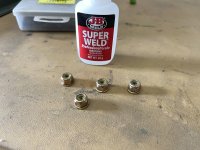
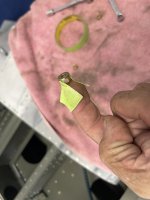
Keep it simple, position the washer/nut on the threads and turn the bolt from the top. Also helps a LOT to get on a ladder and be much higher than normal, allows a better ‘angle’.
IMG_2127.jpegIMG_2128.jpegIMG_2129.jpeg
 
Keep it simple, position the washer/nut on the threads and turn the bolt from the top. Also helps a LOT to get on a ladder and be much higher than normal, allows a better ‘angle’.
View attachment 74756View attachment 74757View attachment 74758
I'm curious about bonding the washer to the nut because I assumed that nuts and bolt heads were supposed to turn against the washer, rather than the aluminum surface below. By your signature it is evident that you know what you are doing... so please can you help explain?
 
I'm curious about bonding the washer to the nut because I assumed that nuts and bolt heads were supposed to turn against the washer, rather than the aluminum surface below. By your signature it is evident that you know what you are doing... so please can you help explain?
I can say that most of the turning was done on the bolt side instead of the nut side. I just held the nut stationary with the box wrench and ratchet the bolt head side.
 
I can say that most of the turning was done on the bolt side instead of the nut side. I just held the nut stationary with the box wrench and ratchet the bolt head side.
In this case, the washer should be on the bolt side. The washer should always be on the side of the equation being turned.

It is, of course, acceptable to use a washer on both sides provided the bolt is long enough. From the pictures, it looks like this has been done here.
 
Last edited:
In this case, the washer should be on the bolt side. The washer should always be on the side of the equation being turned.

It is, of course, acceptable to use a washer on both sides provided the bolt is long enough. From the pictures, it looks like this has been done here.
Thank you; another question - is it necessary to have any washer at all on the nut side in this example, given that it is the bolt head that is being turned (against its washer) whereas the nut is stationary?
 
Thank you; another question - is it necessary to have any washer at all on the nut side in this example, given that it is the bolt head that is being turned (against its washer) whereas the nut is stationary?
Not a requirement but I prefer the added surface area when the nut is primarily loaded in tension.
 
If you don’t like JB weld use a dab of contact cement on the washer and on the nut in a box end wrench. I took mine on and off three times. Seemed trivial
 
Back
Top