

Van's Air Force
You are using an out of date browser. It may not display this or other websites correctly.
You should upgrade or use an alternative browser.
You should upgrade or use an alternative browser.
How do I route my mixture/prop cables through a SB-500 bushing?
- Thread starter nohoflyer
- Start date


Use these. Make sure you get the right sizes.
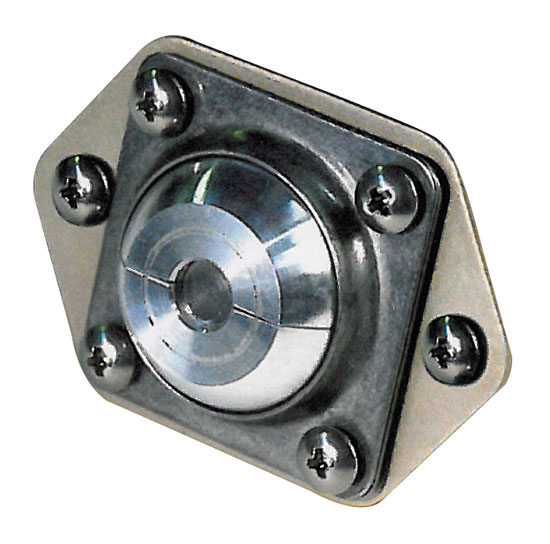
 www.aircraftspruce.com
Eyeball Firewall Fitting - Ss Pressure Plate - Aluminum Ttp-B | Aircraft Spruce ®
Eyeball Firewall Fitting - Ss Pressure Plate - Aluminum Ttp-B The B series firewall fitting has a 1 inch aluminum ball held in place by 2 stainless steel pressure plates.
Slice the bushing with a razer blade. Open it up to fit around the cable and snap into position.No way it fits. It’s just too big! There has to be a trick like taking it apart or something. Very stumped here.
Also works for rudder cables.... Better yet, for rudder cables use the next size smaller bushing, split, slip over cable and snap into existing bushing.

Put the snap bushing over the cable before pushing the bushing into the hole. If the bushing won't slide over the end of the cable then slit the bushing along its axis on one side with a sharp knife and slip it over the cable by flexing it apart, it will spring back and be held together when it is pushed into the hole. (When you slit the bushing position the cut away from the little tangs.)No way it fits. It’s just too big! There has to be a trick like taking it apart or something. Very stumped here.


Size up your hole and snap bushing so it will fit then slit a smaller bushing and nest it into the other one. This takes up the space. Follow Vans instructions and form fire sealant over the bushings and seal to firewall.
This is per Vans. Cheap and simple and has been the Vans standard forever.
The drawback is when changing out cables down the road, it can be a bit difficult.
The eyeballs are great, but the all stainless are much better than those with an aluminum ball. However, they add complexity, expense, and some weight. Choose wisely…..
This is per Vans. Cheap and simple and has been the Vans standard forever.
The drawback is when changing out cables down the road, it can be a bit difficult.
The eyeballs are great, but the all stainless are much better than those with an aluminum ball. However, they add complexity, expense, and some weight. Choose wisely…..

Size up your hole and snap bushing so it will fit then slit a smaller bushing and nest it into the other one. This takes up the space. Follow Vans instructions and form fire sealant over the bushings and seal to firewall.
This is per Vans. Cheap and simple and has been the Vans standard forever.
The drawback is when changing out cables down the road, it can be a bit difficult.
The eyeballs are great, but the all stainless are much better than those with an aluminum ball. However, they add complexity, expense, and some weight. Choose wisely…..
What instruction?! This is one of my problems….no instructions.

Size up your hole and snap bushing so it will fit then slit a smaller bushing and nest it into the other one. This takes up the space. Follow Vans instructions and form fire sealant over the bushings and seal to firewall.
This is per Vans. Cheap and simple and has been the Vans standard forever.
Which doesn't make it even remotely intelligent.
As has been said. you're going to need to split that snap bushing with a razor knife then slip it over the cable before pushing it into the hole.I hear what you guys are saying but neither the knob nor the other end of the cable will come close to fitting through the hole. I will try to push it through the hole minus the grommet and see.
What did your burn test show?Which doesn't make it even remotely intelligent.
We did that one right here 14 years ago, with a variety of different sealants. Even located well outside the hot zone, snap bushings lasted less than 2 minutes in a static environment. In the hot zone they wouldn't last 60 seconds. As for depending on sealant alone, the silicones work by forming a char and ablating. How long do you think ash stays in place on a vibrating panel in a 25 cubic foot per second air movement?
This isn't 1990. The goal is to build better, safer, more reliable airplanes as the community learns more. Steel eyeballs, not aluminum, or tubular steel fittings pumped full of an intumescent, please. If you insist on an old school approach, use a silicone rubber grommet with a layer of intumescent sealant under a SS fire shield. Sealants work relatively well if constrained with mechanical fixation.
This isn't 1990. The goal is to build better, safer, more reliable airplanes as the community learns more. Steel eyeballs, not aluminum, or tubular steel fittings pumped full of an intumescent, please. If you insist on an old school approach, use a silicone rubber grommet with a layer of intumescent sealant under a SS fire shield. Sealants work relatively well if constrained with mechanical fixation.
