Van's Air Force

The definitive Van's Aircraft support community! Buying, building or flying an RV? Join our exclusive family of mentors and enthusiasts!

Help Identifying an Oil Leak

Chachi7565

Well Known Member
Friend
Hi, I'm hoping you can help me identify an oil leak on my RV-8A IO-360-B1B, vertical induction, Bendix-type fuel injection.

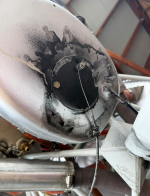
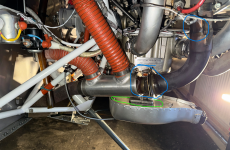
I'm struggling to figure out where it's coming from. When I remove the cowl, I see oil pooled both on top of the filter air box, and around the alternate air door on the bottom of the filter air box. I'm attaching some pictures - one of the alternate air door "dirty" after about 10 hours of flight since it was cleaned. Unfortunately, I didn't get any pictures of the top of the FAB "dirty" this time, but I will do that the next time I have the cowl off. It isn't resulting in excessive oil consumption yet, I'm putting in a quart every 10 hours or so, but it is the only significant leak that I see on the engine.

I'm not seeing any noticeable leaks above this area, and I'm not sure I understand the fuel injection servo well enough, but I can't think of any reason the oil would be coming from that.

Can you help me brainstorm where this oil may be coming from?
1783618021638.png

1783618057561.png
 
Oil under the cowl moves in mysterious ways. One thing I would do is change what looks like your breather tube and have it exit outside the cowl. Another thing I would look at is the oil return line hoses and clamps for integrity and tightness. Lastly, for starters anyway, I would check all the rocker cover gaskets for integrity and tightness.
 
Looks like oil residue on the induction boss at the right side of the photo, plus in the harness above that. Looks to be more reside in the harness above the other induction tube as well.
 
I'm going to suggest it is not oil. Looks like you have a carb'd engine. The black stuff is more likely to be a bit of fuel residue mixed in with aluminum wear debris from the alternate air door.

Rub the gunk between your fingers. If it does not feel like oil, it's most likely not.

I get a very slight amount of the same looking stuff coming out of the carb to airbox mounting plate interface. Again, it is an aluminum to aluminum interface, similar to the alternate air door.

Edit: oops....just noticed you have a fuel injected engine, not carb'd. Aluminum wear debris in fuel residue is still what you have going on here.
 
Last edited:
Couple observations from what you've shared so far; most of the black stuff on the bottom of the FAB is evaporated fuel mixed with aluminum dust from the alternate door chafing against the aluminum ring (this is not oil). That comes from over-priming as well as the fuel in the injector lines boiling off when engine shut down, and that fuel just follows gravity and winds up in the bottom of the FAB.

There's a little bit of oil at the 7 o'clock position of that underside of FAB photo, which is probably from the intake valve guides. That oil also follows gravity and winds up in the bottom of the FAB. That's not a leak.

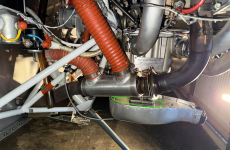
There's oil on the #3 cylinder exhaust plumbing where circled blue below. Is that from you lubricating the joints or is that motor oil? If it's oil, that's another place to look for leaks.

1783620318275.png
 
Last edited:
Couple observations from what you've shared so far; most of the black stuff on the bottom of the FAB is evaporated fuel mixed with aluminum dust from the alternate door chafing against the aluminum ring (this is not oil). That comes from over-priming as well as the fuel in the injector lines boiling off when engine shut down, and that fuel just follows gravity and winds up in the bottom of the FAB.

There's a little bit of oil at the 7 o'clock position of that underside of FAB photo, which is probably from the intake valve guides. That oil also follows gravity and winds up in the bottom of the FAB. That's not a leak.

There's oil on the #3 cylinder exhaust plumbing where circled blue below. Is that from you lubricating the joints or is that motor oil? If it's oil, that's another place to look for leaks.

View attachment 122674
Thank you!

That's mouse milk on the exhaust joint; they were bone dry prior to lubricating them.
 
I Agree with Hgerhardt. What’s your prime/start sequence? prime less.
Will do. To prime, I go to full rich, hit the boost pump, and watch for a fuel flow indication on my Dynon. But, I confess, I've probably waited passed simple fuel flow indication, until it reaches typical fuel flow - probably about a medium-fast four count. I'll start using less and see if it changes. Thanks!
 
Oil under the cowl moves in mysterious ways. One thing I would do is change what looks like your breather tube and have it exit outside the cowl. Another thing I would look at is the oil return line hoses and clamps for integrity and tightness. Lastly, for starters anyway, I would check all the rocker cover gaskets for integrity and tightness.
Yeah, I hate this breather tube setup, but haven't made the time to reroute it. The builder did some things incredibly well, and some things that I wonder at.

I'll check out those other areas you mention.
 
Thanks, all, I'll check those areas and amend my priming procedures to see if that helps. Also, this makes me wonder if my FAB drain is functioning properly, I wouldn't expect it to exit through the alternate air door. But also not too jazzed thinking about overflow priming fuel flowing out that black line onto a hot exhaust, when starting after a previous flight. Any thoughts?
 
........., this makes me wonder if my FAB drain is functioning properly, I wouldn't expect it to exit through the alternate air door. ..........
The alternate air door is metal-on-metal and is not truly sealed and is directly below the throttle body, which the fuel is dripping from. So the fuel leaks out before it reaches that drain you have.
 
Will do. To prime, I go to full rich, hit the boost pump, and watch for a fuel flow indication on my Dynon. But, I confess, I've probably waited passed simple fuel flow indication, until it reaches typical fuel flow - probably about a medium-fast four count. I'll start using less and see if it changes. Thanks!
Yep. A river of fuel running down & straight out your servo.
 
some methods of finding suspected leaks. dry off the engine and/or suspected areas. run for 1-5 mins. shorter is better to keep wind from blowing oil around.

-do it at night and use uv light. the wet areas show up really well. you can use dye but the oil shows up also
-foot powder works also but messy to clean up after
-zip tie paper towel around areas if possible for really short engine ground runs
 
It looks like your cold scat tube is drenched in oil...
That spark plug wire in the upper left of the picture looks wet also.
 
Back
Top