

Van's Air Force
You are using an out of date browser. It may not display this or other websites correctly.
You should upgrade or use an alternative browser.
You should upgrade or use an alternative browser.
Ground adjustable prop ……Cato vs WW
- Thread starter lumber214
- Start date



drinkwater
Member
That's an eye-opener! yikes...

Another option is the Sensenich ground adjustable propeller, either 2-blade or 3-blade.I am trying to decide which ground adjustable prop to use on my 180 hp RV7.
Cato at $6200 vs WW at $4700. Is it worth the extra $$$ for the Cato?
Am I missing any other options?
Looking for the best quality/performance prop.
Thanks for your input on this dilemma
Steve
I have a sensenich ground adjustable prop. I love it. It weighs much less than a constant speed prop. Doesn’t need to be overhauled when it starts spitting grease out of the hub. Performance is very close to Vans constant speed prop numbers. It also cost $4350.00 dollars which is much less than a constant speed prop. It’s easy to set a new pitch value with the suppled pins. The worst part is removing about 15 screws to remove the spinner to get to the prop bolts. Can’t say enough good things about the prop. Oh yeah the carbon fiber blades are beautiful and have nickel leading edges.
How many hubs is a ton?WW has had a ton of cracking hubs (including the replacements), so I’d go with Catto.
I am trying to decide which ground adjustable prop to use on my 180 hp RV7.
Cato at $6200 vs WW at $4700. Is it worth the extra $$$ for the Cato?
Am I missing any other options?
Looking for the best quality/performance prop.
Thanks for your input on this dilemma
Steve
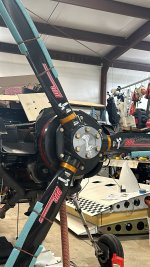
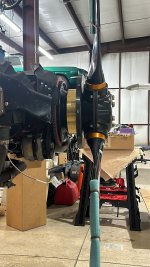
DUC ground adjustable
Last edited:
RANS used them for the Titan on the S21 (it’s a great pairing). I don’t have stats if that’s what you’re asking for, but a significant number of them have had cracks. Many you can’t find without dye penetration testing. Some have received replacement hubs that have subsequently cracked. The thought originally was that it was related to the carbon fiber backplate, then thought it was over torquing, but there have been recent builders that documented their install process meticulously and yet have found another crack. Maybe this is unique to the S21 w/ the Titan IO340, but I can’t imagine that’s the case.How many hubs is a ton?
Here’s a recent SB relating to the issue: https://whirlwindpropellers.com/aircraft/wp-content/uploads/2025/04/WW-ASB-61-001-1.pdf
Last edited:

I’ve had 2 Sensenich GA props, both of which I’ve replaced other props with, one being a Catto. I couldn’t adjust the Catto, so I sent it to Craig to modify it. There’s only so much you can do with a wood core carbon prop in terms of pitch. The adjustments made were minimal, and not enough to fit my requirements, so I bought a Sensenich carbon fiber GA prop. I’ve had two of them now (out of the 6 RV’s I’ve owned/built - all others with CS props). For a fixed pitch prop, I don’t think there’s a better choice than the Sensenich GA.I am trying to decide which ground adjustable prop to use on my 180 hp RV7.
Cato at $6200 vs WW at $4700. Is it worth the extra $$$ for the Cato?
Am I missing any other options?
Looking for the best quality/performance prop.
Thanks for your input on this dilemma
Steve
Our airplanes have a pretty wide range of capabilities, and they all do well in most of these areas, but may be better in more challenging areas with a constant speed prop, but those regimes are limited to high, hot, or short runway limitations usually. Most of us don’t have runway limitations, so even though the runway performance is better with a CS prop, do you need that? Once you are up and running, the differences are minimal. I can out climb all of my formation buddies enroute, and that is probably due to my lighter weight……. but - the differences are minimal. The biggest differences are in the cost of application, and the weight. You may save a small amount of fuel burn enroute at a lower RPM, but if you do, it’s very minimal. You might argue that your CS engine will last longer than it’s fixed pitch brother because of it’s lower cruise RPM, but I challenge you to come up with that data. I’m not talking about a flight school 172 that has spent 70% of its life in the traffic pattern doing touch and goes. I don’t think a higher RPM in cruise with a fixed pitch prop (and mine only is higher if I’m high - above 8000’) has a measurable affect on TBO - TBO being when it is needed, not a Lycoming recommendation.
Off my soap box now - sorry to go off topic…. I think a GA prop is a good choice, vs an Catto, and I prefer the Sensenich one from experience.
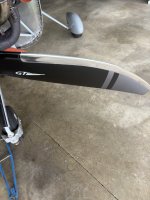
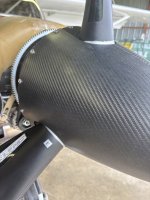
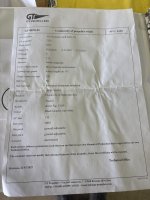
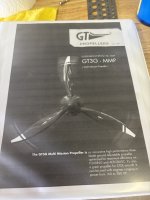
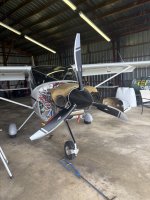
Consider the GT ground adjustable prop. I have one for sale. Like new, 22 hours. Not the right prop for a heavy Glastar. $4000 shipped US
Attachments

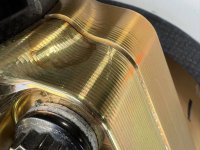
I have a Rans S-21 that I'm building and I just returned my new and unused Whirlwind prop to WW/Hartzell for refund. From the Rans groups I know that at least five S-21s have had cracked hubs. Both the original hub that used 3/8" bolts throughout, and then the updated hub that had 7/16" bolts on the corners, both of them have had cracks. All the hubs I've seen with cracks are under 200 hours, some under 100 hours. No one has been killed or injured by them yet, but clearly if these are not caught that's coming. Couple of pics below to illustrate the cracks, these are from S-21s, credit for photos is not by but owners who share to the Rans community for education purposes.
I am planning on getting a Cato prop but I'm also interested what people are doing here.
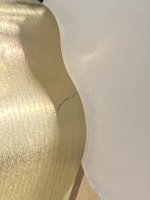
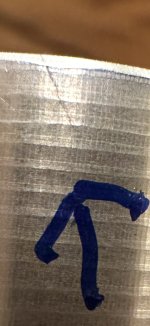
I am planning on getting a Cato prop but I'm also interested what people are doing here.
Everyone I know that has had those hub cracks has jumped over to Catto. I need to ask what prop length they went with, but so far a loss of 5-7 on the top end has been the norm. These are all on 21's or other Bush type planes. Catto hasn't been without problems either, they were throwing the nickel leading edges originally, but it sounds like they have that issue resolved.I have a Rans S-21 that I'm building and I just returned my new and unused Whirlwind prop to WW/Hartzell for refund. From the Rans groups I know that at least five S-21s have had cracked hubs. Both the original hub that used 3/8" bolts throughout, and then the updated hub that had 7/16" bolts on the corners, both of them have had cracks. All the hubs I've seen with cracks are under 200 hours, some under 100 hours. No one has been killed or injured by them yet, but clearly if these are not caught that's coming. Couple of pics below to illustrate the cracks, these are from S-21s, credit for photos is not by but owners who share to the Rans community for education purposes.
I am planning on getting a Cato prop but I'm also interested what people are doing here.
View attachment 100110
View attachment 100111
View attachment 100112
I just ordered 2 GA props from Nicole last week, a 68 for a Panther and a 78 for a Badlands Traveler
On mine, I changed pitch maybe twice - during phase one testing. I had one goal I was trying to achieve. That one goal was, I didn’t want me engine to exceed 2750 RPM at full throttle - at any altitude. That was the parameter I wanted, and it was easy to achieve. On my Catto, wide open throttle would result in a max RPM of over 3000 - even up high at 12,000’. Impossible to modify a Catto to get a reduction of 300 RPM. That’s what I found with my first RV4 (that I didn’t build), O-320 powered. My second RV4 (also not built by me), O-360 powered) had a Sensi FP metal that would spin to almost 3,000 RPM. That was my first Sensenich carbon fiber GA prop. Liked it, then went directly to a Sensenich GA on my latest build - RV6, O-360 powered.
The only reason I would want to change he pitch at this point would be to shorten my takeoff ground roll, or slightly improve initial climb, which I haven’t had a need for.
The only reason I would want to change he pitch at this point would be to shorten my takeoff ground roll, or slightly improve initial climb, which I haven’t had a need for.

I have the Sensi ground adjustable as well. IO360 L2A. What pin did you use for phase one and which have you settled on now for normal ops?On mine, I changed pitch maybe twice - during phase one testing. I had one goal I was trying to achieve. That one goal was, I didn’t want me engine to exceed 2750 RPM at full throttle - at any altitude. That was the parameter I wanted, and it was easy to achieve. On my Catto, wide open throttle would result in a max RPM of over 3000 - even up high at 12,000’. Impossible to modify a Catto to get a reduction of 300 RPM. That’s what I found with my first RV4 (that I didn’t build), O-320 powered. My second RV4 (also not built by me), O-360 powered) had a Sensi FP metal that would spin to almost 3,000 RPM. That was my first Sensenich carbon fiber GA prop. Liked it, then went directly to a Sensenich GA on my latest build - RV6, O-360 powered.
The only reason I would want to change he pitch at this point would be to shorten my takeoff ground roll, or slightly improve initial climb, which I haven’t had a need for.

My GA Sensenich pitch is changed when I go mountain flying in the Rockies. Probably once a year or less being a flat lander. In a pinch on a short runway with high density altitude and max gross weight I can change pitch to the climb setting to get out of the field safely. I like that option.Just out of interest, if you have decided on a FP prop versus CS, what is the rationale for a GA prop on a RV, how often would you change pitch?
I was at OSH last year credit card in hand ready to buy my -7 a prop, o-360 with a solid crankshaft.
Catto didn’t even show up. I ended up talking to them on the phone. They had a choice of a couple of fixed pitch 3 bladed props, take it or leave it. When I asked about a ground adjustable 3 bladed prop, they said all of their time was being devoted to the Cub Type market.
I went to the sensenich booth. When I told them I was ready to buy a prop they basically told me to call the office.
I went over to Hartzell and they had just acquired whirlwind and they were so new that they weren’t set up to do anything but display the whirlwind.
I found the DUC booth and they offered me their Cobra composite 3 bladed with a metal leading edge, custom made including colors.
The DUC is a little more detailed to set up, I used a digital inclinometer to be precise and I made a fixture to accurately read the blade angle.
Get the aircraft set up so the face of the prop is 90 degrees perpendicular to level.
Get the leading edge to the first blade absolutely level.
Adjust the angle of that blade to the degree specified like 10.5 inches inboard of the tip.
Adjust all the blades to the same angle, torque everything down and run up the engine on the ground to maximum power.
The maximum rpm can be dialed in by changing the blade angle by 1 degree for 100 rpm of adjustment.
Fly the aircraft and see what it’ll actually do in flight at max power and make the decision about additional adjustments.
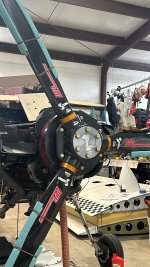
Catto didn’t even show up. I ended up talking to them on the phone. They had a choice of a couple of fixed pitch 3 bladed props, take it or leave it. When I asked about a ground adjustable 3 bladed prop, they said all of their time was being devoted to the Cub Type market.
I went to the sensenich booth. When I told them I was ready to buy a prop they basically told me to call the office.
I went over to Hartzell and they had just acquired whirlwind and they were so new that they weren’t set up to do anything but display the whirlwind.
I found the DUC booth and they offered me their Cobra composite 3 bladed with a metal leading edge, custom made including colors.
The DUC is a little more detailed to set up, I used a digital inclinometer to be precise and I made a fixture to accurately read the blade angle.
Get the aircraft set up so the face of the prop is 90 degrees perpendicular to level.
Get the leading edge to the first blade absolutely level.
Adjust the angle of that blade to the degree specified like 10.5 inches inboard of the tip.
Adjust all the blades to the same angle, torque everything down and run up the engine on the ground to maximum power.
The maximum rpm can be dialed in by changing the blade angle by 1 degree for 100 rpm of adjustment.
Fly the aircraft and see what it’ll actually do in flight at max power and make the decision about additional adjustments.
Last edited:

Personally, I don't see a GA prop as a stand in for a CS prop, but rather a FP prop that you buy once and don't have to send in to get re-pitched. I'd like a CS prop, but I can't justify the 20k USD it would cost ($14k-17k for the prop depending on which one, plus governor, control cable etc). The main complaint I have about my Sensenich GA is that it's TOO light, and with a GA prop there's no way to add noseweight easily like a fixed pitch.Just out of interest, if you have decided on a FP prop versus CS, what is the rationale for a GA prop on a RV, how often would you change pitch?
The RV7 was designed for a constant speed prop. My O-360 does not have a hollow crankshaft, I had SABER MANUFACTURING make a 2 1/4” thick spacer.Personally, I don't see a GA prop as a stand in for a CS prop, but rather a FP prop that you buy once and don't have to send in to get re-pitched. I'd like a CS prop, but I can't justify the 20k USD it would cost ($14k-17k for the prop depending on which one, plus governor, control cable etc). The main complaint I have about my Sensenich GA is that it's TOO light, and with a GA prop there's no way to add noseweight easily like a fixed pitch.
20 pounds of brass should help move the CG forward.
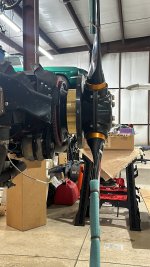

Lots of threads on the RV7 with fixed pitch ref the CG challenges, biggest change has been the trend towards lightweight FP props like the Catto which is 12-14 lbs versus the original sensenich FP metal prop with hub that weighed 42 lbs (not that much different than a CS prop) and that weight difference is right on the nose for maximum CG impactThe RV7 was designed for a constant speed prop. My O-360 does not have a hollow crankshaft, I had SABER MANUFACTURING make a 2 1/4” thick spacer.
20 pounds of brass should help move the CG forward. View attachment 100152
 . Most of us have added the saber spacer and in my case the landol ring on the flywheel to make the CG issue manageable. Depending on the stage of the build a 320 mount from Vans can apparently move the 0-360 a few inches forward which helps the CG. All the fancy new stuff like the earthX battery etc. reduces weight up front which does not help.
Figs
I think I’m using pin 6, but I also made minor adjustments using the Vans “tool” for prop blade adjustment using a magnetized digital level to get both blades set exactly the same blade angle. The initial blade angles differed by .3 degrees using pin 6. After using the digital level I ended up the exact same blade angles, and it was noticeably smoother.I have the Sensi ground adjustable as well. IO360 L2A. What pin did you use for phase one and which have you settled on now for normal ops?
I know about the O-320 engine mount.Lots of threads on the RV7 with fixed pitch ref the CG challenges, biggest change has been the trend towards lightweight FP props like the Catto which is 12-14 lbs versus the original sensenich FP metal prop with hub that weighed 42 lbs (not that much different than a CS prop) and that weight difference is right on the nose for maximum CG impact
Figs
Given the choice between replacing the engine mount plus making a new engine cowling or spending 1k on a brass spacer. I opted for writing a check.
The other thing I did was to mount all the remote avionics to removable plates, to attach to the fore-aft supports between the firewall and the sub-panel.
My -7 as built had an empty CG of 80.25. I’ll weigh it again right after it gets its new paint job.
Mine is 80.14, but I added the Saber spacer, extension (moved the prop forward to increase the cowling clearance for cowling removal with 3 blade), and crush plate.My -7 as built had an empty CG of 80.25. I’ll weigh it again right after it gets its new paint job.
Have you considered Sensenich ground adjustable?I am trying to decide which ground adjustable prop to use on my 180 hp RV7.
Cato at $6200 vs WW at $4700. Is it worth the extra $$$ for the Cato?
Am I missing any other options?
Looking for the best quality/performance prop.
Thanks for your input on this dilemma
Steve
I’m an old time RV guy now flying an S-21 with the Titan 180hp.
Was running the Whirlwind until the hub was no longer safe to operate.
Did consider Catto, but now they are having problems and bulletins.
The Sensenich is a certified design with no advisories or bulletins.
I’m happy with the performance. Give them a call and ask for Steve.
Catto has:I am trying to decide which ground adjustable prop to use on my 180 hp RV7.
Cato at $6200 vs WW at $4700. Is it worth the extra $$$ for the Cato?
Am I missing any other options?
Looking for the best quality/performance prop.
Thanks for your input on this dilemma
Steve
360/180hp
Diameter of 2-Bladed: 68"
Diameter of 3-Bladed: 66"
Pitch: Climb: 75"
Good all-around: 76"
Cruise: 77"
Off the top of my head I paid 6k for 3 bladed composite ground adjustable from DUC
3-blade Inconel COBRA Propeller Right | DUC Hélices
The COBRA range of propellers is the first to have been developed for aircraft with a power rating of over 150 hp.Due to its size and strength, it is capable of handling power ratings from 150hp to 315hp.Its unique high efficiency design is optimized for direct drive engines. Its aerodynamic...
 www.duc-helices.com
