Van's Air Force

The definitive Van's Aircraft support community! Buying, building or flying an RV? Join our exclusive family of mentors and enthusiasts!

GPS175 LPV and GRT Mini GA flight director?

Ruready

Well Known Member
Extreme novice here, I understand rs232 in/out signals kind of I think.. just dont know how many commands can be say sent from 175 to Mini GA on each rs232 pin. Next I read about this thing called Airinc429, is that like an external Rs232 that you use if you run out of Rs232 ports?

Objective is to get my Mini GA to show the 175 nav course on its HSI or PFD and the course and vnav guidance from the 175 LPV approach to the Mini GA flight director, would like to get that Mini GA flight director to grab onto the LPV crs and glide.

Right now all I have showing the 175 crs and glide is a King 209 loc and glide display. I have used the flight director on stand alone Mina GA synthetic approaches where the crs and vnav data comes from inside the Mini GA itself, now wondering how to get the Mini GA to suck in the GPS175 data and show on the Mini GA flight director

Also just updated my Mini GA nav database with the free 28 day cycle data update file from GRT website, is there a way to force that new database from my Mini GA down the GPS175s throat and make it current so I can cancel my Garmin nav updates and save 299 bucks a year?
 
Last edited:
Searching here found this.. but its for a different GRT efis, but will look it over tomorrow and see if it it useful
 

Attachments

  • IMG_0124.png
    IMG_0124.png
    444.1 KB · Views: 26
Most navigators send horizontal guidance via the RS-232, but send vertical guidance via the ARINC connection. The mini doesn't have an ARINC port, therefore you cannot receive the vert guidance.
 
The GPS 175 outputs vertical deviation as an analog signal and as an ARINC 429 GAMA Format 1 or 3 message under Label 117G, with a vertical scale factor under Label 327G. The GPS 175 also outputs cross-track distance on the ARINC 429 output, under Label 116G. I think you'd need a GRT ARINC-429 Module (on sale for $500 as of 4/12/26--but read posts 6 and 7 below) or analog-to-digital converter box capable of generating the appropriate RS-232 message to get it into your Mini GA. GRT tech support should be able to help you figure that out.

In addition, the GPS 175 outputs cross-track distance in hundredths of nautical miles on RS-232 in the Aviation Output Sentence Type 1 message, but the GPS 175 does not transmit vertical deviation on RS-232 as far as I can tell.
 
Last edited:
The database (free) for the GRT EFIS is NOT the same as nor available to the NAV database for Garmin Navigators. There is no transfer mechanism. You must purchase the database updates for the Garmin (or other) certified navigators.

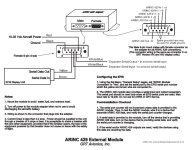
The GRT EFIS products that do not have built-in ARINC modules use an external module connected via one of the RS-232 ports. See the GRT documentation for the ARINC module (same page as the product is listed).

As mentioned above, IF you only wanted horizontal guidance, you could use serial communication from the Garmin to the GRT.
 
The GPS 175 outputs vertical deviation as an analog signal and as an ARINC 429 GAMA Format 1 or 3 message under Label 117G, with a vertical scale factor under Label 327G. The GPS 175 also outputs cross-track distance on the ARINC 429 output, under Label 116G. I think you'd need a GRT ARINC-429 Module (on sale for $500 as of 4/12/26) or analog-to-digital converter box capable of generating the appropriate RS-232 message to get it into your Mini GA. GRT tech support should be able to help you figure that out.

In addition, the GPS 175 outputs cross-track distance in hundredths of nautical miles on RS-232 in the Aviation Output Sentence Type 1 message, but the GPS 175 does not transmit vertical deviation on RS-232 as far as I can tell.
I thought that module was for the std EFIS units and cannot be added to the mini. OP should investigate before purchasing.
 
I thought that module was for the std EFIS units and cannot be added to the mini. OP should investigate before purchasing.
The following is from the web page I linked in post #4 above: "External ARINC-429 Module for 10.1, EX, SX, and Mini-AP. Requires one high-speed serial port (In+Out)". It may only work with the Advanced Package version of the Mini.
 
The following is from the web page I linked in post #4 above: "External ARINC-429 Module for 10.1, EX, SX, and Mini-AP. Requires one high-speed serial port (In+Out)". It may only work with the Advanced Package version of the Mini.
Ok, maybe it works with the AP version.
 
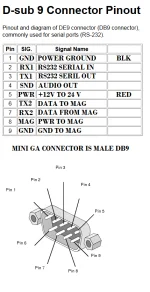
Here is the GA connector, 4 serial pins, don't know if they are high speed
 

Attachments

  • MINI-GA-DB9-PINOUT.webp
    MINI-GA-DB9-PINOUT.webp
    17.9 KB · Views: 15
I thought that module was for the std EFIS units and cannot be added to the mini. OP should investigate before purchasing.
Even more critical is he is using the Mini**GA**.

He should make sure that the documentation says that is has the s/w support for the ARINC module. It does have serial ports.

A quick call or email or booth visit to GRT will give a far more definitive answer than us (including those of us who use a lot of GRT stuff but maybe not that particular configuration.
 
Extreme novice here, I understand rs232 in/out signals kind of I think.. just dont know how many commands can be say sent from 175 to Mini GA on each rs232 pin. Next I read about this thing called Airinc429, is that like an external Rs232 that you use if you run out of Rs232 ports?

Objective is to get my Mini GA to show the 175 nav course on its HSI or PFD and the course and vnav guidance from the 175 LPV approach to the Mini GA flight director, would like to get that Mini GA flight director to grab onto the LPV crs and glide.

Right now all I have showing the 175 crs and glide is a King 209 loc and glide display. I have used the flight director on stand alone Mina GA synthetic approaches where the crs and vnav data comes from inside the Mini GA itself, now wondering how to get the Mini GA to suck in the GPS175 data and show on the Mini GA flight director

Also just updated my Mini GA nav database with the free 28 day cycle data update file from GRT website, is there a way to force that new database from my Mini GA down the GPS175s throat and make it current so I can cancel my Garmin nav updates and save 299 bucks a year?
I think all your questions have been answered here.
1. For legal IFR with your 175 you must buy an annual Garmin data base or a Jepp database. Jepp is even more expensive than Garmin. You also need to buy ‘decoding’ equipment from Garmin or Jepp, respectively, which lets you download the data from the web and get it onto the gps’ memory card. This stuff also limits your ability to make extra copies to give to friends. E.g., you’re stuck paying for the data.
2. ARINC is a completely different system than RS-232. Arinc is a two wire system (the return floats off ground, and in principle has more noise resistance. RS232 is one wire plus it uses the aircraft ground for a return.
3. The 175 outputs horizontal data over RS232 (which the mini has). But the 175 outputs vertical glide slope digital data only over ARINC, which the mini does not have.
4. GRT sells a $500 box that converts ARINC to RS232. You need to call GRT and ask if your particular mini model can use this converter. (I’m not sure if the mini is even capable of displaying a GS needle or pointer.
 
I think all your questions have been answered here.
1. For legal IFR with your 175 you must buy an annual Garmin data base or a Jepp database. Jepp is even more expensive than Garmin. You also need to buy ‘decoding’ equipment from Garmin or Jepp, respectively, which lets you download the data from the web and get it onto the gps’ memory card. This stuff also limits your ability to make extra copies to give to friends. E.g., you’re stuck paying for the data.
2. ARINC is a completely different system than RS-232. Arinc is a two wire system (the return floats off ground, and in principle has more noise resistance. RS232 is one wire plus it uses the aircraft ground for a return.
3. The 175 outputs horizontal data over RS232 (which the mini has). But the 175 outputs vertical glide slope digital data only over ARINC, which the mini does not have.
4. GRT sells a $500 box that converts ARINC to RS232. You need to call GRT and ask if your particular mini model can use this converter. (I’m not sure if the mini is even capable of displaying a GS needle or pointer.
Thanks oh the last post is out of the grt mini GA manual though and it says it can the flight director will be driven by an Ils loc & glide or a GPS Glide so it must be able to probably give GRT a call and find out how it works
 
Thanks oh the last post is out of the grt mini GA manual though and it says it can the flight director will be driven by an Ils loc & glide or a GPS Glide so it must be able to probably give GRT a call and find out how it works
Some Nav radios (e.g., SL30) output digital ILS GS info over RS232, so no ARINC is needed. And having a FD is great, but you really should have a vertical course deviation indication too (and I see no reference to a GS indicator in the mini manual). But since you do have an analog CDI that works with the 175 GPS, that should be all you need.
 
Well that's the reason I made the post I was so confused about RS 232 and Air Ink I think I messaged GRT a few years ago and he did tell me it was possible but yeah he told me it was a mix of a whole bunch of stuff I would need to wire it up to make it work so I guess I'm just going to buy a book that explains the difference between Air Ink and rs 232 cuz I'm just confused about all that stuff. And I was also wondering how the flight director works because I don't see a vertical CDI on the thing so I thought maybe I didn't have a setting set rate to show it you can do the synthetic approach and it shows boxes to fly through and you can choose to have a flight director but there's still no vertical CDI
 
3. The 175 outputs horizontal data over RS232 (which the mini has). But the 175 outputs vertical glide slope digital data only over ARINC, which the mini does not have.
4. GRT sells a $500 box that converts ARINC to RS232. You need to call GRT and ask if your particular mini model can use this converter. (I’m not sure if the mini is even capable of displaying a GS needle or pointer.
The following is sheer speculation: The Mini-GA software may only be set up to display glide path deviation from a device that outputs CD/GS data on an SL30-like serial message.

The following is an observation: Garmin (if you know where to look) and Dynon do a pretty good job of documenting their serial interface messages. If GRT does, I haven't been able to find it.

The following is an opinion: It's too bad that Garmin didn't see fit to program their GPS receivers to output CD/GS data on an SL30-like serial message.

The following is a recommendation to the OP: Ask GRT to email you instructions on how to accomplish what you're trying to do.
 
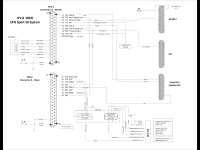
I have a GRT Horiz 10.1, and Garmin GPS175 and G5. I glanced over the question and answers. My advice is document the WIRING and contact GRT. Garmin will be less help for interconnect to Non Garmin equip.

You will almost certainty need a GRT external ARINC 429 adapter so the Garmin GPS175 can provide NAV data to the GRT MINI.
I have no way of knowing what you have without some wiring diagram, exact model of GRT MINI you have. Do you have the Autopilot version? King KI 209 I address below.


A few things were FLAGS to me.

"is there a way to force that new database from my Mini GA down the GPS175s throat and make it current so I can cancel my Garmin nav updates and save 299 bucks a year?"

Garmin and GRT are two different companies obviously. Garmin is highly proprietary and there is no forcing anything with software or data unless Garmin. Like wise Garmin data can not use other GPS/EFIS data, no way, no how. In fact Garmin data can't be used by other Garmin products, without proper serial ID matching device. It is in essence encrypted.​
Are you an Instrument Rated Pilot? If you want to fly legally and safely IFR, RNAV approaches, LPV, LP, LNAV you MUST have current GARMIN NAV database (not GRT). Yes GRT has a database but not IFR. They update the VFR database for free.​
As far as approaches using the GRT only, legally, no the Garmin GPS175 is needed. Period. However GRT sells (for my Horiz 10.1 EFIS not sure about the MINI) an optional IFR database (with approaches). However it is for VFR only and reference only. Last I checked it was a one time $600-$700 option. I'm an instrument rated pilot who files IFR. I will pay for Garmin GPS175 update as needed. Your GRT Mini can be used for IFR situational awareness but requires an external, certified IFR navigator (such as Garmin or Avidyne or King) with current database, for legal IFR approach capability. VFR see below.​
1) If you want to file IFR, fly in IMC, departure, en route, RNAV approaches you must current updated database in the Garmin GPS175.​
2) Do NOT need to update GPS175 if you're VFR and to practice IFR approaches in VFR Wx. not on IFR flight plan, database can be out of date.​
3) You should always have current charts on your iPad, Tablet, Phone (which is free with some EFB Apps) to fly VFR or IFR.​
4) If you don't NEED to update the Garmin you can save your money and update à la carte if and as needed.​
5) If you have ground based VOR/LOC or VOR/LOC/GS/DME you don't need GPS at all*, unless the approach requires it. (WAAS GPS can Sub for DME)​
* Trying to fly in current National Airspace System IFR w/o GPS is getting harder; most smaller airports only have RNAV approaches.

Can the GPS175 show NAV data on GRT Mini?
Yes, I don't know the MINI well, but you will need ARINC 429 adapter, unless your MINI has a built in ARINC 429 converter. That may have been an optional upgrade? I have the GRT Horiz 10.1 (big display). To get my Garmin GPS175 to talk to the EFIS GRT Horizon 10.1, it required an external GRT ARINC 429 converter. You can not use Garmin's ARINC 429 converter for the GRT. On the flip side you can't use a GRT ARINC 429 on a Garmin G5 or G3X.​

"Right now all I have showing the 175 crs and glide is a King 209 loc and glide display. "
Do not understand that, but to be clear standard KI 209 VOR/LOC/Glideslope indicator cannot display GPS LPV approaches because it lacks the internal switching relays needed to bypass its VOR/LOC converter for GPS guidance. To display LPV/LP/LNAV, you need the KI 209A version, which includes GPS switching relays and is compatible with WAAS GPS units. So do you have a KI 209A. If you do, you may need a separate GPS/VOR selector for the KI 209 (or not but research that). In my experience the KI 209A has a separate switch panel to redirect the NAV info to display between the GPS and the NAV receiver.​
I am assuming you have a NAV Radio (VOR/LOC/GS)? To combine that with the MINI may be very straight forward and will allow you to switch between the NAV radio and the GPS. I can do that with the GRT Horz 10.1 EFIS.​
The issue of having multi NAV sources and multi NAV displays can get difficult to impractical. You are mixing different brands of avionics and one of those brands is not fond of playing nice with other brands. It is understandable why they do it. However GRT is known of for being NON-proprietary and working with a variety of NAV, COM, Transponder brands. However if that other brand is proprietary, GRT is unable to work with that device, unless the company gives them the (non proprietary) code, protocol to communicate. I do not think what you want to do is impossible but you may need to put some effort into your somewhat custom configuration. ARINC 429 is the standard so Garmin knows they need to standardize that (not go proprietary).

You seem to want to split the GPS Nav data to two NAV heads and throwing a NAV radio into the mix. interesting. For me I have GPS only not VOR/LOC/GS.

Advice, again make detailed wiring diagram. Deep dive into GRT, GARMIN and KING's installation manuals. Draw wiring out.

If you bought the GPS175 you need to ask Garmin for the installation manual,
it does not come with. I had to ask for it. It's not easy to download a free PDF of Garmin installation manuals. I am sure they don't want it out on the web. I called on a GNS430W and G5 for a club plane not being an Garmin distributor, repair station or A&P they basically would not talk to me. The GNS430W is not "over the counter". The GNS175 is sold to end users, aka homebuilders and DIY wiring of their avionics.

Talk to GRT. I would say talk to Garmin but you are talking about connecting to 2nd Party Products (GRT/KING) good luck. Unless it is in the manual you will have to figure it out. If you had a G5 or G3X Garmin can help. Not a bash, just experience. When I talked to them about splitting the ARINC 429 out of the GPS175 to my GRT EFIS and to the G5m they when catatonic or their head explored. Ha ha.

If you did not get an answer you needed, want more help, more details and wiring schematics would help. You provided little info and details for an answer that requires specifics. I am no expert, but I have been down this road somewhat with my GRT/Garmin hybrid panel. I tried to clarify a few things, hope it helps.
 
Last edited:
Yeah I thought the 209 was the one with the little 12 pin connector on the back the rectangular box connector that's the one I have that must be the 209A, I appreciate the help I can't get into my old gmail account that GRT emailed me a few years ago when I asked this question, Google seems to believe I'm not me and won't let me reset my password so I've tried and tried and tried so I'm going to have to contact GRT again they did email and gave me a complex email about how to do it
 
Not much documentation online for the mini. But for the bigger displays there is a separate manual for IFR application.
On page 18 of that manual, it states that if the Flight Director is set OFF then one can get a pair of needles displayed for horizontal and vertical deviation. (see bottom left of attached image)

View attachment 114973
That is a way obsolete model. I have the follow on Horizon 10.1 EFIS... yes it can do this. The MINI is similar to my Horizon as I understand it, but a much smaller display and less serial inputs. Best advice is call, email GRT and ask.
 
Last edited:
Yeah I thought the 209 was the one with the little 12 pin connector on the back the rectangular box connector that's the one I have that must be the 209A, I appreciate the help I can't get into my old gmail account that GRT emailed me a few years ago when I asked this question, Google seems to believe I'm not me and won't let me reset my password so I've tried and tried and tried so I'm going to have to contact GRT again they did email and gave me a complex email about how to do it

BTW calling GRT does work, but not a monster company with call center. You may have to leave a voice mail or they answer. For something highly technical and detailed, email may be best, takes a day or two. You will get email, with a link of a follow on back and forth will be on-line with a ticket number is needed. It starts an online thread under a ticket #. It works pretty good. However garbage in... be sure to first read the manual, be clear, have attachments as needed, so they don't have to guess. OP is self professed newbie, which is fine. Not sure fully what he has going on. The GRT and GPS175 got my attention. . One issue as I wrote above is MIX and MATCH different brands. Having multi NAV sources and multi Displays adds complexity, devils in the details (wiring and the configuration settings of the EFIS).
 
Email from Jeff at GRT.. pasted below, he makes it sound easy but its almost like reading chinese to me.. I wired the GPS175 up myself it was SIMPLE, 5 wires going to the KI 209A plus a power and ground BAM done. This is like going from soloing a 172 to getting on that orion or artamis and flying to the moon and not landing…. who goes to the moon and doesnt land…. thats almost as bad as Danica going 1 lap from winning the indy 500 being the 1st woman to win and stopping for gas at the last lap instead of flooring it and taking a chance on running out of gas or winning the race

The Mini doesn't have built-in ARINC-429 so if you don't have a GRT ARINC-429 module you will need one to input the ARINC-429 data and the module wires to one of the serial inputs.

The ARINC-429 module document is on our Miscellaneous Documentation page:
https://grtavionics.com/miscellaneous-documentation/

RS-232 connection
GPS175 Pin 9 (RS-232 OUT 1) -- any serial input on EFIS
Example 1: GPS175 Pin 9 (RS-232 OUT 1) -- Mini pin 2 (Serial 1 IN)
Example 2: GPS175 Pin 9 (RS-232 OUT 1) -- GRT ARINC pin 8 (Serial Input pass-thru on male DB9 on box)

A direct connection to the display is preferred unless you're out of serial ports.

You would not connect the serial grounds.

If you are already using one of the Aviation Outputs for the King or something else, you may be able to set another output or you may need to splice into that existing wire. Some Garmins won't let you set two outputs to the same thing, so check the settings before you wire it.

ARINC connections
The GRT ARINC-429 connector (female DB9 on external module box or back of HX/HXr) will be referred to as the C connector here.
GPS175 Pin 5 (ARINC 429 OUT 1A) -- GRT ARINC pin C1 (ARINC 429 IN 1A)
GPS175 Pin 6 (ARINC 429 OUT 1B) -- GRT ARINC pin C2 (ARINC 429 IN 1B)
GPS175 Pin 27 (ARINC 429 IN 1A) -- GRT ARINC pin C5 (ARINC 429 OUT A) -- non-certified only
GPS175 Pin 28 (ARINC 429 IN 1B) -- GRT ARINC pin C9 (ARINC 429 OUT B) -- non-certified only

(Any other RS-232 input/output and ARINC-429 input/output can be substituted.)

GPS175 Settings:

ARINC RX Port 1: (input to 175 for non-certified only)
Format: EFIS/ADC
Speed: Low

ARINC TX Port 1:
Format: GAMA Format 1
Speed: Low

RS232 Port 1: Aviation Output 1

The 175 does not have an RS-232 Fuel/Air Data (FADC) input like other Garmin IFR GPS units.

EFIS Settings in SET MENU, General Setup:

For units with external ARINC module: ARINC Module Connected: Yes, Port (select port it's wired to)

ARINC Receive Rate: Low
ARINC Transmit Rate: Low

Serial Port Rate: 9600
Serial Port Input: GPS1 Aviation/MapCom
The Serial Port Output is not used for the 175 and can be used for unrelated functions at 9600 baud.
Using GPS1 for the GPS175 is recommended and sometimes required. Change any other GPS to GPS2 (change Internal GPS to GPS2).

If the GPS RS-232 is connected to the pass-thru port (pins 8 and 9) on the external ARINC module male DB9,
configure the serial port that the ARINC module is connected to as 9600 GPS1 Aviation/MapCom.

For example, if the ARINC module is connected to port 1 and the GPS RS232 data is connected to its pass-thru port, the settings would look like this:
ARINC Module Connected: Yes, Port 1
For software before July 2022:
Serial Port 1 Rate: 9600
Serial Port 1 Input: GPS1 Aviation/MapCom
The July 2022 and newer software will rename the pass-thru port to AMPT Serial Port:
AMPT Serial Port Rate: 9600
AMPT Serial Port Input: GPS1 Aviation/MapCom

If nothing is connected to the pass-thru port then the serial port input/output would be Off.

Other settings in General Setup:

ARINC GPS Input: GPS1
This tells the EFIS to use the GPS data from the ARINC-429 connection when GPS1 is selected.

NAV Mode Source: Internal
The GPS175 does not have a built-in VOR/ILS receiver, so all mode changes must be done in the EFIS.

GPS1 Flight Plan Source: External
This tells the EFIS to use GPS flight plan data from the GPS175 RS-232 connection.

GPS2 Flight Plan Source: update this to match your GPS2, if any.
GRT GPS units should be Internal. GPS units that transfer flight plan data should be External.

Virtual GPS2: Normally Off unless you know you want this feature.
If you have two GPS inputs this must be Off.

Settings in SET MENU, Primary Flight Display:

To enable the approach modes and PFD indicators, you must configure the ILS display:

ILS Type: pick Needles or Scales as preferred
When some other features are turned on, only Scales mode is possible.

Show VOR CDI on Localizer: No, unless you have a VOR input.

Show GPS CDI on Loc/GS: Yes
This displays the GPS approach deviations on the ILS indicators.
This is required for the GPS approach display and capture modes in the EFIS.


Jeff DeFouw <[email protected]>
Programmer
GRT Avionics, Inc.

 
Last edited:
This is not what you asked and probably not what you want to hear but ....

I suggest that you consider getting a GRT 10.1 or and EX if you plan on doing a bit of IFR flying. Relegate the MINI GA to an additional situation awareness and overall backup device.

Life will be much simpler and the system easier to use. Furthermore, you will find many instances of such a setup and direct advice can be given.

As mentioned before, a direct email to GRT will get you specific answers.

Finally, I plan to stop by their booth on Tuesday and can ask some specific questions if you don't have answers by then.
 
ARINC = AeronauticalRadioINCorporated
When I went through avionics and radar school in the Marine Corps I dont remember ever talking about this arinc 429, what is the 429 and how does a GRT arinc 429 differ from a Garmin or Advanced Flight airinc 429? Does the RS232 also have to be manufacture specific? The only arinc I can remember is the one who handles messages when flying, now I have to google it and see if they are in the avionics market now
 
Last edited:
This is not what you asked and probably not what you want to hear but ....

I suggest that you consider getting a GRT 10.1 or and EX if you plan on doing a bit of IFR flying. Relegate the MINI GA to an additional situation awareness and overall backup device.

Life will be much simpler and the system easier to use. Furthermore, you will find many instances of such a setup and direct advice can be given.

As mentioned before, a direct email to GRT will get you specific answers.

Finally, I plan to stop by their booth on Tuesday and can ask some specific questions if you don't have answers by then.
I posted the reply from GRT its post #24 up 4 from this one, Jeff from GRT explained how to pinout everything. Not sure I want to spend 550 bucks on an 429 arinc module may do it if I can find a used one for a hundred bucks, here is the email again

“The Mini doesn't have built-in ARINC-429 so if you don't have a GRT ARINC-429 module you will need one to input the ARINC-429 data and the module wires to one of the serial inputs.

The ARINC-429 module document is on our Miscellaneous Documentation page:
https://grtavionics.com/miscellaneous-documentation/

RS-232 connection
GPS175 Pin 9 (RS-232 OUT 1) -- any serial input on EFIS
Example 1: GPS175 Pin 9 (RS-232 OUT 1) -- Mini pin 2 (Serial 1 IN)
Example 2: GPS175 Pin 9 (RS-232 OUT 1) -- GRT ARINC pin 8 (Serial Input pass-thru on male DB9 on box)

A direct connection to the display is preferred unless you're out of serial ports.

You would not connect the serial grounds.

If you are already using one of the Aviation Outputs for the King or something else, you may be able to set another output or you may need to splice into that existing wire. Some Garmins won't let you set two outputs to the same thing, so check the settings before you wire it.

ARINC connections
The GRT ARINC-429 connector (female DB9 on external module box or back of HX/HXr) will be referred to as the C connector here.
GPS175 Pin 5 (ARINC 429 OUT 1A) -- GRT ARINC pin C1 (ARINC 429 IN 1A)
GPS175 Pin 6 (ARINC 429 OUT 1B) -- GRT ARINC pin C2 (ARINC 429 IN 1B)
GPS175 Pin 27 (ARINC 429 IN 1A) -- GRT ARINC pin C5 (ARINC 429 OUT A) -- non-certified only
GPS175 Pin 28 (ARINC 429 IN 1B) -- GRT ARINC pin C9 (ARINC 429 OUT B) -- non-certified only

(Any other RS-232 input/output and ARINC-429 input/output can be substituted.)

GPS175 Settings:

ARINC RX Port 1: (input to 175 for non-certified only)
Format: EFIS/ADC
Speed: Low

ARINC TX Port 1:
Format: GAMA Format 1
Speed: Low

RS232 Port 1: Aviation Output 1

The 175 does not have an RS-232 Fuel/Air Data (FADC) input like other Garmin IFR GPS units.

EFIS Settings in SET MENU, General Setup:

For units with external ARINC module: ARINC Module Connected: Yes, Port (select port it's wired to)

ARINC Receive Rate: Low
ARINC Transmit Rate: Low

Serial Port Rate: 9600
Serial Port Input: GPS1 Aviation/MapCom
The Serial Port Output is not used for the 175 and can be used for unrelated functions at 9600 baud.
Using GPS1 for the GPS175 is recommended and sometimes required. Change any other GPS to GPS2 (change Internal GPS to GPS2).

If the GPS RS-232 is connected to the pass-thru port (pins 8 and 9) on the external ARINC module male DB9,
configure the serial port that the ARINC module is connected to as 9600 GPS1 Aviation/MapCom.

For example, if the ARINC module is connected to port 1 and the GPS RS232 data is connected to its pass-thru port, the settings would look like this:
ARINC Module Connected: Yes, Port 1
For software before July 2022:
Serial Port 1 Rate: 9600
Serial Port 1 Input: GPS1 Aviation/MapCom
The July 2022 and newer software will rename the pass-thru port to AMPT Serial Port:
AMPT Serial Port Rate: 9600
AMPT Serial Port Input: GPS1 Aviation/MapCom

If nothing is connected to the pass-thru port then the serial port input/output would be Off.

Other settings in General Setup:

ARINC GPS Input: GPS1
This tells the EFIS to use the GPS data from the ARINC-429 connection when GPS1 is selected.

NAV Mode Source: Internal
The GPS175 does not have a built-in VOR/ILS receiver, so all mode changes must be done in the EFIS.

GPS1 Flight Plan Source: External
This tells the EFIS to use GPS flight plan data from the GPS175 RS-232 connection.

GPS2 Flight Plan Source: update this to match your GPS2, if any.
GRT GPS units should be Internal. GPS units that transfer flight plan data should be External.

Virtual GPS2: Normally Off unless you know you want this feature.
If you have two GPS inputs this must be Off.

Settings in SET MENU, Primary Flight Display:

To enable the approach modes and PFD indicators, you must configure the ILS display:

ILS Type: pick Needles or Scales as preferred
When some other features are turned on, only Scales mode is possible.

Show VOR CDI on Localizer: No, unless you have a VOR input.

Show GPS CDI on Loc/GS: Yes
This displays the GPS approach deviations on the ILS indicators.
This is required for the GPS approach display and capture modes in the EFIS.


Jeff DeFouw <[email protected]>
Programmer
GRT Avionics, Inc.”
 
I have been looking to do a panel update and prefer the GRT line of EFIS to Dynon which is what I currently have. Im not IFR rated and the objective is to be able to do VOR and ILS approaches. Which involves tuning a nav radio receiver to the appropriate frequency and then responding appropriately to the needle indicators. Thus doing GPS simulated IFR procedures is not the right learning experience.

After giving it a lot of thought, I may simply buy a used ILS / VOR receiver and an independent display like the Sandia Si-11X, which is about $2029 new.

Yes, to use an actual IRF Navigator would involve at least a G175 and associated ARINC module, thats quite a chunk of change to spend before being rated. Instead, go with the "Fly Safe" GPS module from GRT which one could say is required for proper ADSB operation and is only $600. The old ILS VOR receiver and the Sandia display will allow effective practice of the old navigational aids and prep for ones checkride.
 
I'let Bob Turner chime in, a SL-30 feeds very nicely onto GRTs with the RS232 format. Old units, so not a go if you want new off the shelf. Antenna,plan all set?
 
I have been looking to do a panel update and prefer the GRT line of EFIS to Dynon which is what I currently have. Im not IFR rated and the objective is to be able to do VOR and ILS approaches. Which involves tuning a nav radio receiver to the appropriate frequency and then responding appropriately to the needle indicators. Thus doing GPS simulated IFR procedures is not the right learning experience.

After giving it a lot of thought, I may simply buy a used ILS / VOR receiver and an independent display like the Sandia Si-11X, which is about $2029 new.

Yes, to use an actual IRF Navigator would involve at least a G175 and associated ARINC module, thats quite a chunk of change to spend before being rated. Instead, go with the "Fly Safe" GPS module from GRT which one could say is required for proper ADSB operation and is only $600. The old ILS VOR receiver and the Sandia display will allow effective practice of the old navigational aids and prep for ones checkride.
You are correct, that this is likely the least expensive route to the ifr checkride. Now the downside: GPS navigation under IFR has become the defacto standard, simply because there are so many more airports with precision gps approaches than there are ILS approaches. At the same time, many of the ILS approaches now require a DME (or GPS) due to the elimination of so many VORs, marker beacons, NDBs. If your home airport has an ILS (or maybe even a VOR approach) and you want IFR capability just to get home, then this may be right for you (Assuming you also have a suitable alternate within range). But most people will want ifr gps capability. Yes, it’s expensive.
Edit: in fact, you should see if there are any useable VOR approaches within a reasonable distance of your examiner. Sometimes the answer is, ‘none’.
 
Last edited:
I'let Bob Turner chime in, a SL-30 feeds very nicely onto GRTs with the RS232 format. Old units, so not a go if you want new off the shelf. Antenna,plan all set?
Yes, I use an SL30 feeding a GRT Hx. Just RS232, no ARINC needed. And the SL30/Hx combo let’s me show the localizer/GS on the main HSI display, while simultaneously showing a VOR cross fix as an RMI needle on the outside of the HSI display. IMHO the SL30 is the best nav com ever made. Too bad parts are getting hard to find.
 
The question that you need to have great clarity on is whether the model of MINI (MINI GA) supports the ARINC function. I know that it works with and have made it work with the other models just as Jeff indicated.
 
When I went through avionics and radar school in the Marine Corps I dont remember ever talking about this arinc 429, what is the 429 and how does a GRT arinc 429 differ from a Garmin or Advanced Flight airinc 429? Does the RS232 also have to be manufacture specific? The only arinc I can remember is the one who handles messages when flying, now I have to google it and see if they are in the avionics market now
Okay, my advice here is to get a good book on digital avionics and do some reading. But perhaps this info will get you started:
RS232 and ARINC429 are sets of standards that describe digital communication systems. They are not the only ones e.g., Trig uses a different standard for its transponder (I forget its RS number). But you need to specify a whole lot more. Both can run at different speeds, sometimes called baud rates for RS232, ‘high speed’ or “low speed” for ARINC. And both may contain differing types of data. What’s in there is specified as a ‘format’. Common formats for arinc include ‘gamma429’ iirc; common rs232 formats include ‘aviation’ or ‘ADSB+’. One manufacturer’s ‘aviation’ format is usually the same as everyone elses. OTOH ‘adsb+’ is propriatary to Garmin.
All these things have to be set with software in both the sending box (TX) and the receiving box (RX). Note in your examples from Jeff how he specifies baud rates and formats. Yes, it’s complicated.
 
The question that you need to have great clarity on is whether the model of MINI (MINI GA) supports the ARINC function. I know that it works with and have made it work with the other models just as Jeff indicated.
+1. And also, if it can display GS deviation. I didn’t see it in the manual.
 
You are correct, that this is likely the least expensive route to the ifr checkride. Now the downside: GPS navigation under IFR has become the defacto standard, simply because there are so many more airports with precision gps approaches than there are ILS approaches. At the same time, many of the ILS approaches now require a DME (or GPS) due to the elimination of so many VORs, marker beacons, NDBs. If your home airport has an ILS (or maybe even a VOR approach) and you want IFR capability just to get home, then this may be right for you (Assuming you also have a suitable alternate within range). But most people will want ifr gps capability. Yes, it’s expensive.
Edit: in fact, you should see if there are any useable VOR approaches within a reasonable distance of your examiner. Sometimes the answer is, ‘none’.
My local field has both VOR and ILS and therefore local DPEs more likely want to see a student demonstrate proficiency with both...
 
My local field has both VOR and ILS and therefore local DPEs more likely want to see a student demonstrate proficiency with both...
So assuming there’s a published LOC approach, you’re all set, with 2 non-precision approaches (LOC and VOR) plus one precision (ILS) approach. The examiner can’t ask you to perform a gps approach if you don’t have the equipment. During the oral he will ask you to plan a flight. You’ll need another airport with VOR or ILS approaches for any required alternate. I will add that GPS driven moving maps make position awareness, holding pattern entries, etc., ludicrously easy. For <$500 get an iPad mini with gps and get moving map software.
 
My local field has both VOR and ILS and therefore local DPEs more likely want to see a student demonstrate proficiency with both...
Well the issue is that VOR might go away, I flew flight check and we would deactivate a VOR if it was to out of tolerance as long as there was an rnav approach, it could be there one day and gone the next don't give any warning we just say done bye LOL no more checks for you. so you might better think about the GPS
 
Well the issue is that VOR might go away, I flew flight check and we would deactivate a VOR if it was to out of tolerance as long as there was an rnav approach, it could be there one day and gone the next don't give any warning we just say done bye LOL no more checks for you. so you might better think about the GPS
KJXN. During Nascar events hundreds of lear jets fly in over the weekend. So I highly doubt that the VOR is going away. To the north is Class C in Lansing and then B at Detroit and Toledo, so I'm sure they keep up their respective ILS and VOR systems.
 
That is a way obsolete model. I have the follow on Horizon 10.1 EFIS... yes it can do this. The MINI is similar to my Horizon as I understand it, but a much smaller display and less serial inputs. Best advice is call, email GRT and ask.
Its the current documentation offered by GRT. If there is something newer one would think they would update their support page...
 
Its the current documentation offered by GRT. If there is something newer one would think they would update their support page...
The latest is on their web site. For the MINI II (not to be confused with original MINI). GRT maintains documents for all current and legacy products. To get to documents go to home page. Drop down Products. Select product. The product page has hyper links across the upper (not top) part of page with:
Description Documentation Software Navigation Database Compatible Equipment Mini EFIS Packages Buy


The manual date is 04/16/2025 and the Pinout is 01/28/2026.
Sun N Fun Prices are in effect. Best time to buy is airshow specials. The MINI II came out in the last 2 years.

I have the Horizon 10.1 EFIS. The manuals were fine. I am no avionics expert. Took me a few calls and emails. GRT answered my questions. Customer service is good.
 
Last edited:
The latest is on their web site. For the MINI II (not to be confused with original, but GRT maintains documents for all legacy products).


[th]
Revision

[/th]​
[th]
Release Date

[/th]​
[td]
Draft

[/td]​
[td]
04/16/2025

[/td]​
[td]
A

[/td]​
[td]
01/28/2026

[/td]​
I was specifically referring to the document on IFR use which is only listed with the bigger displays. The Mini display docs do not mention anything related to IFR operation. The file is much newer 2025 vs 2018 but not any good relative to the OPs questions.
 
My local field has both VOR and ILS and therefore local DPEs more likely want to see a student demonstrate proficiency with both...
DPE does not NEED to see ILS. The regulations are clear a LPV for training and check ride is a substitute for a precision ILS if the LPV DA is 300 ft or less above TDZ or HAT. It is in the ACS. An ILS is a precision approach but an LPV is not (except for training and check ride it is considered precision).

For the purposes of flight planning alternate, LPV is not classified as a precision approach, so Std Alternate WX is 800-2 not 600-2. Although a LPV is indeed very precise and has DA and visibility mins as low as a CAT I ILS at some airports.

I am a CFI-II-ME and our club plane has VOR/LOC/LPV capability, no Glide Slope, and my students pass their check ride with this equip. DPE has no issues.

You need THREE kinds of approaches. Typically in the case of our plane (without GS) students fly a VOR or LOC approach, LNAV approach, and a LPV approach. BTW it can be to the same runway.
 
DPE does not NEED to see ILS. The regulations are clear a LPV for training and check ride is a substitute for a precision ILS if the LPV DA is 300 ft or less above TDZ or HAT. It is in the ACS. An ILS is a precision approach but an LPV is not (except for training and check ride it is considered precision).

For the purposes of flight planning alternate, LPV is not classified as a precision approach, so Std Alternate WX is 800-2 not 600-2. Although a LPV is indeed very precise and has DA and visibility mins as low as a CAT I ILS at some airports.

I am a CFI-II-ME and our club plane has VOR/LOC/LPV capability, no Glide Slope, and my students pass their check ride with this equip. DPE has no issues.

You need THREE kinds of approaches. Typically in the case of our plane (without GS) students fly a VOR or LOC approach, LNAV approach, and a LPV approach. BTW it can be to the same runway.
At KJXN the actual test ride will be in a very old C152 or similar age C172. Neither of which have glass cockpits. Possibly a Garmin 430 on the C172. So at least for that location, scenario, very likely old school.
 
I was specifically referring to the document on IFR use which is only listed with the bigger displays. The Mini display docs do not mention anything related to IFR operation. The file is much newer 2025 vs 2018 but not any good relative to the OPs questions.
Yes, but you need an IFR GPS Navigator or a VOR/LOC/(GS) receiver to fly IFR. The MINI II can display the CDI (Course Deviation Indicator) and Glide Path. 100% positive. They don't say IFR anywhere? There is no need to say that. It is the EFIS, not the NAV source. If the source is IFR approved (WAAS GPS, VOR, LOC, GS) it can display it

As I said above GRT for my Horz 10.1 EFIS does have an option to download an IFR database, shows approach. The GRT SAFEFLY GPS is WAAS enable and TSO'ed certified for ADS-B position source, but NOT IFR. I am not sure the IFR database can or cannot be loaded into the MINI II. It does not matter. Get a WAAS GPS...

What I am saying the only way to fly LEGAL RNAV GPS IFR navigation, is with a GARMIN, AVIDYNE, KING... Required TSOs are TSO-C145 (airborne navigation sensors) or TSO-C146 (stand-alone airborne navigation systems). These WAAS systems allow for LPV, LNAV/VNAV, and LNAV approaches.

We have a club plane (C-182) with KLN 94 that is not WAAS but RAIM, it can do RNAV LNAV/LP approaches, but not LPV RNAV approaches. Non-WAAS TSO-C129/C196 units are IFR but have limitations (no LPV approaches).

The indicators do not need to be TSO in an EAB aircraft. We have "experimental" EFIS. Even the Garmin units (G5, G3X) come in two flavors, Certified and Experimental. It is a matter of the TSO paperwork. GRT does not make any "certified" EFIS because they don't have to be. They are experimental only. That is why they cost less. It is not lack of quality or function. It is less certification cost.

However the GPS must have the TSO for IFR flight NAV. If you are not IFR, get the GRT SafeFly GPS. It is tiny and hidden and can drive your ADS-B out legally. The MINI II has a full VFR airport and chart database and free updates.... just not IFR.

I am 100% sure the MINI II can display NAV info like a GARMIN G5. Contact GRT. They answer I am confident will be YES. The MINI II can be used for IFR navigation from an approved GPS or standard terrestrial NAV receiver.

I would suggest TWO Mini II's, for redundant Attitude and Heading Reference System (AHRS). Although that is not required to be legal. It is same as haveing two Garmin G5's and you can put MAP on one, HSI on the other. Some builders still install an electric mechanical Turn Coordinator, Pitot/Static Airspeed, Altitude, as backup, which at one time when EFIS first came on the scene for certified planes was required, at one time. I think that TSO regulation has changed with dual AHARS and back up electrical power.
 
Last edited:
At KJXN the actual test ride will be in a very old C152 or similar age C172. Neither of which have glass cockpits. Possibly a Garmin 430 on the C172. So at least for that location, scenario, very likely old school.
Okay, here’s exactly the problem we (several of us) were trying to point out.
KJXN has a VOR on-field, but there is NO Published VOR approach there. For a check ride you will have to go elsewhere (not sure where).
KJXN has an ILS, but the notes say ‘GPS required’ (as well as Radar or DME). The gps is needed to identify the missed approach fix. For a check ride you’ll have to go elsewhere.
 
Extreme novice here, I understand rs232 in/out signals kind of I think.. just dont know how many commands can be say sent from 175 to Mini GA on each rs232 pin. Next I read about this thing called Airinc429, is that like an external Rs232 that you use if you run out of Rs232 ports?

Objective is to get my Mini GA to show the 175 nav course on its HSI or PFD and the course and vnav guidance from the 175 LPV approach to the Mini GA flight director, would like to get that Mini GA flight director to grab onto the LPV crs and glide.

Right now all I have showing the 175 crs and glide is a King 209 loc and glide display. I have used the flight director on stand alone Mina GA synthetic approaches where the crs and vnav data comes from inside the Mini GA itself, now wondering how to get the Mini GA to suck in the GPS175 data and show on the Mini GA flight director

Also just updated my Mini GA nav database with the free 28 day cycle data update file from GRT website, is there a way to force that new database from my Mini GA down the GPS175s throat and make it current so I can cancel my Garmin nav updates and save 299 bucks a year?
Okay, just for kicks, last night I emailed Jeff at GRT and asked the question about the GRT MINI **GA** and ARINC and approaches.

At 12:02 AM (this morning right after midnight), I got the following reply.
This from the guy that wrote the software.

~~~~~~~~~
Yes, the Mini-GA has the same capability as a Mini-AP for approach
display and autopilot functions including glideslope capture. It can do
ARINC-429 input and output with a GRT ARINC-429 module connected to one
of the 2 serial ports

~~~~~~~~~~

I hope that this helps.
 
Okay, here’s exactly the problem we (several of us) were trying to point out.
KJXN has a VOR on-field, but there is NO Published VOR approach there. For a check ride you will have to go elsewhere (not sure where).
KJXN has an ILS, but the notes say ‘GPS required’ (as well as Radar or DME). The gps is needed to identify the missed approach fix. For a check ride you’ll have to go elsewhere.
Bob, out of curiosity, how would one have done an IFR checkride back in the days prior to GPS, say the late 70's in a late 50's - mid 70's C152 equipped like the one at the flight school ? Perhaps the approach procedure was different then than now ?

To be transparent, it is my wife who is currently doing her PPL. I actually bought an Arion Lightning for her to train in and accumulate hours in, and had a very good CFI at the time I bought it. But then came covid, pilot shortage and her CFI got a job with Delta flying jets with 600 hours as PIC and since then there have been no independent CFIs willing to train in an experimental. She intends to go on to IFR and then commercial and certainly once she has her PPL (and after soloing) will be able to fly the lightning by herself. Since the lightning is paid for and I do all the maintenance but for the annual, its a huge cost saving compared to renting even the lowly C152 which is battered as hell. And a lot more fun to fly too.
 
Back
Top