

Van's Air Force
You are using an out of date browser. It may not display this or other websites correctly.
You should upgrade or use an alternative browser.
You should upgrade or use an alternative browser.
Fuel filter access issues
- Thread starter RNB
- Start date

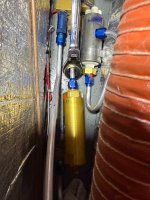

Auburntsts
Well Known Member
I don’t have the AFP setup, but I generally use a regular old open end wrench on AN fittings. Occasionally I've used a crows foot with a ratchet but that’s pretty rare.
On a flying plane?A number of builders have installed an access panel on the ‘tunnel’, near the cabin floor.
I lack confidence in being able to do that at present.
I need some way to secure the filter while I ratchet
Auburntsts
Well Known Member
Usually it’s a 2 wrench process. One on the fitting being loosened and one onthe stationary part— another reason to use open end wrenches.On a flying plane?
I lack confidence in being able to do that at present.
I need some way to secure the filter while I ratchet
Yeah, I think I need to put mine back in that hose clamp and hold it tight. It should work just got really frustrated today. I took it out of the hose clamp thinking I could spin it freeMine has the filter body secured with a hose clamp which helps hold it steady while the fittings are loosened / tightened.
Mine also has a hose clamp, but it’s still a PITA. The side access panel doesn’t help all that much. I’ve found it easiest to remove the aft connection at the fuel selector rather than at the filter canister (11/16” crowsfoot, while holding the selector stem (with a 9/16”, I think). The forward fitting has somewhat easier access—11/16” crowsfoot or stubby. I think I held the canister while removing that one with a 1 3/8” wrench. I’m just starting the C.I. Will probably get to the tunnel filter Wednesday or Thursday. If you hear naval vocabulary in the distance (2500 miles or so) around that time, it will be me.
I took an box end wrench that fit the hex on the filter, cut an opening large enough to fit over the line, and then had a home built line wrench to hold the flats on the filter.
Pics? Tough to fully picture that which you write.

Just cut out the blue section, and your box end wrench becomes a line wrench.Pics? Tough to fully picture that which you write.
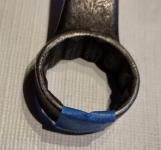
Use a wrench. Even channel locks will work.On a flying plane?
I lack confidence in being able to do that at present.
I need some way to secure the filter while I ratchet

N10KE
Well Known Member
I know you are planning to take the LSRM course and you are building an RV-10. It has been suggested multiple times by others on your other posts - please find a trained set of eyes to look over your work on this RV-10 that you did not build. You seem to be struggling with tasks that a more experienced person would call routine. The two week course you are taking will help, but there is a lot to learn. You would benefit from help for that first condition inspection.
THe bulk of the inspection is done.I know you are planning to take the LSRM course and you are building an RV-10. It has been suggested multiple times by others on your other posts - please find a trained set of eyes to look over your work on this RV-10 that you did not build. You seem to be struggling with tasks that a more experienced person would call routine. The two week course you are taking will help, but there is a lot to learn. You would benefit from help for that first condition inspection.
The next time will be better/faster/easier.
THe bulk of the inspection is done.
I think people are concerned how you can be sure that you covered everything that needed to be covered if you didn't build the plane and this is your first annual.
It's also easy for even experienced A&Ps to make simple mistakes that make the first flight after an annual more risky than most. Were all tools removed, was everything secured and torqued properly, etc.
Even though I have done a few annuals and other work on an RV10 and have almost finished building my own, I will bring in someone experienced with the RV10 before my first flight and during my first annual.
I think people are concerned how you can be sure that you covered everything that needed to be covered if you didn't build the plane and this is your first annual.
It's also easy for even experienced A&Ps to make simple mistakes that make the first flight after an annual more risky than most. Were all tools removed, was everything secured and torqued properly, etc.
Even though I have done a few annuals and other work on an RV10 and have almost finished building my own, I will bring in someone experienced with the RV10 before my first flight and during my first annual.
Seems like the kind of thing one could develop a checklist for. Man, if only such a thing existed in the world.
I. find it a bit ironic that months ago I tried to hire someone in unsuccessfully.
I am well aware of the risks post maintenance, have had two emergency landings after work performed by IAs. on one of the most common GA airframes. One was a non event, one was 7600 using handheld at a jump school talking to guard. I also had a failed departure after inadequate maintenance by someone that held themselves out as being an RV10 expert. Missed Oshkosh as a result.
Auburntsts
Well Known Member
On the remote chance you aren't being facetious, there are. The forum search function and/or Google are your friends. Here's but one example: http://www.expaircraft.com/PDF/RV-Cond-inspection.pdf I personally use a modified version of the one developed by VAF Mod Brian Wallis.Seems like the kind of thing one could develop a checklist for. Man, if only such a thing existed in the world.
Attachments
Last edited:
Yes, many experienced and credentialed professionals make mistakes or are simply not very competent. I think this should add more validity to the concern that you may not have enough experience to catch what needs to be caught during an inspection. Further, if you are struggling to remove a filter, I would encourage you to find some help before removing and reinstalling critical components. Its one thing to miss inspection points from inexperience, but another all together to incorrectly reinstall components and create problems. Seems you have experienced the fall out first hand.Seems like the kind of thing one could develop a checklist for. Man, if only such a thing existed in the world.
I. find it a bit ironic that months ago I tried to hire someone in unsuccessfully.
I am well aware of the risks post maintenance, have had two emergency landings after work performed by IAs. on one of the most common GA airframes. One was a non event, one was 7600 using handheld at a jump school talking to guard. I also had a failed departure after inadequate maintenance by someone that held themselves out as being an RV10 expert. Missed Oshkosh as a result.
No judgement here, just trying to keep you safe. Best of luck.

STUBBY WRENCHESYes, many experienced and credentialed professionals make mistakes or are simply not very competent. I think this should add more validity to the concern that you may not have enough experience to catch what needs to be caught during an inspection. Further, if you are struggling to remove a filter, I would encourage you to find some help before removing and reinstalling critical components. Its one thing to miss inspection points from inexperience, but another all together to incorrectly reinstall components and create problems. Seems you have experienced the fall out first hand.
No judgement here, just trying to keep you safe. Best of luck.

It is definitely doable on a flying plane. I installed the access panels on a 10 while under construction. Much easier then. It makes access to the filter/pump easier but still awkward. And yes, stubby wrenches are a requirement...skinny arms and small hands helps too!On a flying plane?
I lack confidence in being able to do that at present.
Auburntsts
Well Known Member
I'll argue that stubby wrenches are a nice to have, not a need to have, at least for working in the tunnel. I'm about a month away from embarking on my RV-10's 12th condition inspection and I don't own a single stubby wrench. Can't argue about the skinny arms and small hands though.And yes, stubby wrenches are a requirement...skinny arms and small hands helps too!

I bought the access panel kit but have not gotten around to installing it ... too many projects...It is definitely doable on a flying plane. I installed the access panels on a 10 while under construction. Much easier then. It makes access to the filter/pump easier but still awkward. And yes, stubby wrenches are a requirement...skinny arms and small hands helps too!
This is a neat solution, and doubles as a gascolator if needed.

 flyboyaccessories.com
Aerolab Flush Mounted Filter Gascolator
Flyboy Accessories is proud to be the exclusive distributor for the Aerolab Filter Gascolator. This new, top-quality, flush-mounted filter assembly, made by Aerolab in Italy, has been designed to be installed inside the fuselage, flush mounted in the belly skin. It can also be flush mounted in...
flyboyaccessories.com

This is a neat solution, and doubles as a gascolator if needed.
Aerolab Flush Mounted Filter Gascolator
Flyboy Accessories is proud to be the exclusive distributor for the Aerolab Filter Gascolator. This new, top-quality, flush-mounted filter assembly, made by Aerolab in Italy, has been designed to be installed inside the fuselage, flush mounted in the belly skin. It can also be flush mounted in...
They have been discontinued. It is a great product. I have two of them.
Last edited:
Oh dear, that's sad.They have been discontinued. Was a great product. I have two of them.

Same one outboard under each seat.They have been discontinued. It is a great product. I have two of them.
Great product indeed.
I have feeling it may be available again imminently.
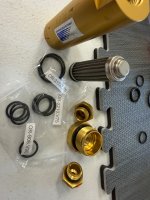

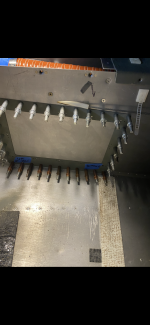
The builder of my RV10 installed an access plate ( maybe 5"x 8") on the bottom of the fuselage directly under the fuel filter. There is a very robust doubler were the access panel is with nutplates and screws every inch or so. I would post a pic but not back home for a few days. Even with the access panel its a little time consuming but probably much easier than going in through the tunnel. Having the plane on an Aero Lift does make it easier to do some of the inspection.I bought the access panel kit but have not gotten around to installing it ... too many projects...
I check that filter at every condition inspection (13 to date) and have never found anything. I guess that a good thing.
Gary

Yep, this is the way. Learned this from Pete Howell.I took an box end wrench that fit the hex on the filter, cut an opening large enough to fit over the line, and then had a home built line wrench to hold the flats on the filter.
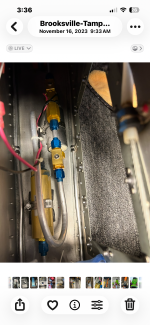
Not the easiest install, but doable in a flying bird.On a flying plane?
I lack confidence in being able to do that at present.
I need some way to secure the filter while I ratchet
Attachments
Last edited:
