

Van's Air Force
You are using an out of date browser. It may not display this or other websites correctly.
You should upgrade or use an alternative browser.
You should upgrade or use an alternative browser.
Filling the ends of control surfaces - how much is too much?
- Thread starter mreifeis
- Start date

Norman CYYJ
Well Known Member
Why?I’m finally installing the fiberglass tips on the vertical and horizontal stabilizers. My question is what are most builders doing in terms of filling the ends of the control surfaces? Fill everything? Both ends of the elevators? What about the ends of the flaps, ailerons etc?

I'm not a fan of filling those areas at all, and I may offend the fit and finish guys, but these aren't street rods, and when you fill, you also trap water, eliminate inspection of fasteners and areas that need inspected. Also, the increased risk (SAFETY) when the filler dislodges and controls jam. IF I was filling any of mine, it would be a riveted "reverse" rib with inward flanges. No need for any of all that in the real world...or, build a Lancair/Glassair that is designed as such with similar material compatibility.

Worse than that! The movable control surfaces are subject to aerodynamic flutter if not balanced properly, and the provision for balancing in the plans is for unfilled control surface tips. Looks good, but adds weight in the wrong places and can unbalance things, critically.

Fenderbean
Well Known Member
This seems to be a very common thing on RVs now minus ease of inspection and with a proper drainage hole I'm not sure it's dangerous.
Did an annual on one RV6 years ago, control surfaces were filled in with 1/2” foam sheet & fiberglass, filler & painted. All was held in place with a blob of what appeared to be epoxy slurry. 2 of these plugs were loose & it took me 3 minutes to pry all the others out!
Owner wasn’t happy initially but a week later he thanked me.
Owner wasn’t happy initially but a week later he thanked me.

Norman CYYJ
Well Known Member
Why not build the plane as per the plans, it is usually the safest thing to do.I don’t understand what exactly is being filled. Does anyone have a picture?
Thank you - good feedback. The motivation behind my question was two fold. First, I thought there may be some sort of aerodynamic efficiency by doing so and second as a way of creating a more finished product. Give the community feedback I am going to save time and potentially eliminate issues down the road and not fill those areas. Also, for the weight conscious I'll save weight to boot.
Thank you to the community!
Thank you to the community!

I used 1/2" foam board (Owens-Corning), and West Systems epoxy+milled fibers to fill and attach to the inset rib/cavities on the rudder counter balance "arm", the elevator counter balance arms, and inboard ends.
As far as flutter is concerned, since equivalent mass was added on both sides of the hinge line (perhaps a bit more "in front" of the line, increasing the mass balance %) there won't be any deleterious effects.
I still may close in the wing tips and flap ends. Due to the mass balance of the ailerons, I won't be closing them in.
As far as flutter is concerned, since equivalent mass was added on both sides of the hinge line (perhaps a bit more "in front" of the line, increasing the mass balance %) there won't be any deleterious effects.
I still may close in the wing tips and flap ends. Due to the mass balance of the ailerons, I won't be closing them in.
Exact same description of filler plugs I removed from RV6 I described above. I hope you did a better job glassing them in compared to that guy. He was flight moments away from having a bad day…I used 1/2" foam board (Owens-Corning), and West Systems epoxy+milled fibers to fill and attach to the inset rib/cavities on the rudder counter balance "arm", the elevator counter balance arms, and inboard ends.
Exact same description of filler plugs I removed from RV6 I described above. I hope you did a better job glassing them in compared to that guy. He was flight moments away from having a bad day…
 I did. At least I think I did -- here's my process. Throw stones as you see fit...
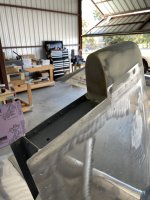
This is an example of the area to be filled -- the Vertical Stab in this case. You can see all the body work that's been done on the VS cap, including the aft end foam close out -- and the foam board in the background.
And here's the process for fabricating the foam plug and attaching it...
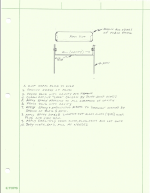
The combination of adhesive on the inside surfaces ("the cavity") and the plug, the bead of epoxy+milled fibers along the perimeter, along with the fiber glass covering holds everything in place quite securely -- and it's water tight.
All said and done - it's not worth it from a performance perspective; I think I gained maybe a knot in apparent airspeed

Last edited:

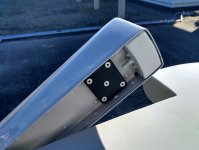

Plugging the aft ends of the H/S tip caps is pretty standard practice. But I think the OP is talking about filling in the outside ends of the flight controls? I've seen some show planes that have the ends of the control surfaces and the H/S filled. Aesthetically they're pretty awesome.
But, any time you start doing stuff like that, you have to own the potential downstream consequences. Having filler come loose and bind up a flight control is one possibility that has to be safeguarded against. Blocking up the holes that would otherwise let water drain out is another.
Plus, it's entirely possible that there may be future maintenance issues that nobody knows about today, but that you ultimately make a lot harder by doing stuff like that. SB-00036 comes to mind. It would be pretty much impossible to do that service bulletin with the ends of the horizontal stab faired in.
But, any time you start doing stuff like that, you have to own the potential downstream consequences. Having filler come loose and bind up a flight control is one possibility that has to be safeguarded against. Blocking up the holes that would otherwise let water drain out is another.
Plus, it's entirely possible that there may be future maintenance issues that nobody knows about today, but that you ultimately make a lot harder by doing stuff like that. SB-00036 comes to mind. It would be pretty much impossible to do that service bulletin with the ends of the horizontal stab faired in.

To answer the OP. Fill per plan. Some fill everything for a little speed, but it adds weight aft where you really don't want it.
I recommend adding a nutplate to the tooling hole on each elevator for counter weight. Or you can rivet the weight. Notice on Dan's photo his is riveted in place. Clean. I think that's a weight. Mine is bolted and safety wired. Not as purdy, but it's secure.
I filled the caps similar to Brian (bjdecker) above.
I layed up a four layer flat piece of fiberglass between glass and let it cure.
Epoxy a closed cell foam plug in the cap about 1/8 below the edge.
Cut a cover from the layup and epoxy with floxed G-Flex epoxy. Sand and finish
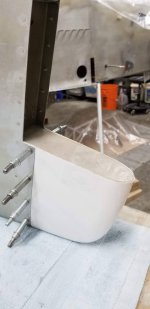
I recommend adding a nutplate to the tooling hole on each elevator for counter weight. Or you can rivet the weight. Notice on Dan's photo his is riveted in place. Clean. I think that's a weight. Mine is bolted and safety wired. Not as purdy, but it's secure.
I filled the caps similar to Brian (bjdecker) above.
I layed up a four layer flat piece of fiberglass between glass and let it cure.
Epoxy a closed cell foam plug in the cap about 1/8 below the edge.
Cut a cover from the layup and epoxy with floxed G-Flex epoxy. Sand and finish
Here's a good video showing how one builder filled the ends.I’m finally installing the fiberglass tips on the vertical and horizontal stabilizers. My question is what are most builders doing in terms of filling the ends of the control surfaces? Fill everything? Both ends of the elevators? What about the ends of the flaps, ailerons etc?

Plus, it's entirely possible that there may be future maintenance issues that nobody knows about today, but that you ultimately make a lot harder by doing stuff like that. SB-00036 comes to mind. It would be pretty much impossible to do that service bulletin with the ends of the horizontal stab faired in.
I filled in control surface end ribs on all my builds. This is strictly cosmetic, no aerodynamic gain at all.
I do add drain paths.
For the new RV-8 the HS Service Bulletin came out a couple of weeks after I finished it. The photo shows the 3/8” hole that I use to insert a borescope to do the SB. A piece of aluminum tape covers the hole until the next inspection.
Carl
Attachments
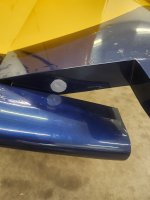
Hey Carl- I get that you can drill a hole to get a bore scope in there, but if the recurring inspection ever reveals spar cracks it seems like a guy would have a heck of a time complying with the subsequent steps.I filled in control surface end ribs on all my builds. This is strictly cosmetic, no aerodynamic gain at all.
I do add drain paths.
For the new RV-8 the HS Service Bulletin came out a couple of weeks after I finished it. The photo shows the 3/8” hole that I use to insert a borescope to do the SB. A piece of aluminum tape covers the hole until the next inspection.
Carl
It was just an example off the top of my head.
Inspection isn't a problem if you have a small enough borescopeHey Carl- I get that you can drill a hole to get a bore scope in there, but if the recurring inspection ever reveals spar cracks it seems like a guy would have a heck of a time complying with the subsequent steps.
It was just an example off the top of my head.
Remove the VS/HS fairing and go in through the tooling holes & flange cut outs in the HS-708 (RV-7) rib. I use a section of 3/8 aluminum tube to guide the borescope from the root end to the tooling hole and thence on to the outboard hinge rivets.
Here's a pic:
6mm borescope from Depstech.
...and you're correct, if you find that you need to comply further with the SB, it's a bigger headache with the ends filled in...
