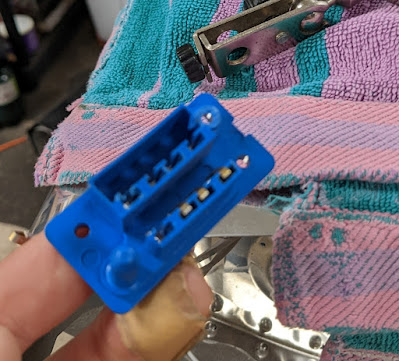
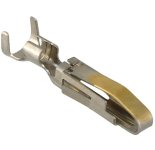
Does anyone have a foolproof method of removing these pins (the one with prongs on both sides) that DOESN'T involve buying that $157 Amp Extraction tool?
Yes, I bought those (they're like Captain Kangaroo' keys). Haven't been able to get them to work because they bend so easily. Got a couple out, though.
Before purchasing the above mentioned kits I did make some custom extraction tools by modifying some exacto knife blades or very small jewelers screw drivers.
In the end, the correct tool for the job is almost always worth the price of entry. Can always buy it, use it and then sell it.
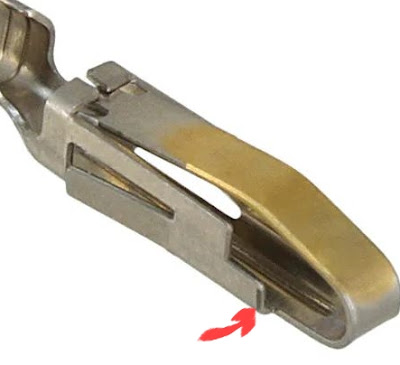
The first thing is to understand what the retention mechanism by looking inside as best you can or checking on the web with Google search. But, I believe these are retained by a barb on the surface of the contact, which is released by inserting a thin about 1/2" or so long piece along the side of the contact in a channel there. I make this kind of extractor by grinding down an end of a hacksaw blade - cheap and available tough but still not brittle material. Grind to about 1/16" wide tab 1/2" or more long, then carefully thin it out to fit down the channel. Don't let it get red hot while thinning or it will get too soft.
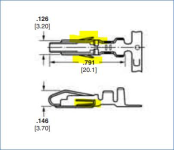
The ES-00078 housing connectors have 2 release tangs. I made a small tang release tool from a narrow strip of steel (old soup can lid or something similar) approximately .070" wide and 3” long. If you fold it in half so the ends match up and the business end is about as wide as the connector (the .126 measurement), then you can insert it into the housing from the contact side, not the wire side, it will release both tangs. Hope this makes sense.
I think what's happening with my little Amazon bargain "keys" is the thin piece is getting redirected on one side INTO the connector instead of staying outside where it can get to the prong. (see red mark)
But I like your idea, though I suspect serious finger blood will be shed in the manufacturing process.
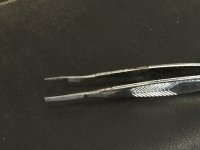
I modified a stainless steel tweezer by grinding the tips. Take care with the grinder the tips need to be quite thin. Now lives in my electrical tools box and works good for me for those blue amp connector pins. No $150 tool needed.