Van's Air Force

The definitive Van's Aircraft support community! Buying, building or flying an RV? Join our exclusive family of mentors and enthusiasts!

Engine trouble.

RV8Squaz

Well Known Member
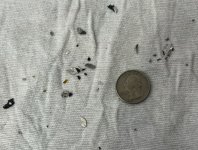
The picture below is from the suction screen at the sump of an AEIO-540. Because of the inverted system's fitting at the sump, that screen only gets checked at annual. The engine has a pressure screen instead of an oil filter. Consequently the oil gets changed every 25 hours. The airplane gets flown about 100-125 hours per year, so it gets 4-5 oil changes in a typical year. I also run through a lot of oil in between changes because it gets thrown out from the constant positive and negative g aerobatics. This airplane is my other ride, an Extra 300S.

I haven't checked the manuals and bulletins yet, but my gut says this is not good. What say you? I don't have the borescope pictures yet as the airplane is getting it's annual done at a shop in Florida.

Thanks,

Jerry
 

Attachments

  • 1000047114.jpeg
    1000047114.jpeg
    578.2 KB · Views: 603
Yeah…..agreed. That’s not good. Most of that looks like aluminum, with a few bits of brass/bronze for good measure. Definitely time to investigate further.
 
Yeah, "chunks" isn't great, but at this point you have samples to send off to get further analysis.
 
Yep, something’s coming apart in there. I say buy your mechanic a beer for checking that screen. Could be really bad or could just be that something got dropped inside and then chewed up. Need to find out what kind of metal you’re seeing in there and continue investigating. Good luck.
 
oh my! That is definately BAD! Those are seriously large chunks of metal. Sadly, the engine has to come apart. If you send the metal in for analysis, lyc can usually tell what component is coming apart. However, with that size of debris, any good mechanic is going to demand a tear down to find the source(s), as well as any secondary damage caused by the circulating debris. I just did a tear down for lifter spalling and the crank had a decent amouynt of scratch damage.

Certainly looks like aluminum, but that is the worst, as there are so many alum components that it doesn't really help narrow down the source.
 
Last edited:
oh my! That is definately BAD! Those are seriously large chunks of metal. Sadly, the engine has to come apart. If you send the metal in for analysis, lyc can usually tell what component is coming apart. However, with that size of debris, any good mechanic is going to demand a tear down to find the source(s), as well as any secondary damage caused by the circulating debris. I just did a tear down for lifter spalling and the crank had a decent amouynt of scratch damage.

Certainly looks like aluminum, but that is the worst, as there are so many alum components that it doesn't really help narrow down the source.
You can determine if it is alum by yourself. Put piece of the metal debris in a jar with muriatic acid. If ferrous metal, nothing happens. If it is aluminum, it will begin to fizz like alka seltzer. It may take a bit for the acid to break through the surface oil layer and make contact with the poiece.
 
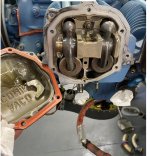
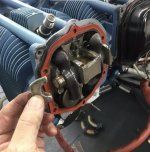
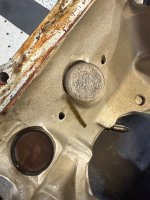
Hopefully it something small like what I found on my 6 , during Covid finding a replacement cylinder was my biggest hurdle ,
 

Attachments

  • IMG_0954.jpeg
    IMG_0954.jpeg
    381.5 KB · Views: 307
  • IMG_0953.jpeg
    IMG_0953.jpeg
    318.3 KB · Views: 304
You can determine if it is alum by yourself. Put piece of the metal debris in a jar with muriatic acid. If ferrous metal, nothing happens. If it is aluminum, it will begin to fizz like alka seltzer. It may take a bit for the acid to break through the surface oil layer and make contact with the poiece.
Using a magnet will also tell you if it's ferrous metal.
 
Thank you guys. Your comments are in alignment and reinforce with what the shop and I are thinking. I’m not sure it matters much at this point this what the material or where it’s coming from due to the size and quantity of the material. I am curious though, so we will investigate.

If borescope reveals a problem with a specific cylinder, we’ll look at that more closely. In that unlikely case, perhaps we can remove the offending cylinder and take a good look at the rest of the internals. Does that sound like a good plan?

Thanks for your help!
 
With chunks that size it should be quickly noticed where it is coming from when you tear the engine down. It is a good thing that you got the urge to check things when you did.
 
With chunks that size it should be quickly noticed where it is coming from when you tear the engine down. It is a good thing that you got the urge to check things when you did.
Also, a very good reason to check your oil sump screen during the annual inspection oil change. (y)

I remember guys seeing aluminum chunks like that back when they were making aluminum oil pump impellers. Chunks of aluminum found in oil screens can also often originate from aluminum piston pin plugs.

 
Last edited:
Using a magnet will also tell you if it's ferrous metal.
Only if the piece is large enough. Also, Due to the surface tension of the oil, alum particles will stick to a magnet. Very easy to get bad conclusions with magnets and small particles.
 
Also, a very good reason to check your oil sump screen during the annual inspection oil change. (y)

I remember guys seeing aluminum chunks like that back when they were making aluminum oil pump impellers. Chunks of aluminum found in oil screens can also often originate from aluminum piston pin plugs.

I had an engine with plugs wearing away badly. Looked like glitter was poured in the oil. NO large chunks like the OP. Oil pump I could definitely see.
 
Thank you guys. Your comments are in alignment and reinforce with what the shop and I are thinking. I’m not sure it matters much at this point this what the material or where it’s coming from due to the size and quantity of the material. I am curious though, so we will investigate.

If borescope reveals a problem with a specific cylinder, we’ll look at that more closely. In that unlikely case, perhaps we can remove the offending cylinder and take a good look at the rest of the internals. Does that sound like a good plan?

Thanks for your help!
A good start. If you find the problem in the cylinder, then you can assess what happened and the potential likelihood of secondary damage. Personally i would not expect particles like that to be coming from any material in the cylinders. You just don’t see that kind of debris from anything going on in the cylinders. You can see the tearing evidence in the particles, which points to something rotational IMO.

It wouldn’t surprise me if those pieces were tin from one of the bearing shells coming apart.
 
Last edited:
I had an engine with plugs wearing away badly. Looked like glitter was poured in the oil. NO large chunks like the OP. Oil pump I could definitely see.
Might even be chucks of aluminum from the bottom-side of a piston.
 
Thank you guys. All very good comments. Larry, great observation regarding the tearing evidence. I see that now.

I know it's false hope and extremely unlikely that the problem is isolated to one cylinder. But if borescope points to a problem with a specific cylinder, I guess we'll start there. The shop mentioned some unusual marks on the valves and piston on at least one of the cylinders, so we'll see. I haven't seen the borescope pictures yet. But when I do, I'll report back.

Thank you!
 
I’m curious. School me on how a fracture like that can occur.
My guess would be a flaw in the casting. A void or inclusion of some sort creates a weak point and over many heat and stress cycles, it can propogate into a crack and eventually fail. That is really not a highly stressed area of the casting, though it is a bit thin in spots, so susceptible to cracks.
 
My guess is that you have a bad piston pin plug or a bearing failing. Those are the most common two sources of metal, that is like that visually, that I have seen. Often times, if it's a bearing one side of the shaving will have a copperish tint as there is copper flashing beneath the babbitt of the bearing. Although, I cant see evidence of that in the pictures. Bearing flakes are very soft and normally can be folded vs. piston pin flakes are harder and they crack or break if you try to fold them. If its a piston pin plug, I don't think it will be visually discoverable with borescope inspection maybe but maybe not. Can't say for sure but if it was mine i would first BS inspect to see if you can find any evidence on a cylinders wall and if not, start taking the cylinders off one side, of the engine, at a time. My experience is that you can have a bad piston pin plug in one cylinder and the others are all good. Regardless make sure you address the oil cooler after you find and fix the source. Good Luck, Mahlon
 
Thank you guys. Your comments are in alignment and reinforce with what the shop and I are thinking. I’m not sure it matters much at this point this what the material or where it’s coming from due to the size and quantity of the material. I am curious though, so we will investigate.

If borescope reveals a problem with a specific cylinder, we’ll look at that more closely. In that unlikely case, perhaps we can remove the offending cylinder and take a good look at the rest of the internals. Does that sound like a good plan?

Thanks for your help!

I’m curious. School me on how a fracture like that can occur.
The cylinders were OH’d from a first run 320-E2D motor, 300hrs on rebuild, that horseshoe piece would cause the engine to stumble every 4-5 hours , opening the oil filter found lots of aluminum alloy and that when I went looking inside, biggest discovery was seeing how banged up the valve cover was and were all my oil would have gone if I had installed the alloy valve option at OH !
 
The cylinders were OH’d from a first run 320-E2D motor, 300hrs on rebuild, that horseshoe piece would cause the engine to stumble every 4-5 hours , opening the oil filter found lots of aluminum alloy and that when I went looking inside, biggest discovery was seeing how banged up the valve cover was and were all my oil would have gone if I had installed the alloy valve option at OH !
Not a real fan of overhauling cylinders -- seen too many fail from fatigue cracks, especially around the exhaust port and spark plug hole.
 
Borescope pictures of the cylinders came in. Everything looks pretty normal inside the cylinders. So that leaves something going on inside. We're sending out the chunks and oil for evaluation and tomorrow I'll consult with the engine shop. But I believe I have no choice at the moment and am looking at an engine teardown/overhaul. The engine, being an "aerobatic" engine, has a TBO of 1400 hours and my engine has 1100 SMOH, circa 2008. I think it would be foolish not to opt for an overhaul.
 
Good that you're going into the bottom end. Looks like thrust bearing (the engine case) picking up and destroying its self. Please report back.
 
My guess is that you have a bad piston pin plug or a bearing failing. Those are the most common two sources of metal, that is like that visually, that I have seen. Often times, if it's a bearing one side of the shaving will have a copperish tint as there is copper flashing beneath the babbitt of the bearing. Although, I cant see evidence of that in the pictures. Bearing flakes are very soft and normally can be folded vs. piston pin flakes are harder and they crack or break if you try to fold them. If its a piston pin plug, I don't think it will be visually discoverable with borescope inspection maybe but maybe not. Can't say for sure but if it was mine i would first BS inspect to see if you can find any evidence on a cylinders wall and if not, start taking the cylinders off one side, of the engine, at a time. My experience is that you can have a bad piston pin plug in one cylinder and the others are all good. Regardless make sure you address the oil cooler after you find and fix the source. Good Luck, Mahlon

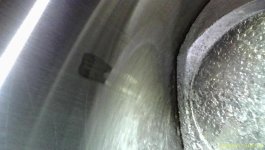
Hello Mahlon. Great to hear from you! I attached below just a few of the borescope pictures. Cylinders 1, 4, and 6 show some minor marks potentially caused by the piston pin plug. But I don't think these appear to be significant enough to produce the chunks we found in my first post. Otherwise the cylinders appear vey normal. What do you think?

Do you think I'm at the point where I should proceed with removing engine for teardown and overhaul? Should I wait on the lab's findings?

Thank you!1.3.JPG4.5.JPG6.3.JPG
 
Hello Mahlon. Great to hear from you! I attached below just a few of the borescope pictures. Cylinders 1, 4, and 6 show some minor marks potentially caused by the piston pin plug. But I don't think these appear to be significant enough to produce the chunks we found in my first post. Otherwise the cylinders appear vey normal. What do you think?

Do you think I'm at the point where I should proceed with removing engine for teardown and overhaul? Should I wait on the lab's findings?

Thank you!View attachment 115202View attachment 115203View attachment 115204
Generally the pin plug leaves a very thin witness mark line on the wall when they are wearing normally (small contact patch). Once they begin to wear away from failure, the mark gets much wider, like in your pics. Based upon that, I would not rule out bad caps. They don't damage the wall, just leave marks, as they are alum.

If the wear mark line stops about 1" below the top of the cyl wall wear area, that would confirm the marks are coming from the pin caps. Can't see the top of wear area in your pics.
 
Generally the pin plug leaves a very thin witness mark line on the wall when they are wearing normally (small contact patch). Once they begin to wear away from failure, the mark gets much wider, like in your pics. Based upon that, I would not rule out bad caps. They don't damage the wall, just leave marks, as they are alum.

If the wear mark line stops about 1" below the top of the cyl wall wear area, that would confirm the marks are coming from the pin caps. Can't see the top of wear area in your pics.
But bad caps wouldn’t leave the chunks we found. Is that correct? Maybe it’s a combination of things. Thank you Larry!
 
But bad caps wouldn’t leave the chunks we found. Is that correct? Maybe it’s a combination of things. Thank you Larry!
When I had caps failing, I got glitter/small particles. However, Mahlon said he has seen debris similar to yours from caps going bad; maybe the chunks get larger in latert stages. Mahlon is probably THE most experienced engine guy on this forum. We should ALWAYS listen to his opinion / experience. He has seen 100's of problems like this and most of us have seen a couple/few. He probably has forgotten more about lyc engines than i know. I still think bearings are the more likely suispect, based upon my limited experience. Ignore Mahlon at your own peril; Not recommended.

You'll know as soon as the cylinders come off and that is step one in the tear down.
 
In 2012, I had camshaft failure on my Superior. 110 hours. I had huge chunks of steel in the oil screen. Did not even consider anything else but to pull the engine and send off to Mahalon at Mattituck. The tappets had huge chunks cut out and metal was embedded in my piston skirts. Camshaft spalled. To this day, I have no idea what was the cause.

Long story short, Mahalon & Mattituck repaired my engine. Kept my crank but other stuff had to be replaced. I cannot remember all the details but I never looked back.

No finer and knowledgeable guy than Mahalon. Trust him with my life. At that time, Mahalon said hurry because Continental was taking them over.

I am so thankful Mahalon helped me. The best money I ever spent because I knew it was done right. Thank You Mahalon!!

Good Luck
Darren Kerns
RV7 N599DT
 
Lycoming piston pin plugs are a notorious problem. That is evidenced by the different designs and different material they have been manufactured from over the years. Yes, the metal you are seeing could be from the thrust face, the bearings or the piston pin plugs or maybe even somewhere else. but you should not just jump to its time for overhaul in my opinion. Find the problem and then evaluate. If its a bad piston pin plug that is a way easier fix and a lot less expensive then doing an entire IRAN or overhaul on the engine. At this point if it were in my shop i would start taking off cylinders and checking the plugs. If that shows nothing then you need to dig further. removing rods will show the condition of the rod bearings. normally if a main is failing you can see the metal squeezing out of the bearing. If its the front thrust you can kinda see that as well in most cases. any of those indications would then require the engine to be removed and torn down. But if its a bad plug, then you put new ones in and go about your business. Of course, I am assuming that you are doing the labor to remove and reinstall the cylinders or that you can have that done economically with the engine still on the plane. The labor to get the cylinders off are all you are risking if the problem is not piston pin related. That's a decision for you to make but when you look at the risk reward for checking the piston pin plugs first, I think you will see that that is a viable way to go. Just because you have had one plug go bad does not mean they are all bad. If you end up removing all the cylinders and find the bad plug in the last one then yes I would relace them all. But if you found it on the first cylinder you removed, the you lucked out and just do that one. Or at least that is the avenue I would follow. If per chance the piston pin plugs were all used over during the previous overhaul, that would be an issue, that to me, would require replacing them all. One of the big issues with trying to give advice on this or any forum is you often don't get the whole picture information wise. Trying to make diagnoses from pictures is also pretty difficult. If you should find that you have decided to pull the engine and send it to an engine shop, for teardown, that's all well and good but just the most expensive and time consuming option in my opinion. Good luck to you on what ever option you decide on.
Mahlon

 
I like the Continental style wrist pins, where the pin plugs are swaged into the pin and are not separate parts ( this style pin is available for Lycomings). I have seen far to many original Lycoming style pin plugs wore down to the size of a butter bean. Once they wear down small enough, it will end up going into the inside of the wrist pin letting the pin move side ways gouging the cylinder wall.
 
You can determine if it is alum by yourself. Put piece of the metal debris in a jar with muriatic acid. If ferrous metal, nothing happens. If it is aluminum, it will begin to fizz like alka seltzer. It may take a bit for the acid to break through the surface oil layer and make contact with the poiece.
BTW - Muriatic acid is diluted hydrochloric acid HCl, used for etching concrete and pool pH balance.
 
Man….looking at your pics again,,,sure seems like I’d get the cylinders off…whether wrist pin caps…or piston skirts, pulling the jugs will get you to an answer faster than anything else you can do, you can have them all off today or tomorrow and have a pretty direct path…note: it’s way easier taking the engine off the airplane, after the jugs are off…so not really any wasted effort, and if you;re lucky, and it’s wrist pin cap or pistons…you just saved a ton of time, effort and $$’s
 
Great advice here that I would certainly follow. Do you know what went into the engine? The old pin plugs, used with separate pins, were either alum, silicon bronze and forget the third type. Then they went to solid alum pieces that were pressed into the piston pins.
 
What if it is as simple as something got dropped inside the motor during an oil change, or adding oil, or invasive engine work. One of the local shops just blew up a customer’s IO-550 bc the mechanic left a shop rag inside when doing a cylinder replacement. Or, some component like the mechanical fuel pump coming apart. These pieces were found in the sump and the suction screen did its job by keeping them out of the oil circulatory system. Right?…nothing found in the pressure screen? I would say good troubleshooting practices calls for exploratory surgery not condemning the motor bc of this and TIS. Good luck! It sucks when any airplane is down but especially an aerobatic airplane at the beginning of the season.
 
Lycoming piston pin plugs are a notorious problem. That is evidenced by the different designs and different material they have been manufactured from over the years. Yes, the metal you are seeing could be from the thrust face, the bearings or the piston pin plugs or maybe even somewhere else. but you should not just jump to its time for overhaul in my opinion. Find the problem and then evaluate. If its a bad piston pin plug that is a way easier fix and a lot less expensive then doing an entire IRAN or overhaul on the engine. At this point if it were in my shop i would start taking off cylinders and checking the plugs. If that shows nothing then you need to dig further. removing rods will show the condition of the rod bearings. normally if a main is failing you can see the metal squeezing out of the bearing. If its the front thrust you can kinda see that as well in most cases. any of those indications would then require the engine to be removed and torn down. But if its a bad plug, then you put new ones in and go about your business. Of course, I am assuming that you are doing the labor to remove and reinstall the cylinders or that you can have that done economically with the engine still on the plane. The labor to get the cylinders off are all you are risking if the problem is not piston pin related. That's a decision for you to make but when you look at the risk reward for checking the piston pin plugs first, I think you will see that that is a viable way to go. Just because you have had one plug go bad does not mean they are all bad. If you end up removing all the cylinders and find the bad plug in the last one then yes I would relace them all. But if you found it on the first cylinder you removed, the you lucked out and just do that one. Or at least that is the avenue I would follow. If per chance the piston pin plugs were all used over during the previous overhaul, that would be an issue, that to me, would require replacing them all. One of the big issues with trying to give advice on this or any forum is you often don't get the whole picture information wise. Trying to make diagnoses from pictures is also pretty difficult. If you should find that you have decided to pull the engine and send it to an engine shop, for teardown, that's all well and good but just the most expensive and time consuming option in my opinion. Good luck to you on what ever option you decide on.
Mahlon

Thank you very much for your thorough reply Mahlon. Looks like we'll be taking off at least one cylinder. I'll keep you guys posted.
 
When I had caps failing, I got glitter/small particles. However, Mahlon said he has seen debris similar to yours from caps going bad; maybe the chunks get larger in latert stages. Mahlon is probably THE most experienced engine guy on this forum. We should ALWAYS listen to his opinion / experience. He has seen 100's of problems like this and most of us have seen a couple/few. He probably has forgotten more about lyc engines than i know. I still think bearings are the more likely suispect, based upon my limited experience. Ignore Mahlon at your own peril; Not recommended.

You'll know as soon as the cylinders come off and that is step one in the tear down.
I agree regarding Mahlon's experience. I don't plan on ignoring his recommendations.
 
Man….looking at your pics again,,,sure seems like I’d get the cylinders off…whether wrist pin caps…or piston skirts, pulling the jugs will get you to an answer faster than anything else you can do, you can have them all off today or tomorrow and have a pretty direct path…note: it’s way easier taking the engine off the airplane, after the jugs are off…so not really any wasted effort, and if you;re lucky, and it’s wrist pin cap or pistons…you just saved a ton of time, effort and $$’s
That's quite true; it would indeed make it easier taking the engine off without a few cylinders!
 
Great advice here that I would certainly follow. Do you know what went into the engine? The old pin plugs, used with separate pins, were either alum, silicon bronze and forget the third type. Then they went to solid alum pieces that were pressed into the piston pins.
Unfortunately I have no idea what was used in this engine. I bought the airplane 5.5 years ago. There is a very basic logbook entry from the overhaul shop. There are no part numbers listed or any other detailed info. The shop was in California and has been out of business for a number of years. The engine was overhauled in 2013.
 
What if it is as simple as something got dropped inside the motor during an oil change, or adding oil, or invasive engine work. One of the local shops just blew up a customer’s IO-550 bc the mechanic left a shop rag inside when doing a cylinder replacement. Or, some component like the mechanical fuel pump coming apart. These pieces were found in the sump and the suction screen did its job by keeping them out of the oil circulatory system. Right?…nothing found in the pressure screen? I would say good troubleshooting practices calls for exploratory surgery not condemning the motor bc of this and TIS. Good luck! It sucks when any airplane is down but especially an aerobatic airplane at the beginning of the season.
I suppose anything is possible. Aside from the annual condition inspection, I'm the only one that works on the plane. It's Experimental, but not amateur built. The last annual was nearly 13 months ago with over 100 hours put on the plane since then. In any case, I haven't found any evidence of foreign objects in either screen.

Yes, it does really stink to lose use of my airplane at the beginning of the season. I was planning on hitting it hard this year and going to Nationals. I started off strong too. I practiced a bunch Jan, Feb, and Mar and came away with a 2nd place finish in Advanced at the first contest of the year.
 
I suppose anything is possible. Aside from the annual condition inspection, I'm the only one that works on the plane. It's Experimental, but not amateur built. The last annual was nearly 13 months ago with over 100 hours put on the plane since then. In any case, I haven't found any evidence of foreign objects in either screen.

Yes, it does really stink to lose use of my airplane at the beginning of the season. I was planning on hitting it hard this year and going to Nationals. I started off strong too. I practiced a bunch Jan, Feb, and Mar and came away with a 2nd place finish in Advanced at the first contest of the year.
Lycoming SB480F is a very detailed list of procedures and options including removal of sump for inspection and inspection of governor oil screen. If you can PM me the location of the CA shop I might have some experience with that shop,
 
Lycoming SB480F is a very detailed list of procedures and options including removal of sump for inspection and inspection of governor oil screen. If you can PM me the location of the CA shop I might have some experience with that shop,
Yup, I’m familiar with the SB. Thanks.

It’ll probably be Monday before I can get the name of the CA shop. My logs are at the shop in FL where I’m getting the annual done. Thank you.
 
As I said above, I've seen it, it looks like thrust surface. If you want to verify pull # 1 or 2, look forward to your reporting back
 
Unfortunately I have no idea what was used in this engine. I bought the airplane 5.5 years ago. There is a very basic logbook entry from the overhaul shop. There are no part numbers listed or any other detailed info. The shop was in California and has been out of business for a number of years. The engine was overhauled in 2013.
Was the shop Performance Aero?

Skylor
 
Last edited:
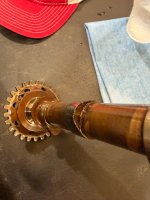
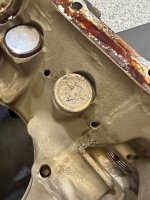
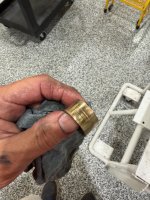
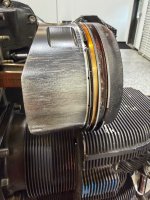
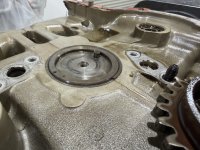
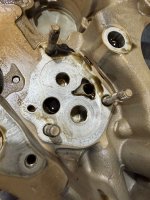
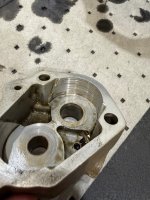
We finally got to tearing down the engine this morning. The verdict is in. It's pretty bad, but at least the crankshaft and case appear to be in good shape. Looks like either the lifter and the cam lobe started going and the metal contaminated the rest of the engine.

The oil pump housing is badly scored, There's a bearing slightly out of position, all of the piston skirts have minor scoring, two piston pin caps badly scored, one cam lobe ground down to about half the original dimension, two badly pitted and dished out lifters.
 

Attachments

  • IMG_6680.jpeg
    IMG_6680.jpeg
    2.7 MB · Views: 152
  • IMG_6678.jpeg
    IMG_6678.jpeg
    2.1 MB · Views: 155
  • IMG_6676.jpeg
    IMG_6676.jpeg
    2.8 MB · Views: 136
  • IMG_6675.jpeg
    IMG_6675.jpeg
    2.4 MB · Views: 126
  • IMG_6674.jpeg
    IMG_6674.jpeg
    3 MB · Views: 122
  • IMG_6672.jpeg
    IMG_6672.jpeg
    2.9 MB · Views: 120
  • IMG_6670.jpeg
    IMG_6670.jpeg
    3.1 MB · Views: 111
  • IMG_6668.jpeg
    IMG_6668.jpeg
    2.3 MB · Views: 154
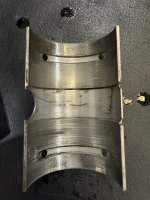
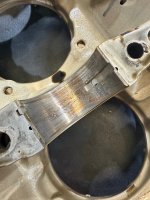
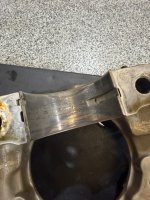
All crankshaft and connecting rod bearings have significant scoring.
 

Attachments

  • IMG_6686.jpeg
    IMG_6686.jpeg
    1.6 MB · Views: 82
  • IMG_6687.jpeg
    IMG_6687.jpeg
    2.6 MB · Views: 82
  • IMG_6689.jpeg
    IMG_6689.jpeg
    2.4 MB · Views: 82
We finally got to tearing down the engine this morning. The verdict is in. It's pretty bad, but at least the crankshaft and case appear to be in good shape. Looks like either the lifter and the cam lobe started going and the metal contaminated the rest of the engine.

The oil pump housing is badly scored, There's a bearing slightly out of position, all of the piston skirts have minor scoring, two piston pin caps badly scored, one cam lobe ground down to about half the original dimension, two badly pitted and dished out lifters.
Is this caused by aerobatics or something else? 😬
 
BTW, Lycoming wasn't much help in analyzing the AVLAB report on the oil and the metal chunks. That gave a very generic reply, "It could be this, it could be that, etc."
 
Back
Top