Van's Air Force

The definitive Van's Aircraft support community! Buying, building or flying an RV? Join our exclusive family of mentors and enthusiasts!

Engine shut downs and Hot starts (RV10 IO540)

RNB

Well Known Member
Sponsor
I'm building out or personalizing my checklists and want some help to internalize and understand engine shut downs and hot starts. I'm coming from C172 where idle power and pull mixture was the shut down and the plane never had a tough time starting back up. I'm now in a bigger better plane, IO-540.

For shut down, I've been told to do the following:
Pull power to 1700 RPM
Dial mixture back 100-200 RPM
Count to 5
Throttle to 1100
Mixture off.

For a hot start within 2 hours:
Don't touch anything!
Master on
Alternator on
Key start
Mixture to half on start, will run rough a few minutes.

Can someone please explain to me what the deal is with hot starts, what is happening in the above as it pertains to hot starts? And what the addition of an electronic magneto does to the mix (later this year I am upgrading one mag).
Thank you.
 
Some thoughts:
- After landing your should already have your mixture pulled back to just before the engine dies on lack of fuel. You can tell you are lean enough if you advance the throttle while taxing and the engine bogs down a little. This helps keep the plugs clean and somewhat mitigates stuck exhaust valve problems.
- From this lean position, shutdown is just ~1000 RPM and pulling the mixture to cutout.
- For hot start, crack open the throttle, igntions on (for pMag) and crank. For mag you typically start on just the left mag (e.g. standard key ignition). If the engine does not start to fire, then (and only then) do you slowly advance the mixture until it does fire. This assumes you did not already flood the engine somehow. Starting off advancing the mixture will result in a flooded engine.
- If you do flood the engine, then mixture at cut out, throttle wide open, crank until it fires then throttle back to fast idle and mixture advanced to your lean taxi position.

I run dual pMags and I’ve had people ask me how do I get the engine to fire after a couple of blades during a hot start. The pMags help, but the procedure is the foundation.

Carl
 
The deal with hot starts is fuel boiling off in the injector lines and trying to get back to an acceptable fuel air ratio for starting that’s not too rich or too lean.

I agree with Carl on a general procedure. Also your FI setup can also have an impact.. IMO there is no universal method that’s works 100% of the time for everyone. For hot starts the sweep method that Carl describes is a good place to start. But you’re going to have to experiment and find the sweet spot your engine and setup likes.

I gave the AFP FI system with a purge valve so hot starts are usually a non-issue for me but occasionally I mess up my timing and have to fight it.
 
My thoughts -- YMMV and others have their own religion about this as well.

First, some humor -- "Continental Engines have a very well defined hot start sequence...problem is, no one knows what it is..."

**Follows is for lycoming engines with Bendix/RSA style continuous flow injection system**

You need three elements for combustion in the correct ratios at the right time: Fuel, Air, Spark.

When you shut down the engine using the mixture, you essentially cut off all fuel flow from the servo to the injectors. Any residual fuel that remains in that circuit will "boil off" from the excess heat at the top of the engine, resulting in dry injectors, distribution spider, fuel outlet at the servo ( read: no fuel). The engine is sitting there with 0 fuel at the intake ports, so you need to introduce some fuel, but not too much because you don't want an overly rich mixture or it won't start.

Tips --

1. Don't use the boost pump to "prime" or "flood" the engine -- 99% of the time you're just making noise and not accomplishing anything. However, if the fuel is at 0 psi, then use the boost pump to introduce fuel into the engine pump/servo.
2. Use the residual fuel pressure to "prime" the servo, spider, injectors -- do this by setting the throttle @ high idle (1/4 open) and advance the mixture until you observe the pressure start to drop, then hit the starter.

...

Of course, the above process is guaranteed to fail when people are watching, or you're in a hurry, or the battery is about dead, or there is a storming coming in, or.... :)
 
What I was told for a hot start procedure is different that what is on the checklists that came with the plane, and both of those are different than what the Lycoming manual says.
 
What I was told for a hot start procedure is different that what is on the checklists that came with the plane, and both of those are different than what the Lycoming manual says.
There's no panacea or one procedure to rule them all per se. You'll need to experiment using the examples provided here and over on POA to find the technique that works for your particular engine/equipment combination.
 
My thoughts -- YMMV and others have their own religion about this as well.

First, some humor -- "Continental Engines have a very well defined hot start sequence...problem is, no one knows what it is..."

**Follows is for lycoming engines with Bendix/RSA style continuous flow injection system**

You need three elements for combustion in the correct ratios at the right time: Fuel, Air, Spark.

When you shut down the engine using the mixture, you essentially cut off all fuel flow from the servo to the injectors. Any residual fuel that remains in that circuit will "boil off" from the excess heat at the top of the engine, resulting in dry injectors, distribution spider, fuel outlet at the servo ( read: no fuel). The engine is sitting there with 0 fuel at the intake ports, so you need to introduce some fuel, but not too much because you don't want an overly rich mixture or it won't start.

Tips --

1. Don't use the boost pump to "prime" or "flood" the engine -- 99% of the time you're just making noise and not accomplishing anything. However, if the fuel is at 0 psi, then use the boost pump to introduce fuel into the engine pump/servo.
2. Use the residual fuel pressure to "prime" the servo, spider, injectors -- do this by setting the throttle @ high idle (1/4 open) and advance the mixture until you observe the pressure start to drop, then hit the starter.

...

Of course, the above process is guaranteed to fail when people are watching, or you're in a hurry, or the battery is about dead, or there is a storming coming in, or.... :)
I came up with a similar method which works pretty reliably on my IO360 (1 Slick and 1 Pmag). For me, a hot start is anytime the CHT is over about 175. Start with throttle closed, mixture shutoff, both ignitions on, and boost pump on. Then mixture rich until I see some fuel flow and then return to shutoff. Then full throttle to bleed the flow to zero. Repeat that one more time. Then throttle open 1/4" and crank. When engine starts increase the mixture as normal. My thought was to get some fuel through to the injector without flooding the engine. Works about 90% of the time... 25% of the time if people are watching. Engine still runs rough until all the system is bled out, which is usually after runup.
 
It probably would not hurt to look up and read the hot start procedure that Continental has put out (stated above as a humor). Although I no longer have the RV10, I do fly behind a IO-550 which is similar and probably a bit more challenging to hot start. One of the things that Continental discusses during a hot engine start is allowing the fuel pump to run for a minute or so with zero fuel flow. My understanding is this helps purge any remaining fuel in the lines as well helps cools the lines a bit. I won't add my hot start procedure here because as someone stated before, it's different for everyone, but it does help to understand what the manufacturer recommends doing and coming up with a method that works for you, your engine and your ignition system.
 
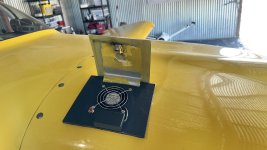
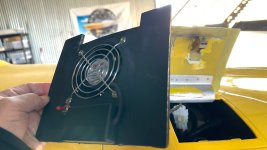
Although hot-start technique is import, I have significantly simpllified my short-turnaround issues by evacuating some of the engine compartment heat after landing. Takes seconds to apply/remove, cost about $20 to make.

IMG_0646.jpegIMG_0617.jpeg
 
Can someone please explain to me what the deal is with hot starts, what is happening in the above as it pertains to hot starts?

Think about Goldilocks and The Three Bears.

Remember porridge too hot, porridge too cold, porridge just right? The situation is similar when starting an engine with a constant flow fuel injection system. The fuel-air charge presented to each spark plug can be thought of as too rich, too lean, or just right. When it's just right, the engine will start and run easily; mixtures near stoichiometric are easy to light.

All successful starting methods are fundamentally the same. We set up a mixture sweep, forcing the ratio from rich to lean, or from lean to rich. Either way, it will pass through stoichiometric at some point in the sweep.

Consider the classic lever dance. It's really a sweep moving toward lean from a condition of way too rich. First we flood it (full rich, boost pump on), which ensures we're beginning the sweep on the too-rich end. Then we put the mixture at ICO and the throttle wide open; when we start cranking, no more fuel is added, but we're supplying plenty of air. With each intake stroke the fuel/air ratio presented to the spark plug becomes progressively leaner and leaner. When the ratio passes through the stoich range (or close to it), spark makes fire. We close the throttle and open the fuel (the lever dance), hoping to remain in the sweet spot.

The method is fairly reliable because the flooding process refilled the divider and nozzle lines, which were probably boiled dry after the shutdown. Now when you "catch" the start by moving the mixture to rich, there is actually fuel immediately available at the nozzles. The downside is that it's easy to be ham-handed. Set aside the runaway RPM thing. With the throttle full open, there is a wide range of fuel flow between ICO and full rich. The open throttle makes the mixture knob a gross control.

Consider the "throttle cracked, slowly push mixture toward rich" method. It's a sweep moving toward rich from a condition of way too lean. Leaving the throttle cracked and pulling the mixture for shutdown merely made the mixture too lean to run. So, to make it fire again we just sweep the mixture from too lean back toward rich. Allowing the engine to spin 4~6 blades with the the mixture knob at ICO ensures you really are starting the sweep in the too-lean range; all air, no fuel. Now start forward slowly on the mixture knob. Since the throttle isn't wide open, mixture knob movement is a finely graduated flow control. With each rev the mixture at the cylinders is getting richer. When each cylinder returns to something near stoich, it will light. Resist the temptation to do anything quickly. Don't shove the red knob; maintain the same nice slow push.

If it doesn't light, you managed to pass through stoich. It's not a problem if you stop and think a moment; you're now at the too-rich end of the scale. You just need to sweep from rich, back toward lean. You want all air, no fuel; do the conventional lever dance if you're comfortable with it.

Or you can do a variation: go to WOT, mixture to ICO, crank, let it hit, but do nothing with the levers. It will run, more or less, and quit. You just moved everything from the too-rich end of the scale to the too-lean end of the scale by using up all the random fuel in the intake tubes and cylinders. Now you can sweep lean to rich again; set throttle cracked, spin it a bit, and start forward slowly with the mixture.

And what the addition of an electronic magneto does to the mix

It simply widens the "just right" range, as it will light slightly richer or leaner mixtures.

 
you can always add fuel, don't over prime! hot start with no priming, will usually start, if not try 2 second prime, no start try 2 more seconds. you will learn what works for you. this is in my IO-540 Robinson 44 helo.
 
Back
Top