Van's Air Force

The definitive Van's Aircraft support community! Buying, building or flying an RV? Join our exclusive family of mentors and enthusiasts!

Emergency Landing Troubleshooting

We will look at the fuel pump vent port and gascolator when we decowl today. Gascolator sump looks good but may not be indicative of the whole story inside. I'll report back.

From memory, after ICO the pressure drops pretty quickly. Definitely does not stay more than an hour.

The plan today is to decowl for a thorough visual inspection. When we're happy with that, 2 hours of ground runs to make sure we're happy with the performance of the electric pump. If that checks out, my instructor will solo ferry the plane. Circling climb to 12,000 above the airport it's currently at, monitoring performance and then picking up class C clearance with Montreal terminal (who will know the plan ahead of time) and straight-lining to home base which is 25NM away. If the engine quits halfway, he will be able to glide to either field or if required to the longer runways of CYHU.

This assumes that the fuel pressure is measured between the Mech. fuel pump outlet and the Servo inlet -- e.g. the pressure in my IO-360-A1B6 w/ Avstar 5VA1 (RSA5 clone) servo remains > 30psi for quite a while (hours), dropping to ~16psi after a few days...
 
This assumes that the fuel pressure is measured between the Mech. fuel pump outlet and the Servo inlet -- e.g. the pressure in my IO-360-A1B6 w/ Avstar 5VA1 (RSA5 clone) servo remains > 30psi for quite a while (hours), dropping to ~16psi after a few days...
are you suggesting that not holding pressure there after shutdown is a problem?
 
are you suggesting that not holding pressure there after shutdown is a problem?
Depends on the "leak" right?

Fuel Pump: A tear in the diaphragm can allow fuel to enter the accy. case - poisoning the oil.
Fuel Pump: A weak check valve (inlet) can push fuel back into the tank, or (outlet) suck fuel away from the servo.

Servo: ICO isn't, more fuel to bleeds through the rotary valve...
 
I would
1- do a fuel flow test from each tank, slowly changing the Andair valve from Rt to Lt to determine where the valve positively opens or closes flow based on knob position. Also confirms proper flow rate from each tank (at this moment!).
2- if there are fuel filters inline to each tank, check both for FOD blockage.
3- drain each tank separately to confirm no other FOD in the tank & clogging up the fuel pickups (remember, trouble happened while you were flopping around doing stalls & such)
Checking vents is easy to do but I don’t think the problem (without prior symptoms) is there.
Edit- actually I’d REPLACE the inline fuel filter elements if there was a possibility of FOD or bad fuel load. There could be potentially a shellac layer (invisible) on the filter element restricting fuel flow (happened to a friend) & if you are in there anyway, not a bad idea anytime.
 
Last edited:
Depends on the "leak" right?

Fuel Pump: A tear in the diaphragm can allow fuel to enter the accy. case - poisoning the oil.
Fuel Pump: A weak check valve (inlet) can push fuel back into the tank, or (outlet) suck fuel away from the servo.

Servo: ICO isn't, more fuel to bleeds through the rotary valve...
I would suspect most servos will not hold pressure very long. When mine was OH'ed, it did, but after 50 hours, it did not. Not sure that is a definitive test to prove FP leakage.
 
I would suspect most servos will not hold pressure very long. When mine was OH'ed, it did, but after 50 hours, it did not. Not sure that is a definitive test to prove FP leakage.
"I never promised you a rose garden..." nor did I say it was definitive...

But, that aside, mine is still "new" (400 hours) and it holds full pressure for about a day, then drops to about 1/2 after another day, etc. after a week it's down to 5psi or so.

Also, fuel pressure is a useful tell/tool during our hot start shenanigans. I now have all of the RV operators at my home field at least looking at the gauge before mindlessly opening the throttle & mixture all the way, turning on the boost pump for 10 seconds, then holding the starter on for 30 seconds (like a Cirrus pilot -- (shaking head)).

🤣
 
Depends on the "leak" right?

Fuel Pump: A tear in the diaphragm can allow fuel to enter the accy. case - poisoning the oil.
Fuel Pump: A weak check valve (inlet) can push fuel back into the tank, or (outlet) suck fuel away from the servo.

Servo: ICO isn't, more fuel to bleeds through the rotary valve...
No where in this thread do I see (perhaps I over looked it) any mention of what brand fuel injection servo the OP has. It's probably unlikely that he has the AP FM-200 on an IO-320, but the FM 200 does not hold pressure atICO, which is part of the reason those systems were designed with the purge valve. The purge valve also cuts the fuel off from the injection distributor when in the bypass position.

Secondly, the mechanical pumps have 2 diaphragms with the space between them routed to the fuel pump vent port. A diaphragm tear results in either oil or fuel (or both in the most severe case) flowing out of the fuel pump vent port/fitting. It's specifically designed this way to prevent fuel or oil contamination and to also provide a visual indication of a failing pump by fluid weeping out of the vent line.

Skylor
 
Last edited:
We will look at the fuel pump vent port and gascolator when we decowl today. Gascolator sump looks good but may not be indicative of the whole story inside. I'll report back.

From memory, after ICO the pressure drops pretty quickly. Definitely does not stay more than an hour.

The plan today is to decowl for a thorough visual inspection. When we're happy with that, 2 hours of ground runs to make sure we're happy with the performance of the electric pump. If that checks out, my instructor will solo ferry the plane. Circling climb to 12,000 above the airport it's currently at, monitoring performance and then picking up class C clearance with Montreal terminal (who will know the plan ahead of time) and straight-lining to home base which is 25NM away. If the engine quits halfway, he will be able to glide to either field or if required to the longer runways of CYHU.
in my opinion, flying the plane without positively identifying and repairing the cause of the significant fuel pressure drops shown in your data is a REALLY BAD IDEA! You need to identify and fix the problem that caused the engine to quit in flight BEFORE flying the plane again!

Skylor
 
in my opinion, flying the plane without positively identifying and repairing the cause of the significant fuel pressure drops shown in your data is a REALLY BAD IDEA! You need to identify and fix the problem that caused the engine to quit in flight BEFORE flying the plane again!

Skylor
This ^ !!
 
So we did some investigating today and..... nothing.

Vent hoses are not blocked, we're able to blow air through and hear it through the tank/vapor out of tank present. Albeit there is more blowing pressure required than expected but it's equal on both tanks. We also saw during the day that fuel fumes were coming out of the under-fuselage end of the vent tube, so a blocked vent is definitely ruled out. Also inserted a borescope in the tank and saw no evidence of collapsing of the tank under suction.

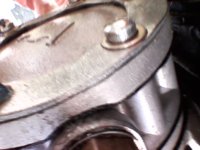
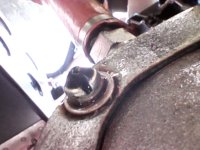
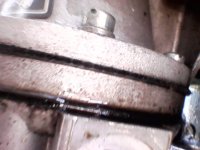
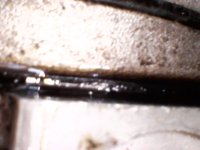
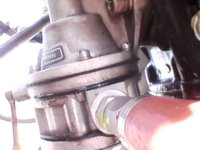
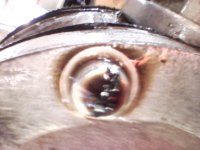
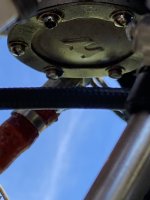
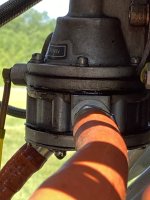
Ground runs were inconsistent with yesterday's findings. Today, on both the mechanical pump and on the electric pump, on left and right, perfect pressure, no choking of the engine in any conditions. We're really stumped. Fuel pressure idle -> max RPM with mechanical pump at 26/27 exactly where it should be, no fluctuation, no rough idle, no indications whatsoever. We did however, on the exterior of the mechanical pump, see a good amount of oil around the gasket. We initially thought this was 95% certain to be evidence of a failing pump, but someone from the airport who has rebuilt 5 of these tempest pumps says that it's not a sign of anything and most likely just oil coming from the weep out of my engine oil sump. Pictures attached.

We're positively stumped. Unfortunately I only had metric wrenches (rookie mistake) so I will go back to inspect the gascolator and the filter in the servo. The mechanical pump is getting tossed anyway since it's 5 years past service life so we'll open up the old one and hope that we see something obvious. Above-mentioned mechanic has seen the main springs in these pumps crack in a way that it can cause intermittent issues.

The plane remains on the ground until we figure it out.
 

Attachments

  • Image_2026-07-05 09_23_52_327.JPG
    Image_2026-07-05 09_23_52_327.JPG
    339.7 KB · Views: 41
  • Image_2026-07-05 09_23_56_571.JPG
    Image_2026-07-05 09_23_56_571.JPG
    386.9 KB · Views: 40
  • Image_2026-07-05 09_24_12_143.JPG
    Image_2026-07-05 09_24_12_143.JPG
    363.3 KB · Views: 36
  • Image_2026-07-05 09_24_16_932.JPG
    Image_2026-07-05 09_24_16_932.JPG
    303.6 KB · Views: 32
  • Image_2026-07-05 09_24_21_532.JPG
    Image_2026-07-05 09_24_21_532.JPG
    319 KB · Views: 33
  • Image_2026-07-05 09_24_33_368.JPG
    Image_2026-07-05 09_24_33_368.JPG
    346.9 KB · Views: 34
  • IMG_8182.jpeg
    IMG_8182.jpeg
    672 KB · Views: 33
  • IMG_8181.jpeg
    IMG_8181.jpeg
    828.3 KB · Views: 39
Two thoughts.

1. What if it is nothing? By this, maybe the fuel selector wasn’t quite right or some other anomaly? At some point you gotta just fly again.

2. Your second paragraph of the first post has lots of statements that puzzle me. Will clip below.

Pre-flight included checking the breather hoses externally and fuel sump as usual. Taxi and run-up we had some difficulty with the magnetos check and CHT#3 temps since it was such a hot day (31C, 90% RH), we couldn’t get to high RPM and peak mixture to clean the plugs Finally we accepted a drop of 80rpm on each mag. Everything was done on the R tank. During takeoff, we noticed lower fuel pressure at 21 PSI. Historically we are at 26-27 PSI and the pump manufacturer (Tempest #AF15473) recommends 25-30. We turned on the electric fuel pump when we noticed this and the pressure went back up to 25 for the rest of the climb to 1500. Disengaged electric pump as of this altitude.

Some difficulty
Finally we accepted
Couldn’t get high rpm/peak mixture
Difficult cht 3

These all come across as a warning, and coupled together read as holes in Swiss cheese that could lead to bigger problems. Why take off if things aren’t right? Why resign to compromise ie “finally we accepted”?

Why were you flying with an instructor?

I’m following along to keep learning, thanks for all your follow ups.
 
Two thoughts.

1. What if it is nothing? By this, maybe the fuel selector wasn’t quite right or some other anomaly? At some point you gotta just fly again.

2. Your second paragraph of the first post has lots of statements that puzzle me. Will clip below.

Pre-flight included checking the breather hoses externally and fuel sump as usual. Taxi and run-up we had some difficulty with the magnetos check and CHT#3 temps since it was such a hot day (31C, 90% RH), we couldn’t get to high RPM and peak mixture to clean the plugs Finally we accepted a drop of 80rpm on each mag. Everything was done on the R tank. During takeoff, we noticed lower fuel pressure at 21 PSI. Historically we are at 26-27 PSI and the pump manufacturer (Tempest #AF15473) recommends 25-30. We turned on the electric fuel pump when we noticed this and the pressure went back up to 25 for the rest of the climb to 1500. Disengaged electric pump as of this altitude.

Some difficulty
Finally we accepted
Couldn’t get high rpm/peak mixture
Difficult cht 3

These all come across as a warning, and coupled together read as holes in Swiss cheese that could lead to bigger problems. Why take off if things aren’t right? Why resign to compromise ie “finally we accepted”?

Why were you flying with an instructor?

I’m following along to keep learning, thanks for all your follow ups.
Looking at the lycoming operator's manual, they say mag drops below 175 and not more than 50 difference between the two is permissible. Our checklist from previous owner is <75. We decided that 80 was acceptable. The rpm/peak mixture was to clean carbon buildup on the plugs but with 80, we were fine with it.


CHT3 to our understanding is normally the hot cylinder, and it always is on my plane - this is not new. We attributed the heat to spending 10 minutes doing runup trying to get the plugs cleaned on a very hot and humid day, not out of the ordinary (at first). Based on the EMS data that I pulled post-failure, I don't suspect the CHT or any other engine parameter to be indicative or problematic at all.

Fuel pressure 21 PSI - yeah that was maybe the first real warning sign. Despite the lower trend than historical it was in the green range of the EMS settings, we opted to just use the electric pump for the rest of the takeoff. Re-examining that, it was our first warning. Hindsight is 20/20. In the future we will be more stringent.

I'm flying with an instructor since I'm still a PPL student with 25 hours!
 
Looking at the lycoming operator's manual, they say mag drops below 175 and not more than 50 difference between the two is permissible. Our checklist from previous owner is <75. We decided that 80 was acceptable. The rpm/peak mixture was to clean carbon buildup on the plugs but with 80, we were fine with it.


CHT3 to our understanding is normally the hot cylinder, and it always is on my plane - this is not new. We attributed the heat to spending 10 minutes doing runup trying to get the plugs cleaned on a very hot and humid day, not out of the ordinary (at first). Based on the EMS data that I pulled post-failure, I don't suspect the CHT or any other engine parameter to be indicative or problematic at all.

Fuel pressure 21 PSI - yeah that was maybe the first real warning sign. Despite the lower trend than historical it was in the green range of the EMS settings, we opted to just use the electric pump for the rest of the takeoff. Re-examining that, it was our first warning. Hindsight is 20/20.

I'm flying with an instructor since I'm still a PPL student with 25 hours!
What country are you in and/or are you a non native speaker/writer of the English language ? Sorry, edit as I see Canada.
Your first post suggests you are ppl(a licensed pilot) and ifr rated…
At least the way I read things.

Who is the owner of the rv9?

If this is your plane, I am most curious about the purchase process and who did the Prebuy? Why were they chosen?
 
in my opinion, flying the plane without positively identifying and repairing the cause of the significant fuel pressure drops shown in your data is a REALLY BAD IDEA! You need to identify and fix the problem that caused the engine to quit in flight BEFORE flying the plane again!

Skylor
Agreed. We decided to no-go as we didn't find a definitive answer.
 
No where in this thread do I see (perhaps I over looked it) any mention of what brand fuel injection servo the OP has. It's probably unlikely that he has the AP FM-200 on an IO-320, but the FM 200 does not hold pressure and ICO, which is part of the reason those systems were designed with the purge valve. The purge valve also cuts the fuel off from the injection distributor when in the bypass position.

Secondly, the mechanical pumps have 2 diaphragms with the space between them routed to the fuel pump vent port. A diaphragm tear results in either oil or fuel (or both in the most severe case) flowing out of the fuel pump vent port/fitting. It's specifically designed this way to prevent fuel or oil contamination and to also provide a visual indication of a failing pump by fluid weeping out of the vent line.

Skylor
I couldn't immediately verify the brand - I only have a part number that I found in the engine logs 252414-11. Can't successfully cross-reference it currently, I will look into it when I go back to the plane to look for manufacturer and S/N

**EDIT** It's in the AFM the previous owner wrote.

Bendix RSA 5AD1 part number 254147-13-M
 
Last edited:
During takeoff, we noticed lower fuel pressure at 21 PSI. Historically we are at 26-27 PSI and the pump manufacturer (Tempest #AF15473) recommends 25-30. We turned on the electric fuel pump when we noticed this and the pressure went back up to 25 for the rest of the climb to 1500.
Fuel pressure 21 PSI - yeah that was maybe the first real warning sign. Despite the lower trend than historical it was in the green range of the EMS settings, we opted to just use the electric pump for the rest of the takeoff.
This is a bit of a tangent to the root cause investigation, but might I point out...

THIS is why you are supposed to have the electric boost pump ON during take-off, is it not? Do you normally take off with the boost pump off? Why???
 
So we did some investigating today and..... nothing.

Vent hoses are not blocked, we're able to blow air through and hear it through the tank/vapor out of tank present. Albeit there is more blowing pressure required than expected but it's equal on both tanks. We also saw during the day that fuel fumes were coming out of the under-fuselage end of the vent tube, so a blocked vent is definitely ruled out. Also inserted a borescope in the tank and saw no evidence of collapsing of the tank under suction.

Ground runs were inconsistent with yesterday's findings. Today, on both the mechanical pump and on the electric pump, on left and right, perfect pressure, no choking of the engine in any conditions. We're really stumped. Fuel pressure idle -> max RPM with mechanical pump at 26/27 exactly where it should be, no fluctuation, no rough idle, no indications whatsoever. We did however, on the exterior of the mechanical pump, see a good amount of oil around the gasket. We initially thought this was 95% certain to be evidence of a failing pump, but someone from the airport who has rebuilt 5 of these tempest pumps says that it's not a sign of anything and most likely just oil coming from the weep out of my engine oil sump. Pictures attached.

We're positively stumped. Unfortunately I only had metric wrenches (rookie mistake) so I will go back to inspect the gascolator and the filter in the servo. The mechanical pump is getting tossed anyway since it's 5 years past service life so we'll open up the old one and hope that we see something obvious. Above-mentioned mechanic has seen the main springs in these pumps crack in a way that it can cause intermittent issues.

The plane remains on the ground until we figure it out.
Fuel pumps often fail intermittently. I would give strong consideration to proactively replacing the pump given your symptoms. I would not drain the good tank too low until i had proven to myself that the pump was the problem and not fod floating around in the troubled tanks lines.
 
Looking at the lycoming operator's manual, they say mag drops below 175 and not more than 50 difference between the two is permissible. Our checklist from previous owner is <75. We decided that 80 was acceptable. The rpm/peak mixture was to clean carbon buildup on the plugs but with 80, we were fine with it.


CHT3 to our understanding is normally the hot cylinder, and it always is on my plane - this is not new. We attributed the heat to spending 10 minutes doing runup trying to get the plugs cleaned on a very hot and humid day, not out of the ordinary (at first). Based on the EMS data that I pulled post-failure, I don't suspect the CHT or any other engine parameter to be indicative or problematic at all.

Fuel pressure 21 PSI - yeah that was maybe the first real warning sign. Despite the lower trend than historical it was in the green range of the EMS settings, we opted to just use the electric pump for the rest of the takeoff. Re-examining that, it was our first warning. Hindsight is 20/20. In the future we will be more stringent.

I'm flying with an instructor since I'm still a PPL student with 25 hours!
Unless your flying instructor is a aircraft engine mechanic I would go and find one that knows what he is doing. There are a lot of flying instructors that think that they have to impress their students and they don't know what they don't know, and at this point you are probably in the same boat.
 
This is a bit of a tangent to the root cause investigation, but might I point out...

THIS is why you are supposed to have the electric boost pump ON during take-off, is it not? Do you normally take off with the boost pump off? Why???
Sage advice here. SOP should be boost pump on in any situation where you may not have time/altitude to deal with any fuel interruptions. Use your redundancy!! You had a teaching moment here; fuel pump issues can appear out of the blue. Learn from it and adapt your approach.
 
Last edited:
This is a bit of a tangent to the root cause investigation, but might I point out...

THIS is why you are supposed to have the electric boost pump ON during take-off, is it not? Do you normally take off with the boost pump off? Why???

This may be a touch off topic but I’m bringing it up for the education of those that don’t know. For our Lycoming powered low wing RV’s, it IS standard procedure to operate the standby electric fuel pump during takeoff and landing to provide redundancy in case of mechanical pump failure. However, for aircraft powered by Continental IO series engines such as Bonanza’s, it is NOT SOP to operate the electric boost pump for takeoff and landing. The reason is that boost pump operation (while the mechanical pump is operational) can lead to engine flooding at low power settings. Therefore pilots used to operating such Continental powered aircraft might not be familiar with the Lycoming low-wing standard of boost pump operation during takeoff and landing.

Skylor
 
Last edited:
Yes the electric fuel pump is now part of our SOP for takeoff, landing, and manoeuvers. It was not added by the builder but after discussion he did use it every now and then. We will use it every time from now on.
 
Fuel pumps often fail intermittently. I would give strong consideration to proactively replacing the pump given your symptoms. I would not drain the good tank too low until i had proven to myself that the pump was the problem and not fod floating around in the troubled tanks lines.
It's being changed as soon as I get the part. Maybe today; if someone has it available in stock. It stays grounded until then
 
Unless your flying instructor is a aircraft engine mechanic I would go and find one that knows what he is doing. There are a lot of flying instructors that think that they have to impress their students and they don't know what they don't know, and at this point you are probably in the same boat.
Could you elaborate? Which part are you referring to?
 
Good source = https://www.airpowerinc.com
The RV9, like several other RV's, uses a fuel tank vent line routing through the fuselage that loops up high. This routing results in a low point near the base of the fuselage as line exits to the wing connection. This low point can & does occasionally accumulate a slug of fuel that does NOT block the line however does offer some additional resistance to air being blown thru... this could account for the difference your mechanic was sensing when he/she compared to an RV6. I'm attaching a few dwgs from RV9 manual for your viewing.
 

Attachments

Thanks everyone for the recommendations.

We found two things: The unused gascolator inlet port had a leak that the mechanic found visually during a static RPM test - we put new grease and torqued it. Likely contributed but can't be sure. We also replaced the mechanical pump and I will be disconnecting it. After many ground runs and a circling climb to 12000 over the stranded airport, I'm happy to say that the plane is functioning beautifully with no more symptoms and is back home in the hangar.

I will soon disassemble the old pump to verify if it had failed. We know that there's nothing in the gascolator or servo screens nor the spider so that eliminates a lot of plugging options/contamination.
 
Thanks everyone for the recommendations.

We found two things: The unused gascolator inlet port had a leak that the mechanic found visually during a static RPM test - we put new grease and torqued it. Likely contributed but can't be sure. We also replaced the mechanical pump and I will be disconnecting it. After many ground runs and a circling climb to 12000 over the stranded airport, I'm happy to say that the plane is functioning beautifully with no more symptoms and is back home in the hangar.

I will soon disassemble the old pump to verify if it had failed. We know that there's nothing in the gascolator or servo screens nor the spider so that eliminates a lot of plugging options/contamination.
Glad to hear of your progress.

Never use grease as a thread sealant in fuel applications; anywhere actually. Over time, the fuel will dissolve the grease and create a leak path. if you meant fuel lube instead of grease that is different.
 
Good source = https://www.airpowerinc.com
The RV9, like several other RV's, uses a fuel tank vent line routing through the fuselage that loops up high. This routing results in a low point near the base of the fuselage as line exits to the wing connection. This low point can & does occasionally accumulate a slug of fuel that does NOT block the line however does offer some additional resistance to air being blown thru... this could account for the difference your mechanic was sensing when he/she compared to an RV6. I'm attaching a few dwgs from RV9 manual for your viewing.
Thanks for these - immensely useful. I have them in a binder but did not think to go through them. Looks like a screen should be put at the vent opening which was not done prior. I will do so to eliminate future possibility of insects plugging the vent.
 
Just a thought. Fuel vent line screens. You may want to have a long cylinder shaped screen, or a 2 times or more larger screen inlet than the vent line itself. The idea is to have an increased surface area of screen so that a smaller bug or particle is less likely to completely chock off the vent line.

If you only have a screen that is the diameter of the vent line. It is a very small area for air to have accsss to the line. It would take a vey large bug or gum wrapper to plug the screen if it was a cylinder shape or several times diameter screen at the inlet.

Just some food for thought.
 
Back
Top