Van's Air Force
You are using an out of date browser. It may not display this or other websites correctly.
You should upgrade or use an alternative browser.
You should upgrade or use an alternative browser.
ELT mount technique
- Thread starter nohoflyer
- Start date



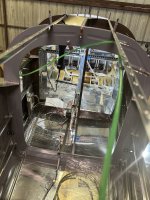
A weight (I believe) is used to activate the ELT in a sudden stop. If it is in an incorrect plane, it is unlikely to function. You can test the unit by conducting a "drop test" in any axis to see in which direction it can be activated.
I saw pictures of an EXCELLENT homemade mount on here several days ago in another thread that is easy to construct and install.... At this link: https://vansairforce.net/threads/ack-elt-e-04-installation-pics.232746/#post-1824574
I saw pictures of an EXCELLENT homemade mount on here several days ago in another thread that is easy to construct and install.... At this link: https://vansairforce.net/threads/ack-elt-e-04-installation-pics.232746/#post-1824574
Last edited:

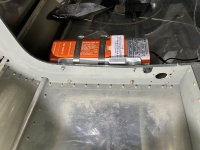
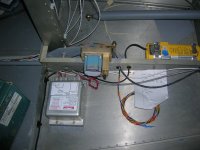
Because the "G" switch won't work properly in that configuration! The ELT must be mounted IAW installation instructions provided by the manufacturer.I installed my ELT (I can move it if necessary) 90 degrees from the instruction recommendation. Can anyone tell me why I wouldn’t want this spot? Seems to fit perfectly and is out of the way of any cables.

The instructions are a requirement - not a recommendation. The inertia switch must be orientated correctly to activate in the event of a crash. The arrow on the top of your unit clearly has a warning arrow pointing "FORWARD"

#1) RTFM!
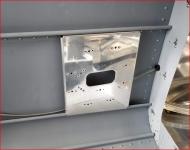
#2) Use the ELT mount that Van's sells.

 store.vansaircraft.com
#2) Use the ELT mount that Van's sells.
ELT/ELT Power Supply Bracket, Right
Mounting Bracket for ELT or Whelen Power Supply
Attachments

That's going to be fine if you crash straight sideways to the left, where the arrow points.I installed my ELT (I can move it if necessary) 90 degrees from the instruction recommendation. Can anyone tell me why I wouldn’t want this spot? Seems to fit perfectly and is out of the way of any cables.
Read the installation instructions. The ones included with my ELT said something about the ELT pointed in the same direction as the centerline of the aircraft within 5 degrees. I initially mounted my ELT to the side of my baggage area as in post #6. I later added spacers to align that angle closer to centerline.
Plus you didn’t mount the “straps” (they have holes) through the fastener locations as directed in the instructions. Mr. A320 Airline Captain, does your carrier allow to not follow instructions and SOP?

 www.kitplanes.com
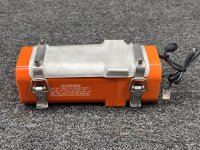
Stick to the Plans - KITPLANES
On his RV-7, Tony Kirk literally followed his own advice.
www.kitplanes.com
Hey- Please don't think I'm piling on, but just to clarify why this is a thing; You already got the answer that it matters due to the G-switch orientation, but the other issue is that the ELT is one of only a few items where you can't really go off the reservation just because it's going into an EAB, due to the TSO requirement.
There are specifications called Technical Standard Orders that deal with stuff like this. Basically a TSO functions like a mil-spec does for hardware, but for things like seat belts, radios etc. I'm not going to take the time to look up the specific FAR, but the cliff notes version is that an ELT that meets the applicable TSO is a required piece of equipment in pretty much any small airplane that has more than one seat. Certified, EAB, whatever.
Honestly, I think that for the kind of flying I do, in this ADSB era, an ELT's requirement is kinda dumb and I wouldn't even have installed one in my plane if I'd had a choice, but unfortunately we don't get to choose. You have to have an ELT, and it has to be installed in accordance with the mounting instructions that come with it in order to meet it' s TSO.
There are exceptions to how I explained it, but that's it in a nutshell.
Good on you for asking the question. That's how we learn stuff.
edit- I forgot add; if you use that Vans mount you might want to think about relieving the vertical flanges that face outboard on the mount. On my RV7 the rudder cable runs behind the mount and was rubbing on that flange, which I didn't notice until everything was riveted in place and I hung the rudder back on in the hangar.
There are specifications called Technical Standard Orders that deal with stuff like this. Basically a TSO functions like a mil-spec does for hardware, but for things like seat belts, radios etc. I'm not going to take the time to look up the specific FAR, but the cliff notes version is that an ELT that meets the applicable TSO is a required piece of equipment in pretty much any small airplane that has more than one seat. Certified, EAB, whatever.
Honestly, I think that for the kind of flying I do, in this ADSB era, an ELT's requirement is kinda dumb and I wouldn't even have installed one in my plane if I'd had a choice, but unfortunately we don't get to choose. You have to have an ELT, and it has to be installed in accordance with the mounting instructions that come with it in order to meet it' s TSO.
There are exceptions to how I explained it, but that's it in a nutshell.
Good on you for asking the question. That's how we learn stuff.
edit- I forgot add; if you use that Vans mount you might want to think about relieving the vertical flanges that face outboard on the mount. On my RV7 the rudder cable runs behind the mount and was rubbing on that flange, which I didn't notice until everything was riveted in place and I hung the rudder back on in the hangar.
Last edited:
Norman CYYJ
Well Known Member
Interesting, most ELT installations that i have seen in Experimentals are not installed according to the mandatory TSO, yet they are passed by the FAA or DAR inspectors.Hey- Please don't think I'm piling on, but just to clarify why this is a thing; You already got the answer that it matters due to the G-switch orientation, but the other issue is that the ELT is one of only a few items where you can't really go off the reservation just because it's going into an EAB, due to the TSO requirement.
There are specifications called Technical Standard Orders that deal with stuff like this. Basically a TSO functions like a mil-spec does for hardware, but for things like seat belts, radios etc. I'm not going to take the time to look up the specific FAR, but the cliff notes version is that an ELT that meets the applicable TSO is a required piece of equipment in pretty much any small airplane that has more than one seat. Certified, EAB, whatever.
Honestly, I think that for the kind of flying I do, in this ADSB era, an ELT's requirement is kinda dumb and I wouldn't even have installed one in my plane if I'd had a choice, but unfortunately we don't get to choose. You have to have an ELT, and it has to be installed in accordance with the mounting instructions that come with it in order to meet it' s TSO.
There are exceptions to how I explained it, but that's it in a nutshell.
Good on you for asking the question. That's how we learn stuff.
edit- I forgot add; if you use that Vans mount you might want to think about relieving the vertical flanges that face outboard on the mount. On my RV7 the rudder cable runs behind the mount and was rubbing on that flange, which I didn't notice until everything was riveted in place and I hung the rudder back on in the hangar.
Those guys don’t care. You should be worried about the guys doing ramp inspections and your insurance company investigatorsInteresting, most ELT installations that i have seen in Experimentals are not installed according to the mandatory TSO, yet they are passed by the FAA or DAR inspectors.

I’m trying to picture a scenario where an insurance company would deny coverage due to an incorrectly installed ELT, and I’m drawing a blank.You should be worried about the guys doing ramp inspections and your insurance company investigators

I totally agree with what has already been said regarding orientation. I mounted mine on the plate in the tail at the horizontal stabilizer (many others have too). It is easier to access for the annual condition inspections there. Recognize I have a constant speed prop and nose wheel so I expect to be slightly on the nose heavy side anyway. If you expect to be tail heavy, I wouldn'tI installed my ELT (I can move it if necessary) 90 degrees from the instruction recommendation. Can anyone tell me why I wouldn’t want this spot? Seems to fit perfectly and is out of the way of any cables.
insurance companies first step in a claim is to see if you violated the policy limitations in any way to avoid paying a claim. Keeping a plane in compliance with FAA regs is usually a requirement in those policies. I didn't really think it through when I wrote that post and your right that this is not likely one of those items they would look for issues. That said, if it is installed in a non compliant way that ultimately means you are not compliant with your Op Lims and therefore your policy requirements.I’m trying to picture a scenario where an insurance company would deny coverage due to an incorrectly installed ELT, and I’m drawing a blank.
Norman CYYJ
Well Known Member
I would think that if an ELT is not mounted according to the manufacturers TSO specs then technically the plane is flying without a valid CofA and the insurance companies wanting to get out of making a pay out might use that as an excuse, just saying.I’m trying to picture a scenario where an insurance company would deny coverage due to an incorrectly installed ELT, and I’m drawing a blank.

In the interest of the archives, and someone coming along later to read this thread, I have to point out that technically speaking, the ELT is not an “airworthiness” requirement - it is an operational requirement. If you have one, it has to be installed correctly (by the TSO-approached manual) for me to sign off the airplane…but an argument can be made that it is not required to get an AWC…but if it is a passenger-carrying plane, the PILOT is in violation for operating it without one (except for some special circumstances), yet the AWC is still valid. Same thing is true with Transponder certs.I would think that if an ELT is not mounted according to the manufacturers TSO specs then technically the plane is flying without a valid CofA and the insurance companies wanting to get out of making a pay out might use that as an excuse, just saying.
And….I have two airplanes with no ELT’s that are perfectly legal to fly!



Seriously?I would think that if an ELT is not mounted according to the manufacturers TSO specs then technically the plane is flying without a valid CofA and the insurance companies wanting to get out of making a pay out might use that as an excuse, just saying.
Every time some technical discrepancy or deviation gets discussed, the go-to answer is "your insurance company is going to use that to deny any claims!".
Personally, I've not had any such an experience with my insurance companies (home, auto, airplane) including some serious claims for the flying club on which I was a board member. Maybe I/we just have better carriers than y'all....I dunno.
(ETA: Now, *health* insurance companies? Yeah, they generally suck @ss, but that's a different internet forum
 )
)
I think the two things are unrelated.I would think that if an ELT is not mounted according to the manufacturers TSO specs then technically the plane is flying without a valid CofA
If insurance companies could successfully deny coverage whenever any random gadget, unrelated to the cause of a crash or the amount of damage, was improperly installed, they would basically never have to pay a claim.and the insurance companies wanting to get out of making a pay out might use that as an excuse, just saying.
Does your policy have that language somewhere?insurance companies first step in a claim is to see if you violated the policy limitations in any way to avoid paying a claim. Keeping a plane in compliance with FAA regs is usually a requirement in those policies.
Norman CYYJ
Well Known Member
Does your policy have that language somewhere?
In Canada an ELT is a requirement, the only time it is not a requirement is when it is out for repair and then you are only allowed to fly within 25 miles of the airport that the plane is based.In the interest of the archives, and someone coming along later to read this thread, I have to point out that technically speaking, the ELT is not an “airworthiness” requirement - it is an operational requirement. If you have one, it has to be installed correctly (by the TSO-approached manual) for me to sign off the airplane…but an argument can be made that it is not required to get an AWC…but if it is a passenger-carrying plane, the PILOT is in violation for operating it without one (except for some special circumstances), yet the AWC is still valid. Same thing is true with Transponder certs.
And….I have two airplanes with no ELT’s that are perfectly legal to fly!
Pretty sure that my policy says that i as a pilot must follow all FAA regulations and same for my aircraft. Lets say you were flying on a lapsed medical, but your accident was unrelated to your health. Do you really think that your insurance company won’t use that to deny your claims? Not saying that these are unscrupulous people that constantly deny claims. But they are for profit companies that increase profits by minimizing claims. I concur that they will not nit pick little details, but remain confident that they will check the status of things like your medical and CI status. I am sure there are insurance investigators that will comb through log books looking for irregularities. I had a friend with a claim and the insurance company asked for a copy of his pilot and aircraft log books. Pretty sure it wasn’t just for the record keeping.Does your policy have that language somewhere?

Pretty sure that my policy says that i as a pilot must follow all FAA regulations and same for my aircraft. Lets say you were flying on a lapsed medical, but your accident was unrelated to your health. Do you really think that your insurance company won’t use that to deny your claims?
I don’t think it says this.Pretty sure that my policy says that i as a pilot must follow all FAA regulations and same for my aircraft.
True, the lapsed medical issue you identify might well put you crosswise with specific requirements governing which pilots are insured, but that’s not the same as denying coverage for an improperly mounted ELT, or because your aircraft didn’t “follow all FAA regulations” in some other way that’s unrelated to the claim.
I have no illusions about insurance companies (believe me). But I’d be very surprised if your policy says your aircraft must follow all FAA regulations as a condition of coverage.
But I could be wrong! Give your policy a read and see!
You are mostly correct. I know I have seen this in past policies, but couldn't find it in current policy. It does state the following when defining pilots covered:I don’t think it says this.
True, the lapsed medical issue you identify might well put you crosswise with specific requirements governing which pilots are insured, but that’s not the same as denying coverage for an improperly mounted ELT, or because your aircraft didn’t “follow all FAA regulations” in some other way that’s unrelated to the claim.
I have no illusions about insurance companies (believe me). But I’d be very surprised if your policy says your aircraft must follow all FAA regulations as a condition of coverage.
But I could be wrong! Give your policy a read and see!
"... Any person holding a currently effective certificate issued by the Federal Aviation Administration designating him or her a private..."
Therefore, if any of the FAA's requirements are not met, such as BFR, medical, etc., the pilot is not covered. This likely applies to other related activities. Even without the words, I have to wonder if the insurer has recourse to deny claims if they can prove the owner knowingly flew the aircraft in a state that made it unairworthy according to the FAA, such as lapsed CI. Most states have a lot of laws relating to insurance that go in both directions, but hat is well outside of my expertise.
Last edited:
Yup, a lapsed/not current certificate is likely a problem!Therefore, if any of the FAA's requirements are not met, such as BFR, medical, etc., the pilot is not covered. This likely applies to flying in IMC without a rating and other related activities.
On the other hand, I’d be surprised if coverage for a crash caused by inadvertent flight into IMC by a pilot without an instrument rating could be denied under that language. If he or she filed illegally and flew in the clouds on purpose, perhaps it would be a different matter…
Last edited:
agreed. inadvertant IMC not an issue. I deleted that sentence as that was not what I intended. I meant exercising priviledges for which you are not rated and current.Yup, a lapsed/not current certificate is likely a problem!
On the other hand, I’d be surprised if a crash caused by inadvertent flight into IMC by a pilot without an instrument rating could be denied under that language. If he or she filed illegally and flew in the clouds on purpose, perhaps it would be a different matter…