Van's Air Force

The definitive Van's Aircraft support community! Buying, building or flying an RV? Join our exclusive family of mentors and enthusiasts!

Electric Fuel Valve by Engineering Students

jessicas_other_half

Member
Patron
This is for Jessica Cox's Impossible RV-10.

We are looking for ways to lower Jessica's workload in the cockpit, and one idea is to automate switching tanks. We are working with engineering students at the University of Arizona to develop a concept for the idea and are looking for parts to use in their prototype. Has anyone installed an electric fuel selector valve in an RV or other experimental airplane? If so, what did you use? If not, is there one you might trust under the right circumstances?

We know going electric isn't the norm, but we're going for a prototype first. Ideas on how to do it or any educational guidance would be appreciated (the students will read this thread). I'll be happy to show the prototype when it's done, and then we can get into the "why not's." You're welcome to post a "following" message or turn on notifications if you want to know when I post the prototype in May.

Thanks for your support!

(I almost forgot, the students aren't allowed to copy the new one from Cirrus ;))
 
Have you looked at available automotive technology? GM offered dual tanks in many trucks for many, many years. Relatively cheap and reliable, made by the thousands.
12v, electrically operated. They switch fuel lines and transfer the senders to one gage.
Anyway, for the cost, it might be worthwhile effort to reverse engineer them for educational purposes.
 
This is for Jessica Cox's Impossible RV-10.

We are looking for ways to lower Jessica's workload in the cockpit, and one idea is to automate switching tanks. We are working with engineering students at the University of Arizona to develop a concept for the idea and are looking for parts to use in their prototype. Has anyone installed an electric fuel selector valve in an RV or other experimental airplane? If so, what did you use? If not, is there one you might trust under the right circumstances?

We know going electric isn't the norm, but we're going for a prototype first. Ideas on how to do it or any educational guidance would be appreciated (the students will read this thread). I'll be happy to show the prototype when it's done, and then we can get into the "why not's." You're welcome to post a "following" message or turn on notifications if you want to know when I post the prototype in May.

Thanks for your support!

(I almost forgot, the students aren't allowed to copy the new one from Cirrus ;))
Have you looked at available automotive technology? GM offered dual tanks in many trucks for many, many years. Relatively cheap and reliable, made by the thousands.
12v, electrically operated. They switch fuel lines and transfer the senders to one gage.
Anyway, for the cost, it might be worthwhile effort to reverse engineer them for educational purposes.
Boundary Conditions? Is a manual override required? Position feedback? etc.
 
Have you looked at available automotive technology? GM offered dual tanks in many trucks for many, many years. Relatively cheap and reliable, made by the thousands.
12v, electrically operated. They switch fuel lines and transfer the senders to one gage.
Anyway, for the cost, it might be worthwhile effort to reverse engineer them for educational purposes.
That's great to know. We'll look into it. Thanks!
 
With the sensor you have the failure to switch mode covered.

You will also need to ensure you have no failure modes where either both tanks are blocked in normal operation, or where both tanks are open to the suction.

If you are pulling from two tanks in a low wing aircraft, you will eventually pull one empty and air is easier to pull than fuel so it will end in an engine stoppage. They won't empty evenly as one would sometimes presume.

Derek
 
As DerekS said, don’t let any single failures cause a total loss of fuel flow. For fuel shutoff valves (not selectors), MIL-V-8608A has a design where there are separate signals for open vs close. With a simple solenoid, a broken wire or failed coil means loss of engine. If it has to be electric/electronic and fail safe, one way to do it would be to create a header/feed tank on one side that is the primary feed tank (with a baffle and flapper check valves), and then a manual or automatic transfer with a small pump from the other side to that feed tank. Then you can leave the fuel selector on the side with the feed tank with a manual override to get to the opposite tank if needed. I considered such a system for automatic lateral CG management but decided to just go with the stock system.
- Bob
 
Boundary Conditions? Is a manual override required? Position feedback? etc.
Yeah
you have to give us more information about the requirements. Since you included a manual override does that imply you are using a motorized ball valve? That precludes latching or bi-stable solenoid valves that are the first thing I thought of. Is this an undergrad excercise?
 
Last edited:
As DerekS said, don’t let any single failures cause a total loss of fuel flow. For fuel shutoff valves (not selectors), MIL-V-8608A has a design where there are separate signals for open vs close. With a simple solenoid, a broken wire or failed coil means loss of engine. If it has to be electric/electronic and fail safe, one way to do it would be to create a header/feed tank on one side that is the primary feed tank (with a baffle and flapper check valves), and then a manual or automatic transfer with a small pump from the other side to that feed tank. Then you can leave the fuel selector on the side with the feed tank with a manual override to get to the opposite tank if needed. I considered such a system for automatic lateral CG management but decided to just go with the stock system.
- Bob
Bob has a good idea here that side steps a lot of the critical failure modes - just build a fuel balancer that pumps from the high side to the low side. If anything goes wrong it goes wrong much more slowly, and you change less of the all important fuel system. Make sure you are pumping into the feed tank through a dedicated bung. More for the students to think about.
 
Have you looked at available automotive technology? GM offered dual tanks in many trucks for many, many years. Relatively cheap and reliable, made by the thousands.
12v, electrically operated. They switch fuel lines and transfer the senders to one gage.
Anyway, for the cost, it might be worthwhile effort to reverse engineer them for educational purposes.
Hmmm, I remember those and they did fail at the worst time and with out warning. At least with the manual valve you might feel a change in the way it feels before it fails.
 

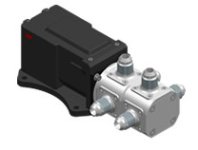
It’ll function as a 3 port automotive pollack valve, which is a good option. This particular valve has NPT threads for AN style fittings
 
Hmmm, I remember those and they did fail at the worst time and with out warning. At least with the manual valve you might feel a change in the way it feels before it fails.
The original in my 1995 dump truck failed last year. 276k miles and almost 40 years. However, I would t recommend using one in an airplane. It was recommended as a cheap example of a common valve they can take apart and look inside.
I got lucky. It failed at the hangar. Failure mode was spewing fuel out of a fitting that appears to be designed to do so. Not good.
If I was to put an electric operated valve in an airplane it would have to have a mechanical bypass and a benign recognizable failure mode. Complex and expensive is my guess.
 
This is just a bad idea. Its a great idea to challenge the students to design one, just don't put it in the plane.
 
This is just a bad idea. Its a great idea to challenge the students to design one, just don't put it in the plane.
Why would it be any worse than if average joe designed one and put it in the plane?

Someone is going to have to come up with an idea and then design it.

The important part is validating the part before it is used in an aircraft. If those students design a part that is tested and validated, it isn’t a bad idea.
 
Remember this isn’t a stunt but a way for a pilot with physical limitations to manage fuel. There are a lot of interesting ideas in this thread. All with various risks and possible risk mitigation. Like any engineering problem it’s comprise between cost, complexity and risk.
 
Last edited:
Why would it be any worse than if average joe designed one and put it in the plane?

Someone is going to have to come up with an idea and then design it.

The important part is validating the part before it is used in an aircraft. If those students design a part that is tested and validated, it isn’t a bad idea.
Simple. It adds unneeded complexity to an important system and additional points of failure. I have no idea who Jessica is, however if Jessica can not manage fuel/tank selection because it adds work load flying the RV-10, probably should not be PIC.
 
Simple. It adds unneeded complexity to an important system and additional points of failure. I have no idea who Jessica is, however if Jessica can not manage fuel/tank selection because it adds work load flying the RV-10, probably should not be PIC.
Dude, cool your jets.
 
Last edited:
Simple. It adds unneeded complexity to an important system and additional points of failure. I have no idea who Jessica is, however if Jessica can not manage fuel/tank selection because it adds work load flying the RV-10, probably should not be PIC.
Yeah, cool your jets and take some time to get information before you go off.

You might want to read about Jessica.
 
This is for Jessica Cox's Impossible RV-10.

We are looking for ways to lower Jessica's workload in the cockpit, and one idea is to automate switching tanks. We are working with engineering students at the University of Arizona to develop a concept for the idea and are looking for parts to use in their prototype. Has anyone installed an electric fuel selector valve in an RV or other experimental airplane? If so, what did you use? If not, is there one you might trust under the right circumstances?

We know going electric isn't the norm, but we're going for a prototype first. Ideas on how to do it or any educational guidance would be appreciated (the students will read this thread). I'll be happy to show the prototype when it's done, and then we can get into the "why not's." You're welcome to post a "following" message or turn on notifications if you want to know when I post the prototype in May.

Thanks for your support!

(I almost forgot, the students aren't allowed to copy the new one from Cirrus ;))
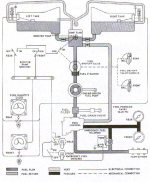
Andair was selling one for a while but now as I understand it have stopped because of supply chain issues. I am fairly sure this is being used in the new Cirrus's coming out with their automatic fuel tank changeover design. The lack of supply might be indicative Cirrus is buying up the capacity. Hopefully one can be designed and tested for her RV-10.

Screenshot 2024-09-28 190720.jpg
 
Last edited:
OK, maybe this is my dumbest thought of the day... Or maybe it's so simple it's brilliant.

We are very accustomed to using linear actuators in aircraft, particularly in trim systems and as cowl flap actuators. I'm thinking two small linear actuators, each one attached to the lever of a standard 90 degree ball valve, would be very simple to implement and would use a valve with known reliability. Install limit switches at both ends of travel of the actuator and tie those switches to LED indicators. A total of four indicators would be needed to achieve the utmost in simplicity. Two reds, one for each tank in the "OFF" position, two greens, again one for each tank but this time in the "ON" position.

A simple switch with three positions could drive the servos. A small amount of engineering would be required to configure the switch to both fit Jessica's ability to manipulate the switch handle as well as the ability to switch from one tank to the other without going through the "Off" position. This isn't rocket science.
 
OK, maybe this is my dumbest thought of the day... Or maybe it's so simple it's brilliant.

We are very accustomed to using linear actuators in aircraft, particularly in trim systems and as cowl flap actuators. I'm thinking two small linear actuators, each one attached to the lever of a standard 90 degree ball valve, would be very simple to implement and would use a valve with known reliability. Install limit switches at both ends of travel of the actuator and tie those switches to LED indicators. A total of four indicators would be needed to achieve the utmost in simplicity. Two reds, one for each tank in the "OFF" position, two greens, again one for each tank but this time in the "ON" position.

A simple switch with three positions could drive the servos. A small amount of engineering would be required to configure the switch to both fit Jessica's ability to manipulate the switch handle as well as the ability to switch from one tank to the other without going through the "Off" position. This isn't rocket science.
You could also use a stepper motor direct drive to the valve shaft.
 
Simple. It adds unneeded complexity to an important system and additional points of failure. I have no idea who Jessica is, however if Jessica can not manage fuel/tank selection because it adds work load flying the RV-10, probably should not be PIC.

She was born without arms and she has been flying an older ercoupe with no rudder pedals with just her feet. Her pilot license restricts her to 2 axis controls. When the EAA group finishes this for her. The FAA will require a retest and give her a new pilots license with the restriction of a particular custom built N-numbered aircraft.

There is an EAA group custom building an RV10 for her and her limitations. For example there was one university that was working on the door mechanism. How to open the door from the outside, climb in, and close and latch the door, and reverse the process with only her feet, and another university was designing a series of controls to fly the aircraft. Again with only feet and toes.

S he is a tremendous spokesperson and inspires others. What do we need? People with a can do/overcome anything attitude? Or people who lounge about waiting for government handouts.

I met her a year ago at Oshkosh at the Ercoupe owners dinner. In one of the hangars at Oshkosh, they had a simulator you could try flying with just your feet just like Jessica.
 

It’ll function as a 3 port automotive pollack valve, which is a good option. This particular valve has NPT threads for AN style fittings

something like this could be set up to automatically switch tanks every 30 minutes
 
Who OEMs the fuel valve to Cirrus? Late model SR-22’s and all SF-50’s have a valve which changes tanks every 15 minutes, and a flap you can open for a manual override.

You might be able to get whenever they’re using off the shelf, without having to reinvent wheels.

- mark
 
For simplicity, why not have a manual selector valve that also allows use of both tanks at same time (left, right, and BOTH)?
 
For simplicity, why not have a manual selector valve that also allows use of both tanks at same time (left, right, and BOTH)?

Because in a low wing airplane dependent on a fuel pump for suction, unporting either tank while on BOTH will make the pump suck air bubbles into the fuel system and shut down your engine. First tank that runs dry gives you a bad day.

A high wing airplane using gravity to feed the engine doesn’t have that problem, so you can run BOTH on Cessna 100-series but not on (say) RVs.

For this application, Bob’s earlier idea of a transfer pump into a header tank seems best. Transfer can run automatically. If the automation fails, you have until the header tank runs dry to find a safe landing.

- mark
 
The key here is the manual override.
Parker already make such a thing. Electrically operated and automated and with a manual handle.
These have existed in boats and 4x4s forever so it’s a well trodden path.
Well enough trodden to stick one in your experimental? Up to you.
Sounds like an eminently sensible project for this user though. I hope to see a great solution.
 
If you want simplicity with and manual override. I believe we are way over thinking this.
1. Keep the as designed system, move the fuel selector valve and extend the handle if needed for manual override situation.
2. Normal operation, leave the tank on the left side (I am picking a side here, does not matter which one).
3. Install two small transfer pumps for redundancy, one per tank (for weight distribution). Right tank pump will suck. Left tank will push. Size the pumps for roughly 55% of the normal cruise fuel flow (see why below in failure modes).
4. Using fuel gauges when the imbalance exceeds X amount the pumps turn on. Being in IT, I would program this, but likely electrical engineers have a much better solution that is more reliable. Needs pilot controlled shutoff/disable of the automatic system along with a lock out when the left tank is over X fuel level.
5. Have two manual transfer switches in case the gauge based system fails.

This would provide an automatic system, minimal change on a proven design, and fault tolerance.

Failure modes, and how this covers it.
1. Electrical failure. Existing manual switch. No change.
2. Automatic gauge fails in flight. Turn on one pump. This will provide just over half the fuel needed for normal cruise meaning there will be minimal switching if any. Separate switches allow for redundancy in case one pump fails.
3. If a pump fails, there is a second pump. Risk is the automatic may wait too long before the second pump kicks in allowing the left tank to run dry. In this scenario, Jessica would be required to disable the system, and manually take over and use the right tank.
4. Automatic system goes into over dive and does not shut off. Risk would be overflowing the left tank and dumping fuel. Need some sort of lockout to prevent the pumps from running if the left tank is over X full. And a pilot controlled shutoff of the automatic system.

Did I miss a condition?

Tim
 
The key here is the manual override.
Parker already make such a thing. Electrically operated and automated and with a manual handle.
These have existed in boats and 4x4s forever so it’s a well trodden path.
Well enough trodden to stick one in your experimental? Up to you.
Sounds like an eminently sensible project for this user though. I hope to see a great solution.
Is there a link to where you can purchase one?
 
If you want simplicity with and manual override. I believe we are way over thinking this.
1. Keep the as designed system, move the fuel selector valve and extend the handle if needed for manual override situation.
2. Normal operation, leave the tank on the left side (I am picking a side here, does not matter which one).
3. Install two small transfer pumps for redundancy, one per tank (for weight distribution). Right tank pump will suck. Left tank will push. Size the pumps for roughly 55% of the normal cruise fuel flow (see why below in failure modes).
4. Using fuel gauges when the imbalance exceeds X amount the pumps turn on. Being in IT, I would program this, but likely electrical engineers have a much better solution that is more reliable. Needs pilot controlled shutoff/disable of the automatic system along with a lock out when the left tank is over X fuel level.
5. Have two manual transfer switches in case the gauge based system fails.

This would provide an automatic system, minimal change on a proven design, and fault tolerance.

Failure modes, and how this covers it.
1. Electrical failure. Existing manual switch. No change.
2. Automatic gauge fails in flight. Turn on one pump. This will provide just over half the fuel needed for normal cruise meaning there will be minimal switching if any. Separate switches allow for redundancy in case one pump fails.
3. If a pump fails, there is a second pump. Risk is the automatic may wait too long before the second pump kicks in allowing the left tank to run dry. In this scenario, Jessica would be required to disable the system, and manually take over and use the right tank.
4. Automatic system goes into over dive and does not shut off. Risk would be overflowing the left tank and dumping fuel. Need some sort of lockout to prevent the pumps from running if the left tank is over X full. And a pilot controlled shutoff of the automatic system.

Did I miss a condition?

Tim
That seems to be adding a bunch of complexity.

In this case, there is inevitably going to be more but I think a better solution would be to install a header tank and just feed it from both tanks all the time.

A pump for each tank with return lines from the header to the wing tank. Check valve in the return lines to prevent cross flow. Engine draws from the header. During flight, pumps are on, header is fed from two independent sources. If one pump fails, the other keeps the header full until corresponding wing tank and header tank is empty. No pilot interaction required.
 
Last edited:
That seems to be adding a bunch of complexity.

In this case, there is inevitably going to be more but I think a better solution would be to install a header tank and just feed it from both tanks all the time.

A pump for each tank with return lines from the header to the wing tank. Check valve in the return lines to prevent cross flow. Engine draws from the header. During flight, pumps are on, header is fed from two independent sources. If one pump fails, the other keeps the header full until corresponding wing tank and header tank is empty. No pilot interaction required.
Similar set up in Glasair's and Lancair's.
 
That seems to be adding a bunch of complexity.

In this case, there is inevitably going to be more but I think a better solution would be to install a header tank and just feed it from both tanks all the time.

A pump for each tank with return lines from the header to the wing tank. Check valve in the return lines to prevent cross flow. Engine draws from the header. During flight, pumps are on, header is fed from two independent sources. If one pump fails, the other keeps the header full until corresponding wing tank and header tank is empty. No pilot interaction required.
Two pumps into a header tank still needs some additional complexity.

The header tank still needs to be vented, so you can' t keep pumping forever or the fuel will go overboard and if you use a return system you need to figure out which tank to send the excess back to. A check valve (or two) won't balance flow.

Pick one tank, use a pump to top it up from the other one (check valve to block reverse flow). Add a foot grabable handle to the existing valve for emergency swap (e.g. left the cap off the main tank), but most of the time you should see the imbalance and be on the ground long before it becomes critical.

4. Using fuel gauges when the imbalance exceeds X amount the pumps turn on. Being in IT, I would program this, but likely electrical engineers have a much better solution that is more reliable. Needs pilot controlled shutoff/disable of the automatic system along with a lock out when the left tank is over X fuel level.
This is the complex part, with dependencies on fuel gauges and other things we don't like to trust. - I don't have a better answer for it, but with the above mechanicals is becomes a non critical system. If it pumps too much, pull the breaker, if it stops pumping. Land. Both detected by the imbalance. If you want to get really fancy pump the aux tank empty when you get below x gal.

Fuel systems are hard, lots of thing go wrong when we start changing them. I'd definitely look at what cirrus did before picking a final direction. also a lot to be said for the motor on the valve approach and no change to the fluid side of the system.

Derek
 
IMG_7366.jpeg
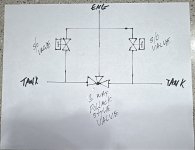
A pollack style 3 port valve controlled by a timer.

If you must have a back up. 2 normally closed shutoff valves. Throw a pair of guarded switches on them.
 
That seems to be adding a bunch of complexity.

In this case, there is inevitably going to be more but I think a better solution would be to install a header tank and just feed it from both tanks all the time.

A pump for each tank with return lines from the header to the wing tank. Check valve in the return lines to prevent cross flow. Engine draws from the header. During flight, pumps are on, header is fed from two independent sources. If one pump fails, the other keeps the header full until corresponding wing tank and header tank is empty. No pilot interaction required.
That works for high wing. On a low wing it will lead to a fuel imbalance.

Tim
 
Two pumps into a header tank still needs some additional complexity.

The header tank still needs to be vented, so you can' t keep pumping forever or the fuel will go overboard and if you use a return system you need to figure out which tank to send the excess back to. A check valve (or two) won't balance flow.

Pick one tank, use a pump to top it up from the other one (check valve to block reverse flow). Add a foot grabable handle to the existing valve for emergency swap (e.g. left the cap off the main tank), but most of the time you should see the imbalance and be on the ground long before it becomes critical.


This is the complex part, with dependencies on fuel gauges and other things we don't like to trust. - I don't have a better answer for it, but with the above mechanicals is becomes a non critical system. If it pumps too much, pull the breaker, if it stops pumping. Land. Both detected by the imbalance. If you want to get really fancy pump the aux tank empty when you get below x gal.

Fuel systems are hard, lots of thing go wrong when we start changing them. I'd definitely look at what cirrus did before picking a final direction. also a lot to be said for the motor on the valve approach and no change to the fluid side of the system.

Derek

Derek,

The point was an automated system. Even in your system, you need fuel gauges to help the pilot manage fuel tank imbalances, or the pilot is depending upon the fuel totalizer combined with tracking fuel transferred; or inventing a new complicated system. The goal here is to reduce pilot complexity.

The design I suggest may sound complicated, but is actually very simple with multiple independent very simple systems. This provides redundancy; limited failure modes, and reduces pilot workload. The most complicated aspect of my system would be the automated system; and this could be removed. Just have Jessica activate one transfer pump in the runup, it will likely never catchup.

The problem with fuel gauges we use very low resolution systems. Look at the results CEIS gets with older Cirrus for an example of fixing the problem of poor fuel gauges.

Tim
 
Nope, properly executed with a header tank, feeding from both tanks in a low wing will work just fine.
Any examples you can provide that are as simple as a design as you postulated? I have never seen one that works well that was not very complex and failure prone. Note: my view and knowledge is somewhat limited.

Tim
 
Might be the easiest and simplest to mount the selector valve with the shaft horizontal and turned 90 degrees and use a "D" shaped foot loop on a short push rod to actuate it. Push forward for one tank and pull aft for the other. Would only take a couple of seconds to change tanks and would not be prone to any electrical failure or glitching.

Think a loop something like this:https://i.ebayimg.com/images/g/lrAAAOSwS4djNz-f/s-l1600.webp
 
I too have always heard that you cannot have both tanks feed at the same time in a low wing airplane, but we had a Shinn (Morrisy or Varga Kachina) based at my airport in Pennsylvania that had this configuration. Each side had a simple on/off valve and normal ops was to leave them both on. Apparently, it worked fine right up to the end.

Unfortunately, the end came when the owner/pilot was shooting patterns with no gas in the tanks. On his first takeoff it ran fine up to about 500 feet and then started banging and cutting out. Believe it or not, he landed and did a taxiback for another takeoff off. The fuel line would fill up when the fuel flow was low and then suck dry at high power. He had the same result on the second takeoff, but after landing he decided the best idea was to do a touch and go. This time he got to about 100 feet off the end of the runway when it died. He tried to turn back and stalled into the woods. He did not have his harness latched, so he was ejected and died of a broken neck.

Of interest to this group is that there was no fuel found at the accident site. Apparently the engine had no trouble feeding until all of the gas was gone.
 
Any examples you can provide that are as simple as a design as you postulated? I have never seen one that works well that was not very complex and failure prone. Note: my view and knowledge is somewhat limited.

Tim
B Model “Bonanza with a Stick” (T-34) for one. Fuel valve has 2 positions, on and off.
 
IF you are going with a header tank. The Eecoupe she currently flies has both low wings and a header tank.

The Ercoupe wing tanks are connected together. (1 interconnected wing tank) There is a mechanical fuel pump on the motor. If the motor is turning, fuel is being pumped from the wings into the header tank. The header tank gravity feeds the carburetor. There is an elbow fitting inside the header tank porting excess fuel back to the wing(s).

To duplicate this with a fuel injected engine. You would probably want the engine driven pump feeding the engine from the header, and 2 electric pumps (A/B redundancy) Feeding the header tank. The header tank would probably need 30+ minutes useable fuel.

You could also add a switch to supply the engine via electric fuel pump directly should the engine mounted pump fail.

The problem with that design as a stand alone, as previously pointed out. Fuel injected engines don’t like air in the fuel lines.
 
Derek,

The point was an automated system. Even in your system, you need fuel gauges to help the pilot manage fuel tank imbalances, or the pilot is depending upon the fuel totalizer combined with tracking fuel transferred; or inventing a new complicated system. The goal here is to reduce pilot complexity.

The design I suggest may sound complicated, but is actually very simple with multiple independent very simple systems. This provides redundancy; limited failure modes, and reduces pilot workload. The most complicated aspect of my system would be the automated system; and this could be removed. Just have Jessica activate one transfer pump in the runup, it will likely never catchup.

The problem with fuel gauges we use very low resolution systems. Look at the results CEIS gets with older Cirrus for an example of fixing the problem of poor fuel gauges.

Tim

Hi Tim,

I attempted to address two ideas in one post which is never a good idea. I'd likely not do redundant pumps, and I'd make the pump able to catch up. Even if you are pumping at 200% of max flow from start up, you'd have to leave it doing for a long time before you finally sent 25% of the gas overboard which in my mind is a better outcome that not being able to pump fast enough to keep yourself in the air because you got behind.

Looking a fuel accessibility, your worst case is the pump failed on the ground, since that strands 50% of your fuel, and I'd rather see the imbalance faster in that case. Add to the fact that it removes a bunch of fittings that can leak. I'd also suggest you already have a good backup in the foot operated valve in case of emergency.

That backup also makes the balancing system non-critical which is why one can propose relying the things like fuel gauges

I'm just throwing options out there - the Students / Jessica are the ones that need to be comfortable with it. There are a few options here.

Derek
 
Back
Top