Hello,
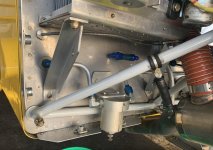
My 7A has a gascolator that's basically inaccessible to drain during pre-flight. Do you all sump your gascolators?
My 7A has a gascolator that's basically inaccessible to drain during pre-flight. Do you all sump your gascolators?



Hello,
My 7A has a gascolator that's basically inaccessible to drain during pre-flight. Do you all sump your gascolators?

Hello,
My 7A has a gascolator that's basically inaccessible to drain during pre-flight. Do you all sump your gascolators?

Jesus you guys are frightening me. Should I get rid of the gascolator?

The RV3 I now fly is carbed and maybe more tolerant of contaminates in the fuel?
Same for me and my RV7. I remove the bowl and screen at each CI, as well as the carburetor's finger screen but have never found anything. I sump each tank before flight, which is where I occasionally have found debris and water.My RV7 originally had a gascolator. It was useless! It would not drain fuel unless I would turn on the boost pump.
When I changed to fuel injection I eliminated it and replaced it with an AFP high pressure boost pump, with a high flow fliter. The filter gets serviced at each condition inspection.
I sump the lowest point in my taildragger's fuel system: which is each tank's rear inboard main tank drains.
There are a lot of us out here that feel the placement of a gascolator ahead of the firewall, in that hot environment, is perfect for boiling fuel and causing vaporlock.


I have one on my -4 per plans and Bingelis book recommendation when built in Jurassic era. I have a small hole in my lower cowl that I can sump through with a standard drain tool. My -4 is always hangared, and in 12 years, I have never got a drop of water out of it, and yes, I have do it with the boost pump on.

 If I couldn't tap the gascolator, there would be a little part of me that would be uneasy...
 What if...... If I had one that was not accessible, I would find a way to make it so. IMHO
I have one on my -4 per plans and Bingelis book recommendation when built in Jurassic era. I have a small hole in my lower cowl that I can sump through with a standard drain tool. A few years back I witnessed a return to field deadstick Glassair that was just pure luck...He had not owned it for long, and it sat on our ramp around Xmas time while he visited family and it rained a couple times. Had the whole family there for his departure home to Fla. Did a non eventful runup, took off and did high speed zoom climb at steep angle and at 500-800 feet, backfire pop and silent, managed the dreaded turnback but was so fast he had to force on runway , overshoot and destroyed the plane. We pulled the cowl and the hidden, inaccessible gascolator was full of water to the top. Im sure the zoom climb force fed water that was there for a while. Gave me a new respect for sumping mine. My -4 is always hangared,and in 12 years, I have never got a drop of water out of it, and yes, I have do it with the boost pump on.
There are a lot of us out here that feel the placement of a gascolator ahead of the firewall, in that hot environment, is perfect for boiling fuel and causing vaporlock.


I can't think of any model RV, that Van's designed their fuel valve below the wing sumps of the aircraft....
Therefore the lowest location of the fuel system is in the fuel tanks at the drain petcock.
The RV15 will be the first RV model that will benefit by having a gascolater installed and inspected before each flight.
Van's head of design for over 16 years, that brought us the RV 7, 8, 9, 10, 12, and 14, did not install a gascolater on his own RV6....... go figure.

A gascator doesn’t have to be located at the low point in a fuel system to be effective. It is an artificial low point in the system, that used properly, can be an effective filtering system.
My current airplane has a gascolator. Do I sump it? Not during every preflight but I do pretty regularly.


Unless the tail is raised, ie. on an A model or a tailwheel model in flight. At that point, a gascolator (if properly installed) does become the lowest point in the system. Once the water is trapped there, it won't get out until you sump it.Therefore the lowest location of the fuel system is in the fuel tanks at the drain petcock.
And according to DanH, small amounts of water are not a problem for FI unlike for carbs where water can collect in the bowl.
Condensation is a big problem in the midwest and southeast, which is why I always refuel as soon as I land. No air in the tanks, no condensation.
A friend of mine put a gasalator in his RV6 with a very fine ceramic filter. The lead in the gas plugged it up.
This may just be a misinterpretation. On the ground before flight you can't sump a gascolator on a TW RV because there's no pressure in the system to push out a sample. You might get a few dribbles but that's it. So you have to turn on the electric pump to pressurize the system. Sump the tank first, to be sure there's no water in it, and then sump the gascolator, to get any water that may have been brought there on a previous flight (and you're right, that could be from either the electric or the engine-driven pump).I keep hearing the only way to suck water into the gascollator is by using a fuel pump which must be insinuating an electric fuel pump since all aircraft engines have a mechanical fuel pump. If the engine driven fuel pump is drawing fuel from the tanks it will also draw water as well. So what makes an electric fuel pump any more efficient to pull water into the fuel system than the engine driven fuel pump? The electric fuel pump is a back up in case the mechanical fuel pump fails.
A gascolator can hold a lot more debris in the bottom than a filter can in its folds, and not restrict the flow in the process. A filter will ultimately become a plug once it's picked up enough debris, and cleaning it requires disconnecting your fuel lines and trying not to spill fuel everywhere. A gascolator is designed to be cleaned easily.I can’t imagine anyone not having an in-line fuel filter at the very least which has way more filter area than a gascolator to filter out way more debris.
Thanks for all your replies. A little more confused than I was before I posted this and I’m guessing the non sumpers are under represented so they’re not shamed. I’m going to work on a way to make sumping mine a practical part of my pre flight, but still curious as to why there’s disagreement about the low point in the system. Also, why’s the gascolator included in plans without the corresponding infrastructure to make it a practical part of the pre flight?

Thanks for all your replies. A little more confused than I was before I posted this and I’m guessing the non sumpers are under represented so they’re not shamed. I’m going to work on a way to make sumping mine a practical part of my pre flight, but still curious as to why there’s disagreement about the low point in the system. Also, why’s the gascolator included in plans without the corresponding infrastructure to make it a practical part of the pre flight?
Take a tape measure or laser measure and measure from the ground to the wing tank skin at the petcock drain. Then, try to find a lower spot in the fuel system.
Take a tape measure or laser measure and measure from the ground to the wing tank skin at the petcock drain. Then, try to find a lower spot in the fuel system.