Van's Air Force

The definitive Van's Aircraft support community! Buying, building or flying an RV? Join our exclusive family of mentors and enthusiasts!

Cooling shroud: To Keep, or Not To Keep...

dbhill916

Well Known Member
Friend
Patron
... that is the question.

I have a legacy RV-12 and lost compression on #2. I'll need to pull the #2 cylinder to complete the diagnostic process and that is complicated by the legacy fiberglass cooling plenum that was called out in the earlier KAIs. It's my understanding that the cooling plenum was found to not be needed to ensure good cooling and was eliminated in the later legacy RV-12 kits.

I may need to cut the shroud off of the #2 cylinder in order to remove it. If I need to do that, should I try to repair the shroud or just eliminate it all together?

Please feel free to comment according to your opinion, but any data will be given more weight in my final decision.

Thanks in advance,
-dbh
 
For what it's worth, no recent Sling has a cooling shroud of any type, not even the turbo 915/16's. The Slings have tiny cowl inlets similarly sized to the RV-12, which just blow willy-nilly into the cowl. No inner ducting.
 
I don’t have a cooling shroud on my legacy RV12. To my knowledge cooling hasn’t been a problem.
 
When you get to the root of your comprehension loss I would be interested to hear what you find is the cause. I dropped compression on my leak down to 61/80 on #1 suddenly. The engine starts and runs fine so I am running SeaFoam in the oil for 20 hrs to see if it might be a stuck ring before tearing into it.
 
When you do differential compression test.... do you hear air leakage at exhaust, carb intake, or gurgle at oil tank? First two are valve leakage and second is piston rings.
 
I removed the shroud a few years ago by breaking/cutting it out. Not needed, the liquid cooled heads are doing a fine job cooling the engine, the ram air going around the engine and out the bottom cowl adds to overall cooling. After each flight I open the oil door to help vent the engine even more.
 
Did any of you get an egt increase on the LH egt after removing the shroud?
After I removed my shroud, my left egt runs 50°- 60° hotter now. I have swapped egt probes (no change) and rebuilt the carbs (no change). I don't know if it has to do with the close proximity of the radiator to the cylinder and the ram air being removed by removing the shroud.
I'm stumped...... ..
 
The Rotax compression test should be accomplished with 87PSI not the 80psi used on Continentals and Lycomings. Using 87 psi may give you a better percentage or it simply may seat the rings in the piston lands better.
 
The Rotax compression test should be accomplished with 87PSI not the 80psi used on Continentals and Lycomings. Using 87 psi may give you a better percentage or it simply may seat the rings in the piston lands better.
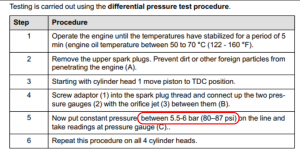
The Rotax Line Maintenance Manual says...
1742868568491.png
A lot of times 87 PSI is used because it is a nice even 6 bar, but 80 PSI is OK according to Rotax.
 
The Rotax compression test should be accomplished with 87PSI not the 80psi used on Continentals and Lycomings. Using 87 psi may give you a better percentage or it simply may seat the rings in the piston lands better.
Where did you see this, the line manual reads;
“Now put constant pressure, between 5.5-6 bar (80–87 psi) on the line and take readings at pressure gauge”
12-20-00 page 8

Edit, BBAGGERMAN, you beat me to it. 😂

 
Shroud or no shroud…. Your choice. Cooling performance will be the same.
But you should do all or nothing.
Cutting the shroud off one cyl but leaving the rest in place is not a good idea.
 
Back
Top