


Van's Air Force

The definitive Van's Aircraft support community! Buying, building or flying an RV? Join our exclusive family of mentors and enthusiasts!

CHTs - How cold is too cold?

skirting_virga

Well Known Member
Patron
Follow-on discussion to my recent thread about metal in the oil filter.

I have an 8A with an angle-valve IO-360, and it just so happens I live at high elevation and fly at fairly high altitudes. This engine cools very well. I have a large oil cooler with a variable-air door and I can dial it in to almost whatever number I want, but try to run 190-195°.

Just a for-example: on a recent flight, I was at 13.5k feet, OAT was -14°C, and my CHTs were 268-285-293-259 which strikes me as quite cool. This is at max M.P. which should be around 17inHg, and 2500 RPM.

The metal in my oil is concerning and I don't yet know the source, but I'm wondering if very low CHTs in cruise could be responsible for excessive metal interference resulting in piston skirt scuffing and shavings in the oil. Is this a normal amount of scuffing?
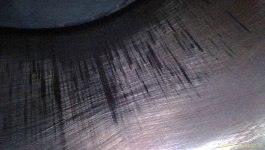
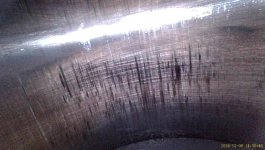
IMG_0001.jpgIMG_0006.jpg
 
Thin air, cold OAT, my experience of many aircraft flying a lot in the UP of MI in the winter, nothing wrong with those temps. Now, Mr. B would tell you that's too cool...LOL
 
I recently looked for this and was not successful. Somewhere in the Lycoming info is a desired CHT for cruise. My recollection is somewhere in the low 300 range.
 
Follow-on discussion to my recent thread about metal in the oil filter.

I have an 8A with an angle-valve IO-360, and it just so happens I live at high elevation and fly at fairly high altitudes. This engine cools very well. I have a large oil cooler with a variable-air door and I can dial it in to almost whatever number I want, but try to run 190-195°.

Just a for-example: on a recent flight, I was at 13.5k feet, OAT was -14°C, and my CHTs were 268-285-293-259 which strikes me as quite cool. This is at max M.P. which should be around 17inHg, and 2500 RPM.

The metal in my oil is concerning and I don't yet know the source, but I'm wondering if very low CHTs in cruise could be responsible for excessive metal interference resulting in piston skirt scuffing and shavings in the oil. Is this a normal amount of scuffing?

View attachment 75986View attachment 75987
Follow-on discussion to my recent thread about metal in the oil filter.

I have an 8A with an angle-valve IO-360, and it just so happens I live at high elevation and fly at fairly high altitudes. This engine cools very well. I have a large oil cooler with a variable-air door and I can dial it in to almost whatever number I want, but try to run 190-195°.

Just a for-example: on a recent flight, I was at 13.5k feet, OAT was -14°C, and my CHTs were 268-285-293-259 which strikes me as quite cool. This is at max M.P. which should be around 17inHg, and 2500 RPM.

The metal in my oil is concerning and I don't yet know the source, but I'm wondering if very low CHTs in cruise could be responsible for excessive metal interference resulting in piston skirt scuffing and shavings in the oil. Is this a normal amount of scuffing?

View attachment 75986View attachment 75987
I get nervous below 220 fahrenheit on cht's.. typically descending from high AGL this occurs. My morning run-up before T.O. this temperature is what I wait for before pouring in the coal. That's also when oil temp rises above 110°F as well. You're probably aware the cylinder cools faster than the piston when descending
 
"For maximum service life of the engine maintain cylinder head temperature between 150°F and 400°F during continuous operation."
The desired oil temperature range for Lycoming engines is from 165˚ to 220˚ F.

Good luck
 
Back
Top