

Van's Air Force
You are using an out of date browser. It may not display this or other websites correctly.
You should upgrade or use an alternative browser.
You should upgrade or use an alternative browser.
CherryMax Alternative
- Thread starter Jkalpine
- Start date


Great, now they will be $1 each instead of 50 cents...Good luck finding em in quantities. The factory that makes them burned down last year.

I think that ship sailed a good while back. They have dried up as fast as Aeroshell #6 did a few years ago.Great, now they will be $1 each instead of 50 cents...
Maybe I can use the ones I have to finance my tail kit! LolI think that ship sailed a good while back. They have dried up as fast as Aeroshell #6 did a few years ago.
If you have any for a dollar let me know and I'll buy them. The ones I've bought lately (when I can find them) have been significantly more expensive.Great, now they will be $1 each instead of 50 cents...


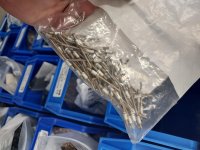
I'm just curious how many Cherrymax rivets are in the RV-15 ? I am not building one, but I built my -4, which has zero Cherrymax called for anywhere.I did use a few at my lower aft fuselage skin ...(They were not yet invented when the -4 was designed). Cherry max is simpler version of the Cherry lock rivet, the Max having a special washer that seats the Inconel lock ring, allowing several sizes and head styles to be pulled with one gun/anvil head. I've spent the last 46 years doing heavy jet overhauls and we use them every day ..we literally have "free stock " bins of many sizes in all our hangars. While we use limited number of protruding head, and mostly all are reduced head CSK, I can tell you there is no shortage that I am aware of. I will check with our buyers and see if we are buying direct from a big box vendor, or through Boeing/Airbus...Unfortunately, I cannot liberate and hand out any of these, and they don't have shelf life/disposal dates (Like primer and Proseal do).
Attachments

N10KE
Well Known Member
The reason some of us are interested in sourcing CherryMax rivets is so that we can dimple and flush rivet in locations not suitable to be bucked with solids. Apparently there will be some places (flight controls for example) where it will not be feasible to buck flush rivets. The flush CherryMax is an alternative as the CS4 rivets do not have the required strength. The current prices on CherryMax are making that option even more expensive. It sounds like the big MRO’s have bought up most of the limited supply.
Just for fun I put 36 different universal and flush head CherryMax into my cart at ACS. Only 5 out of 36 were in stock. Have seen similar at the other normal homebuilder supply businesses. I imagine the big boy's get priority or the buyers proactively purchased what they could.I'm just curious how many Cherrymax rivets are in the RV-15 ? I am not building one, but I built my -4, which has zero Cherrymax called for anywhere.I did use a few at my lower aft fuselage skin ...(They were not yet invented when the -4 was designed). Cherry max is simpler version of the Cherry lock rivet, the Max having a special washer that seats the Inconel lock ring, allowing several sizes and head styles to be pulled with one gun/anvil head. I've spent the last 46 years doing heavy jet overhauls and we use them every day ..we literally have "free stock " bins of many sizes in all our hangars. While we use limited number of protruding head, and mostly all are reduced head CSK, I can tell you there is no shortage that I am aware of. I will check with our buyers and see if we are buying direct from a big box vendor, or through Boeing/Airbus...Unfortunately, I cannot liberate and hand out any of these, and they don't have shelf life/disposal dates (Like primer and Proseal do).

The reason Cherrymax are currently hard to find:


I calculated this a while back (having built with both solid rivets and Cherry N’s). Cherry N’s are a bit stronger (diameter-for-diameter) as solid rivets, but lower strength than CherryMax by a considerable margin, both in shear and tension. Many people hear or write “Cherry” without realizing that there are considerable differences in the product lines.Has anyone investigated strength of Cherry N stainless rivets for comparison? Monnett has been using successfully them for many years on their kits.
N10KE
Well Known Member
If Cherry N’s are stronger than solids and solids are generally stronger than LP-4’s and dimpled joints are stronger than non-dimpled - if there is a Cherry-N of proper specs - it sounds like that might be an option. Maybe our resident Van’s former employee and construction expert could reach out to his former employer for an engineering statement on the use of these rivets. Next question - were these also made in the same factory, so they are in limited supply as well?I calculated this a while back (having built with both solid rivets and Cherry N’s). Cherry N’s are a bit stronger (diameter-for-diameter) as solid rivets, but lower strength than CherryMax by a considerable margin, both in shear and tension. Many people hear or write “Cherry” without realizing that there are considerable differences in the product lines.
The other aspect of pulled rivets that I wonder about is their long term resistance to vibration, in terms of loosening their grip over time. Cherry 'Q' rivets may be superior in that regard. This Aircraft Spruce page provides some useful information about Cherry 'N' and 'Q' rivets. Spruce doesn't appear to sell the countersunk/flush head 'Q' rivets. You can get SSPQ (cad-plated steel) and CCPQ (stainless steel) rivets from Wicks, but they don't sell the countersunk head rivets either.I calculated this a while back (having built with both solid rivets and Cherry N’s). Cherry N’s are a bit stronger (diameter-for-diameter) as solid rivets, but lower strength than CherryMax by a considerable margin, both in shear and tension. Many people hear or write “Cherry” without realizing that there are considerable differences in the product lines.
Last edited:
