

Van's Air Force
You are using an out of date browser. It may not display this or other websites correctly.
You should upgrade or use an alternative browser.
You should upgrade or use an alternative browser.
Can RV use Continental Engines?
- Thread starter PhatRV
- Start date

Vans doesn't offer an engine mount for a Continental engine, so you'd have to figure that out.Because of the growth of the experimental aircraft market, mainly from Vans, many of the used Lycoming engines are harder to find.
Do you know if Continental engines can be used on the RVs? I know that C172 uses the Continental engine
FYI- 172's haven't had Continental engines since around 1970...

The C-172 used Continental engines for the early models and then began using Lycoming in I think the late 60's to early 70's.Because of the growth of the experimental aircraft market, mainly from Vans, many of the used Lycoming engines are harder to find.
Do you know if Continental engines can be used on the RVs? I know that C172 uses the Continental engine
Continental quit making engines (the heavier 6 cyl, O-300) in the 150 HP range many years ago so the only viable choice is the 6 cyl IO-360 (around 200 HP).
I has been used by a few builders but it uses a very different mounting style so you must design and build your own engine mount.
It is also heavier than the 4 cyl Lycomings so you would be compromising the airplane in that regard.
One of the prototype RV-10's was built using a Continental IO360ES. It required a huge amount of engineering and design changes, and no one was interested in an RV-10 with only 210HP so it was never offered as a kit option, but the prototype is still flying with that engine.
It really depends on the horsepower range. It’s really tough to beat an O200 for 100hp. I know of several RV 12s flying with O200s and they are fairly nice match.


It's tough to find a used Titan engine in the various air salvage places.Does a Titan engine count?
Hmmm…….. I know of at least one RV-12 that was built using a Continental O-200, and once it was weighed and weight and balance calculations done, the engine was removed and a Rotax installed before it was ever flown.It really depends on the horsepower range. It’s really tough to beat an O200 for 100hp. I know of several RV 12s flying with O200s and they are fairly nice match.
The O-200 is a good engine, but being ~45 lb heavier than the Rotax, it is not a good swap on an airplane like the 12 that was specifically designed around a light engine.

I see the Cirrus SR20 and SR22 have the Continental engines installed in them. The engine is used in Cirrus is probably due to both brands belong to the state owned Chinese conglomerate AVIC but I was thinking if the engines can be used in the Cirrus, it can be used the RV. But Scott pointed out the weight penalty and lower power compare to Lycoming, now I am less inclined to think about its application for RV.
Another thing someone can help me out is why is it that the Continental engines have the oil coolers right at the front, instead of being in the back like most of the Lycoming. I see the big inlets on twins with Continental engines, all of them have these massive oil cooler right at the inlet. Would this hurt the engine performance from the cooling and speed perspective, or is this a design trait for the Continental engines?
Thanks
Another thing someone can help me out is why is it that the Continental engines have the oil coolers right at the front, instead of being in the back like most of the Lycoming. I see the big inlets on twins with Continental engines, all of them have these massive oil cooler right at the inlet. Would this hurt the engine performance from the cooling and speed perspective, or is this a design trait for the Continental engines?
Thanks

Pilot135pd
Well Known Member
So you're saying that only the antique Cessnas have Continentals.FYI- 172's haven't had Continental engines since around 1970...

Pilot135pd
Well Known Member
As someone who is constantly aware of oil temps because I have a big angle valve Lycoming engine in my very slow plane in Texas heat, this is a very interesting question.Another thing someone can help me out is why is it that the Continental engines have the oil coolers right at the front, instead of being in the back like most of the Lycoming. I see the big inlets on twins with Continental engines, all of them have these massive oil cooler right at the inlet. Would this hurt the engine performance from the cooling and speed perspective, or is this a design trait for the Continental engines?

My dad had an antique Cessna with a Continental... But it had 7 cylinders arranged in a circle. Even less appropriate for an RV...So you're saying that only the antique Cessnas have Continentals.


Jjackh10
Well Known Member
Continentals really aren't much heavier when you compare = horsepower. Most of the confusion comes from the differences in what parts are included in the claimed weights. The empty weight of a Cirrus SR-20 didn't go down when they switched to a lyc 390. The issue comes when fitting a 6 cylinder to an airframe designed for a 4 cylinder (RV-4,6,7,9,14). The weight is a bit further forward. On something like the RV-10 the only reason not to use a continental is that building engine mounts is sort of a lost art in the bolt/ rivet together plane world.Interesting info. I didn't realize the Continental engine is so heavy and underpowered compared to the Lycoming engine.
Jjackh10
Well Known Member
But that plane is arguably as pretty as an RV.My dad had an antique Cessna with a Continental... But it had 7 cylinders arranged in a circle. Even less appropriate for an RV...
Not all continentals have the oil cooler in front - the IO-520/550 series used on some bonanzas are in the rear. I've had both versions, a 470 with a front mounted cooler and a 550 rear mounted.I see the Cirrus SR20 and SR22 have the Continental engines installed in them. The engine is used in Cirrus is probably due to both brands belong to the state owned Chinese conglomerate AVIC but I was thinking if the engines can be used in the Cirrus, it can be used the RV. But Scott pointed out the weight penalty and lower power compare to Lycoming, now I am less inclined to think about its application for RV.
Another thing someone can help me out is why is it that the Continental engines have the oil coolers right at the front, instead of being in the back like most of the Lycoming. I see the big inlets on twins with Continental engines, all of them have these massive oil cooler right at the inlet. Would this hurt the engine performance from the cooling and speed perspective, or is this a design trait for the Continental engines?
Thanks
Aside from those differences, the 470 has a belt driven alternator and the 520/550 are driven off the gear.
All those differences have pros/cons but cooling is not a concern on either engine. Of course, guess which one is faster, a 470 or 550
 ? I think everyone would rather take the cubic inches.
Well, nothing wrong with Continental, but yeah, I can't think of a Cessna single that has had a Continental since the early 1980's so I guess that would qualify them and antiques at this point.So you're saying that only the antique Cessnas have Continentals.

Jjackh10
Well Known Member
Yea, I think I've heard of a few crank failures there too. Just opinion but I don't think those are design issues. I suspect those problems are the result of the same decisions Boeing and many other manufacturers have made in recent years. Old O-470's are still hauling thousands of skydivers up every day. With minimal attention from maintenance, and zero mechanical sympathy from the operator.Can't speak for the validity of the reputation; but, ask an open minded Cirrus owner about his Cylinder life.
I see the Cirrus SR20 and SR22 have the Continental engines installed in them. The engine is used in Cirrus is probably due to both brands belong to the state owned Chinese conglomerate AVIC but I was thinking if the engines can be used in the Cirrus, it can be used the RV. But Scott pointed out the weight penalty and lower power compare to Lycoming, now I am less inclined to think about its application for RV.
Thanks
More likely price and availability; but I doubt we will ever know. CMI was selected roughly thirty years before China acquired either company. In fact it was after the acquisition that Cirrus switched from CMI to Lycoming.
Can't speak for the validity of the reputation; but, ask an open minded Cirrus owner about his Cylinder life.
As a former Cirrus owner, both SR20 and SR22, and still a current member of COPA. What do you want to know? I never replaced a cylinder in either plane. Especially when considering the engine from an SR20, they do not eat cylinders.
The turbocharged SR22s, are much more prone to cylinder replacement requirements. Mostly due to heat issues. But that is a completely different engine then discussed so far in this thread.
Tim
Good to know. Thanks.As a former Cirrus owner, both SR20 and SR22, and still a current member of COPA. What do you want to know? I never replaced a cylinder in either plane. Especially when considering the engine from an SR20, they do not eat cylinders.
Tim
The IO520 and IO550 C series Continentals used in Barons are Dynafocal mounted like a Lycoming, and have rear mounted oil coolers. I have no clue if they will bolt up in place of a 540 (doubt it), but it's a much more similar engine setup than the traditional bed mount Continentals most people think of. They are smooth, powerful engines for the weight and run well lean of peak. I suspect one of these would work well in an RV10 for someone willing to develop the installation. However it would have to be a labor of love because I think there would be enough benefit (if any) over a Lycoming to justify reinventing the wheel.

deek
Well Known Member
The IO-550C is 300 HP @2700RPM, the IO-520C is 285HP. Both would make an excellent alternative engine for a RV-10. Big Conti's have their own idiosyncrasies, as do the 540 and 580 Lycs. Pick your poison, but the Conti's don't generally eat their cams and give 10-15% more power than the 260 HP IO-540D4A5. There are a lot of Conti cores out there!
I'm not a fan of gear driven alternators, but that's what's on my V-tail.
I'm not a fan of gear driven alternators, but that's what's on my V-tail.

Auburntsts
Well Known Member
Anything can be made to work given enough time and money within the HP and weight constraints of each model. So are Continentals an option —sure. However they aren’t a panacea. There’s essentially no acquisition cost savings and you’d have roll your own FWF package to include the mount, cowl mods at the very least, plus other integration issues. So IMO unless you were gifted an engine the juice isn’t worth the squeeze for all but a very tiny percentage of builders who enjoy such challenges and for which flying isn’t the main goal.
Is there a Continental equivalent to the Lycoming IO390? I would like to see if there is a lower cost option for the RV 15
IO-360 or TIO-360 from CMI are in the 200HP range. Fairly comparable in terms of power. From what others have posted, also comparable in terms of final weight, but I do not know that for sure. Where the CMI differs is the engine is apparently longer, and this has CG effects and cowling effects.
Tim
Since the continental engines are top induction, meaning, the induction tubes and related systems are on the top of the engine versus the bottom, there are other cowl fit problems, other than just the lengthIO-360 or TIO-360 from CMI are in the 200HP range. Fairly comparable in terms of power. From what others have posted, also comparable in terms of final weight, but I do not know that for sure. Where the CMI differs is the engine is apparently longer, and this has CG effects and cowling effects.
Tim
The top cowling, for the RV 10 with the Continental engine, was totally redone to fatten it up and make it higher to clear the induction system.

Toobuilder
Well Known Member
Also a bit of an oddball today, but the Franklin/PZL 220 has promise "on paper". Parts availability makes it a bit dicey as a sustainable plan, however.IO-360 or TIO-360 from CMI are in the 200HP range. Fairly comparable in terms of power. From what others have posted, also comparable in terms of final weight, but I do not know that for sure. Where the CMI differs is the engine is apparently longer, and this has CG effects and cowling effects.
Tim
The Franklin is a lightweight 6 banger that makes big power. Would make a fine addition to the nose of a F-4 Raider.
...Until you needed a part
It’s probably not common knowledge in the RV community anymore because it was more than a couple decades ago, but at one point the original (teal colored) RV-8 prototype was resurrected from storage with the installation of a Franklin engine to investigate the viability of another engine option for builders.Also a bit of an oddball today, but the Franklin/PZL 220 has promise "on paper". Parts availability makes it a bit dicey as a sustainable plan, however.
The Franklin is a lightweight 6 banger that makes big power. Would make a fine addition to the nose of a F-4 Raider.
...Until you needed a part
It became known by the nickname Franklinstein.
If I remember correctly, the project was eventually abandoned because in the long run, there was no cost benefit to using that engine on top of the potential for uncertainty in the availability of engines in volume and potential future issues for parts availability as Mike mentioned.
I did not realize this is a feature of the Continental engine. I always thought all GA aircraft engines are bottom induction, and some are forward, rear, or botton.Since the continental engines are top induction, meaning, the induction tubes and related systems are on the top of the engine versus the bottom,
Toobuilder
Well Known Member
Nope. Several Lycoming models with top induction too.I did not realize this is a feature of the Continental engine. I always thought all GA aircraft engines are bottom induction, and some are forward, rear, or botton.
Toobuilder
Well Known Member
I believe this “uncertainty” killed many of the airframes designed around the “cheap and available” Russian radials and turbines too. Too bad.If I remember correctly, the project was eventually abandoned because in the long run, there was no cost benefit to using that engine on top of the potential for uncertainty in the availability of engines in volume and potential future issues for parts availability as Mike mentioned.
How did Franklinstein perform?
It performed very well, and was quite smooth from what I remember.I believe this “uncertainty” killed many of the airframes designed around the “cheap and available” Russian radials and turbines too. Too bad.
How did Franklinstein perform?
The engine was mounted as close to the firewall as possible but if I remember correctly, the engine was slightly heavier than the angle valve Lycoming , so the battery had to be mounted in the aft tail cone to compensate.
Here is an old VAF thread with some conversation about it
Franklin
I've been talking to Maciej in Poland for several months about putting a 220 Franklin on my 7, and they have agreed to meet with me at Oshkosh about doing firewall forward stuff for RV's. No need to refer me to David Brand...I've been talking with him the same amount of time as well (he still...
 vansairforce.net
Last edited:
Not all Continental engines are top induction... Scott's reply was in reference to the continental IO-360.I did not realize this is a feature of the Continental engine. I always thought all GA aircraft engines are bottom induction, and some are forward, rear, or botton.
I am still looking at the various Continental engine for sale from the airplane salvage companies and Ebay.
I found this TSIO-520, no prop-strike engine that was parted out from a Cessna 414. Compression are all 78/80. I think this is bottom induction.
They are asking for $28K. Can this engine work on the RV10 or other RV/Rocket speed mods?
I found this TSIO-520, no prop-strike engine that was parted out from a Cessna 414. Compression are all 78/80. I think this is bottom induction.
They are asking for $28K. Can this engine work on the RV10 or other RV/Rocket speed mods?
Attachments
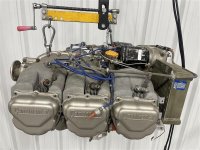
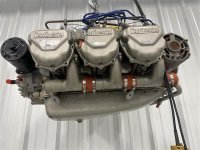
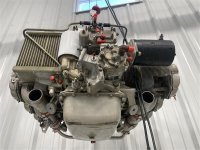

"can this work". Dang near anything can be made to work. Chevy V8, Mazda rotary, Radial... you need to put some constraints around this question. Is your time free? Is engineering the necessary motor mount going to be free, just cost of parts / materials? Undoubtedly the cowl will need mods, whole different baffle setup... figure out how to run throttle, mixture cables, etc.... If your time is free, and you can do all the necessary re-engineering, then it could be a good option. If you have to farm out cowl work, engine mount design & fab, etc. the misc costs will eat into your savings.I am still looking at the various Continental engine for sale from the airplane salvage companies and Ebay.
I found this TSIO-520, no prop-strike engine that was parted out from a Cessna 414. Compression are all 78/80. I think this is bottom induction.
They are asking for $28K. Can this engine work on the RV10 or other RV/Rocket speed mods?
Also expect a bit less re-sale value, if that matters at all to you.
All I did was put in a 320-H2AD vs. a 'normal' Lycoming o-320. Yeah... took more effort than I expected. Always yet other gotcha. Thought I was done and found the bottom cowl wouldn't clear the alternator.
with the price of the Lycoming IO-540 in the range of$100K, I think this Continental is still a more cost effective option. If Continental step up to support its engine for RV, then the resale question can be done away. The Cirrus SR22 doesn't have a problem powered with Continental"can this work". Dang near anything can be made to work. Chevy V8, Mazda rotary, Radial... you need to put some constraints around this question. Is your time free? Is engineering the necessary motor mount going to be free, just cost of parts / materials? Undoubtedly the cowl will need mods, whole different baffle setup... figure out how to run throttle, mixture cables, etc.... If your time is free, and you can do all the necessary re-engineering, then it could be a good option. If you have to farm out cowl work, engine mount design & fab, etc. the misc costs will eat into your savings.
Also expect a bit less re-sale value, if that matters at all to you.
All I did was put in a 320-H2AD vs. a 'normal' Lycoming o-320. Yeah... took more effort than I expected. Always yet other gotcha. Thought I was done and found the bottom cowl wouldn't clear the alternator.

Having some experience with a more recent PZL Franklin 220 and Hartzell STC conversion on a Cessna 170, I totally get the "Franklinstein" nickname. It had over-heating issues and leaked oil like an AMF Harley. You would think an engine designed by a true machinist would be a better product but the TBOs are lower. And parts are not as readily available and must come from Poland.It’s probably not common knowledge in the RV community anymore because it was more than a couple decades ago, but at one point the original (teal colored) RV-8 prototype was resurrected from storage with the installation of a Franklin engine to investigate the viability of another engine option for builders.
It became known by the nickname Franklinstein.
If I remember correctly, the project was eventually abandoned because in the long run, there was no cost benefit to using that engine on top of the potential for uncertainty in the availability of engines in volume and potential future issues for parts availability as Mike mentioned.
