Van's Air Force

The definitive Van's Aircraft support community! Buying, building or flying an RV? Join our exclusive family of mentors and enthusiasts!

breather hose collapsing

TS Flightlines

Well Known Member
Advertiser
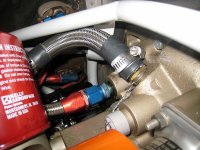
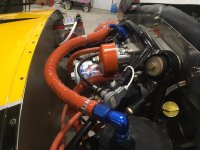
Morning all---We get quite a few emails and calls from builder/owners about the possibility of their silicone breather hoses collapsing at the bends and creating a potential fairly major situation. The engine needs to breathe, and if the breather hose is restricted, or collapsed, the possibilty of blowing out the crank seal increases, as well as other seals/gaskets. Alot of RVs have the molded 90* heater hose from Vans. While its good that is molded into the correct shape, the hose material isnt oil compatible. Over time is swells and becomes very soft and spongy. 306 style hose is oil resistant, but you have to do some makeshift 90*s to make it route properly.

Some of you have the Anti-Splat separator. Its a very good product, and it comes with a silicone hose. Its oil resistant, but its construction leave very little internal reinforcement. So if its over bent, it can kink and restrict and/or collapse, defeating the purpose of the breather. Worse, in flight, it could create enough crankcase pressure to blow out the crank seal, and potential engine damage from oil loss could occur. There are a couple of solutions. Yes, you can find pre-molded 90*s silicone hoses from the race car guys to make the routing better. It may not be long enough to work, so you may have to put several together. A simple solution is one we used back in the industrial hose days---an internal support for suction hose. Its s simple spring, that allows the hose to bend, but the spring supports the internal walls of the hose, and prevents it from collapsing. You can find these at alot of hydraulic hose shops, and some race car hose suppliers. It the length is short enough, even the aviation aisle at the big box stores may have what youre looking for.

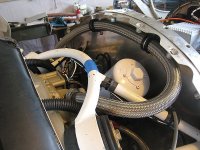
Just measure the INSIDE diameter of the hose you are using, usually 3/4 or 1 inch dependent on the engine size, then find a spring with the OD of that size. Insert the spring and Eureka, problem solved. You may remember in the older days the lower radiator hoses on your car having support springs. Same Idea. Now those those of you that want the really cool factor and have a great spending limit on your AMEX cards, a convoluted stainless braid teflon hose solves all of those problems, including reducing your spending limit on the credit card.
 

Attachments

  • Breather hose 1.jpeg
    Breather hose 1.jpeg
    79.7 KB · Views: 287
  • Inverted tank breather hose.jpeg
    Inverted tank breather hose.jpeg
    69.8 KB · Views: 289
  • Convoluted teflon breather hose.JPG
    Convoluted teflon breather hose.JPG
    108.9 KB · Views: 264
  • Murley inverted oil 4.jpg
    Murley inverted oil 4.jpg
    270.5 KB · Views: 282
On my 6, I used oil resitant hose, but that was easy, as no sharp bends. The 10 was much tighter. I used the silicone hose and made a 90* bend with copper. just a copper 90* fitting and soldered in two short pipe stubs. The copper tube was a perfect fit in the hose. Just another idea for dealing with this.
 
On my 6, I used oil resitant hose, but that was easy, as no sharp bends. The 10 was much tighter. I used the silicone hose and made a 90* bend with copper. just a copper 90* fitting and soldered in two short pipe stubs. The copper tube was a perfect fit in the hose. Just another idea for dealing with this.
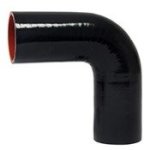
Like Larry said, there are a bunch of ways to do this. Here is an example of the HPS silicone hose. Yep---they have different leg lengths to make a 1 piece. Im NOT advertising for them, just an example.
 

Attachments

  • HPS 90 black silicone hose.jpg
    HPS 90 black silicone hose.jpg
    4.3 KB · Views: 25
I was helping a friend with his RV14A that had a partially collapsed breather tube. The owner has been made aware of this issue. My antisplat oil/air separator is installed on the baffle right behind #4 cylinder. The tube from breather is almost a straight shot to the separator and the exit hose is a straight shot to the exhaust. Furthermore since every thing is connected to the engine, there is hardly any relative movements between parts. As an added benefit, the down hose is not right near the air outlet and therefore not blocking it or creating more turbulent air, hence better cooling.
 
I just used a straight fitting (brass) at the motor, and ran clear tubing from ACE Hardware and followed the motor mount down to the exhaust. It runs across the back of the motor and down the left side. I hate anything that bridges from the motor to the firewall, it will always be in your way.
There are no bends.... just a long curve that matched the tubing.
 
I didn't like the Vans hose. Way too big. I also didn't like the aluminum tube. It would be in the way all the time.
I used this hose.
Then I filled the aluminum tube with fine sand and straightened out the bend. Cleaned it really good and attached to the firewall terminated just above the exhaust. I drilled a weep hole about 6" above.
The power steering hose is oil resistant. It fits perfect and has the correct bend. When I need access, it comes off with two hose clamps.
 
I just used a straight fitting (brass) at the motor, and ran clear tubing from ACE Hardware and followed the motor mount down to the exhaust. It runs across the back of the motor and down the left side. I hate anything that bridges from the motor to the firewall, it will always be in your way.
There are no bends.... just a long curve that matched the tubing.
I would exercise some caution there. That clear stuff from the hardware store gets very soft at quite low temps. So a bend/kink can form easilly when it gets hot. It feels pretty rigid at room temp, but like jello at 200*.
 
I didn't like the Vans hose. Way too big. I also didn't like the aluminum tube. It would be in the way all the time.
I used this hose.
Then I filled the aluminum tube with fine sand and straightened out the bend. Cleaned it really good and attached to the firewall terminated just above the exhaust. I drilled a weep hole about 6" above.
The power steering hose is oil resistant. It fits perfect and has the correct bend. When I need access, it comes off with two hose clamps.

You guys at TS flight lines are awesome! I will definitely be racking up the limit on my Amex in a couple weeks as I need some
 
Morning all---We get quite a few emails and calls from builder/owners about the possibility of their silicone breather hoses collapsing at the bends and creating a potential fairly major situation. The engine needs to breathe, and if the breather hose is restricted, or collapsed, the possibilty of blowing out the crank seal increases, as well as other seals/gaskets. Alot of RVs have the molded 90* heater hose from Vans. While its good that is molded into the correct shape, the hose material isnt oil compatible. Over time is swells and becomes very soft and spongy. 306 style hose is oil resistant, but you have to do some makeshift 90*s to make it route properly.

Some of you have the Anti-Splat separator. Its a very good product, and it comes with a silicone hose. Its oil resistant, but its construction leave very little internal reinforcement. So if its over bent, it can kink and restrict and/or collapse, defeating the purpose of the breather. Worse, in flight, it could create enough crankcase pressure to blow out the crank seal, and potential engine damage from oil loss could occur. There are a couple of solutions. Yes, you can find pre-molded 90*s silicone hoses from the race car guys to make the routing better. It may not be long enough to work, so you may have to put several together. A simple solution is one we used back in the industrial hose days---an internal support for suction hose. Its s simple spring, that allows the hose to bend, but the spring supports the internal walls of the hose, and prevents it from collapsing. You can find these at alot of hydraulic hose shops, and some race car hose suppliers. It the length is short enough, even the aviation aisle at the big box stores may have what youre looking for.

Just measure the INSIDE diameter of the hose you are using, usually 3/4 or 1 inch dependent on the engine size, then find a spring with the OD of that size. Insert the spring and Eureka, problem solved. You may remember in the older days the lower radiator hoses on your car having support springs. Same Idea. Now those those of you that want the really cool factor and have a great spending limit on your AMEX cards, a convoluted stainless braid teflon hose solves all of those problems, including reducing your spending limit on the credit card.
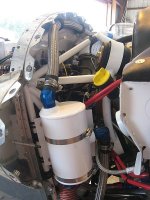
Hey…I recognize a couple of those pictures with the really cool hose!!! 😉

The F1 is going to be jealous if I don’t treat it the same…we’ll talk financing/mortgage when I finalize all the hose lengths for all the fuel/oil lines Tom!
 
I used a moulded rubber elbow that’s used on automotive PCV systems. Coupled that with an aluminum tube down and out. The elbow I found at Summit Racing and it was from a Ford product. Being used on PCV systems they can take the oil mist. They come in all variety of bend angles and are inexpensive and light.
 
I would exercise some caution there. That clear stuff from the hardware store gets very soft at quite low temps. So a bend/kink can form easilly when it gets hot. It feels pretty rigid at room temp, but like jello at 200*.
I will place a temp probe on it and see. It has been there for 18 years.
 
Back
Top