Van's Air Force

The definitive Van's Aircraft support community! Buying, building or flying an RV? Join our exclusive family of mentors and enthusiasts!

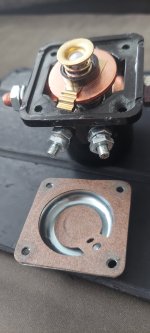
Brand New Starter Contactor aka Relay aka Solenoid stuck closed

PH102

Member
Patron
20250911_064657.jpg

Have any of you seen this?

I used two wrenches (a thin 1/2 inch wrench for the inside nut) as instructed to prevent rotating the stud and only tightened enough to compress the outer lock washer enough to prevent movement of the cable.

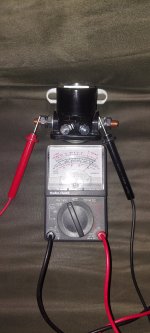
I did not continuity test it before or after installation. The starter turned with only the Master switch. No prop installed yet.

The coil does click with +12v to the S terminal but does not open the contacts after removal of +12v.

I read Bob Nuckolls description of these "Type I" contactors but his reference to failures involved lack of continuity. He Says:

"I've disassembled a lot of dead Type I devices over the years. I can tell you that a goodly number of the contactors I've opened failed prematurely from environmental abuse of one kind or another."

"Another form of failure in Type I devices is precipitated by the mechanic who installs a new contactor. Note that the stationary contacts are fabricated on the end of the threaded connector stud which penetrates the housing wall. If the installer is not careful, the stud is rotated a tiny amount due to overzealous tightening of the stud nuts. The resulting tilt placed on the face of the stationary contact prevents good mating with the movable contact. The reduced area of contact precipitates early failure."

Van's web store says this about the part:
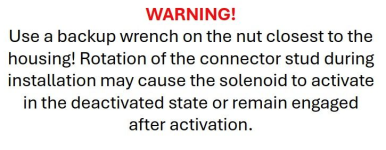
Screenshot 2025-09-11 083230.png
It seems to me that this part should not be so temperamental with such damaging consequences should it stay closed. Any other horror stories?
 
The more common failure is pitting of the contacts leading to inconsistent contact, not a short.
I did some forensics on one. The contacts main component is a copper disk that is intended to rotate randomly evening out the wear. If that disk quits rotating, it can develop an area of high resistance.
I have not heard of these shorting but I am not surprised.
If you want to dig into it, drill out the four pop rivets and it will come apart. You should be able to see what caused the failure.
These units are very rugged, simple, and proven over time and mega hours. However, they are cheap and mass produced. Infancy failure or out of the box failure shouldn’t surprise anyone.
 
This is a very common failure of the contractor, a part that was probably designed by Henry Ford a century ago - and has never been updated. There have been hundreds of millions of these made and used, and are so common that you’re probably not going to force a redesign just for aviation use (or if you do, you don’t want to see the price tag).

The big “stud” s actually the threaded end of a square-headed bolt, the square head of which is inside the case. As JonJay said, the ring comes down to contact the face of the bolt head. If it is slightly turned, you get contact only at the corner, and arcing results, burning the contacts and causing high resistance. That’s the common failure that results from not backing up with a thin wrench when tightening the nut.

It sounds to me like your studs might be turned enough that the corners are literally jamming against the contact ring - or the ring is loose on the solenoid coil…or something! Take it apart and see what’s wrong - it will make us al smarter about a very different failure mode. Worthless as is!
 
View attachment 97186

Have any of you seen this?

I used two wrenches (a thin 1/2 inch wrench for the inside nut) as instructed to prevent rotating the stud and only tightened enough to compress the outer lock washer enough to prevent movement of the cable.

I did not continuity test it before or after installation. The starter turned with only the Master switch. No prop installed yet.

The coil does click with +12v to the S terminal but does not open the contacts after removal of +12v.

I read Bob Nuckolls description of these "Type I" contactors but his reference to failures involved lack of continuity. He Says:

"I've disassembled a lot of dead Type I devices over the years. I can tell you that a goodly number of the contactors I've opened failed prematurely from environmental abuse of one kind or another."

"Another form of failure in Type I devices is precipitated by the mechanic who installs a new contactor. Note that the stationary contacts are fabricated on the end of the threaded connector stud which penetrates the housing wall. If the installer is not careful, the stud is rotated a tiny amount due to overzealous tightening of the stud nuts. The resulting tilt placed on the face of the stationary contact prevents good mating with the movable contact. The reduced area of contact precipitates early failure."

Van's web store says this about the part:

View attachment 97193
It seems to me that this part should not be so temperamental with such damaging consequences should it stay closed. Any other horror stories?

there is a piston inside a bore with a large cdopper contact on the end and that piston moves down via manetic force from the energized coils and is pushed up by a spring when de energized; The latter being much weaker than the former. Sometimes during manufacturing, they leave a burr on the piston and it gets stuck in the bore. It is VERY difficult to find one of these solenoids that is not poorly constructed in an asia factory, due to limited demand. Cole hersee still makes them but the form factor is a bit different from this ford style we all use and sadly not $25.

IMO a slightly twisted contact end would not cause this problem, though it would create the far less than optimal contact area you described. The piston travels asbout 1/4" IIRC. As Paul mentions, this is jusy a square bolt head. However, it is supported by a flat in the plastic case, so it can only get cocked slightly. Enough to give poor contact, but not enough to hit the main contactor plate in the open position. I believe yours got stuck in the down position due to a mfg defect. you should hear it click as you de energize the coil. if it doesn't, it is stuck.
 
Last edited:
there is a piston inside a bore with a large cdopper contact on the end and that piston moves down via manetic force from the energized coils and is pushed up by a spring when de energized; The latter being much weaker than the former. Sometimes during manufacturing, they leave a burr on the piston and it gets stuck in the bore. It is VERY difficult to find one of these solenoids that is not poorly constructed in an asia factory, due to limited demand. Cole hersee still makes them but the form factor is a bit different from this ford style we all use and sadly not $25.

IMO a slightly twisted contact end would not cause this problem, though it would create the far less than optimal contact area you described. The piston travels asbout 1/4" IIRC. As Paul mentions, this is jusy a square bolt head. However, it is supported by a flat in the plastic case, so it can only get cocked slightly. Enough to give poor contact, but not enough to hit the main contactor plate in the open position. I believe yours got stuck in the down position due to a mfg defect. you should hear it click as you de energize the coil. if it doesn't, it is stuck.
...Littelfuse...
 
Holding it in the same position as in the picture, tap it hard on your bench to see if you can dislodge the disc.
 
Smack it hard on the bench and see if it "releases" -- then cut it apart, take pictures of the contacts and share :)
 
Take it apart and see what’s wrong - it will make us al smarter about a very different failure mode. Worthless as is!
20250911_103131.jpg

Nothing unusual looking inside. Removing the cover fixed the problem. Pushing the cover back into place pushed the round, moving center contact onto the stud heads and made solid connection. Relaxing pressure from holding the cover on opened the contacts a few thousandths of an inch, all that separates you from disastrous starter engagement. Maybe the brass ring is a little too high? Maybe the cork gasket a little too thin? Has the round center of the cork gasket always been there?? because without that it might work.

The coil and magnet work fine and do not stick. Hitting with hammer might dent the cover and push the contacts closer together.

Everybody please test these before install. I'm lucky the prop was not installed yet. I am looking at different products.

Thanks for all the excellent replies! Still looking for other horror stories. I can't be the only one to have this problem. The notice above from Van's online store leads me to believe that this is not an isolated problem.
 
View attachment 97199

Nothing unusual looking inside. Removing the cover fixed the problem. Pushing the cover back into place pushed the round, moving center contact onto the stud heads and made solid connection. Relaxing pressure from holding the cover on opened the contacts a few thousandths of an inch, all that separates you from disastrous starter engagement. Maybe the brass ring is a little too high? Maybe the cork gasket a little too thin? Has the round center of the cork gasket always been there?? because without that it might work.

The coil and magnet work fine and do not stick. Hitting with hammer might dent the cover and push the contacts closer together.

Everybody please test these before install. I'm lucky the prop was not installed yet. I am looking at different products.

Thanks for all the excellent replies! Still looking for other horror stories. I can't be the only one to have this problem. The notice above from Van's online store leads me to believe that this is not an isolated problem.

I had one stay closed on a short taxi and burned up the starter recently. The replacement Cole hersee solenoid lasted 6 starts before the accordion copper strip broke.
 
View attachment 97186

Have any of you seen this?

I used two wrenches (a thin 1/2 inch wrench for the inside nut) as instructed to prevent rotating the stud and only tightened enough to compress the outer lock washer enough to prevent movement of the cable.

I did not continuity test it before or after installation. The starter turned with only the Master switch. No prop installed yet.

The coil does click with +12v to the S terminal but does not open the contacts after removal of +12v.

I read Bob Nuckolls description of these "Type I" contactors but his reference to failures involved lack of continuity. He Says:

"I've disassembled a lot of dead Type I devices over the years. I can tell you that a goodly number of the contactors I've opened failed prematurely from environmental abuse of one kind or another."

"Another form of failure in Type I devices is precipitated by the mechanic who installs a new contactor. Note that the stationary contacts are fabricated on the end of the threaded connector stud which penetrates the housing wall. If the installer is not careful, the stud is rotated a tiny amount due to overzealous tightening of the stud nuts. The resulting tilt placed on the face of the stationary contact prevents good mating with the movable contact. The reduced area of contact precipitates early failure."

Van's web store says this about the part:

View attachment 97193
It seems to me that this part should not be so temperamental with such damaging consequences should it stay closed. Any other horror stories?
I've actually found that using a backup wrench on the nut closest to the housing contributes to the stud/contact rotating. I've had better luck preventing rotation by holding the wire lug stationary while tightening the nut, and DON'T over-tighten.

Skylor
 
just use a manual solenoid, you control it, thats how my 1949 Piper is, big manual pushbutton... has a heavy spring in the button to release it when you stop pressing, worked for 76 years
 
just use a manual solenoid, you control it, thats how my 1949 Piper is, big manual pushbutton... has a heavy spring in the button to release it when you stop pressing, worked for 76 years
Yea, no problem running #2 cable in the cabin, do it everyday.
 
Yea, no problem running #2 cable in the cabin, do it everyday.
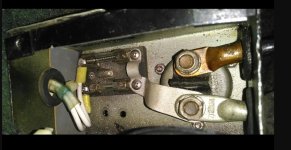
Right under the seat, battery is also, factory config, 76 years now. The manual solenoid switch on the right side of the box connects directly to battery.
 

Attachments

  • Screenshot_20250911_202046_Chrome.jpg
    Screenshot_20250911_202046_Chrome.jpg
    285.5 KB · Views: 58
Back
Top