Van's Air Force

The definitive Van's Aircraft support community! Buying, building or flying an RV? Join our exclusive family of mentors and enthusiasts!

Auxiliary power connection

My first post , English is my third language , so forgive spelling and vocabulary. Our mother tonge "Afrikaans" is under thread , as some of you may know .🥲🥲
I am busy building a 10 in South Africa. Currently 75 % finished and 45 % to do still.
My mission is to build the lightest most reliable RV-10 in the southern hemisphere!

Please post your plan for auxiliary power to the 10 . This point will be used to charge the battery during prolonged times of been on the ground. As well as to jump start
in the case of a master left on ..or the end of battery life, as I have a single battery .
I have a plan but would like to hear ans see what you guys have done.


Regards
Johan
 
No worries, your english is "good".

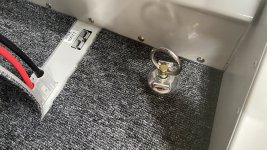
I have installed a Ctek panel plug on the rear baggage panel:


Plug a Ctek charger and no more worries. I have an Odyssey battery in the tail cone. Not sure if it will work with other fancy batteries with electronic circuits in them.

I considered a jump start plug and decided it was a lot of weight to carry for rare uses. If I leave the master on, I am OK with waiting until the battery is charged. I use a shut-down checklist to make sure I turn the master off.
 
No worries, your english is "good".

I have installed a Ctek panel plug on the rear baggage panel:


Plug a Ctek charger and no more worries. I have an Odyssey battery in the tail cone. Not sure if it will work with other fancy batteries with electronic circuits in them.

I considered a jump start plug and decided it was a lot of weight to carry for rare uses. If I leave the master on, I am OK with waiting until the battery is charged. I use a shut-down checklist to make sure I turn the master off.
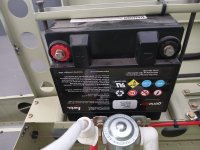
Thank you for your reply , good idea for charging but lacking the jumpstart....I have a genesis battery as replied in previous thread.
 

Attachments

  • Genesis bat.jpg
    Genesis bat.jpg
    170.5 KB · Views: 44
How about this one.

Good luck
 
How about this one.

Good luck

How about this one.

Good luck
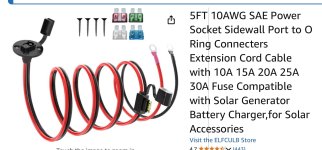
Looks great. Found it at Amazon for $10. Your link shows $199 and out of stock.

 
Johan,

If you just need something for charging and not worried about jump starts then make it easy and install one of these. I had one in my RV-4 and now in my RV-8 and they work great. I mounted mine inside the aft cockpit for easy access but my hangar neighbor next door drilled some holes in the aft fuselage near his battery and mounted the plug in on the outside.


Attachments

  • IMG_2080.jpeg
    IMG_2080.jpeg
    239.7 KB · Views: 40
My first post , English is my third language , so forgive spelling and vocabulary. Our mother tonge "Afrikaans" is under thread , as some of you may know .🥲🥲
I am busy building a 10 in South Africa. Currently 75 % finished and 45 % to do still.
My mission is to build the lightest most reliable RV-10 in the southern hemisphere!

Please post your plan for auxiliary power to the 10 . This point will be used to charge the battery during prolonged times of been on the ground. As well as to jump start
in the case of a master left on ..or the end of battery life, as I have a single battery .
I have a plan but would like to hear ans see what you guys have done.


Regards
Johan
In addition to charging and jumping, running the panel on a power supply will be necessary for all the panel time you will want and need. Pick any connector and wire that can carry the starting load and the charging and ground run issues will be covered. Just be sure that all three devices (charger, jump pack, power supply) have the same connector on the end.

I've found for an RV-10 that inside the baggage area on the aft bulkhead
at the bottom is the best place to locate the plug.
 
In addition to charging and jumping, running the panel on a power supply will be necessary for all the panel time you will want and need. Pick any connector and wire that can carry the starting load and the charging and ground run issues will be covered. Just be sure that all three devices (charger, jump pack, power supply) have the same connector on the end.

I've found for an RV-10 that inside the baggage area on the aft bulkhead
at the bottom is the best place to locate the plug

Impotant point
 
I have an Anderson plug for each battery. 2 x PC680s.
Never needed to jump but I’m sure that one of those mini Li power packs would do it. The battery is only about 12” of 8AWG away.
I use these for charging rarely but quite often for hangar flying.

IMG_8261.jpeg
 
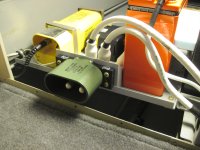
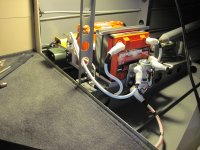
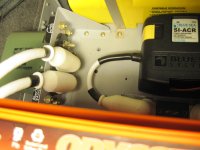
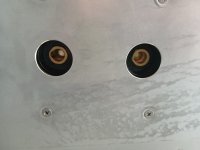
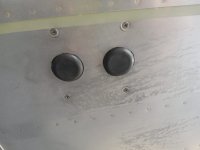
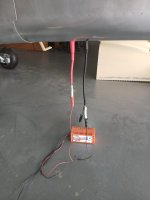
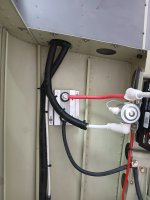
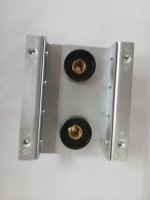
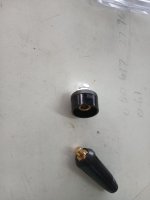
Here is what I came up, after careful consideration . I wanted access from outside the aircraft . It must be safe ,one can only imagine what will happen if the two poles touch each other in mid air ( the Anderson plug that some suggested is not safe according to me). So I decided on the plugs used on invertor welders which is widely available and cheap. The placing is just under the main solenoid. In the aircraft I only carry 2 short male leads, which can be connected to a charger or jumping cables. When not in use you push 2 rubber grommets into the holes. All comments welcome.
 

Attachments

  • CON 6.jpg
    CON 6.jpg
    67.7 KB · Views: 100
  • CON 5.jpg
    CON 5.jpg
    65.9 KB · Views: 109
  • CON 4.jpg
    CON 4.jpg
    63.7 KB · Views: 100
  • CON 3.jpg
    CON 3.jpg
    127.9 KB · Views: 90
  • CON 2.jpg
    CON 2.jpg
    46.7 KB · Views: 84
  • CON 1.jpg
    CON 1.jpg
    105.6 KB · Views: 88
Here is what I came up, after careful consideration . I wanted access from outside the aircraft . It must be safe ,one can only imagine what will happen if the two poles touch each other in mid air ( the Anderson plug that some suggested is not safe according to me). So I decided on the plugs used on invertor welders which is widely available and cheap. The placing is just under the main solenoid. In the aircraft I only carry 2 short male leads, which can be connected to a charger or jumping cables. When not in use you push 2 rubber grommets into the holes. All comments welcome.
How do you identify the + socket.
 
How do you identify the + socket.
Unfortunately they will fit into each other , but will be marked with a sticker on the outside paint. If you are clever enough to put the read lead of a battery charger on the positive pole of a battery , this would be safe and easy but not fool prove :p:cool:
 
Unfortunately, I have seen a guy who walked on the moon connect the negative to positive and positive to negative while trying to jump a car in the parking lot….. People do dumb things - I know because I’ve seen me do ‘em……
Unfortunately they will fit into each other , but will be marked with a sticker on the outside paint. If you are clever enough to put the read lead of a battery charger on the positive pole of a battery , this would be safe and easy but not fool prove :p:cool:
 
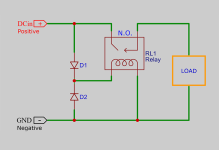
Mechanical keying of polarized connectors is the closest thing to "free" reverse-polarity protection, but the next best thing is a simple relay circuit like this. The relay needs to be sized for the expected current, so if you're using this to jump-start the plane you'll want to use something like a master contactor. Diode D1 should be sized for the coil current, and D2 is for flyback protection.

1743694622189.png
 
Unfortunately, I have seen a guy who walked on the moon connect the negative to positive and positive to negative while trying to jump a car in the parking lot….. People do dumb things - I know because I’ve seen me do ‘em……
I did this once to my car when I was 18. POOF.
 
Mechanical keying of polarized connectors is the closest thing to "free" reverse-polarity protection, but the next best thing is a simple relay circuit like this. The relay needs to be sized for the expected current, so if you're using this to jump-start the plane you'll want to use something like a master contactor. Diode D1 should be sized for the coil current, and D2 is for flyback protection.

View attachment 84518
This makes a lot of sense Mburch, Thank you for the advise.
 
This makes a lot of sense Mburch, Thank you for the advise.
I added a female piper plug that I attached to my sub-panel and I can reach under my panel while seated in my seat, and plug the male receptacle into it. It is wired through the firewall and into the starter solenoid. I use one of the super duper lithium emergency hand held jump start batteries that I connected to the male piper plug. This enables me to jump start my engine while I am safely seated in the cockpit with no help outside and therefore no danger to someone near the prop.

Fortunately I have had to jump start my engine only once after leaving a switch on. My super duper lithium battery claims to start a V8 over 20 times and comes in a small case that holds the piper plug and recharging cord. Easy to carry for any trip.

Sorry that I can’t find a photo but I attach a copy of my basic schematic which only depicts the female piper plug as a small circle. It has worked great in trials and the one time needed from my home base airport.
 

Attachments

Back
Top