Van's Air Force

The definitive Van's Aircraft support community! Buying, building or flying an RV? Join our exclusive family of mentors and enthusiasts!

Alternator and Battery switches- separate or combined?

GyroF-16

Well Known Member
Patron
I’m upgrading my F1 Rocket’s electrical system.
I currently have a Battery switch, an Alternator Field switch and a Generator enable switch for a Monkworkz generator.
I intend to replace them with locking toggle switches, and am contemplating a 3-position switch with OFF - BATT - ALTERNATOR positions.
Then a separate locking toggle switch for the generator.

I’m trying to think of disadvantages of the 3-position switch vs a separate BATT switch.
In what situations might I need to turn off the battery, but leave the alternator on?
 
I have a separate battery master and one SPDT on-off-on switch for the alternator (top position) and the Monkworkz generator (bottom position). It doesn't make sense to cut the battery out of the loop. You would lose the ability of the battery to not only charge, but absorb current fluctations from the noisy alternator
 
I’m upgrading my F1 Rocket’s electrical system.
I currently have a Battery switch, an Alternator Field switch and a Generator enable switch for a Monkworkz generator.
I intend to replace them with locking toggle switches, and am contemplating a 3-position switch with OFF - BATT - ALTERNATOR positions.
Then a separate locking toggle switch for the generator.

I’m trying to think of disadvantages of the 3-position switch vs a separate BATT switch.
In what situations might I need to turn off the battery, but leave the alternator on?
I have exactly this architecture on my Rocket. I cant think of any scenario that I would want to select the battery off and leave the alternator on
 
I have exactly this architecture on my Rocket. I cant think of any scenario that I would want to select the battery off and leave the alternator on
But there might be plenty of times when you want to select the battery on and the alternator (field) off. No reason to energize the field when you’re just checking stuff on the ground with the engine not running.
 
I remember all the single engine Cessnas had a split alt-bat switch. You could turn on the battery only, but if you tried to turn on just the alternator the switch dragged the battery switch on, too. So at least the Cessna engineers thought alternator on/battery off was not a good idea.
 
… 3-position switch with OFF - BATT - ALTERNATOR positions.
… separate… toggle switch for the Monkworkz generator.
This is what I have, I leave the Monkworkz on all the time. I start and takeoff on Monkworkz only until Monkworkz brings bus/battery voltage up to the Monkworkz 14.2 setpoint (backup mode, wire cut), then turn on the main alternator. This way Monkworkz is stress-tested in flight in addition to functional preflight test, and in case of depleted battery the battery is not overheated by the high-output main alternator. Monkworkz takes some seconds to turn off when main alternator brings bus/battery voltage up to 14.4 but the 0.2V differential is enough for Monkworkz to go offline. I have Monkworkz status LED next to its enable switch.
… I’m trying to think of disadvantages of the 3-position switch vs a separate BATT switch…
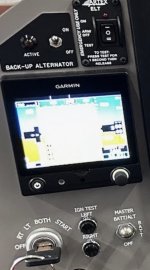
3 position OFF - BATT- BATT + ALTERNATOR switch is best IMO.
 

Attachments

  • IMG_0894.jpeg
    IMG_0894.jpeg
    142.1 KB · Views: 12
I have a 3 position switch set up as you describe. There's no scenario I can think of where you would kill the battery and leave the alternator running.

Cessna knows a thing or two about building airplanes and the red split rocker switch that we've all seen a million times is designed so its not possible to shut off the battery without the alternator side tripping off as well.
 
So at least the Cessna engineers thought alternator on/battery off was not a good idea.
It’s not

So if separate switches are used, the system should be wired such that when the master is switched to off it disables the field feed for the alternator, even if the alt switch is still on.
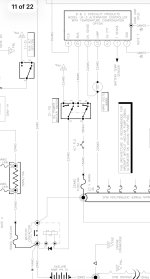
This can be done easily if a double pole switch is used for the master switch. One pole (side) switches the ground activation for the master relay, and the other switches the voltage feed for the alternator field. This gets connected to the alternator switch for secondary control.
 
I don’t think I’ve seen an electrical system that energizes the regulator or the field from the always hot (battery) bus. They are (should) be downstream of the master contactor.
As Scott says a DPDT will do this nicely but if you have to have two switches it won’t matter as long as you don’t run the VR off the battery bus.
If you do connect your VR field or voltage sense to the battery buss you will quickly find you’ll have a flat battery as they draw a (small) load even when off.

IMG_6292.jpeg
 
Back
Top