Van's Air Force

The definitive Van's Aircraft support community! Buying, building or flying an RV? Join our exclusive family of mentors and enthusiasts!

air intake system

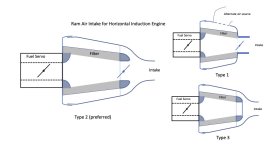
I have and RV-8 in the build process. It is an angle valve IO360 with a horizontal induction and Fly efii system 32 set up. I would like to know what intake/filter systems other builders have installed. I would like something similar to a Rod Bower type 2 set up but not necessarily needing the ram air option. What is available out there or what other styles others have used.
 
Install the RAM air option. Otherwise, you are giving up HP and speed.You can always not use it if you are concerned with burning more fuel but if you don't have it and then want it, you may be doing a bunch of re-work later on and taking your bird down for an undetermined amount of time.
 
who makes a good Ram air induction system?
HP Aircraft now offers my ram-air induction system. (or just PM me). There are three different options for the filter and alternate air configuration.

PS - It seems HP Aircraft's advertising agreement with Doug expired, but we are trying to renew it. Doug has not responded yet. I feel it is fair to mention our products since we are trying in good faith to re-establish the agreement. Doug?
 
I don't suppose you have a ram air solution for a frankensnorkel...
I don't know what a frankensnorkel is. If you have horizontal induction, then our ram-air inlet will work for you. If you have a vertical induction, I know that some folks put a Bower system on a 95-degree elbow duct. Ours might work that way too, but we haven't tried it.
 
I don't know what a frankensnorkel is. If you have horizontal induction, then our ram-air inlet will work for you. If you have a vertical induction, I know that some folks put a Bower system on a 95-degree elbow duct. Ours might work that way too, but we haven't tried it.
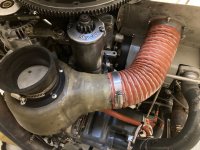
Horizonal intake coupled to this snorkel tube with the air filter in the left cowl inlet. I'm assuming this is not a candidate for ram air.

Edit: shown is an RV-14. I believe the adaptation to other models is the "franken" part. It's not a super clean/easy fit.
 

Attachments

  • preview.jpg
    preview.jpg
    382 KB · Views: 83
Horizonal intake coupled to this snorkel tube with the air filter in the left cowl inlet. I'm assuming this is not a candidate for ram air.

Edit: shown is an RV-14. I believe the adaptation to other models is the "franken" part. It's not a super clean/easy fit.
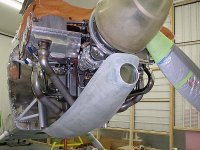
Our system would replace the snorkel and filter. You would fit our ram-air intake in its place. If you choose our Type 1 system, the intake in the left cowl inlet would be a good source for the alternate air supply. That is what I have on my airplane. You no longer need the filter, since the Type 1 ram-air system incorporates a filter with more area. I just have a 3" scat tube to a flanged hole in the cowl inlet. If the picture makes mine look a little bit grungy, its because its been in service for 15 years. The foam sleeve connects to the intake in the cowl.
ram-air type 1-installed-small.jpg
 
Ah, I get it. My cowling doesn't have an intake that faces forward so it would be reinventing too much to change it. I think the builder preferred the aesthetic, which I must admit is very "clean", but I would prefer actual ram air pressure over a clean appearance. Low priority since major surgery is required.
 
Ah, I get it. My cowling doesn't have an intake that faces forward so it would be reinventing too much to change it. I think the builder preferred the aesthetic, which I must admit is very "clean", but I would prefer actual ram air pressure over a clean appearance. Low priority since major surgery is required.
Your reasoning makes sense. I too like the aesthetics of the clean cowl with the snorkel installation. And you know, the pressure in the cooling inlet is not that much below full ram pressure. A well-designed filter installation (meaning radiused lips to avoid separation of the flow into the filter) can produce fairly high manifold pressures, although not quite up to our filtered ram pressure. The main issue is getting a big enough filter in there.
 
For the OP, it sounds like you have the cowl designed for the stock Van’s snorkel induction. I did the flight testing of the updated Van’s snorkel on my RV-8 (the one now used on the RV-14 IO-390 engine) . I measured a solid 0.5” of ram air boost using the new snorkel.

I suggest you take a look - this would be a good fit for your plane.

Carl
 
My cowling doesn't have an intake that faces forward so it would be reinventing too much to change it.
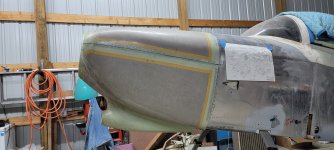
its only fiberglass. Cut a hole and add a pitot inlet. I measured the cheek inlet pressure vs. the pitot in real time with a manometer and though the numbers indicate it’s not “that” much of a loss to do the cheek inlet, in reality, it is. I have cut up and glassed my lower cowl so many times there is no original glass left. The dedicated pitot inlet that Steve suggests is the clear winner if you are looking for pure performance.
 
Note Carl's comment about an updated snorkel. I've lost track of what Vans now has available for what, but Don Rivera did some consulting and flow bench work for them a while back, the result being a better flowing RV-14 snorkel. The change was at the lower end.

Also, a tweak regarding Mike's comment about measuring the ram pressure at the left cooling inlet vs a horizontal pitot inlet, and not finding a lot of difference. Reducing the leakage rate of the baffle seals and cylinder wraps will raise the upper plenum and inlet pressures. Inlet pressure increases further if you then shrink the cowl exit. Put another way, the difference between cheek and pitot inlets gets even smaller if you build a really good cooling system. Gotta love synergistic design...

Steve and Bob have some nice stuff, much better than a Bower and available now. Ken Krueger also has something in the works.
 
Its just fibreglass, cut a hole,
Installed 2.jpg
Check the distance from the front of your "fuel servo", or whatever SDS uses, to where the regular fuel servo would be.
I think the SDS "servo" is shorter - you may have to extend the new inlet.
 
I tried to create the "perfect" snorkel inlet on the Rocket. Very generous radius on the inlet, large duct, and smooth bend to the servo. All improvements compared to the Vans setup on the -8.

IMG_20221120_143238010.jpg
IMG_20221120_133543298.jpg

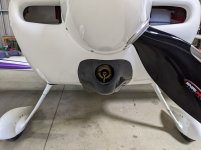
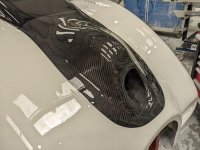
Despite the advantage of this inlet being essentially "leak free" due to the fact that it's fixed to the engine (no rubber seals), in practice it still displays losses compared to the pure pitot scoop. In the end, I abandoned the cleaner "snorkel" for the higher performing pitot.

IMG_20230416_121102416_HDR.jpg
IMG_20230416_132158925_HDR.jpg
 
In the interest of full disclosure, I did make a change to the filter air box (in my case, between the throttle body and sump) during this modification. Originally, I had a composite air box but switched to aluminum due to heat issues. Mr Smith generously offered some pointers to optimize the internal airflow of the air box so I’m not sure how much contribution that made to the overall results, but I am now ”done” screwing with the inlets. After much fabrication and different configurations, I am convinced this is optimum for my airplane.
 
I’m at the same point in the build with my -7. Can you post pictures of the scoop used with RAM air option for the air intake. Also, where can this setup be purchased?

IO-370, superior cold air sump with the FM-150 injection.
 
I don't know anyone offering this kind of thing for sale.
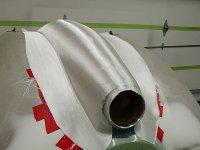
This is the size of hole I ended up with, started with regular RV-6 cowl with a scoop.
Cowl 39.jpg
Snorkle had been substantially adjusted to fit FM-200 and B&C starter
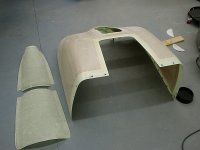
I made parts to fill the holes in 4 parts
Cowl 40.jpg
The only purpose of this stage is to get a shape to work with
Cowl 41.jpg
Then I decided to use a SkyDynamics inlet and sump which moved the FM200 forwards ...
Cowl 42.jpg
New bump mould, used to make the shape below and excavated from the inside
Cowl 44.jpg
This was the final part
Cowl 45.jpg
Plenty of stages left out, it all took quite a long time.
With the SD sump & intake there wasn't really enough space for the snorkle, and I was fed up by that stage and wanted to go flying.
Cowl 39.jpgCowl 40.jpgCowl 41.jpgCowl 42.jpgCowl 44.jpgCowl 45.jpgMay add the snorkle later ...
 
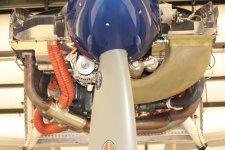
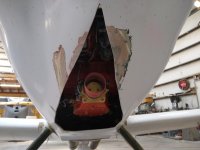
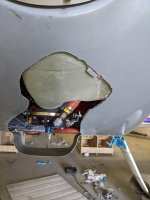
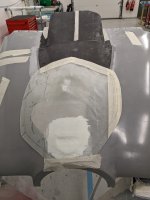
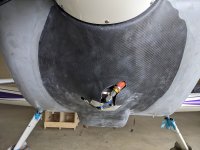
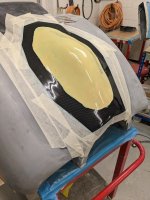
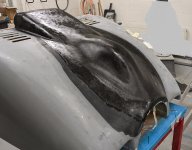
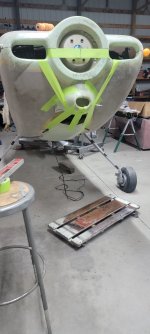
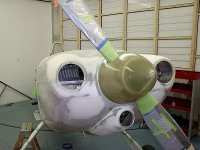
Its only fiberglass so we did it, cuts were made. Mocked it up. Final decisions are yet to be made but it is pretty close to where it will end up. Before and after pics.20241006_213959.jpg20241005_164638.jpg
 
Dan,

What clearance did you go for between the inlet and the prop (blades a full course pitch)?

I did something like this on my first build. The problem arose when I changed out the baseball bat FP prop for the Hartzell BA prop. I got to redo the nose to shave off ~3/4” or so more to get it to clear.

Carl
 
That's a good question, and the answer is "It was a long time ago and I can't remember." 🥴
Probably a inch or more with the BA in full coarse.
 
That's a good question, and the answer is "It was a long time ago and I can't remember." 🥴
Probably an inch or more with the BA in full coarse.
24 years ago we used this book “Speed with Economy” as reference to modify stock RV-8 cowls’ engine air intake:

This is where we adopted moving the intake closer to the prop. The book is dated, but still some good “trial and error” information.

Carl
 
Back
Top