


Van's Air Force

The definitive Van's Aircraft support community! Buying, building or flying an RV? Join our exclusive family of mentors and enthusiasts!

A VW Beetle Engine with 160hp? Seriously?

PabloSniper

Active Member
Hello, gentlemen!
Well, I live in Brazil, and here it's still quite popular to use the VW engine in flying machines.
So, I took it upon myself to research who does the best work with this engine.
I had already read that AeroVee engines were problematic, and that while Revmaster engines were good, they tended to require frequent maintenance.
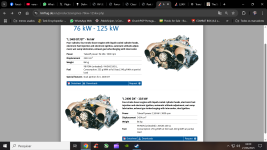
Imagine my surprise when I discovered that the best builders of these small engines are the Germans from Limbach.
1750489790723.png

They have a very well-organized website.
For the higher horsepower engines, they modified the cooling system, making it similar to a Rotax.
However, the lower horsepower versions retain the original air-cooling system.
There is even a drone that uses three of these engines.


Just to be clear, I'm not saying whether they're good or bad, nor am I suggesting that you should use one in your RV-6, RV-7, RV-8, or RV-9.
I'm simply sharing something that genuinely surprised me.


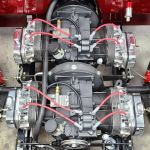
And at that moment, I thought — what if we installed two of these engines? 🥳
1750490251669.png


The sound turned out beautiful.
 
Interesting!
Bore is 97mm. It is quite challenging in an original vw case. Curious how they did it and also about the reliability / longevity.
 
Hello, gentlemen!
Well, I live in Brazil, and here it's still quite popular to use the VW engine in flying machines.
So, I took it upon myself to research who does the best work with this engine.
I had already read that AeroVee engines were problematic, and that while Revmaster engines were good, they tended to require frequent maintenance.
Imagine my surprise when I discovered that the best builders of these small engines are the Germans from Limbach.

View attachment 90632

They have a very well-organized website.
For the higher horsepower engines, they modified the cooling system, making it similar to a Rotax.
However, the lower horsepower versions retain the original air-cooling system.
There is even a drone that uses three of these engines.


Just to be clear, I'm not saying whether they're good or bad, nor am I suggesting that you should use one in your RV-6, RV-7, RV-8, or RV-9.
I'm simply sharing something that genuinely surprised me.


And at that moment, I thought — what if we installed two of these engines? 🥳

View attachment 90633


The sound turned out beautiful.
Had a Limbach on my first plane, a Dragonfly. Put 1200 hours on it. Best VW based engine in my opinion. It was expense then compared to other options. One Slick mag and no oil filler.
 
Interesting!
Bore is 97mm. It is quite challenging in an original vw case. Curious how they did it and also about the reliability / longevity.
In the video he said it was all Scat engine components. They sell "everything" vw performance from crankshaft outward. Super imaginative build. Wish my tablet had bigger speakers.
danny
 
Had a Limbach on my first plane, a Dragonfly. Put 1200 hours on it. Best VW based engine in my opinion. It was expense then compared to other options. One Slick mag and no oil filler.
I’m not sure which engine model it is, but I saw that one of them has a TBO of 1,500 hours, which seems quite a lot for this type of engine, in my opinion.
In fact, their website mentions that this engine was previously sold as certified, but is currently available only for experimental use. However, they plan to resume certified sales in 2026.
A 160 hp engine directly coupled to the propeller and weighing only 86 kg (approximately 190 pounds) doesn’t sound bad at all.
I'm quite curious about how one of these would perform in an RV-3 or RV-4.
 
I’m not sure which engine model it is, but I saw that one of them has a TBO of 1,500 hours, which seems quite a lot for this type of engine, in my opinion.
In fact, their website mentions that this engine was previously sold as certified, but is currently available only for experimental use. However, they plan to resume certified sales in 2026.
A 160 hp engine directly coupled to the propeller and weighing only 86 kg (approximately 190 pounds) doesn’t sound bad at all.
I'm quite curious about how one of these would perform in an RV-3 or RV-4.
I don't recall the model. It did have a 1500 hr TBO and it was 80 HP. It was certified for a German motorglider.
 
I’m not sure which engine model it is, but I saw that one of them has a TBO of 1,500 hours, which seems quite a lot for this type of engine, in my opinion.
In fact, their website mentions that this engine was previously sold as certified, but is currently available only for experimental use. However, they plan to resume certified sales in 2026.
A 160 hp engine directly coupled to the propeller and weighing only 86 kg (approximately 190 pounds) doesn’t sound bad at all.
I'm quite curious about how one of these would perform in an RV-3 or RV-4.
Probably pretty lousy.

Engines like RPMs. They are basically air pumps. More rpm = more air being pumped = more power.

Props don't like RPMs. How comes a Robinson R22 can hang on its "propeller" with power to spare, whereas an RV4 with the exact same engine at the exact same weight can't even begin to hope doing so? Big, slow propellers make more thrust than fast, small ones.

My Jodel with Subaru required 2 to 3 fewer inches of MAP to keep the same speed when switching from a 2.12:1 to a 2.29:1 reduction drive ratio, dropping prop rpm from 1900 to 1750.

Now a direct drive VW will most likely need well over 3000 rpm to get to the published horsepower numbers. Likely 3300 or so, requiring a tiny little prop to keep the tips from going supersonic. And will produce no significant thrust.

My bet is that a 100 hp Rotax 912S might be pretty close in performance and that a 140 hp 914 will run circles around it.
 
Back
Top
