Piper J3
Well Known Member
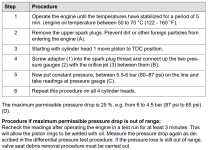
I’m beginning my annual condition inspection and started with differential pressure (leak-down) test for my early SN 912ULS with 1030 TT. Plane was last flown in October before weather closed in. So, engine has sat for almost two months. Today I did compression test and all four cylinders are 79/80 with engine stone cold (Rotax says 5.5 – 6 bar ≈ 80–87 psi). I use Rotax 0.040” orifice tester at 80 psig to have some comparison to Lyc and Continental engines. No leakage at intake or exhaust valves with minimal blow-by on piston rings. All four cylinders sound similar for ring leakage at the oil tank vent. So, everything looks good. Oil consumption is 1 liter / 75 hrs. running Costco (top tier) 93E10 Mogas and Mobil 1 Racing 4T 10W-40 synthetic oil. Engine is run at 5500 rpm in cruise.
My question is… I bought this airplane with 48TT and have operated it for ten years. I’m trying to remember how the engine compression felt (burping) when new compared to now with 1000+ hrs. I think the compression now is slightly less than new and yet the diff press test looks excellent. Does anyone else with mid-time engine have similar observation?
My question is… I bought this airplane with 48TT and have operated it for ten years. I’m trying to remember how the engine compression felt (burping) when new compared to now with 1000+ hrs. I think the compression now is slightly less than new and yet the diff press test looks excellent. Does anyone else with mid-time engine have similar observation?
Last edited: