Van's Air Force

The definitive Van's Aircraft support community! Buying, building or flying an RV? Join our exclusive family of mentors and enthusiasts!

8 Ton bottle Jack conversion to lift plane

jackking123

Well Known Member
Patron
I bought two HF 8 ton bottle jacks. They are shorter guys 9" to 17.75", with about 8.75" of total lift.
The plan is the make a stand that supports the jacks to be closer to bottom of wing.
Anyone do this.

I did not see the taller jacks I saw many use. I can always return them.
Thoughts on jacking the RV-7. I will keep them if I can make them work (safely).
Got a steal on them and they are cheaper than the longer bottle jacks.
 
Have you tried jacking to see if 8.75" is enough travel? Just a quick observation.
Jacking the airplane is serious. Most buy the long cherry picker ram and adapt it. Probably a plan somewhere on VAF.
 
I bought two HF 8 ton bottle jacks. They are shorter guys 9" to 17.75", with about 8.75" of total lift.
The plan is the make a stand that supports the jacks to be closer to bottom of wing.
Anyone do this.

I did not see the taller jacks I saw many use. I can always return them.
Thoughts on jacking the RV-7. I will keep them if I can make them work (safely).
Got a steal on them and they are cheaper than the longer bottle jacks.
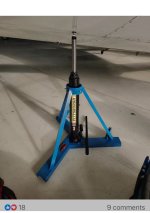
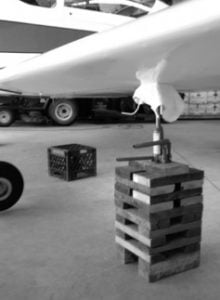
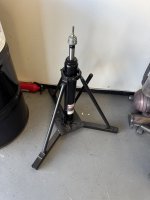
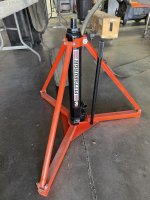
I'll get a pic tomorrow of the jack setup I use to lift the wings. I borrow these from a friend, but he uses the HF bottle jacks too. But he's enclosed those within a tripod type stand. Also he uses blocks of 2x4 with padding on one side and a hole drilled on the other to center on the jack end. You put the padded end in between the inspection covers centered on the spar. It works like a champ and I've used this numerous times.

The nice thing is I tend to lift from further inboard on the spar than way out at the tie down point. Like in between the Inner and middle inspection plate. This allows for a shorter jack.
 
Last edited:
Just a reminder that when jacking an RV, you want the tail up to level the plane in pitch, yet weight the tail because it’ll nose over when you jack it. A safer way to lift the plane is to use an engine hoist and lift it from the engine or engine mount. Another option is to only do one side at a time, using carpeted block of wood placed on the wing spar. I believe someone makes a jack point for the round gear-7 that attaches to the axel..
 
A safer way to lift the plane is to use an engine hoist and lift it from the engine or engine mount.
I'd think twice, maybe three times before using the engine lifting lug to lift an airplane. That lug (and where/how it attaches to the engine) is designed for a 300 pound engine, not an 1100 pound airplane. Also, better be really careful where and how you attach your straps if you lift via the engine mount. There are lots of poor choices available.
 
I bought two HF 8 ton bottle jacks. They are shorter guys 9" to 17.75", with about 8.75" of total lift.
The plan is the make a stand that supports the jacks to be closer to bottom of wing.
Anyone do this.

I did not see the taller jacks I saw many use. I can always return them.
Thoughts on jacking the RV-7. I will keep them if I can make them work (safely).
Got a steal on them and they are cheaper than the longer bottle jacks.
I have an RV7A, & have done the same. Using short jacks, then made a “base” for under each jack out of plywood, 4- sided, each side a trapezoid. 18” square footprint, 8” square where the jack sits. One side of the trapezoid is longer, as to be perpendicular to the wing (because of wing dihedral). 2 x 4 against the wing under the spar, with a horizontal bolt through the 2 x 4 and through the tie-down eyebolt , so it can’t slide. Seems to work well.

Gary S
 
I bought two HF 8 ton bottle jacks. They are shorter guys 9" to 17.75", with about 8.75" of total lift.

Travel of the long jack is almost 20 inches.

Website says long jacks are in stock at my local store.
 
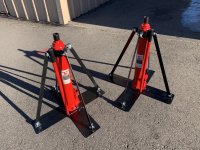
I made these from the plans published years ago in Kitplanes. They were easy to weld and cheap to build. I used the 3-ton 24" - 44" jacks from Harbor Freight. I almost never lift both wings of my -9A at the same time, so I've really only needed one. They're very quick and easy to slip under one wing to get one wheel off the ground. They're too heavy to be conveniently portable, but as an in-hangar tool for landing gear work etc, they're great.


1772975296784.jpeg
 
I made these from the plans published years ago in Kitplanes.


View attachment 111864

That particular design is subject to collapse. I made a similar error on V.1 of my own.

In short, the straps are tension only, but the flat plate base has no bending strength. Push the top to one side, and the downside strap buckles while the opposite strap bends the base upward.
 
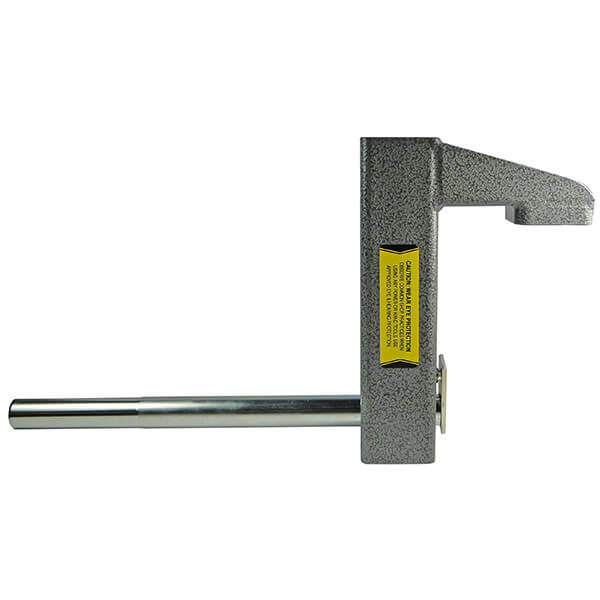
My jacks have four 3/4” 4130 tube legs welded to a 2” wide clamp ring around the bottle jack. It’ll never fold over. Jacks used are similar to illustration below
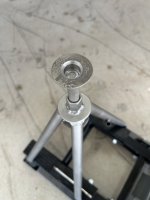
Also, I machined metal sockets to the top of each ram to capture a stud I insert to the wing tie down bolt hole.
 

Attachments

  • IMG_2728.png
    IMG_2728.png
    465.9 KB · Views: 31
Just a reminder that when jacking an RV, you want the tail up to level the plane in pitch, yet weight the tail because it’ll nose over when you jack it. A safer way to lift the plane is to use an engine hoist and lift it from the engine or engine mount. Another option is to only do one side at a time, using carpeted block of wood placed on the wing spar. I believe someone makes a jack point for the round gear-7 that attaches to the axel..
Yep, I'm a big fan of the one side at a time. Its much easier and you don't need to weigh the tail down. It's probably rare that you would need both wheels off at the same time. And even if you need both wheels off at the same time - lift one side up, take wheel off, put a block of wood under the axle, then lower it and go do the other side. When replacing the wheels, reverse the process. The couple of times I've had both wheels up, the whole plane just gets unstable and squirrelly, even with weight on the tail. YMMV
 
i am asking this question because i dont really know the downside of just jacking a gearleg. the wing jacks seem like a lot of work to make and a slipped jack is a big deal. why not jack a gear leg? i made a clamp to attach to a leg in an hour that locks a bottle jack securely and not much chance of a slip putting the bottle jack thru your plane.
 
I'd think twice, maybe three times before using the engine lifting lug to lift an airplane. That lug (and where/how it attaches to the engine) is designed for a 300 pound engine, not an 1100 pound airplane. Also, better be really careful where and how you attach your straps if you lift via the engine mount. There are lots of poor choices available.
Math might be a little off here. OP stated for a -7. Gear legs attach to and are integral to engine mount. When landing that mount is subject to over 1000 #, possibly much more if a carrier deck landing.
 
i am asking this question because i dont really know the downside of just jacking a gearleg. the wing jacks seem like a lot of work to make and a slipped jack is a big deal. why not jack a gear leg? i made a clamp to attach to a leg in an hour that locks a bottle jack securely and not much chance of a slip putting the bottle jack thru your plane.

You're not wrong Bob. Lots of folks lift one wheel at a time. And although I have wing jacks, I carry these little weldments for the -8 in my tool bag. I can get a tire off the ground with not much more than a log and a tree limb.

P7140003.JPG
 
Have you tried jacking to see if 8.75" is enough travel? Just a quick observation.
Jacking the airplane is serious. Most buy the long cherry picker ram and adapt it. Probably a plan somewhere on VAF.
Yes it is serious. Google / AI says 8" is enough. I know most buy the long one... I may (edit will) return these for longer ones. That is why I posted thread. Thanks

You're not wrong Bob. Lots of folks lift one wheel at a time. And although I have wing jacks, I carry these little weldments for the -8 in my tool bag. I can get a tire off the ground with not much more than a log and a tree limb.
Thanks Dan I was thinking of this. BUT... RV-7 gear is not like this. It has a one piece round tapered gear leg, curved straight into the axial. Some clamp U-Bolts and bracket to gear leg. However you have to remove gear leg fairing, and I plan on a WOOD damper on gear leg which is a show stopper. Further I really do not want to mess with clamps on the gear leg for many reasons. Your idea is great and works well I see, but N/A to my application.

My jacks have four 3/4” 4130 tube legs welded to a 2” wide clamp ring around the bottle jack. It’ll never fold over. Jacks used are similar to illustration below
Also, I machined metal sockets to the top of each ram to capture a stud I insert to the wing tie down bolt hole.
You cheapskate (after my own heart)... VEVOR, have many of their things, diesel heater, motorcycle stand... on and on. Thanks for tip, I bought them, free shipping, a few bucks cheaper than 30% off at HF.
 
Last edited:
Math might be a little off here. OP stated for a -7. Gear legs attach to and are integral to engine mount. When landing that mount is subject to over 1000 #, possibly much more if a carrier deck landing.
As I implied, it is where you hook/strap to the mount that is important. There are more bad options than good ones. And lifting from the engine is a horrible choice. I jack one side at a time using the gear leg as the jack point.
 
i am asking this question because i dont really know the downside of just jacking a gearleg. the wing jacks seem like a lot of work to make and a slipped jack is a big deal. why not jack a gear leg? i made a clamp to attach to a leg in an hour that locks a bottle jack securely and not much chance of a slip putting the bottle jack thru your plane.
Could you share a picture of your clamp with the jack?
 
i am asking this question because i dont really know the downside of just jacking a gearleg. the wing jacks seem like a lot of work to make and a slipped jack is a big deal. why not jack a gear leg? i made a clamp to attach to a leg in an hour that locks a bottle jack securely and not much chance of a slip putting the bottle jack thru your plane.

There is nothing wrong with your idea, but your premise that wing jacks are not secure or risky is not accurate.

Again have picture. I assume you are not using the brake caliper mount bolts but clamping onto the gear leg itself? That has been done before. For my RV-7, to jack clamping onto the gear leg I would have to remove gear leg fairing and planned wood stiffener/damper..

Making a bracket is not hard with clamps. This has been done for a long time with "U" bolts. However you have be careful not nick the high strength steel gear leg steel. Also when you jack gear leg is going to move a little, still on spring gear.

Wing jacks are solid floor to wing. If you are only doing one tire, need an inch of clearance, one wing jack and no tail lift or weight security is needed. RV-7A is easier to jack with wing jacks than tail dragger.

So there are pros and cons to everything.

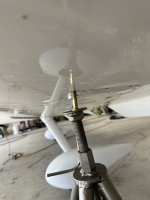
Good wing jacks can be very safe and secure. There is nothing on the floor near the wheel and brake. No need to remove gear leg fairing, bolt brackets to the gear leg. You put a bolt in tiedown. The bolt has a head ground to make it conical to fit in jack cup (you can buy or fabricate). Tail is lifted and strap with weight on tailwheel stinger keeps it secure. If only doing one wheel you don't need to lift tail or put weight on tail. One wing jack will lift the tire off the ground.

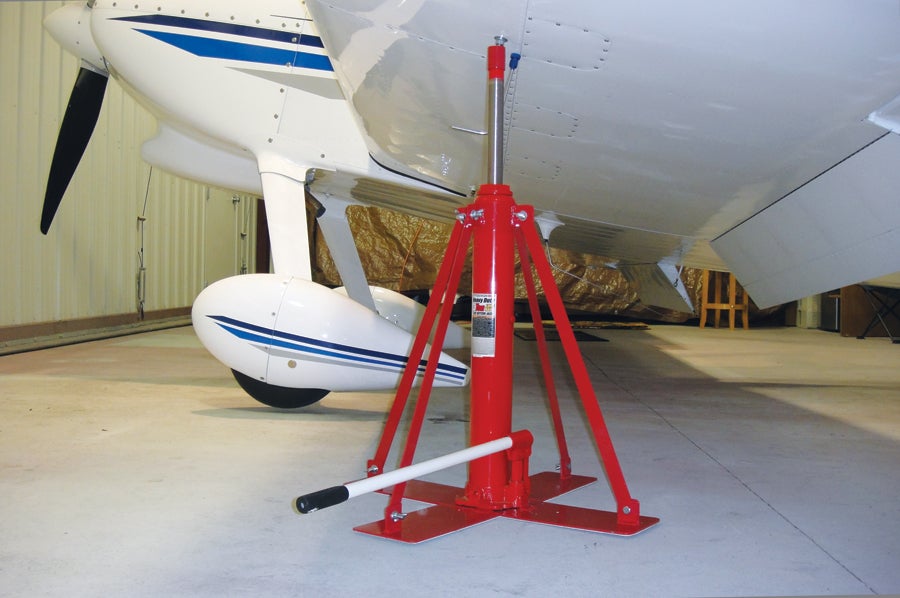
Aircraft Spruce makes this bad boy for $75. It is pretty clever. Once you get wheel and tire off ground, slide tire off, block the axal with wood, lower and remove tire and tool.
RV Jack Stand Kit
 
Last edited:
There is nothing wrong with your idea, but your premise that wing jacks are not secure or risky is not accurate.
Properly executed, wing jacks are fine. But they still scare me. My home field has a composite shop. It takes several fingers to count the Cirri I've seen in that shop after someone dropped them off the jacks. The ones that make it to the composite shop are the lucky ones. The jack often punches through in front of the spar. That's repairable. The aircraft with damaged spars need a whole new wing... Anyway, I figure the people who damaged those airplanes are working in pro shops with pro gear and decent training. Maybe I'm wrong about that.

I feel very comfortable with jacking solutions that rely on lifting by the landing gear and sticking wood blocks under axles. There's very little potential energy there, and if there was a screw-up, I guess I could damage a brake caliper or drop something on my foot, but there wouldn't be spar or wing skin damage.
 
Yep, I'm a big fan of the one side at a time. Its much easier and you don't need to weigh the tail down. It's probably rare that you would need both wheels off at the same time. And even if you need both wheels off at the same time - lift one side up, take wheel off, put a block of wood under the axle, then lower it and go do the other side. When replacing the wheels, reverse the process. The couple of times I've had both wheels up, the whole plane just gets unstable and squirrelly, even with weight on the tail. YMMV
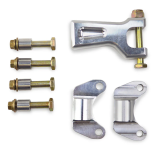
It's rare that I've ever needed to lift both wings. The Harbor Freight-based hydraulic jacks are quick and easy to use in the hangar, but cumbersome. In the event of a flat away from home, I've installed the FlyBoy Accessories jackpoints on both main gear hubs and carry the lifting arm with me. They're expensive, but well-made and accommodate a wide range of jack options.


1773019380006.png 1773019424294.png
 
It's rare that I've ever needed to lift both wings. The Harbor Freight-based hydraulic jacks are quick and easy to use in the hangar, but cumbersome. In the event of a flat away from home, I've installed the FlyBoy Accessories jackpoints on both main gear hubs and carry the lifting arm with me. They're expensive, but well-made and accommodate a wide range of jack options.


View attachment 111895 View attachment 111896
Blake is supposed to be releasing a screw type jack for those. Still waiting.
 
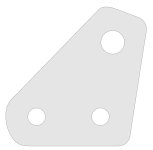
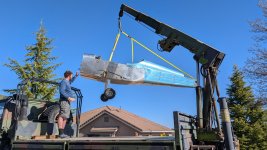
I designed a couple of lifting lugs that attach to the two inboard bolts on the top of the U-01404-L&R on each side of the spar carrythrough on the -14A. I had them made by SendCutSend out of 3/8" aluminum. They seem sturdy enough so far, when using the cherry picker or the truck crane. I have my doubts as to whether they'll be useful for lifting a completed airplane, mainly because I don't plan to have a strong-enough crane in my hangar. But that arrangement will probably be good enough until the wings go on.

More on topic, I bought a cherry picker off Amazon, which arrived damaged in shipping, and which ended up being free... until I had to buy a replacement 8T long-stroke hydraulic jack from HF because the one I received with the cherry picker leaked down way too fast. So far, the HF unit is maintaining... lift. But I spent the extra $17 on the 2Y warranty if it decides to leak.

BTW, the young man standing on the truck bed is 6'8", and fits in a -14(A). For a while. I'm 5'7", so rudder pedal position is going to be interesting.

RV-14(A) lifting lug.jpgCraning the fuse.jpg
 
Last edited:
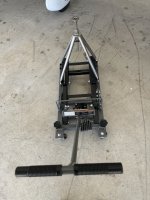
This is what I use. It is the HF motorcycle lift. I built a 3/4" plywood box to give it the height I needed and some foam pieces to make it match the slope of the bottom of the airplane. It takes some shifting around to get to the perfect spot to lift the entire plane the first time, then I marked it with sharpie. I have only used it on my 9A and it works for me. I dont think the jack could live a 10 or maybe a heavy RV. My weight is 1098 pounds. The plane is NOT stable enough to get in the cockpit while lifted up but allows for easy wheel - brake - and wheel pants work. I do NOT know if it would work for a tail wheel plane.
 

Attachments

  • motorcycle lift.jpg
    motorcycle lift.jpg
    3.1 MB · Views: 45
It's rare that I've ever needed to lift both wings. The Harbor Freight-based hydraulic jacks are quick and easy to use in the hangar, but cumbersome. In the event of a flat away from home, I've installed the FlyBoy Accessories jackpoints on both main gear hubs and carry the lifting arm with me. They're expensive, but well-made and accommodate a wide range of jack options.


View attachment 111895 View attachment 111896
These work great.
 
I like this. What is the height of the attachment?

I think I will break out the welder and.

Thanks
Chip

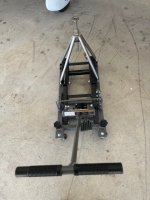
On the 6A, I was working with 28" from floor to the bottom of the wing at the jack point. The attachment height could vary since you have height adjustment with the threaded rod welded to the cup. Also you have to account for the 3/8" Grade 8 bolt length that screws into the jack point. I think bolt length is 4". With the threaded rod screwed in about half way, I can get about 4" clearance tire to floor at full lift.

I can get some dimensions when I'm back at the hangar. The nice thing about this design, it does not require any modification of the motorcycle lift.

Note the storage of the 3/8" bolt welded to one leg.

RV Lift.jpg
 
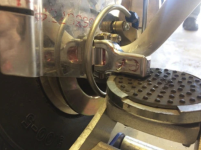
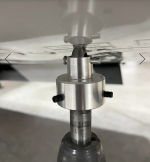
AeroGarage advertises some machined cups that will securely slip over the ram of most jacks, ram size up to 1.25 inches. He also makes a tie down ring that, in addition to fitting the cup cleanly, will actually secure to it with a through-pin. Well-made and very clever. I bought the cup several months ago thinking it might fit my Cleaveland tie downs but it doesn't. I went back to order his tie-downs but I think AeroGarage has stopped making them, they haven't been available for quite a while.

1773075591338.png
 
What kind of work or maintenance would require lifting the whole plane off the ground?
Other than fitting the wheel pants, probably nothing. I use it at annual just so I can flip the tires if needed and change the pads. It works for me. It did make it easier to weigh and set the plane down equally on the scales.
 
i am asking this question because i dont really know the downside of just jacking a gearleg. the wing jacks seem like a lot of work to make and a slipped jack is a big deal. why not jack a gear leg? i made a clamp to attach to a leg in an hour that locks a bottle jack securely and not much chance of a slip putting the bottle jack thru your plane.
The downside, for me anyway wth my RV-8 - is the gear leg fairings are a PITA to get on an off.

And unfortunately, I've tried to add the jack attach points to the gear axle to be able to lift it if away from home. But my wheel pants won't fit over them, so I had to remove them.
 
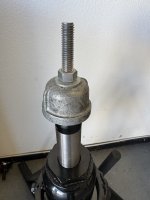
Carriage bolt thru a pipe end cap
Make sure these are grade 8 carriage bolts. One of the few jacking incidents reported here was failure of hardware store cheapo carriage bolts combined with an acute lifting angle that did not keep the bolts square.
Cast pipe caps are also suspect.
Side loading is one reason I don’t like to jack just one wing.
I use the shortest grade 8 bolt that will work with the head rounded to fit the cup on top of the jack ram. Tail lifted and try to keep the bolts square.
 
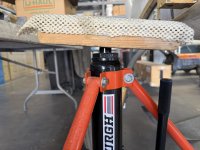
I'll get a pic tomorrow of the jack setup I use to lift the wings. I borrow these from a friend, but he uses the HF bottle jacks too. But he's enclosed those within a tripod type stand. Also he uses blocks of 2x4 with padding on one side and a hole drilled on the other to center on the jack end. You put the padded end in between the inspection covers centered on the spar. It works like a champ and I've used this numerous times.

The nice thing is I tend to lift from further inboard on the spar than way out at the tie down point. Like in between the Inner and middle inspection plate. This allows for a shorter jack.
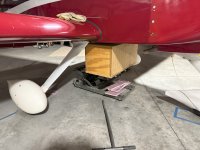
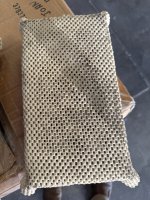
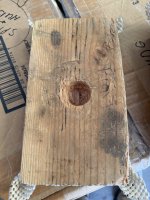
Here are the pics I promised. Simple wood blocks with padding on top and a hole drilled on the back side to sit on top of the jack shaft/head/tip or whatever its called. Very low chance of it slipping and punching a hole through the wing.

1773188593687.jpeg
1773188624952.jpeg
1773188647273.jpeg
1773188666285.jpeg


As I said previously, just place the block in the gap between inspection plates centered on the spar and its easy peasy lemon squeezy. No side loading or risk of puncture. Just be sure to chock the other wheels well so the airplane can't roll.
 
Here are the pics I promised. Simple wood blocks with padding on top and a hole drilled on the back side to sit on top of the jack shaft/head/tip or whatever its called. Very low chance of it slipping and punching a hole through the wing.

View attachment 112083
View attachment 112084
View attachment 112085
View attachment 112086


As I said previously, just place the block in the gap between inspection plates centered on the spar and its easy peasy lemon squeezy. No side loading or risk of puncture. Just be sure to chock the other wheels well so the airplane can't roll.
You’re not lifting on the spar. You’re lifting on the spar flange, rib flanges, and skin. I wouldn’t be ok with that on my airplane. Same when putting a jury rigged jack under the belly.

I really don’t understand why folks don’t seem to want to follow Vans advice and recommendations and use the jack points, designed and engineered for that purpose. There is no risk of “punching a hole” through the wing if you use the proper equipment.

Thousands of aircraft types and I cant think of any that don’t lift by the jack points engineered by the aircraft designers.
 
You’re not lifting on the spar. You’re lifting on the spar flange, rib flanges, and skin. I wouldn’t be ok with that on my airplane. Same when putting a jury rigged jack under the belly.

I really don’t understand why folks don’t seem to want to follow Vans advice and recommendations and use the jack points, designed and engineered for that purpose. There is no risk of “punching a hole” through the wing if you use the proper equipment.

Thousands of aircraft types and I cant think of any that don’t lift by the jack points engineered by the aircraft designers.
And yet, a poster in this thread talks about a composite shop full of Cirrusses (or is it Cirri?) that have been damaged from slipping off wing jacks presumably in professional shops with pro gear.

I hear what you're saying, and I too bought a set of the screw in tie down jack points and they look scary and unstable when I used them once. I've used the solution I posted above numerous times - borrowed from a multiple RV builder btw - and they've worked like a champ with zero issues.

YMMV ofc.
 
AeroGarage advertises some machined cups that will securely slip over the ram of most jacks, ram size up to 1.25 inches. He also makes a tie down ring that, in addition to fitting the cup cleanly, will actually secure to it with a through-pin. Well-made and very clever. I bought the cup several months ago thinking it might fit my Cleaveland tie downs but it doesn't. I went back to order his tie-downs but I think AeroGarage has stopped making them, they haven't been available for quite a while.

View attachment 111950
Thanks for the plug!

My machines have been tied down for months now with some high volume work, but just this week I’ve got one of the machines re-setup for a restock of my own products.
Titanium chips are flying as I type this, and these will be ready to ship again by the end of the month.
 
Back
Top