Van's Air Force

The definitive Van's Aircraft support community! Buying, building or flying an RV? Join our exclusive family of mentors and enthusiasts!

20 Years on with a car engine

clarkefarm

Active Member
Sponsor
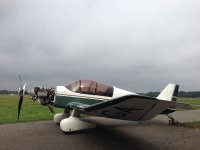
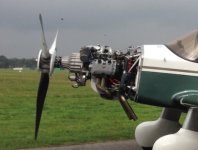
Flying a Subaru powered 9A with an NSI package and still having fun.
Plenty of excitement with engine failures due to my incompetent tuning but hopefully have just about achieved reliability.
Max speed about 163 KIAS and just under 2000 fpm (with 1500 lb) at 2000' but very pleasant at reduced power.
For those thinking of a Rotax, NSI had a significant horizontal radiator and 1.5 gal header tank behind the engine which might help with W & B.
 
Good stuff, and nice strip (y)

20 years is indeed a long time, congrats... interesting would be to know how many hours were flown with that engine during this time span?
 
My inner gearhead is smiling at this. I really enjoy seeing something optimized to this point, and fully recognize the effort required.
I like tinkering so lots of engines (Forester blocks and engines are not really expensive) and the current iteration is the AVLS EJ253 circa 2011 which is rated at 173 hp.
Hours flown are not going to make the honours list but are compensated by the fun of modifying and the experience of learning to use a Motec M130 ECU with its extraordinary capabilities.
 
My day job is R&D and new product development for a major oilfield company, involving LOTS of this sort of tinkering. Somehow, as much as I love doing it, by the time I get home and have some downtime all I really want to do is fly the plane.
 
In the video, after takeoff, it looks and sounds like you have power reductions when you operate the electric trim on the stick?
 
I was wondering that too - electric prop pitch control on the stick?
The last Subie that I worked on had an electronic prop controller, MT P-120-A, which used a potentiometer to "dial-a-speed". Maybe he was able to decipher the gebrauchsanleitung and wire in the coolie hat. :)
 
My day job is R&D and new product development for a major oilfield company, involving LOTS of this sort of tinkering. Somehow, as much as I love doing it, by the time I get home and have some downtime all I really want to do is fly the plane.

Me too, hence my selection of my 1940’s tech tractor engine (Lycoming). Always interested in reading about newer technology. Haven’t seen it yet, but hope springs eternal.
 
Me too, hence my selection of my 1940’s tech tractor engine (Lycoming). Always interested in reading about newer technology. Haven’t seen it yet, but hope springs eternal.
You are right about the electric pitch. It was a feature of the NSI offering and the L-R coolie hat switch coarsens or fines the pitch (with 22 degrees of negative pitch available). Interestingly I get great braking from very fine to negative with no real increase by upping the power - maybe cavitation ?
Coarsening to load the engine reduces revs and power without restricting breathing so should be more efficient. I can get down to about 4,000 RPM without an increase in vibration so it is very useful.
At the other end of the scale the gearbox includes a sprague clutch so the propellor will free-wheel in a forward direction - probably not great for drag in the glide but enables good air or ground braking even with a dead engine to salvage botched landings.
Link to using the prop pitch to slow quickly.
 
Nice!!!

21 years of Subaru here (N/A EJ25), and around 800 hours accumulated. That's 800 hours of 20-minute flights, taking off, max power 2500 fpm climbs to catch some clouds, 10 minutes of fun and then power all the way back to land. After a lot of engineering, re-engineering and re-re engineering, the thing is 100% trouble free now. Loving it so much that I am building a turbocharged STi to put on my RV3. That should be a screamer!

Seen here from my buddies RV7: (and note the placement of my radiators in the wing roots)

IMG_9862.JPG
 
You are right about the electric pitch. It was a feature of the NSI offering and the L-R coolie hat switch coarsens or fines the pitch (with 22 degrees of negative pitch available). Interestingly I get great braking from very fine to negative with no real increase by upping the power - maybe cavitation ?
Coarsening to load the engine reduces revs and power without restricting breathing so should be more efficient. I can get down to about 4,000 RPM without an increase in vibration so it is very useful.
At the other end of the scale the gearbox includes a sprague clutch so the propellor will free-wheel in a forward direction - probably not great for drag in the glide but enables good air or ground braking even with a dead engine to salvage botched landings.
Link to using the prop pitch to slow quickly.
I watched your airspeed on final and the braking was pretty impressive! I'm fp and have to carefully plan to control my speeds. Pretty cool!
danny
 
You are right about the electric pitch. It was a feature of the NSI offering and the L-R coolie hat switch coarsens or fines the pitch (with 22 degrees of negative pitch available). Interestingly I get great braking from very fine to negative with no real increase by upping the power - maybe cavitation ?
Coarsening to load the engine reduces revs and power without restricting breathing so should be more efficient. I can get down to about 4,000 RPM without an increase in vibration so it is very useful.
At the other end of the scale the gearbox includes a sprague clutch so the propellor will free-wheel in a forward direction - probably not great for drag in the glide but enables good air or ground braking even with a dead engine to salvage botched landings.
Link to using the prop pitch to slow quickly.
Will it push you backwards on the ground like a turbine, or just free wheel?
 
Flying a Subaru powered 9A with an NSI package and still having fun.
Plenty of excitement with engine failures due to my incompetent tuning but hopefully have just about achieved reliability.
Max speed about 163 KIAS and just under 2000 fpm (with 1500 lb) at 2000' but very pleasant at reduced power.
For those thinking of a Rotax, NSI had a significant horizontal radiator and 1.5 gal header tank behind the engine which might help with W & B.
What did your empty weight come in at? Most Subie's I've seen over the past 30 yrs. (mostly Eggs) were 1130-50 lbs.
 
Spot on with the empty weight - about 1,153 but includes 20 gals in wing tip tank capacity to give all up of 56 gals plus another 1.5in the header tank. Also has an inbuilt "long object" storage compartment running back into the fuselage for rods, skis etc.
NSI package also includes a "tuned exhaust muffler" (maybe/maybe not) but is seriously heavy but quiet.
 
Back
Top