Background: I posted this thread, trying to figure out how to make a dumb GPS receiver work with Trio EZ Pilot. With help from Trio, I managed to do it!
In short, the problem was the lack of magnetic variation. My solution is to inject a magnetic variation into the GPS output. Basically I put a microcontroller in the middle of the data flow. It takes the GPS output, adds a magnetic variation to it, then sends the modified GPS data to the autopilot.
This method needs these items:
I programmed the ESP32 dev board with the source code and wired it like this diagram. Then it just works! It's able to keep flying in a perfect straight line. Finally I don't have to keep holding the stick for once! I'm so happy with it!
Since ESP32 also has WiFi and bluetooth support, I think there is potential for even more. Maybe I'll be able to upload a flight plan from an iPad and make it fly some waypoints.
In short, the problem was the lack of magnetic variation. My solution is to inject a magnetic variation into the GPS output. Basically I put a microcontroller in the middle of the data flow. It takes the GPS output, adds a magnetic variation to it, then sends the modified GPS data to the autopilot.
This method needs these items:
- An NMEA GPS receiver using RS232 with 4800 baud. They are usually around $20. Example.
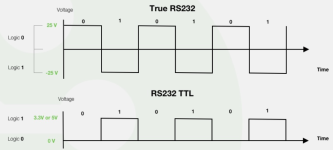
- An RS232 to TTL converter like this.
- A microcontroller. I use ESP32 for a quick start. But any microcontroller with the ability to process UART should work.
I programmed the ESP32 dev board with the source code and wired it like this diagram. Then it just works! It's able to keep flying in a perfect straight line. Finally I don't have to keep holding the stick for once! I'm so happy with it!
Since ESP32 also has WiFi and bluetooth support, I think there is potential for even more. Maybe I'll be able to upload a flight plan from an iPad and make it fly some waypoints.
Last edited: