Van's Air Force

The definitive Van's Aircraft support community! Buying, building or flying an RV? Join our exclusive family of mentors and enthusiasts!

Alt Static Air Source Options

lr172

Legacy Member
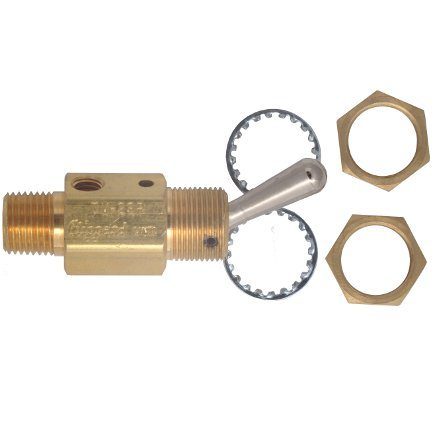
Had leaks on my previously leak free static system last week. Finally tracked it down to the air switch I put on the panel. It came from Mcmaster, which generally is mid range quality. Seems the orings shrunk over the last few years. Am a bit hesitant to just replace it, but have a 1/2" hole in my panel for it. Any suggestions for a better quality switch or ideas for a better solution? On my 6, I just used a TEE and a cap, but was easy to hide it from view. On the 10, none of the tubing is exposed to the pilot. I was considering a bulkhead fitting with a cap, but is kind of ugly.

Appreciate any ideas
 
Had leaks on my previously leak free static system last week. Finally tracked it down to the air switch I put on the panel. It came from Mcmaster, which generally is mid range quality. Seems the orings shrunk over the last few years. Am a bit hesitant to just replace it, but have a 1/2" hole in my panel for it. Any suggestions for a better quality switch or ideas for a better solution? On my 6, I just used a TEE and a cap, but was easy to hide it from view. On the 10, none of the tubing is exposed to the pilot. I was considering a bulkhead fitting with a cap, but is kind of ugly.

Appreciate any ideas
 
Thanks. That looks identical to the one that just failed. Looks like the sam mfr stamping.
Well now I know where to look first if I develop a static leak. I have the same toggle valve installed. I imagine something like that is difficult to make to where it wouldn't be susceptible to o-ring shrinkage. A bulkhead fitting with a cap is an elegant solution as long as it can be tight enough to seal well and still be loosened by hand when you need it.
 
Thanks. That looks identical to the one that just failed. Looks like the sam mfr stamping.
Basically the same switch I have in the SubSonex as a gear switch (pneumatic gear) - hasn’t leaked in six years… but then again, I have a dual air pump to keep pressure up if it leaks! Not like a static system that needs to be very leak free….
 
Basically the same switch I have in the SubSonex as a gear switch (pneumatic gear) - hasn’t leaked in six years… but then again, I have a dual air pump to keep pressure up if it leaks! Not like a static system that needs to be very leak free….
yeah, my leak was not significant, but enough to make the tester unhappy once we got to 5000'. in your case, you probably wouldn't have even sensed the leak as would most pressure applications that use that switch.
 
Last edited:
Well now I know where to look first if I develop a static leak. I have the same toggle valve installed. I imagine something like that is difficult to make to where it wouldn't be susceptible to o-ring shrinkage. A bulkhead fitting with a cap is an elegant solution as long as it can be tight enough to seal well and still be loosened by hand when you need it.
i took it apart to see if I could fix it. it has a tiny 1/8-3/16" piston with two tiny orings that do the sealing. Viton orings would probably resolve it over nitrile, but why spend another $.04 when people buy them anyways. i didn't even bother trying to find orings that small.

i can get a nyloseal type bulkhead fitting which should seal well, just not attractive. would definately mak the static tests easier though.
 
Hey Larry- I have the same toggle as you and everybody else, so no help with a better mousetrap in that regard. But it occur to be that for aesthetic purposes if a guy was going to replace it with a bulkhead fitting and a cap, he could epoxy a knurled knob or whatever on the cap to pretty it up and make it easier to turn. You'd get bonus points if you machined a cap out of aluminum, cut pipe threads in it and anodized it danger red.
 
FWIW. Won’t fill the panel hole; but, Mooneys untilized a small 1/4 turn ball valve for many decades. Mine never leaked.

Was mounted to the bottom backside of the panel. Label reference for alt air source with — and | for open/closed. Held in place by an Adel; one end open, the other into a tee in the static line.

No need for a tool to “actuate”, opened easy/fast, still won’t fill a hole in the panel.

Just an option. Take the old one apart and attempt a remedy. What do you have to lose?
 
Check Amazon, there seem to be 1mm thick o rings down to around 1mm ID (that's a bit over 1/32, smaller than 3/64) readily available. Mostly nitrile, but some silicone too.
 
i took it apart to see if I could fix it. it has a tiny 1/8-3/16" piston with two tiny orings that do the sealing. Viton orings would probably resolve it over nitrile, but why spend another $.04 when people buy them anyways. i didn't even bother trying to find orings that small.

i can get a nyloseal type bulkhead fitting which should seal well, just not attractive. would definately mak the static tests easier though.
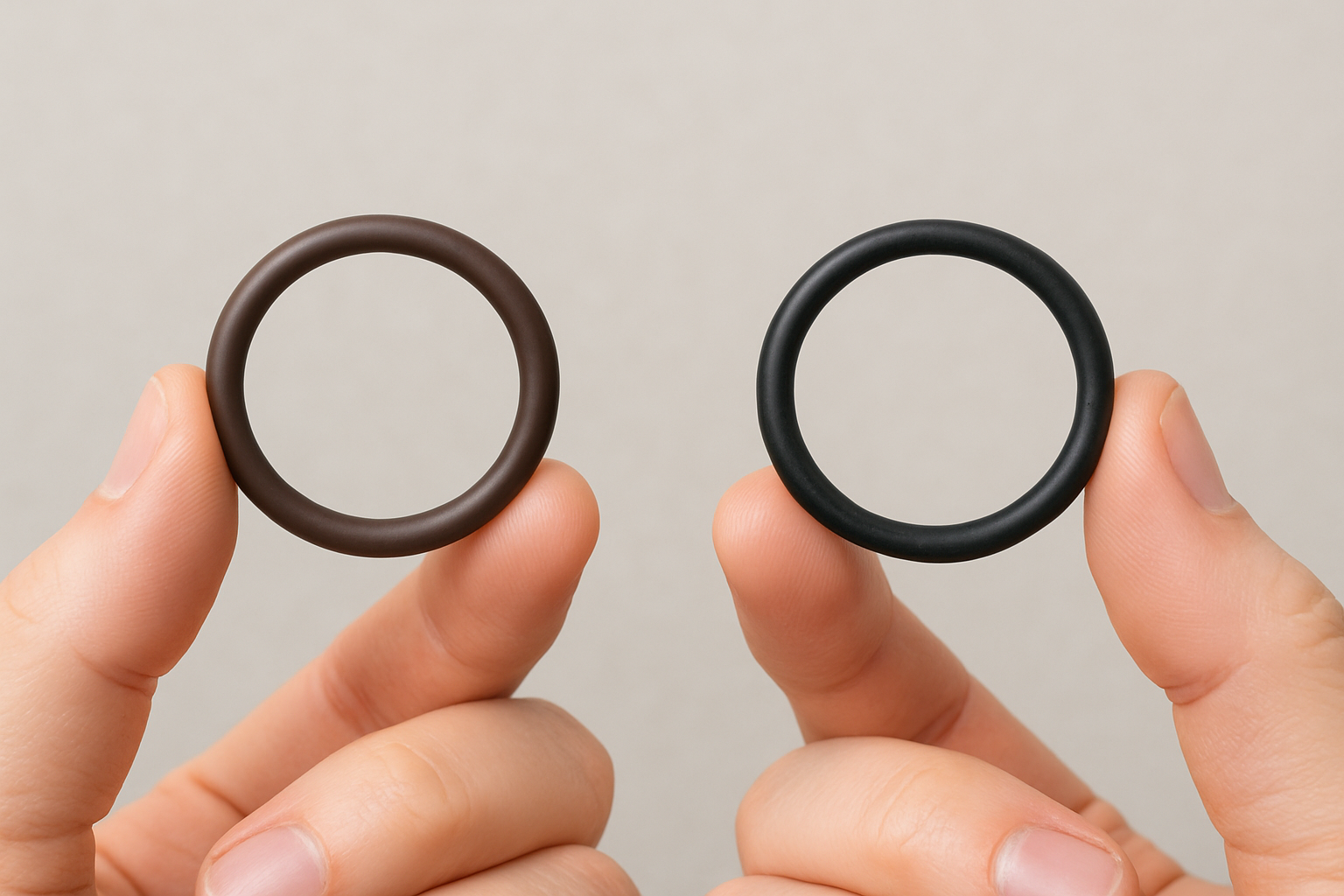
Viton (FKM or fluorocarbon) elastomer has developed an aura of being a "magic" solution to sealing problems in our airplanes, especially as a replacement for nitrile (NBR or Buna-N). Like all elastomers, each is designed for a particular temperature range and chemical resistance.
Here's a comparison source:
I've extracted some data from this source:

TEMPERATURE​

  • NBR: -30°F to 250°F (-35°C to 120°C)
  • FKM: -15°F to 400°F (-26°C to 205°C)

PERFORMANCE CHARACTERISTICS

  • Chemical Resistance: FKM outperforms NBR in resistance to fuels, oils, solvents, and many aggressive chemicals.
  • Environmental Resistance: FKM maintains integrity under extreme conditions and is resistant to mold, ozone, and weathering.
  • Abrasion and Tear Resistance: Both materials perform well, but NBR typically offers higher abrasion and tear resistance, making it a strong choice for mechanical wear applications.

LIMITATIONS​

NBR O-rings are not ideal for harsh chemical environments or prolonged outdoor exposure. Their resistance to specific liquids can also be reduced when the material is formulated for extreme high or low temperatures. Conversely, FKM O-rings should be avoided in applications involving brake fluid, ketones, hot water, or very low-temperature conditions, where performance may be compromised.

In the limitations of FKM they are referring to automotive brake fluid, not the MIL-H-5606 hydraulic fluid we use in brakes. Viton is used in our wheel brake cylinders due to its high temperature rating, but it does not have as low a temperature rating.

For most of our applications, (except wheel brake cylinders), but including including the switch type alternate static source I think nitrile is a better choice.

Note that ALL o-rings are sensitive to cuts and abrasion when being assembled which is why all parts must be properly deburred prior to assembly.

 
Last edited:
Viton (FKM or fluorocarbon) elastomer has developed an aura of being a "magic" solution to sealing problems in our airplanes, especially as a replacement for nitrile (NBR or Buna-N). Like all elastomers, each is designed for a particular temperature range and chemical resistance.
Here's a comparison source:
I've extracted some data from this source:

TEMPERATURE​

  • NBR: -30°F to 250°F (-35°C to 120°C)
  • FKM: -15°F to 400°F (-26°C to 205°C)

PERFORMANCE CHARACTERISTICS

  • Chemical Resistance: FKM outperforms NBR in resistance to fuels, oils, solvents, and many aggressive chemicals.
  • Environmental Resistance: FKM maintains integrity under extreme conditions and is resistant to mold, ozone, and weathering.
  • Abrasion and Tear Resistance: Both materials perform well, but NBR typically offers higher abrasion and tear resistance, making it a strong choice for mechanical wear applications.

LIMITATIONS​

NBR O-rings are not ideal for harsh chemical environments or prolonged outdoor exposure. Their resistance to specific liquids can also be reduced when the material is formulated for extreme high or low temperatures. Conversely, FKM O-rings should be avoided in applications involving brake fluid, ketones, hot water, or very low-temperature conditions, where performance may be compromised.

In the limitations of FKM they are referring to automotive brake fluid, not the MIL-H-5606 hydraulic fluid we use in brakes. Viton is used in our wheel brake cylinders due to its high temperature rating, but it does not have as low a temperature rating.

For most of our applications, (except wheel brake cylinders), but including including the switch type alternate static source I think nitrile is a better choice.

Note that ALL o-rings are sensitive to cuts and abrasion when being assembled which is why all parts must be properly deburred prior to assembly.

Thanks for the education here. Interesting. One thing not mentioned is shrinkage. From experience, i have seen nitrile rubber orings give up their solvents (a guess here, not sure what is happening chemically) and dry out and shrink over time, at least those not bathed in fluids that prevent it, like atf. Does FKM share the same characteristics? I speculated that it may not, hence my comments. But clearly I don’t know a lot about it.
 
Check Amazon, there seem to be 1mm thick o rings down to around 1mm ID (that's a bit over 1/32, smaller than 3/64) readily available. Mostly nitrile, but some silicone too.
Thanks for the tip. I just broke down and bought another switch from mcmaster. Looks like a different mfr, but similar design. Was only $22. If it lasts another 7 years, i guess that is good value in aviation anyways.
 
$22? That's a wayyy better option than guess-and-chech futzing with mini o rings or trying to measure impossibly small grooves with calipers, or wires, or whatever it would take to pick the right part
 
I like simple so I just dropped a short section of nylo tube down where the vent is and cap it off with some nylo fittings that are easy to reach in flight.
Also doubles as a access point for testing.
 
I like simple so I just dropped a short section of nylo tube down where the vent is and cap it off with some nylo fittings that are easy to reach in flight.
Also doubles as a access point for testing.
That is what i did on my 6. Simple and effective. On the 10, none of the lines are exposed to pilot. I could run one there, but no real good place to secure it. I really liked the idea of the nyloseal bulk head fitting in the panel and also bought one. In the end i just wanted to keep the panel looking sharp. If this switch fails, the bulkhead fitting is going in.
 
I like simple so I just dropped a short section of nylo tube down where the vent is and cap it off with some nylo fittings that are easy to reach in flight.
Also doubles as a access point for testing.
I have a question for which you are well qualified to answer. While my static is now leak free again, we also found a leak in the Pitot. I can’t get to the fittings without dropping the pitot. The stupid gretz has threaded inserts embedded in the compsite and one spun on me, so a big pita now to get it out. If i pull a 10” vacuum on that line to the pitot, it will drop to 0 in about 5-7 seconds. A decent leak but not huge. Always figured the pitot system is pretty tolerant of leaks. Do you believe mine is enough to cause inaccuracies? It used to be leak free and my speeds seem very consistent to what they used to be.
 
I did. It ha two of the tiniest orings i have ever seen. Have no idea how i would order replacements.
For future reference, this has been a reliable source for NBR and FKM orings in *lots* of sizes for me:

 
I have a question for which you are well qualified to answer. While my static is now leak free again, we also found a leak in the Pitot. I can’t get to the fittings without dropping the pitot. The stupid gretz has threaded inserts embedded in the compsite and one spun on me, so a big pita now to get it out. If i pull a 10” vacuum on that line to the pitot, it will drop to 0 in about 5-7 seconds. A decent leak but not huge. Always figured the pitot system is pretty tolerant of leaks. Do you believe mine is enough to cause inaccuracies? It used to be leak free and my speeds seem very consistent to what they used to be.
From my experience small leakage in pitot is not something to worry about. There is an unlimited amount of air to compensate for the leakage.
 
Last edited:
From my experience small leakage in pitot is not something to worry about. There is an unlimited amount of air to compensate for the leakage.
thats what i thought. Thanks for the help. I believe the static guy ties the pitot and static together during the testing, so he will still have to deal with the leakage during testing, correct?
 
For reference, the Cessna (heated) pitot head has a small hole drilled in the bottom aft corner of the casting as a water drain (when flying through precip). During one of my pitot static checks on my C-150, the tech neglected to tape over this hole and of course, the test gear showed a massive leakdown. Taping over the hole brought the test gear back to an acceptable level and my system passed the test.

If you know the pitot head has a known leak (water drain hole or otherwise) make sure the tech tapes over the hole/leak and you should be fine.
 
For reference, the Cessna (heated) pitot head has a small hole drilled in the bottom aft corner of the casting as a water drain (when flying through precip). During one of my pitot static checks on my C-150, the tech neglected to tape over this hole and of course, the test gear showed a massive leakdown. Taping over the hole brought the test gear back to an acceptable level and my system passed the test.

If you know the pitot head has a known leak (water drain hole or otherwise) make sure the tech tapes over the hole/leak and you should be fine.
Every heated pitot has a drain hole, I can't imagine a repair station that does these checks didn't know this.
 
Every heated pitot has a drain hole, I can't imagine a repair station that does these checks didn't know this.
yes, tester knows that. however, the gretz is unique and does not have a drain hole like all the others. At least that is what the internet says. previous certs we did not plug any drain holes and it held a vac quite well without leaks. something changed in the last two years.
 
Back
Top