Van's Air Force

The definitive Van's Aircraft support community! Buying, building or flying an RV? Join our exclusive family of mentors and enthusiasts!

polishing my canopy

rick57

Well Known Member
Sponsor
Need your advice on cleaning and polishing my plexiglass canopy on my RV-4. I plan to use wool pads on a 5" orbital sander. Which product(s) will be best for removing very light scratches and surface dust? Canopy is cleaned before each flight with Prist. Needs something a little stronger as surface is not smooth to the touch. Please advise. Many thanks, Rick
 
Need your advice on cleaning and polishing my plexiglass canopy on my RV-4. I plan to use wool pads on a 5" orbital sander. Which product(s) will be best for removing very light scratches and surface dust? Canopy is cleaned before each flight with Prist. Needs something a little stronger as surface is not smooth to the touch. Please advise. Many thanks, Rick
Know little about polishing plexi beyond avoiding the temptation to go more agressive than necessary. Would exercise some caution here. I have done a fair amount of paint work, including cut and buff. I have learned that wool pads are far more agressive than sponge pads and unsure if you can get super fine wool pads. If you are not taking out meanngfull scratches, I would consider some of the foam varieties. They rang from pretty agressive to super fine.
 
I used the stuff from aircraft spruce sells that comes in four levels of abrasive to remove deep scratches to final polish.
 
Need your advice on cleaning and polishing my plexiglass canopy on my RV-4. I plan to use wool pads on a 5" orbital sander. Which product(s) will be best for removing very light scratches and surface dust? Canopy is cleaned before each flight with Prist. Needs something a little stronger as surface is not smooth to the touch. Please advise. Many thanks, Rick
Each cleaning should start with a surface rinse with water and a terry cloth drenched. One pass flip the cloth to a clean section. Rinse and continue. Wipe dry with wrung out cloth....... then polish with Plexus or equivalent, using a 100% cotton T-shirt.

Scratches that you only see when the sun hits just right, will be gone. Any other will need a more aggressive polish & buff.
 
From past experiences, I would stay away from wool pads. Wool is very aggressive.

I'd start with Novis 3,2,and 1 by hand each step with a new clean cotton T shirt (no logos). If it's really bad, use a orbital sander with a microfiber cloth.

Also start with a fairly benign area (like the aft canopy) to get a feel for the process. Micromesh if Novis doesn't get you where you want to be. Might also do a very light touch with a claybar to get some of the bigger contaminants off first, but I haven't tried that yet.

Start with the minimum amount of abrasive needed for the job. Patience is a virtue here.....

Laird
 
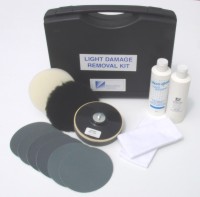
This is what we used to polish out light scratches in plexiglass chin bubbles and windscreens on Navy helicopters:
On this subject - and by no means am I suggesting you were anything other than super-careful with the helicopters, Ken - I had to cringe when watching the documentary about the Blue Angles last year. The ground crew are in there swirling away with a cloth to clean the windscreens and you could see the circular scratches glinting in the morning sunlight. If that was my aeroplane I would have kick their collective backsides from here to kingdom come. And these guys are supposed to be the cream of the Navy maintenance teams? I think they need a lesson on how to clean canopies. Based on that I'm sceptical when people say things like "... in the Navy we used to do it this way...". :D

But yes, a good product and I have a kit in my hangar. We often used it on the helicopters we maintained as well.
 
If you want to know how to do a canopy like it is supposed to be done, send a note to MacCool on this forum and he can tell you ALL ABOUT how to get your canopy pretty close to NEW! He has a lot of experience with polishing things........... You might be able to find his musings by using the forum SEARCH engine.......

See post #12 below........ 😊
 
Last edited:
On this subject - and by no means am I suggesting you were anything other than super-careful with the helicopters, Ken - I had to cringe when watching the documentary about the Blue Angles last year. The ground crew are in there swirling away with a cloth to clean the windscreens and you could see the circular scratches glinting in the morning sunlight. If that was my aeroplane I would have kick their collective backsides from here to kingdom come. And these guys are supposed to be the cream of the Navy maintenance teams? I think they need a lesson on how to clean canopies. Based on that I'm sceptical when people say things like "... in the Navy we used to do it this way...". :D

But yes, a good product and I have a kit in my hangar. We often used it on the helicopters we maintained as well.

Oh, we all knew about the using an up-down motion to minimize swirls. We also knew that there was no way the Navy was buying us bails of nice new micro-fiber cloth to clean windscreens with. Often the softest thing we could find was a "lint free cloth" (as the Navy calls them) that didn't have hydraulic fluid on it. When you're sitting behind the windscreen looking out, you don't really notice the fine swirls that regular cleaning leaves behind. Bug guts and water spots are definitely distracting though.
 
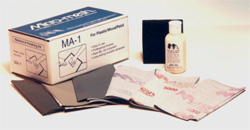
I am an A&P and bought a micro mesh kit using power tools. I know from personal experience that micro mesh by hand requires patience and hours and hours of rubbing for very little results.

 
I am an A&P and bought a micro mesh kit using power tools. I know from personal experience that micro mesh by hand requires patience and hours and hours of rubbing for very little results.

I am not an A&P and have had excellent results using the micromesh kit by hand to remove scratches from several windscreens and canopies. I just followed the directions and it worked well. It does take a little time, but the results have been worth it.
 
I am not an A&P and have had excellent results using the micromesh kit by hand to remove scratches from several windscreens and canopies. I just followed the directions and it worked well. It does take a little time, but the results have been worth it.
+1. I've taken out a lot of scratches over the years with this product; some of them were very deep. Even restored an entire ~ 1 sq. ft. area that had gotten acetone on it. Works well.

One valuable time saving trick that I'd learned = No need to always start with the course-est abrasive. Find the one that just barely exceeds what you're trying to remove and step down from from there.
 
I am an A&P and bought a micro mesh kit using power tools. I know from personal experience that micro mesh by hand requires patience and hours and hours of rubbing for very little results.

For a little history: I have worked on De Havilland twin otters where I was given one of these stupid Aircraft Spruce hand kits to address scratches on the interior of the passenger compartment windows. It was frustrating and honestly wasn’t a productive use of time.

On the other hand, working at the Embraer facility assigned to polish out EMB190 scratched cockpit side windows.

The exterior would be pitted from flying, the interior had gouges, meaning really deep scratches from careless flight crews throwing their flight bag or luggage around.

Using power tools it was about a 2 work day job using power tools to fully polish the interior & exterior of both side-view windows to perfect condition. Then it took an additional day for NDT to inspect it with their tools to verify that the window thickness still exceeded minimum values.

The exterior was easy as there weren’t any edges to worry about. The learning curve was figuring out to a heavy enough grit to remove all the damage. Once you used power tools with silicon carbide sandpaper, the surface had a milky look to it. You had no way to see if the surface was good until you polished it all the way out. Meaning you had to do it all over again if you didn’t use an aggressive enough paper.

The other half of the learning curve was to keep the silicon carbide sandpaper away from the interior window frame. I would use metal tape around perimeter of the inner side to keep the silicon carbide sandpaper an inch or so away from the window frame.

If you used a grit heavy too close to a window frame, the random orbital sander left swirls that were really tough to remove.

I damaged the surface of rear canopy of my -7 tip up with chemicals when I stripped it for paint. I have the kit listed above that I bought it for use on my certified aircraft. My plan is to use metal tape to bracket the area to keep the size of the job from getting out of control.

 
Need your advice on cleaning and polishing my plexiglass canopy on my RV-4. I plan to use wool pads on a 5" orbital sander. Which product(s) will be best for removing very light scratches and surface dust? Canopy is cleaned before each flight with Prist. Needs something a little stronger as surface is not smooth to the touch. Please advise. Many thanks, Rick
See what Airplane Plastics, the folks who make Van's canopies, have to say: https://www.airplaneplastics.com/faq
 
I've always used a micro mesh kit. It will polish nicely but if you're too aggressive you can change the optics. And take your time.
danny
 
For a little history: I have worked on De Havilland twin otters where I was given one of these stupid Aircraft Spruce hand kits to address scratches on the interior of the passenger compartment windows. It was frustrating and honestly wasn’t a productive use of time.

On the other hand, working at the Embraer facility assigned to polish out EMB190 scratched cockpit side windows.

The exterior would be pitted from flying, the interior had gouges, meaning really deep scratches from careless flight crews throwing their flight bag or luggage around.

Using power tools it was about a 2 work day job using power tools to fully polish the interior & exterior of both side-view windows to perfect condition. Then it took an additional day for NDT to inspect it with their tools to verify that the window thickness still exceeded minimum values.

The exterior was easy as there weren’t any edges to worry about. The learning curve was figuring out to a heavy enough grit to remove all the damage. Once you used power tools with silicon carbide sandpaper, the surface had a milky look to it. You had no way to see if the surface was good until you polished it all the way out. Meaning you had to do it all over again if you didn’t use an aggressive enough paper.

The other half of the learning curve was to keep the silicon carbide sandpaper away from the interior window frame. I would use metal tape around perimeter of the inner side to keep the silicon carbide sandpaper an inch or so away from the window frame.

If you used a grit heavy too close to a window frame, the random orbital sander left swirls that were really tough to remove.

I damaged the surface of rear canopy of my -7 tip up with chemicals when I stripped it for paint. I have the kit listed above that I bought it for use on my certified aircraft. My plan is to use metal tape to bracket the area to keep the size of the job from getting out of control.

Excellent information, thanks for your time. I don't have the time to do it by hand. These products will help immensely..Rick
 
What color pad do you use?
Adams old-style system was orange for major swirls, green for medium swirling, and white for fine scratching. Now it's it's blue and white. On plexiglas I only use the white 5.5 inch pads (Adams newer fine pads are still white) with the Novus kit. I polish the canopy once a year with a white foam pad, maybe twice a year using first #2 then #1. Day-to-day for bugs etc is Plexus or Aeroguard using a clean borderless/tagless microfiber cloth (Korean microfiber is best, according to legend). I buy microfiber from The Rag Company. Plexus/Aeroguard is pretty much just a cleaner. It does a good job of that but doesn't do anything for scratch or swirl correction. They usually have some silicones in them to fill in the scratches and make you think it fixed them.

I'm not nearly as anal-retentive about detailing my cars as I used to be, but plexiglas is a different story. That stuff is so soft that it collects swirling easily. Usually just from casual or inattentive buffing with an old T-shirt or dirty polishing pad.
 
Back
Top