

Van's Air Force
You are using an out of date browser. It may not display this or other websites correctly.
You should upgrade or use an alternative browser.
You should upgrade or use an alternative browser.
Which PMAG automotive spark plug for IO-390?
- Thread starter Gash
- Start date


Here's a website with a chart comparing heat ranges for different automotive spark plug brands.
It's worth noting here that the Denso 24 heat rating is the same as the NGK 8 heat rating (which is what most people are using in their short reach applications, i.e. the NGK BR8ES).
Many here are using the Denso 27 heat rating plugs, which is the same as the NGK 9 heat rating. I'm concerned that these spark plugs may be too cold for normal applications like an RV-14 with an IO-390. By "normal" I mean not racing and not being pushed hard with high CHTs. It seems to me that the Denso IKH24 (same heat rating as the NGK BR8ES) would be a better choice to have less lead fouling. I'm interested in learning others' thoughts here. Thank you.
It's worth noting here that the Denso 24 heat rating is the same as the NGK 8 heat rating (which is what most people are using in their short reach applications, i.e. the NGK BR8ES).
Many here are using the Denso 27 heat rating plugs, which is the same as the NGK 9 heat rating. I'm concerned that these spark plugs may be too cold for normal applications like an RV-14 with an IO-390. By "normal" I mean not racing and not being pushed hard with high CHTs. It seems to me that the Denso IKH24 (same heat rating as the NGK BR8ES) would be a better choice to have less lead fouling. I'm interested in learning others' thoughts here. Thank you.
Last edited:

Karl, the selection goal is a plug whose center electrode runs hot enough to burn away carbon, without being hot enough to cause pre-ignition, i.e. ignition of the fuel air mix by glow, rather than spark. The rule is "hot enough, and no more".
After monitoring IKH27s for a while, I would not consider 24s.
After monitoring IKH27s for a while, I would not consider 24s.
Last edited:
Thanks Dan, what are you monitoring on your plugs? I saw one of your posts on another thread showing a photo of one of your IKH27 plugs. It looked clean, so that's good. Is there any other data? Have you done a comparison between the IKH27 and any other heat ranges and/or brands?
I keep going back to the fact that the Denso 27 heat range is the same as the NGK 9 heat range. This is colder than the NGK BR8ES plugs (8 heat range) I have run successfully for over 1,500 hours on my last two RVs with IO-375 and IO-360 engines with 8.5-1 compression jugs.
There's also the fact that SDS sells the IKH24 plugs with their electronic ignition for engines with long reach plugs. Therefore I still suspect that the Denso IKH27 plugs actually aren't hot enough for an IO-390 that's not being pushed hard (like racing, etc.) I also suspect that everyone is installing the Denso IKH27 plugs simply because that's what is listed on p. 9 of the PMAG installation manual. But even PMAG writes in their manual that it's just a plug that OTHERS have reported that works. There does not appear to be any test data to support their recommendation. If possible I'd like to get more data to make an informed decision.
I keep going back to the fact that the Denso 27 heat range is the same as the NGK 9 heat range. This is colder than the NGK BR8ES plugs (8 heat range) I have run successfully for over 1,500 hours on my last two RVs with IO-375 and IO-360 engines with 8.5-1 compression jugs.
There's also the fact that SDS sells the IKH24 plugs with their electronic ignition for engines with long reach plugs. Therefore I still suspect that the Denso IKH27 plugs actually aren't hot enough for an IO-390 that's not being pushed hard (like racing, etc.) I also suspect that everyone is installing the Denso IKH27 plugs simply because that's what is listed on p. 9 of the PMAG installation manual. But even PMAG writes in their manual that it's just a plug that OTHERS have reported that works. There does not appear to be any test data to support their recommendation. If possible I'd like to get more data to make an informed decision.
Last edited:
Thanks Dan, what are you monitoring on your plugs? I saw one of your posts on another thread showing a photo of one of your IKH27 plugs. It looked clean, so that's good. Is there any other data? Have you done a comparison between the IKH27 and any other heat ranges and/or brands?
I keep going back to the fact that the Denso 27 heat range is the same as the NGK 9 heat range. This is colder than the NGK BR8ES plugs (8 heat range) I have run successfully for over 1,500 hours on my last two RVs with IO-375 and IO-360 engines with 8.5-1 compression jugs.
There's also the fact that SDS sells the IKH24 plugs with their electronic ignition for engines with long reach plugs. Therefore I still suspect that the Denso IKH27 plugs actually aren't hot enough for an IO-390 that's not being pushed hard (like racing, etc.) I also suspect that everyone is installing the Denso IKH27 plugs simply because that's what is listed on p. 9 of the PMAG installation manual. But even PMAG writes in their manual that it's just a plug that OTHERS have reported that works. There does not appear to be any test data to support their recommendation. If possible I'd like to get more data to make an informed decision.
First, heat range comparisons between manufacturers are not very accurate. Second, as Dan mentioned, the plug only needs to be hot enough to burn off deposits at all/most operating ranges of any specific engine. Being any hotter provides no benefit and reduces the margin before the onset of pre-ignition. Third, each cylinder head design and CR will have different requirements, relative to plug heat range. Finally, the right plug can only be found by trial and error, usually done by the engine manufacturer. Good engine tuners do this themselves for non-OEM builds.
Dan is a pretty reliable engine guy and I would trust his expeience input. You will only find anecdotal data, as the OEMs don't do testing for this type of plug.
Larry
Last edited:

2,100 trouble free hours with -27 for me
2,100 trouble free tach hours with -27 as a go to plug for me. I have run all kinds of conditions with extensive efforts to gain performance with plugs and timing (plugs never made any measurable difference). During that time I have tested several other plugs and all of them did okay too.
2,100 trouble free tach hours with -27 as a go to plug for me. I have run all kinds of conditions with extensive efforts to gain performance with plugs and timing (plugs never made any measurable difference). During that time I have tested several other plugs and all of them did okay too.

I use Denso IKH01-27 in my IO-390 with great performance. I tried another brand a few years ago--NOT doing that again.
The Denso IKH01-27 are about three times the cost of the Denso IKH-27, does the additional cost offer that much of a performance difference?
Cool plastic cases
I tested 8 of these (Denso IKH01-27) extensively for racing and found no benefit... but they do come in neat individual plastic cases.
I tested 8 of these (Denso IKH01-27) extensively for racing and found no benefit... but they do come in neat individual plastic cases.

NGK BR9EIX. Run them since install 10 years ago. Swap them on the annual, probably don?t need to but O?Reillys price is sweet enough !

sixtyauto.com or eBay
I have gotten them from sixityauto.com and eBay without issue
I have gotten them from sixityauto.com and eBay without issue

Resurrecting and old thread here as my question/thoughts have to do with what's been discussed above.
Recently I pulled my original IKH27 spark plugs out of my IO-390. I have 175.9 tach time on the engine. The engine is equipped with one E-mag and one Slick mag.
The massive plugs looked good at 100 hours, but I replaced them anyway. I pulled the replacements at 175.9 and they look nice, dry, no lead deposits, etc. I cleaned them, checked the gap and reinstalled them.
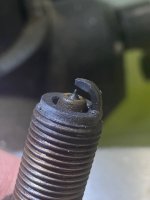
The IHK27s are a different story. Based on what I'm reading above, there has been good discussion on the use of the DENSO IKH27. Below is a picture of the original IKH27 plug(s) pulled out of my IO-390 after 175.9 hours. This is representative of how all 4 looked. To me, they look pretty oily and dirty. I've spoken to a couple of local "experts" that think I should go to a hotter plug. In this case, that would be the IKH24 which is one step hotter. Based on the info above and the picture below, I'd like to get your thoughts.
Thanks,
Fred
Recently I pulled my original IKH27 spark plugs out of my IO-390. I have 175.9 tach time on the engine. The engine is equipped with one E-mag and one Slick mag.
The massive plugs looked good at 100 hours, but I replaced them anyway. I pulled the replacements at 175.9 and they look nice, dry, no lead deposits, etc. I cleaned them, checked the gap and reinstalled them.
The IHK27s are a different story. Based on what I'm reading above, there has been good discussion on the use of the DENSO IKH27. Below is a picture of the original IKH27 plug(s) pulled out of my IO-390 after 175.9 hours. This is representative of how all 4 looked. To me, they look pretty oily and dirty. I've spoken to a couple of local "experts" that think I should go to a hotter plug. In this case, that would be the IKH24 which is one step hotter. Based on the info above and the picture below, I'd like to get your thoughts.
Thanks,
Fred
if the sibling plug is clean, then it seems quite apparent from the pics that these plugs are too cold.Resurrecting and old thread here as my question/thoughts have to do with what's been discussed above.
Recently I pulled my original IKH27 spark plugs out of my IO-390. I have 175.9 tach time on the engine. The engine is equipped with one E-mag and one Slick mag.
The massive plugs looked good at 100 hours, but I replaced them anyway. I pulled the replacements at 175.9 and they look nice, dry, no lead deposits, etc. I cleaned them, checked the gap and reinstalled them.
The IHK27s are a different story. Based on what I'm reading above, there has been good discussion on the use of the DENSO IKH27. Below is a picture of the original IKH27 plug(s) pulled out of my IO-390 after 175.9 hours. This is representative of how all 4 looked. To me, they look pretty oily and dirty. I've spoken to a couple of local "experts" that think I should go to a hotter plug. In this case, that would be the IKH24 which is one step hotter. Based on the info above and the picture below, I'd like to get your thoughts.
View attachment 117266
Thanks,
Fred

Summit RacingImpossible to buy
Trying to buy 4 Denso IKH27 plugs to match the orig's that came with the T-bolt 390 now with dual Pmags.
Unbelievable how hard these are to find online.
Anybody have a source that's not Amazon?

Summit Racing

Denso 5347 IKH27 Iridium Power Spark Plug
Denso 5347 IKH27 Iridium Spark Plug - Same Day Shipping. Free Returns. PayPal Accepted. Secure Online Ordering. Est. 1969.
Used now last 4 years, excellent but now expensive! (Good thing they last hundreds of hours!)
Larry,if the sibling plug is clean, then it seems quite apparent from the pics that these plugs are too cold.
Thanks for the confirmation. Any idea why these plugs appear to be working for everybody else but seem to be a bit cold for my engine?
Also, I'm a little slow. By "sibling plugs" do you mean the massives?
For those looking for these plugs, I just went to the source (Denso): https://www.densoproducts.com/denso-5347-ikh27-iridium-power-spark-plug
Yes, the opposing plug in the same cylinder. kind of a confirmation that something other than plug heat range is not in play.Larry,
Thanks for the confirmation. Any idea why these plugs appear to be working for everybody else but seem to be a bit cold for my engine?
Also, I'm a little slow. By "sibling plugs" do you mean the massives?
For those looking for these plugs, I just went to the source (Denso): https://www.densoproducts.com/denso-5347-ikh27-iridium-power-spark-plug
my guess is most people saying they are good have PV engines; you have an AV. Combustion chamber design/geometery has a LOT to do with how a flame front moves around (or two distinct flame fronts in our case). Our plugs sit out on the periphery, not in the center area. My guess is that there is something unique about the AV chamber that keeps the combustion temp near the plug(s) cooler. Modern design tries to drive efficiency by engineering the shape to even out the combustion progress, maximizing pressure produced from the process. Also Possible that one plug runs hotter than the other, as the combustion temps could be different at each end. therefore folks would have different experiences based upon where they installed them. Also, not everyone is wise enough to look at a plug and recognize it is running too cold. Also, your engine has squirters, taking a lot of heat out of the boundary materials that PV engines don't have. I am sure you notice your CHTs generally run cooler than your PV brothers. lower head material temps improve the plugs efficiency in pulling heat out and therefore run cooler. Guys running ROP all the time will see different amounts of combustion heat than those running LOP. Same goes for ignition advance.
A lot of complexity in this kind of thing and an engineer would spend weeks on a dyno trying to find an optimum plug for a given chamber design. no surprise that you are not finding advice of others to work for you.
Last edited:

I use NKG BR8ES. Cheap. Never had a problem. Also ran them in my dirtbikes. Never had a problem.
Those are not long reach plugs I'm pretty sure. Long reach is needed for the IO390 and probably most angle valve engines. My Denso IKH27 plugs look still new when I change them ~ every 250 hrs. (EFII ignition and fuel systems) Lots of LOP operations.I use NKG BR8ES. Cheap. Never had a problem. Also ran them in my dirtbikes. Never had a problem.

Same here - makes it harder to throw them out. Last set had 240 hours.My Denso IKH27 plugs look still new when I change them ~ every 250 hrs. (EFII ignition and fuel systems) Lots of LOP operations.
Iridium plugs generally are good for 3000 hours. Why would you throw them out at 250, when they look and perform as new! Doesn’t seem that hard to run them longer. What am I missing?Same here - makes it harder to throw them out. Last set had 240 hours.
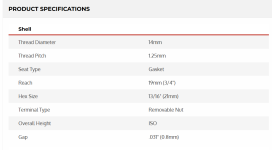
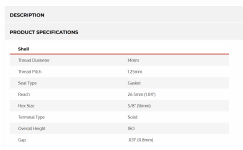
It will say "Solid", vs "Removable Nut". Note I like to use plugs with 16 mm hex so I can more easily torque the brass adapter separately. (With the plug in the adapter)How do you order plugs and make certain your getting solid tips, not the thread on ones?
Thanks
Dan,Fred, go fly, lean to peak in cruise, and ground the mag. If no misfire running on the IKH27's alone, they are fine, regardless of appearance.
The right plug is the coldest choice which doesn't foul.
I appreciate the advice. I'll give it another shot. Currently, I lean aggressively on the ground, climb at 150 ROP and cruise about 30 LOP.
I want to make sure i understand:
- Go to cruise altitude (roughly 8500')
- Lean to peak
- Run on E-mag only and check for misfire
- If all good, you recommend I stay with the IKH27.
Many thanks,
Fred
It's one basic ignition stress test, but no great precision is required. Pick conditions you find comfortable and shut down the other ignition. You can do the same test on the runup pad if you wish. The inflight check just allows more RPM.
The goal is to determine if running at any condition causes plug fouling significant enough to misfire at any condition. For example, you mentioned leaning aggressively on the ground. Are you do so because you think it's good practice, or because it idles better during taxi, or because you've actually detected plug fouling misfire on the runup pad?
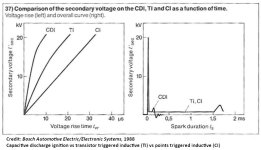
Fouling means the creation of an electrical path on the surface of the center insulator ceramic. Technically there are always some electrons bleeding off along that path as the voltage rises toward a level high enough to ionize the gap, even with a brand new plug. Oil is not very conductive, and makes it only slightly worse, while highly conductive deposits, notably carbon and metallic lead, can allow so much bleed that the coil is discharged before voltage can rise enough to make the leap.
Good 'ole dirty two-strokes are typically equipped with capacitive discharge ignitions for rapid rise time, so the voltage reaches an ionizing level before the electrons can bleed away.
The goal is to determine if running at any condition causes plug fouling significant enough to misfire at any condition. For example, you mentioned leaning aggressively on the ground. Are you do so because you think it's good practice, or because it idles better during taxi, or because you've actually detected plug fouling misfire on the runup pad?
Fouling means the creation of an electrical path on the surface of the center insulator ceramic. Technically there are always some electrons bleeding off along that path as the voltage rises toward a level high enough to ionize the gap, even with a brand new plug. Oil is not very conductive, and makes it only slightly worse, while highly conductive deposits, notably carbon and metallic lead, can allow so much bleed that the coil is discharged before voltage can rise enough to make the leap.
Good 'ole dirty two-strokes are typically equipped with capacitive discharge ignitions for rapid rise time, so the voltage reaches an ionizing level before the electrons can bleed away.
Last edited:
I struggle with this too. However, my understanding is that 3000 hours life (I haven’t verified this as correct) is with unleaded fuel in an automotive environment (much lower duty levels) and does not apply with our more corrosive and dirtier leaded fuel. I considered keeping the plugs at my last annual, but saw some small deposits deep in the plug (carbon and lead?) and opted to go with crowd wisdom and replace them.Iridium plugs generally are good for 3000 hours. Why would you throw them out at 250, when they look and perform as new! Doesn’t seem that hard to run them longer. What am I missing?
i don't disagree that the plugs live a harder life in the lycs, but you will see this over time. i run standard plugs which are typically good for 1000 hours in an auto engine. by about 7-800 hours I find the electrode wear objectionable and replace based upon that. i also have to gap them far more often than what is seen in auto engines.I struggle with this too. However, my understanding is that 3000 hours life (I haven’t verified this as correct) is with unleaded fuel in an automotive environment (much lower duty levels) and does not apply with our more corrosive and dirtier leaded fuel. I considered keeping the plugs at my last annual, but saw some small deposits deep in the plug (carbon and lead?) and opted to go with crowd wisdom and replace them.
it is your choice and not expensive. i was just trying to inject a counter point to this VAF thing about replacing plugs every year. just doesn't make a lot ofd sense to me.
Great question. I lean as it idles better and I was taught that way. After start-up, the idle is rich. I've "tinkered" with the idle mixture adjustment (FM-150) and have gotten to the point where I believe it idles best. It just idles better with the mixture leaned. I haven't had any issues with fouled plugs or a misfire....at least to the best of my knowledge........Are you do so because you think it's good practice, or because it idles better during taxi, or because you've actually detected plug fouling misfire on the runup pad?
I guess, I should probably admit that I don't really know how to tell if a plug is fouled. I always figured that if the engine ran strong during run up with no miss or hesitation, my plugs were good to go.
Regarding idle (trying not to thread drift here), after starting, it runs much better when I lean. When I pull the mixture at shutdown, I get a very small (25 rpm or less) increase before the engine quits.
Thanks for your response.

Only if both electrodes are iridium or platinum. The ground electrode on these (and the IW27 and IK27) are conventional, so that part wears just like a standard cheap plug. I replace mine when the tip of the ground strap has an eroded-away hollow area, which increases the gap, which is typically around 250 hrs for my 360 AV with Lightspeed.Iridium plugs generally are good for 3000 hours. Why would you throw them out at 250, when they look and perform as new! Doesn’t seem that hard to run them longer. What am I missing?
As to why they're built this way, go ask Denso.
Only if both electrodes are iridium or platinum. The ground electrode on these (and the IW27 and IK27) are conventional, so that part wears just like a standard cheap plug. I replace mine when the tip of the ground strap has an eroded-away hollow area, which increases the gap, which is typically around 250 hrs for my 360 AV with Lightspeed.
Yep.
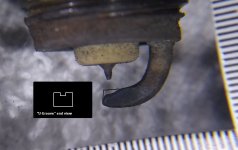
thats interesting. most of the iridiums that i have seen had little stubs of different metal on the grd electrode. i just assumed these plugs had them as well - never used them. thanks for catching that. given that insight i agree these won't go anywhere near 3000 in a lyc.Only if both electrodes are iridium or platinum. The ground electrode on these (and the IW27 and IK27) are conventional, so that part wears just like a standard cheap plug. I replace mine when the tip of the ground strap has an eroded-away hollow area, which increases the gap, which is typically around 250 hrs for my 360 AV with Lightspeed.
As to why they're built this way, go ask Denso.
Last edited:
